Thyroid Treatment in Ayurveda in Pune: Best Methods to Manage Symptoms (2026 Guide)
A doctor-reviewed, evidence-aware guide to thyroid symptoms, tests, Ayurvedic methods, diet and yoga — with a realistic Pune cost comparison and a checklist for choosing the best Ayurvedic doctor in Pune for your thyroid care.
Clinics in Wagholi and Kharadi, Pune
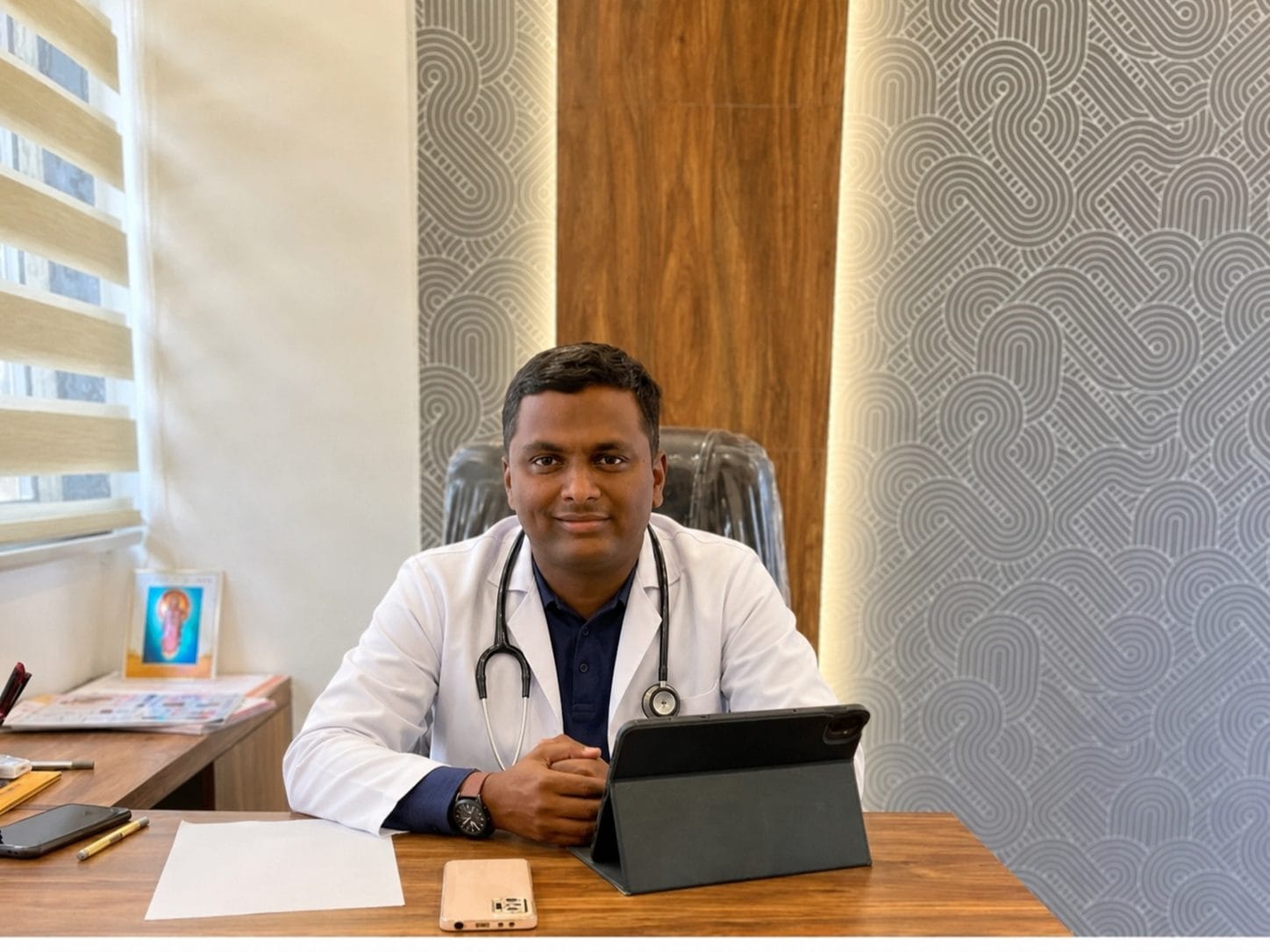
Medically reviewed by Dr. Shailesh Shamkant Phalle, BAMS, M.D. (Kayachikitsa) — Ayurvedic Physician, author of Thyroidology in Ayurveda.
Last updated: 16 October 2026 · Written for patient education; not a substitute for an in-person consultation.
Quick Answer
Thyroid treatment in Ayurveda in Pune works best as a supervised, integrated plan. First confirm the diagnosis with TSH, free T4/T3 and, where needed, anti-TPO antibodies and a neck ultrasound. Continue any prescribed thyroid medicine unless your treating doctor changes it. Then add Ayurvedic care built around your constitution: an Agni-correcting diet, carefully chosen herbs, selected Panchakarma (Vamana, Virechana, Basti, Nasya) when you are a suitable candidate, yoga and pranayama, and sleep correction. Re-test every 6–8 weeks after any change. Be cautious of any clinic that promises a permanent result or asks you to stop thyroid medicine on day one.
Why Thyroid Problems Matter in India
If you have been searching for thyroid treatment in Ayurveda in Pune, you are in very large company. A multi-city study published in the Indian Journal of Endocrinology and Metabolism tested adults in eight Indian cities and found hypothyroidism in about 10.95% of them — roughly one in ten adults. Of those, about 7.5% already knew about their condition, while about 3.5% had never been diagnosed. The study also found that hypothyroidism was more common in women and in older adults, and that subclinical hypothyroidism and anti-TPO antibody positivity were common findings.
That last number matters. A thyroid disorder can sit quietly for years behind symptoms people explain away: tiredness blamed on work, weight gain blamed on age, hair fall blamed on water, low mood blamed on stress. Pune's IT and corporate belt — long sitting hours, irregular meals, shift-based sleep, constant screen time — adds plenty of such explanations. Many patients who visit our Kharadi and Wagholi clinics have been living with symptoms for a long time before anyone checks a TSH value.
This guide is written to give you a complete, honest picture: what the thyroid does, how Ayurveda understands it, which Ayurvedic methods may help manage symptoms, where the evidence is thin, what thyroid care realistically costs in Pune, and how to judge whether a clinic deserves your trust. Our aim is to be useful whether you choose to consult us or any other qualified practitioner.
The Thyroid and Its Common Disorders
The thyroid is a small, butterfly-shaped gland at the front of the neck. It makes thyroxine (T4) and triiodothyronine (T3), hormones that set the pace of your metabolism — how quickly you burn energy, how fast your heart beats, how warm you feel, how regular your bowels are, how clearly you think, and how your menstrual cycle behaves. The pituitary gland controls the thyroid through thyroid-stimulating hormone (TSH): when thyroid hormones run low, TSH rises; when they run high, TSH falls.

The most common thyroid conditions seen in clinical practice are:
- Hypothyroidism (underactive thyroid): too little hormone, so everything slows down. See our overview of hypothyroidism causes.
- Subclinical hypothyroidism: TSH is raised while T4 and T3 are still in range. Read more on subclinical hypothyroidism.
- Hashimoto's thyroiditis: an autoimmune condition and the commonest cause of hypothyroidism in iodine-sufficient regions. See Hashimoto's thyroiditis and Ayurveda.
- Hyperthyroidism (overactive thyroid), including Graves' disease: too much hormone, so everything speeds up. See hyperthyroidism causes, types and investigations.
- Goitre and thyroid nodules: enlargement or lumps in the gland, which may or may not change hormone levels and always deserve proper evaluation.
- Thyroiditis: temporary inflammation, for example after pregnancy or following a viral illness.
If you are unsure how the two main patterns differ, our explainer on hypothyroidism vs hyperthyroidism lays them side by side, and our note on the endocrine system shows how the thyroid fits among the body's other hormone glands.
Symptoms: Underactive vs Overactive Thyroid
Thyroid symptoms develop slowly and overlap with many other problems, which is why they are so often missed. Here are the patterns doctors look for.
Underactive thyroid (slowing down)
- Persistent tiredness and heaviness, even after sleep
- Unexplained weight gain or difficulty losing weight
- Feeling cold when others are comfortable
- Constipation and sluggish digestion
- Dry skin, brittle nails, thinning hair or hair fall
- Puffy face, hoarse voice, slow pulse
- Low mood, brain fog, poor memory
- Heavy, prolonged or irregular periods; difficulty conceiving
Overactive thyroid (speeding up)
- Racing or irregular heartbeat, palpitations
- Weight loss despite a normal or increased appetite
- Feeling hot, sweating, heat intolerance
- Anxiety, irritability, tremor of the hands
- Loose or frequent stools
- Poor sleep and muscle weakness
- Light or infrequent periods
- Eye irritation or bulging in Graves' disease
Because these symptoms also occur with anaemia, vitamin B12 or vitamin D deficiency, PCOS, depression and simple overwork, a blood test is the only reliable way to tell. If fatigue is your main complaint, our note on constant tiredness and fatigue explains the other causes worth ruling out, and persistent bowel sluggishness is covered in our guide to constipation and its Ayurvedic management.
Skin, Hair, Weight and Hormones: Conditions That Travel With the Thyroid
The thyroid rarely acts alone. Patients often arrive with a skin, hair, weight or menstrual complaint and discover the thyroid is part of the picture. Checking TSH is a sensible first step when any of the following persist.
Autoimmune and inflammatory skin conditions
Vitiligo: studies consistently report a higher rate of autoimmune thyroid disease among people with vitiligo, so a thyroid profile with anti-TPO is routinely advised. Our article on myths and facts about vitiligo from an Ayurvedic view explains the autoimmune angle in plain language.
Psoriasis: an immune-mediated skin and joint condition that some studies link with thyroid autoimmunity. If you manage both, read about psoriasis symptoms and treatment and how Panchakarma is used in psoriasis.
Eczema and dry, itchy skin: an underactive thyroid can cause dry, rough, itchy skin that mimics or aggravates eczema. A correct diagnosis matters before choosing therapy; see our guides to Ayurvedic treatment for eczema, eczema treatment in Ayurveda and psoriasis vs eczema. For the wider picture of immune-related conditions, see autoimmune disorders and Ayurveda.
Hair fall, weight gain and hormonal imbalance
Diffuse hair thinning, stubborn weight gain and cycle problems are three of the most common reasons women in Pune first ask about their thyroid. Our pages on hair fall in Ayurveda, thyroid and weight gain, the Ayurvedic approach to obesity, PCOD care in Kharadi, Pune and hormonal disorders explained cover each in depth.
How Ayurveda Understands the Thyroid
Classical Ayurvedic texts describe neck swellings under the heading Galaganda (gala = neck, ganda = swelling). There is no single classical word for hypothyroidism or hyperthyroidism as modern medicine defines them, so contemporary Ayurvedic physicians interpret thyroid disease through the core Ayurvedic framework rather than a one-to-one translation. The commonly used interpretations are:
- Hypothyroid pattern: predominance of Kapha (heaviness, coldness, slowness, weight gain) combined with Vata (dryness, constipation, hair fall, low mood), weak digestive and metabolic fire (Agnimandya) and accumulation of undigested metabolic residue (Ama), with impaired metabolism of Rasa and Meda dhatus.
- Hyperthyroid pattern: predominance of Pitta (heat, sweating, irritability, loose stools) with aggravated Vata (palpitations, tremor, restlessness, sleeplessness) and an over-sharp digestive fire (Tikshnagni).
- Srotorodha: blockage of the body's micro-channels, which in this framework helps explain swelling, nodules and sluggish hormonal signalling.
The Ayurvedic Principle, In Simple Terms
Modern medicine measures and corrects the hormone level. Ayurveda looks at the person behind the number — digestion, bowel regularity, sleep, stress, body type and daily routine — and tries to correct the conditions that keep the thyroid under strain. The two approaches are complementary, not competing: the blood test tells you how the thyroid is performing; the Ayurvedic plan works on the terrain around it.
These are interpretive frameworks used in clinical practice. They are not laboratory diagnoses, which is why we always pair them with blood tests.

How Thyroid Problems Are Diagnosed
The modern tests that anchor every plan
- TSH: the first-line screening test. Reference ranges differ slightly between laboratories, so your doctor interprets the value against the range printed on your report.
- Free T4 and free T3: show how much active hormone is circulating and help separate overt from subclinical disease.
- Anti-TPO (and sometimes anti-thyroglobulin) antibodies: point towards autoimmune thyroid disease such as Hashimoto's.
- Neck ultrasound: checks gland size, texture and nodules; a needle test (FNAC) is arranged by the treating doctor if a nodule looks suspicious.
- Supporting tests: haemoglobin, vitamin D, vitamin B12, lipid profile and blood sugar, because an underactive thyroid often travels with raised cholesterol and nutritional gaps.

The Ayurvedic assessment
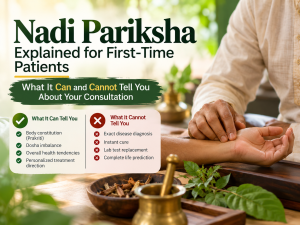
Alongside the reports, the Ayurvedic physician examines the pulse (Nadi Pariksha), the tongue (see our note on Jivha Pariksha), digestive strength (Agni), bowel habit, sleep pattern, appetite, body type (Prakriti) and current imbalance (Vikriti). This is what allows two patients with an identical TSH value to receive different plans.
Can Ayurveda Replace Thyroid Medicine?
This is the most important question in this guide, so here is a straight answer.
Our position on thyroid medicine
Do not stop levothyroxine or anti-thyroid tablets on your own. In overt hypothyroidism, levothyroxine replaces hormone your body is not making; stopping it can bring symptoms back, and in pregnancy it can affect both mother and baby. In hyperthyroidism, the choice between anti-thyroid drugs, radioactive iodine and surgery belongs with your endocrinologist.
Ayurvedic care is best positioned as supportive and integrative: easing symptoms, correcting digestion and lifestyle, supporting overall resilience — and, where repeat tests justify it, allowing your treating physician to review the dose. Any dose change should be a joint, test-guided decision, never a guess.
It is also important to be honest about the evidence. High-quality clinical trials of multi-modal Ayurvedic thyroid care are limited. The best-known study is a small, eight-week, placebo-controlled pilot trial of ashwagandha root extract in 50 adults with subclinical hypothyroidism, which reported improvements in TSH, T3 and T4 compared with placebo. It is encouraging, but it was small, short and single-centre, and it did not study people already taking levothyroxine. Much of the remaining support for Panchakarma, diet and lifestyle in thyroid disease rests on classical texts and clinical experience. Practitioners who say otherwise are overstating the data. For a related discussion, see why a single pill is not the whole story in thyroid disorders and why you should not just live with your thyroid.
Best Ayurvedic Methods to Manage Thyroid Symptoms
Thyroid treatment in Ayurveda in Pune, as practised at our clinics, is a layered programme rather than a single medicine. The layers below are combined and sequenced according to your type of thyroid disorder, constitution, digestion and overall health.
Ahara & Agni correction
Warm, freshly cooked, easy-to-digest food, fixed meal times and gentle digestive herbs (Deepana-Pachana) to clear Ama and strengthen Agni.
Aushadhi (herbal formulations)
Individually selected single herbs and classical compounds, reviewed against your reports and current medicines.
Shodhana (Panchakarma)
Selected cleansing procedures such as Vamana, Virechana, Basti and Nasya, only for suitable candidates and under doctor supervision.
Bahya chikitsa (supportive therapies)
External therapies such as Abhyanga, Udvartana, Swedana and Shirodhara to support circulation, weight, stress and sleep.
Yoga, Pranayama & Dinacharya
Posture, breathing, sleep and daily-routine correction to lower the stress load on the hormonal axis.
Pariksha (monitoring)
Repeat TSH and free T4/T3 after changes, symptom tracking and coordination with your endocrinologist.
For a patient-friendly overview of day-to-day measures, our article on home remedies for managing hypothyroidism separates habits that help from claims that do not hold up.
Panchakarma and Supportive Therapies for Thyroid Care
Panchakarma is Ayurveda's system of five cleansing procedures, carried out after oil and steam preparation and followed by a structured recovery diet. In thyroid care, they are used selectively to reduce Ama and Kapha, settle Vata and support metabolism — not as a replacement for medicine and not for everyone. If you want the full concept first, read what Panchakarma involves.
Vamana — therapeutic emesis
Considered for Kapha-dominant patterns: heaviness, weight gain, excess mucus and sluggish digestion. Needs good strength and careful screening.
Virechana — therapeutic purgation
Considered for Pitta–Kapha patterns, including associated skin complaints and metabolic sluggishness. Dosing is individual.
Basti — medicated enema
The principal therapy for Vata: constipation, dryness, body aches, low energy and hormonal-cycle irregularity.
Nasya — nasal therapy
Traditionally used for the head and neck region, including sinus congestion, headaches and hair fall. Evidence is based on tradition and clinical experience.
Raktamokshana — blood purification
Not a thyroid therapy in itself. It may be considered for selected inflammatory skin patches that travel with autoimmune conditions, after a doctor's assessment.
Who should NOT go ahead
Pregnancy, uncontrolled blood pressure or diabetes, heart disease, active hyperthyroidism with fast heart rate, marked weakness or recent illness. Your doctor decides after screening.
Upakarma and supportive external therapies
Supportive therapies prepare the body for Panchakarma or are used on their own for symptom relief. Abhyanga (warm medicated oil massage) soothes Vata, dry skin and aches; Udvartana (dry herbal-powder massage) is used for Kapha and weight; Swedana (herbal steam) loosens stiffness; and Shirodhara (a steady stream of warm oil over the forehead) is widely used to calm anxiety and improve sleep — helpful because stress and poor sleep amplify thyroid symptoms. Avoid vigorous massage directly over a goitre or nodule unless your doctor has cleared it.

Wondering what a course costs? Our page on Panchakarma treatment cost in India and AYUSH rate references explains pricing, and you can see our facilities in Panchakarma at our Kharadi clinic.
Ayurvedic Herbs for Thyroid: Uses and Safety Notes
Herbs are the part of Ayurvedic care most often misused, because "natural" is mistaken for "harmless". Thyroid hormones act on almost every organ, and some herbs can influence them. That is why herbs should be chosen by a physician who has seen your reports, not bought from a shelf.

| Herb / formulation | Traditional use | Safety and evidence note |
|---|---|---|
| Ashwagandha (Withania somnifera) | Stress, fatigue, general strength (Rasayana) | A small 8-week trial (600 mg/day) in subclinical hypothyroidism reported improved TSH, T3 and T4. It may add to the effect of thyroid hormone, so do not combine with levothyroxine or use in hyperthyroidism without supervision and repeat tests. |
| Kanchanar (Bauhinia variegata) and Kanchanar Guggulu | Classical preparation for glandular swellings and nodules | Traditional use; evidence is mainly classical and clinical. Prescribed with monitoring. |
| Guggulu (Commiphora wightii) | Sluggish metabolism, Medo-hara (fat-reducing), joint stiffness | Used under supervision with repeat tests because herbs can alter thyroid hormone activity. |
| Triphala | Digestion, gentle bowel regularity | Useful for constipation that accompanies hypothyroidism; may loosen stools. |
| Punarnava and Varuna | Puffiness, Kapha-Meda swellings | Traditional use; avoid self-use if you have kidney disease or are dehydrated. |
| Brahmi, Jatamansi, Shankhpushpi | Stress, memory, sleep | May cause drowsiness; tell your doctor about sedatives or sleep medicines. |
| Shatavari | Women's hormonal balance, Rasayana | Discuss first if you have a hormone-sensitive condition. |
| Guduchi (Tinospora cordifolia) | Immune modulation | Used cautiously in autoimmune thyroid disease; rare liver-injury reports exist, so it needs medical supervision. |
| Kelp / seaweed supplements (not an Ayurvedic herb) | Sold as "thyroid support" | Iodine-rich; can worsen both underactive and overactive thyroid. Avoid unless prescribed. |
Quality matters too. Choose formulations from licensed manufacturers with batch testing, and be especially careful with mineral and metal-based preparations (Rasa aushadhi and bhasma), which must be prepared and dosed correctly. Ask any practitioner to write down the name, dose and duration of every product you are given.
Ayurvedic Diet for Thyroid
Diet is the lever patients can pull every day. Our existing guides on an effective Ayurvedic diet for thyroid and food restrictions for thyroid: myth or reality go deeper; here are the essentials.

Favour
- Warm, freshly cooked meals at fixed times
- Moong dal, khichdi, vegetable soups and seasonal cooked vegetables
- A rotation of whole grains (wheat, jowar, rice, ragi) rather than one grain
- Ginger, cumin, coriander, fennel, turmeric and curry leaves
- Buttermilk (takra) at lunch and a little ghee or sesame oil
- Food sources of selenium — eggs, fish, nuts and seeds — in normal portions
- Iodised salt in moderate, normal amounts
Moderate or avoid
- Refined sugar, maida, deep-fried and packaged foods
- Cold drinks, ice cream and refrigerated leftovers
- Skipping meals or very late, heavy dinners
- Daytime sleep (aggravates Kapha)
- Kelp, seaweed or high-dose iodine and selenium supplements
- Large amounts of raw cabbage, cauliflower or broccoli (cooked, moderate portions are fine)
Practical points that often get missed
- Levothyroxine timing: take it with water on an empty stomach, usually 30–60 minutes before breakfast, and keep roughly four hours away from calcium and iron supplements. Coffee and soy can reduce absorption if taken together.
- Gluten: a gluten-free diet is not required for every thyroid patient. It is appropriate when coeliac disease is confirmed, which can co-occur with autoimmune thyroid disease. See our note on the gluten-free diet in hypothyroidism.
- Iodine and selenium: both help the thyroid at normal intake and can harm at high intake. Food first; supplements only when prescribed.
| Time | Sample choice |
|---|---|
| On waking | Levothyroxine (if prescribed) with water; wait 30–60 minutes before eating |
| Breakfast | Vegetable upma, moong-dal chilla or multigrain thalipeeth with a little ghee |
| Mid-morning | Seasonal fruit such as papaya or apple; warm jeera-ajwain water |
| Lunch | Chapati or jowar bhakri, moong dal, a cooked vegetable, small salad, buttermilk |
| Evening | Roasted chana or sprouts with lemon; ginger-tulsi tea |
| Dinner (before 8 pm) | Khichdi or vegetable soup with a light vegetable; keep it small |
| Bedtime | Warm milk with a pinch of turmeric, if it suits you |
Yoga, Pranayama and Daily Routine
Evidence that yoga directly changes TSH is limited, but small studies and plenty of clinical experience suggest benefits for stress, sleep, energy and quality of life — all of which matter in thyroid disease. A gentle, regular routine beats an intense, occasional one.
Asanas
Surya Namaskar (gentle pace), Setu Bandhasana, Bhujangasana, Ustrasana, Matsyasana and Simhasana. Sarvangasana and Halasana only if your neck, blood pressure and thyroid size allow, and with a trained teacher.
Pranayama
Ujjayi, Bhramari and Nadi Shodhana calm the nervous system. Avoid forceful Kapalabhati if you have palpitations, high blood pressure or are pregnant.
Dinacharya
Wake early, scrape the tongue, take a warm-water sip, eat at fixed times, walk 30–45 minutes, oil massage when suitable and sleep by about 10 pm.
Stress care
Ten minutes of quiet breathing or meditation daily, screen-free wind-down before bed and regular breaks from long desk hours.

Special Situations: Hashimoto's, Subclinical, Hyperthyroid, Pregnancy
Hypothyroidism
The commonest pattern. Medicine usually continues while Ayurvedic care targets digestion, constipation, weight, hair, mood and sleep. See our pages on Ayurvedic treatment for hypothyroidism in Pune and hypothyroidism and Panchakarma.
Subclinical hypothyroidism
With a mildly raised TSH and normal T4, many doctors choose to monitor rather than medicate, depending on TSH level, antibodies, symptoms, age and pregnancy plans. This is the stage where lifestyle and Ayurvedic support are most often considered first, always with repeat tests.
Hashimoto's thyroiditis
Because it is autoimmune, the aim is to keep hormone levels steady, lower the stress and inflammatory load and check for associated conditions. Herbs that stimulate immunity are used cautiously.
Hyperthyroidism and Graves' disease
This needs an endocrinologist first. Ayurvedic care is only an adjunct for anxiety, sleep, heat sensitivity and general strength; Vamana, Virechana and strong heating herbs are generally avoided while the heart rate is high. See hyperthyroidism and Ayurveda.
Pregnancy and fertility
Thyroid hormone needs rise in pregnancy, and untreated thyroid disease can affect fertility and pregnancy outcomes. Never stop or alter thyroid medicine without your obstetrician or endocrinologist. Our article on the role of the thyroid in reproduction explains the integrated approach.
Realistic Timeline and Monitoring
Anyone who promises a fixed date for "normal" thyroid reports is guessing. Energy, bowel regularity and sleep often respond before TSH moves, and responses vary widely between people. A sensible structure looks like this:
| Stage | What happens |
|---|---|
| Week 0 | Baseline tests (TSH, free T4/T3, anti-TPO, vitamin D, B12, haemoglobin, lipids) plus Ayurvedic assessment |
| Weeks 1–4 | Diet and daily-routine reset, symptom diary, herbs started if appropriate |
| Weeks 6–8 | Repeat TSH and free T4 — the usual interval after any change in medicine, herb or diet |
| Weeks 8–16 | Review; Panchakarma window if indicated and you are fit for it |
| Month 6 onwards | Reassessment; once stable, tests every 6–12 months as advised |
Thyroid Care Cost in Pune: A Realistic Price Comparison
Cost is a legitimate part of choosing care, and thyroid treatment is long-term. Anyone comparing thyroid treatment in Ayurveda in Pune should look at the total cost of care over several months, not a single headline price. The figures below are indicative ranges drawn from public listings seen in October 2026 and will vary by laboratory, clinic and doctor. They are market references, not quotes from Ayusanjivani.
| Item | Typical Pune range | Notes |
|---|---|---|
| Thyroid profile (TSH, T3, T4) | About ₹340–₹790 | Public lab listings show roughly ₹339–₹770 on one platform and ₹620–₹789 across Pune areas on another; home collection is common. |
| Endocrinologist consultation | About ₹350–₹2,000 | Lower figures are clinic visits; higher figures are hospital specialists. |
| Levothyroxine tablets | About ₹140–₹230 per 120-tablet bottle | At common doses a bottle lasts about four months, so roughly ₹35–₹60 a month at MRP. |
| Ayurvedic doctor consultation | About ₹200–₹1,000 (most ₹300–₹600) | Depends on experience, location and whether the visit includes therapy planning. |
| Panchakarma-type therapy, per day | About ₹200–₹1,500 per day | A broad indicative figure; actual cost depends on the procedures and medicines used. |
| Single therapy sessions (teaching-hospital rate list) | About ₹50–₹700 per session | From a published 2023 rate list of a Pune teaching Ayurved hospital; private clinics price differently. |
| Ayusanjivani (Kharadi and Wagholi) | Itemised written estimate after consultation | Consultation, procedures, medicines and follow-up are listed separately. |
Three routes compared
| Route | What you pay for | Watch-outs |
|---|---|---|
| Conventional only | Specialist visit every few months, low-cost tablets, tests every 6–12 months once stable | Lowest cash cost; does little for persisting symptoms such as constipation, low energy or stress. |
| Integrated (medicine + Ayurveda) | Everything above, plus Ayurvedic consultations, herbs, optional Panchakarma and a few extra tests in the first 3–6 months | Higher spend; ask for an itemised estimate so you know what each part costs. |
| Ayurveda only | Consultations, herbs and therapies | Not advised for overt thyroid disease without physician oversight; the hidden cost is missed diagnosis, relapse and repeated tests. |
A simple budgeting example using only public figures
For the first three months of an integrated plan, count three Ayurvedic consultations (about ₹900–₹1,800), two to three thyroid profiles including baseline and repeats (about ₹680–₹2,370) and three months of levothyroxine (about ₹105–₹175). That comes to roughly ₹1,700–₹4,350 before any endocrinologist visit, herbal medicines or Panchakarma. Herbs and therapies are clinic-specific, which is why an itemised estimate matters more than a headline price.
What pushes the Ayurvedic part of the bill up or down
Type and severity
Subclinical or mild cases usually need less than long-standing autoimmune disease with multiple symptoms.
Panchakarma or not
A course of Vamana, Virechana or Basti adds therapy, stay and medicine costs; many patients do not need one.
Number of follow-ups
Regular review with repeat tests is the part that keeps care safe, and it belongs in the estimate.
Quality of medicines
Classical formulations from licensed makers differ in cost from unlabelled or proprietary blends.
OPD vs residential
Daily visits cost differently from an in-house stay with monitoring.
Repeat testing
Tests at 6–8 weeks are an expected cost, not an extra.
Questions to ask before you pay
- Can you give me an itemised written estimate for the first three months?
- Which herbs and formulations will I take, at what dose, and for how long?
- Is Panchakarma necessary for me, or optional?
- When will my thyroid tests be repeated, and who reviews them?
- Will you work with my endocrinologist and keep my thyroid tablets unchanged unless tests justify it?
- What is not included in the quoted price?
Pricing red flags
- A large prepaid "thyroid package" with a guaranteed outcome
- Refusal to list ingredients or batch details
- Pressure to buy supplements or stop tests
- No mention of repeat TSH or free T4
How to Choose the Best Ayurvedic Doctor or Clinic in Pune for Thyroid Care
There is no official ranking of the best Ayurvedic clinic in Pune or the best Ayurvedic doctor in Pune. Star ratings and "best" banners measure popularity and marketing, not clinical quality. Use this checklist instead, whichever practitioner you consider.
- Verify registration and qualifications. Look for BAMS or MD (Ayurveda) with valid registration under the Maharashtra Council of Indian Medicine, and ask to see it.
- Insist on lab-based diagnosis. A good practitioner reads or orders TSH, free T4/T3 and, where relevant, anti-TPO — pulse alone is not enough.
- Check the stance on your medicine. You should never be told to stop levothyroxine or anti-thyroid drugs abruptly.
- Expect transparency about herbs. Names, doses, duration, and a clear warning about interactions such as ashwagandha with thyroid hormone.
- Look for an individual plan. Prakriti, Agni, bowel habit, sleep and stress should shape the advice, not a fixed package.
- Ask whether Panchakarma is truly indicated. A responsible clinic screens for contraindications and says when it is not needed.
- Make sure follow-up is built in. Repeat tests at 6–8 weeks with a named person reviewing them.
- Demand fair, itemised pricing. No guaranteed outcomes, no hidden add-ons.
- Check verifiable expertise. Publications, books and clear educational content are better evidence than awards on a banner.
Signs of a trustworthy thyroid practice
- Uses and reviews your TSH and free T4/T3
- Works alongside your endocrinologist
- Explains risks and limits of evidence
- Gives written, itemised plans
- Plans repeat tests and review dates
Red flags
- Promises a permanent or guaranteed result
- Asks you to stop thyroid tablets immediately
- Sells unlabelled "thyroid powders" or supplements
- Discourages blood tests
- Quotes one flat price with no breakdown
Our Thyroid Care Pathway at Ayusanjivani
Ayusanjivani Ayurveda Centre is led by Dr. Shailesh Shamkant Phalle (BAMS, M.D. Kayachikitsa), author of the book Thyroidology in Ayurveda. Anyone searching for the best Ayurvedic clinic in Pune for thyroid care should judge every clinic, including ours, against the checklist above rather than take our word for it. This is how a patient's thyroid care typically proceeds with us.
History and report review
Symptoms, timeline, current medicines and all available thyroid reports are reviewed together.
Ayurvedic assessment
Nadi, Jivha, Prakriti, Agni, bowel and sleep assessment to identify your pattern.
Coordinated plan
Your thyroid medicine continues unless your treating doctor changes it; we work with your endocrinologist where needed.
Diet, herbs and routine
A written plan covering food, herbs with dose and duration, and a daily routine.
Panchakarma if indicated
Selected procedures and supportive therapies, only after contraindication screening.
Follow-up and repeat tests
Reviews at planned intervals with repeat TSH and free T4/T3.
📍 Ayusanjivani — Kharadi
Full Panchakarma facilities and thyroid consultations for patients across Kharadi and the eastern IT corridor. See our Ayurvedic clinic in Kharadi.
Call Kharadi Clinic📍 Ayusanjivani — Wagholi
The same doctor-supervised thyroid care for patients across Wagholi and the Nagar Road belt.
WhatsApp Wagholi ClinicWhen to See an Endocrinologist Urgently
Do not wait for Ayurvedic care if you notice:
- A neck lump that is hard, painless and growing, or any lump with a family history of thyroid cancer
- Difficulty swallowing or breathing, or hoarseness lasting more than two to three weeks
- Palpitations with chest pain, fainting or severe breathlessness
- Extreme drowsiness, confusion, very slow pulse or marked cold intolerance
- Bulging eyes, double vision or sudden eye pain
- Thyroid disease together with pregnancy or planned pregnancy
Frequently Asked Questions
No honest practitioner can promise that. Ayurvedic care can help manage symptoms and support digestion, sleep, stress and overall resilience, and in some people with subclinical or fluctuating thyroid problems, repeat tests may show improvement under supervision. Overt hypothyroidism usually needs long-term hormone replacement, and any change in medicine should be decided by your treating doctor based on repeat tests.
No. Do not stop or reduce levothyroxine or anti-thyroid tablets on your own. Stopping can bring symptoms back and can be risky in pregnancy. If your repeat tests improve over time, your treating physician may review the dose, but that should be a test-guided decision.
It varies. Many people notice changes in energy, bowel regularity and sleep before their lab values move. Repeat TSH and free T4 are usually done 6 to 8 weeks after any change, and a meaningful review often takes three to six months. Anyone promising a fixed date for normal reports is guessing.
There is no single best medicine. Herbs and formulations such as kanchanar guggulu or ashwagandha are chosen according to your type of thyroid disorder, constitution, digestion and current medicines. Ashwagandha in particular can add to the effect of thyroid hormone, so avoid self-medicating and ask your doctor to write down the name, dose and duration of every product.
It can be suitable for selected people, but not for everyone. Pregnancy, uncontrolled blood pressure or diabetes, heart disease, active hyperthyroidism with a fast heart rate, marked weakness or recent illness are common reasons to avoid or delay it. Panchakarma such as Vamana, Virechana, Basti or Nasya should only be done after screening and under doctor supervision.
Ayurvedic care may help with associated symptoms such as fatigue, constipation, stress, hair fall and sleep problems, and with diet and lifestyle correction. Because Hashimoto's is autoimmune, immunity-stimulating herbs are used cautiously, and thyroid hormone levels still need regular monitoring with your endocrinologist.
Hyperthyroidism needs evaluation and treatment planning by an endocrinologist first. Ayurvedic care is only an adjunct for anxiety, sleep, heat sensitivity and general strength, and strongly heating herbs and procedures such as Vamana and Virechana are generally avoided while the heart rate is high.
Yes, an underactive thyroid can contribute to hair thinning, dry skin and weight gain, though many other causes exist, so a TSH test is worthwhile. Once the thyroid is being managed, Ayurvedic diet, routine, herbs and external therapies may help with hair and weight concerns, but results vary between individuals.
It depends on your condition and on whether Panchakarma is needed. Public listings in Pune show a thyroid profile at roughly Rs 340 to Rs 790 and Ayurvedic consultations at roughly Rs 200 to Rs 1,000, with herbs and therapies priced separately by each clinic. At Ayusanjivani you receive an itemised written estimate after your consultation.
There is no official ranking, so judge by evidence rather than banners. Check registration and qualifications (BAMS or MD Ayurveda), make sure the doctor reads your TSH and free T4/T3 reports, confirm you will never be asked to stop thyroid tablets abruptly, and ask for written herbs with dose and duration, an itemised price and a follow-up plan with repeat tests.
Yes. Ayusanjivani Ayurveda Centre offers the same doctor-supervised thyroid care at both its Kharadi and Wagholi clinics in Pune. Call +91 84323 29371 or message us on WhatsApp to book at your preferred location.
Sources and references
- Unnikrishnan AG, Kalra S, et al. Prevalence of hypothyroidism in adults: an epidemiological study in eight cities of India. Indian J Endocrinol Metab. 2013;17(4):647–652. Read the study
- Sharma AK, Basu I, Singh S. Efficacy and safety of ashwagandha root extract in subclinical hypothyroid patients: a double-blind, randomized placebo-controlled trial. J Altern Complement Med. 2018;24(3):243–248. View on PubMed
- Thyroid profile prices in Pune, public listings: Apollo 24|7 and PharmEasy, October 2026.
- Endocrinologist consultation fees in Pune, public listings: MediBuddy and DocIndia, October 2026.
- Ayurvedic consultation and Panchakarma per-day ranges in Pune: Practo and DocIndia, October 2026.
- Single-session therapy rates: Dr. D. Y. Patil Ayurved Hospital, Pimpri, Pune — Hospital Rate List 2023.
- Levothyroxine MRP reference: Apollo Pharmacy listing for Thyronorm, accessed October 2026.
Prices change frequently. Verify current rates with the provider before booking.
Reviewed by Dr. Shailesh Shamkant Phalle
BAMS, M.D. (Kayachikitsa) — Ayurvedic Physician and author of Thyroidology in Ayurveda, Ayusanjivani Ayurveda Centre, Kharadi & Wagholi, Pune.
This article is for general health education and does not replace an in-person medical evaluation. Do not start, stop or change any thyroid medicine, herb or therapy without consulting your treating doctor. Individual results vary and no outcome is guaranteed.