
Ayurvedic Piles Treatment in Pune – Ayurvedic Care for Hemorrhoids (Arsha)
At Dr. Phalle's Ayusanjivani Ayurveda Centre, we offer authentic, root-cause Ayurvedic treatment for piles (hemorrhoids) using classical protocols like Kshara Sutra, Kshara Karma, Virechana and personalized diet correction — helping you heal naturally, without repeated surgery.
Digestive Health · Ano-Rectal Care
What is Piles (Hemorrhoids)?
Piles, medically known as hemorrhoids, are swollen and inflamed vascular cushions in and around the anal canal. These blood vessels naturally help with stool control, but when they become engorged due to increased pressure, straining, or poor digestion, they enlarge, bleed, or prolapse — causing pain, itching, and discomfort during daily activities.
Piles can be internal (developing inside the rectum, usually above the dentate line), external (forming under the skin around the anus), or a combination of both known as mixed piles. In Ayurveda, this condition is called Arsha — a term described in detail over 4,000 years ago by Acharya Sushruta in the Sushruta Samhita, who classified it by dosha involvement and outlined both medicinal and minimally invasive treatment (Kshara Sutra and Kshara Karma) that modern colorectal medicine still references today.
If you're searching for an Ayurvedic doctor for piles treatment in Pune, or comparing piles clinics in Wagholi and Kharadi, our team at Ayusanjivani evaluates the grade of your piles, your dominant dosha, and your digestive strength (Agni) before recommending a personalized, non-surgical-first treatment plan. Piles are frequently linked to underlying chronic constipation, acidity, and Irritable Bowel Syndrome — so we treat the root digestive imbalance, not just the local symptom.
Book a Piles Consultation →
Why Choose Us
Why Choose Ayusanjivani for Piles Treatment in Wagholi & Kharadi?
If you're looking for a trusted Ayurvedic clinic in Wagholi or an experienced Ayurvedic doctor in Kharadi, we offer evidence-informed, classical Ayurvedic management for piles at every grade — from early bleeding piles to chronic, recurrent cases.
Grade & Dosha-Based Assessment
Every patient is assessed for the clinical grade of piles (I–IV) and the underlying dosha imbalance (Vataja, Pittaja, Kaphaja, or Raktaja Arsha) before we recommend medicines, Kshara Sutra, or Panchakarma.
Non-Surgical, Root-Cause Focus
We prioritize conservative, minimally invasive Ayurvedic protocols — internal medicines, Kshara Karma, sitz baths, and diet correction — to manage piles and reduce recurrence, reserving Kshara Sutra for indicated chronic cases.
Wagholi & Kharadi Locations
With clinics in Wagholi and Kharadi, Dr. Phalle's Ayusanjivani Ayurveda Centre makes authentic, hygienic Arsha (piles) treatment easily accessible across East Pune.
🌿 Consult an Ayurvedic Doctor for Piles in Pune Today
Get a personalized Arsha treatment plan from Dr. Phalle's experienced Ayurvedic specialists.
Types of Piles
Types of Piles: Internal, External & Prolapsed
Piles are first classified clinically by their location and behaviour. Understanding your type helps our Ayurvedic doctors decide the right combination of internal medicine, local therapy, and procedure.
Internal Piles
Internal piles develop inside the rectum, above the dentate line, where there are fewer pain-sensing nerves. They are usually painless in early stages but commonly cause bright red bleeding during or after bowel movements. As they enlarge, internal piles may prolapse — protrude outside the anus — during straining.
External Piles
External piles form under the skin directly around the anal opening, in an area rich with pain-sensitive nerve endings. They tend to be itchy, painful, and swollen — especially while sitting, walking, or during bowel movements — and may occasionally form a hard, tender lump if a blood clot develops (thrombosed external pile).
Prolapsed & Mixed Piles
Prolapsed piles are internal piles that extend outside the anus during straining and either retract on their own or need to be pushed back. Mixed piles occur when internal and external components combine into a single continuous swelling, usually seen in longstanding, higher-grade cases requiring more focused Ayurvedic management.
Acharya Sushruta, considered the father of surgery in ancient India, dedicated an entire chapter of the Sushruta Samhita — the Arsha Chikitsa Adhyaya — to describing the anatomy, classification, and staged treatment of piles nearly 4,000 years ago. He recommended a four-fold approach: Bheshaja (medicines) for early disease, Kshara Karma (alkaline cauterization), Agni Karma (thermal cauterization), and Shastra Karma (surgery) for advanced disease — a graded protocol our doctors still follow today, matched against modern clinical grading for accuracy.
Severity Staging
The 4 Clinical Grades of Internal Piles
Ayurvedic Classification
Types of Arsha According to Ayurveda
Classical Ayurvedic texts classify Arsha (piles) into six types based on which dosha — Vata, Pitta, or Kapha — and which tissue (Rakta, or blood) is predominantly vitiated. This classification directly guides medicine selection and therapy at our clinic.
Dry, rough, blackish or dusky-coloured pile masses with severe pain, cracking sensations, hardness, constipation, and gas. Aggravated by dry, cold, or stale food and irregular routine.
Soft, reddish-yellow pile masses with burning sensation, inflammation, and a tendency to bleed. Aggravated by spicy, sour, fried, and excessively hot foods.
Large, soft, smooth, whitish pile masses that are typically painless but associated with itching, mucus discharge, and a feeling of heaviness. Aggravated by heavy, oily, and sedentary habits.
Caused by vitiation of Rakta Dhatu (blood tissue), marked by profuse, bright red bleeding during bowel movements — this type needs prompt attention to prevent secondary anemia.
A combined presentation involving all three doshas simultaneously, showing mixed symptoms of pain, burning, and swelling — generally the most complex to manage and often chronic in nature.
Piles present from birth or a strong hereditary predisposition, often linked to a family history — genetics remain a recognized risk factor in both Ayurveda and modern medicine.
Ayurveda further groups Arsha for treatment convenience into Shushka Arsha (dry, non-bleeding — Vataja, Kaphaja, Vata-Kaphaja types) and Ardra Arsha (wet, bleeding — Pittaja, Raktaja, Rakta-Pittaja types). This distinction determines whether our doctors prioritize Vata-pacifying oleation therapies or Pitta-Rakta cooling and bleeding-control protocols for your specific case.
Root Causes
What Causes Piles?
In Ayurveda, Arsha develops when deranged Agni (digestive fire) produces Ama (toxins) that vitiate Vata, Pitta, and Kapha, ultimately weakening the tissue supporting the ano-rectal veins. Modern risk factors align closely with this classical understanding.
Repeated, excessive pressure on the rectal and anal veins while straining is one of the most common triggers for pile formation.
Difficulty passing stool or infrequent bowel movements increases pressure on rectal veins — closely tied to our constipation treatment approach.
Frequent loose stools irritate and weaken rectal tissue over time, contributing to pile formation and Raktaja Arsha.
Increased abdominal and pelvic pressure during pregnancy is a leading cause of piles developing or worsening in expecting mothers.
Excess body weight adds continuous pressure on rectal veins, contributing significantly to pile formation and recurrence.
A family history of piles (Sahaja Arsha) can increase susceptibility, even with otherwise healthy bowel habits.
Long hours of sedentary sitting — common in desk jobs — slows pelvic circulation and increases venous pressure in the anal region.
Excess spicy, fried, and processed food aggravates Pitta and disturbs Agni, a classical contributor to Pittaja and Raktaja Arsha.
Recognize the Signs
Common Symptoms of Piles
Symptoms vary by type and grade of piles. Our Ayurvedic doctors in Wagholi and Kharadi assess your specific symptom pattern to confirm the diagnosis and dosha type before starting treatment.
Bright red blood in the stool or on toilet paper after bowel movements — a hallmark of internal and Raktaja Arsha.
Persistent pain, especially during bowel movements or while sitting, is common in external and higher-grade piles.
Itching and irritation around the anal area, often caused by mucus discharge and skin irritation from prolapsed tissue.
Palpable, sensitive swellings near the anus — particularly noticeable and painful in cases of external or thrombosed piles.
A mucousy discharge after bowel movements is frequently seen with internal piles and is characteristic of Kaphaja Arsha.
A burning feeling around the anus, especially after passing stool, is typical of Pitta-dominant (Pittaja) piles.
A sensation of tissue protruding from the anus during or after straining, sometimes requiring manual repositioning.
Chronic, unaddressed bleeding piles can lead to iron-deficiency anemia — related to our anemia care guidance.
🏥 Ready for Authentic Piles Treatment in Pune?
Speak to our expert Ayurvedic doctors at Dr. Phalle's Ayusanjivani — Wagholi & Kharadi.
Our Treatment Approach
Ayurvedic Treatment for Piles at Ayusanjivani
Our Ayurvedic doctors select the right combination of therapy based on the grade of piles, dosha type, bleeding severity, and your overall digestive strength — always starting with the least invasive, most sustainable option.
Before recommending any therapy, we take a detailed case history, examine the anal region, and correlate findings with your bowel pattern, diet, and lifestyle to confirm the clinical grade and Ayurvedic dosha type of your Arsha. This two-layer diagnosis — modern grading plus classical dosha analysis — is what allows us to move straight to the most effective therapy for your specific case, rather than a one-size-fits-all protocol.
Virechana (Therapeutic Purgation)
Virechana is a Panchakarma detoxification procedure that clears excess Pitta and Ama from the gut, improves digestion, and prevents recurrence of piles by correcting the root digestive imbalance. Learn more about our Virechana therapy.
Kshara Karma (Alkaline Application)
A herbal alkaline paste (Kshara) is applied directly to the pile mass under expert supervision, causing controlled chemical cauterization that shrinks the tissue over successive sittings — a time-tested, minimally invasive classical procedure.
Kshara Sutra (Medicated Thread Therapy)
For chronic Grade II–IV piles, a medicated alkaline thread is looped around the pile mass, gradually cutting off its blood supply so the tissue shrinks, sloughs, and heals — a proven, low-recurrence alternative to conventional surgery.
Agni Karma (Thermal Cauterization)
Used selectively in cases with excessive bleeding, Agni Karma applies precise therapeutic heat to control hemorrhage and stimulate localized tissue healing under strict clinical safety protocols.
Raktamokshana (Blood Purification)
In select Raktaja Arsha cases with significant blood vitiation, therapeutic bloodletting may be recommended to purify the blood and support healing. Explore our Raktamokshana treatment in detail.
Internal Medicines & Deepana-Pachana
Classical formulations such as Triphala Churna, Abhayarishta, and Agni-Deepana (digestive-fire enhancing) herbs regulate bowel movements, reduce inflammation, control bleeding, and prevent constipation from recurring.
Pathya-Apathya
Diet & Lifestyle Guidance for Piles
Ayurveda places enormous importance on Nidana Parivarjana — avoiding the causative factors — alongside treatment. The right diet and daily routine (Pathya) can meaningfully reduce symptoms and prevent recurrence of Arsha.
✅ Foods & Habits to Favor
These support soft, regular bowel movements and pacify the doshas most commonly aggravated in piles:
- High-fiber foods — whole grains, leafy greens, and seasonal vegetables
- Ripe fruits like papaya, pear, and pomegranate
- Warm water and adequate hydration through the day
- Ghee in moderation to lubricate the bowel and ease elimination
- Buttermilk (takra) with cumin, which supports healthy digestion
- Regular, gentle physical activity and short daily walks
- A fixed daily routine for meals and bowel movements
🚫 Foods & Habits to Avoid
These aggravate Pitta and Vata, worsen straining, and can intensify bleeding or inflammation:
- Spicy, deep-fried, and heavily processed foods
- Excess tea, coffee, and carbonated drinks
- Refined, low-fiber foods and frequent red meat
- Alcohol and smoking, which impair tissue healing
- Prolonged sitting or standing without breaks
- Suppressing the natural urge to defecate
- Excessive straining or spending long periods on the toilet
⚠️ Note: Diet and lifestyle correction supports treatment but does not replace clinical evaluation. Persistent bleeding, severe pain, or Grade III–IV prolapse should always be assessed in person by our Ayurvedic doctors at Wagholi or Kharadi before starting any home protocol.
Who Should Visit Us
Ayurvedic Piles Treatment is Recommended For
Whatever stage you're at, our Ayurvedic doctors at Dr. Phalle's Ayusanjivani Ayurveda Centre in Wagholi & Kharadi will assess your condition before recommending the right combination of therapies.
Mild bleeding, itching, and discomfort respond very well to internal medicine, diet correction, and Kshara Karma.
For those who've dealt with recurring symptoms for months or years, we offer a structured, root-cause management plan.
Patients who've undergone surgery for piles and want long-term management to prevent relapse and rebuild digestive health.
If you're at moderate stage (Grade II or early Grade III) and prefer a non-invasive route, Kshara Sutra and Kshara Karma are effective alternatives.
Piles frequently occur alongside constipation, IBS, or poor digestion — we treat the connected digestive root cause together.
Hemorrhoids are common during and after pregnancy; we offer gentle, pregnancy-safe Ayurvedic guidance for relief.
Persistent bright-red bleeding needs prompt evaluation to control hemorrhage and prevent anemia.
If piles run in your family (Sahaja Arsha), proactive dietary and lifestyle guidance can help delay or reduce severity.
Our Ayurvedic Centre in Wagholi & Kharadi
Benefits of Treating Piles at Ayusanjivani
Experience comprehensive, classical Ayurvedic Arsha care under expert supervision at Dr. Phalle's Ayusanjivani Ayurveda Centre — Wagholi & Kharadi.
Meet Your Doctor
Expert Ayurvedic Care, Led by Dr. Shailesh
Every piles treatment plan at Ayusanjivani is personally reviewed and supervised by our lead Ayurvedic physician, ensuring safe, classical, and consistent care across our Wagholi and Kharadi clinics.
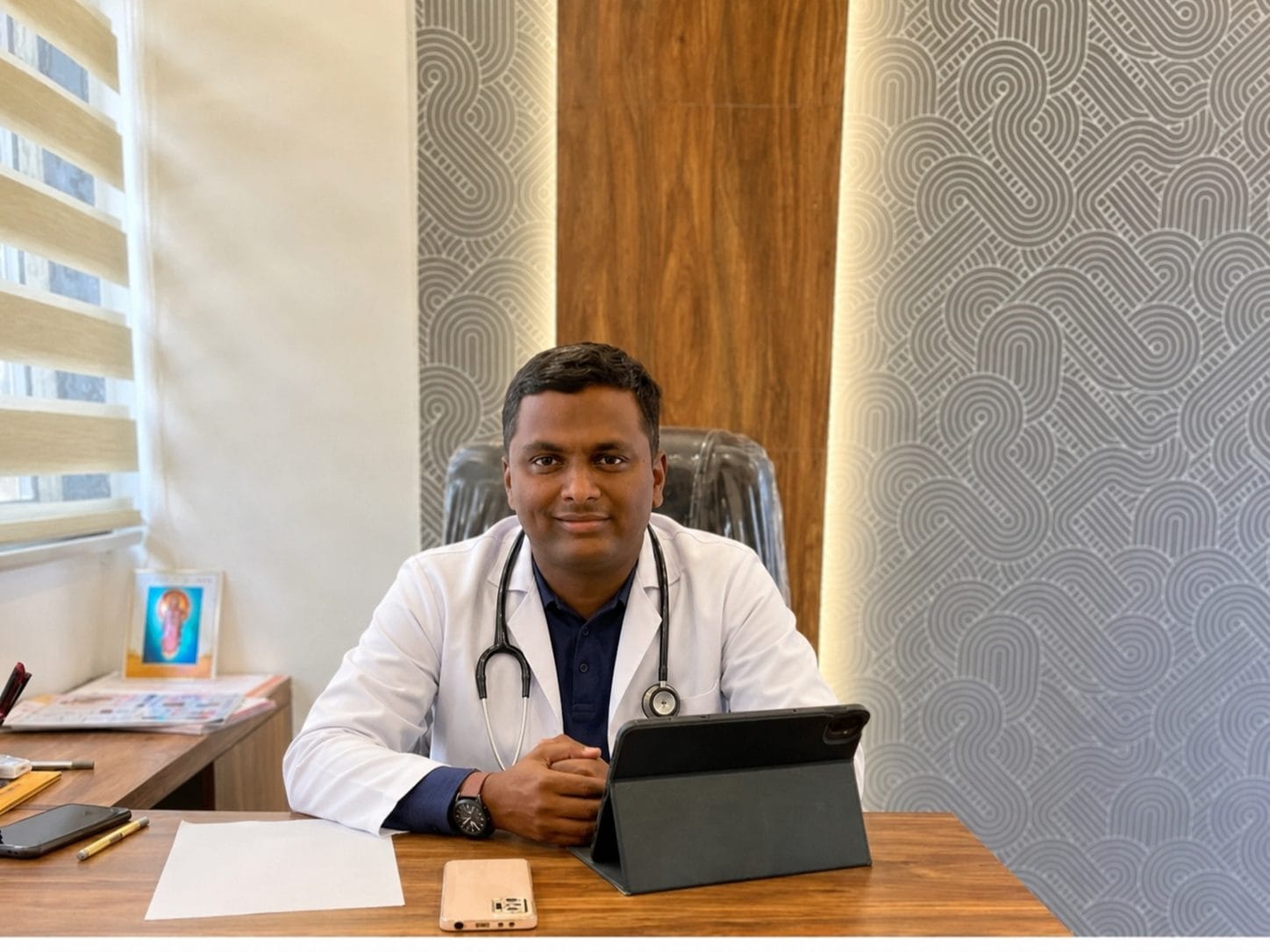
Dr. Shailesh brings extensive clinical experience in classical Ayurvedic Panchakarma and Ano-Rectal (Guda Roga) disorders, including piles, fissures, and fistula. At Ayusanjivani's Wagholi and Kharadi clinics, he specializes in grade-wise and dosha-based management of Arsha — combining Kshara Karma, Kshara Sutra, Virechana, and personalized internal medicine to help patients avoid unnecessary surgery wherever clinically appropriate.
Every patient is personally assessed before a treatment plan is created — ensuring that therapy is matched precisely to the type, grade, and dosha involvement of your condition, in line with classical texts like the Sushruta Samhita.
Common Questions
Frequently Asked Questions About Piles Treatment
Have questions about Ayurvedic piles treatment at our clinic in Wagholi or Kharadi? Clear answers from Dr. Phalle's Ayusanjivani specialists.
Book Your Piles (Arsha) Treatment in Wagholi or Kharadi, Pune
Consult with Dr. Phalle's expert Ayurvedic practitioners today. We provide authentic, grade-wise and dosha-based piles treatment — from diet correction to Kshara Sutra — tailored to your individual condition.