Hormonal Disorders: Symptoms, Causes & Ayurvedic Treatment
Introduction :
Hormones are chemical messengers produced by various glands in the body that regulate essential functions such as growth, metabolism, reproduction, sleep, mood, stress response, and energy production. Even a slight imbalance in hormone levels can affect multiple organs and systems, leading to a wide range of health concerns known as hormonal disorders.
In recent years, hormonal disorders have become increasingly common in India due to changing lifestyles, poor dietary habits, chronic stress, obesity, sleep disturbances, environmental pollutants, and metabolic diseases. Conditions such as thyroid disorders, polycystic ovary syndrome (PCOS), diabetes, infertility, low testosterone, obesity, and growth hormone abnormalities are now being diagnosed more frequently than ever before.
Hormonal imbalance can affect individuals of all ages—from children with growth hormone disorders to adolescents with PCOS, adults with thyroid dysfunction, and elderly individuals experiencing menopause or age-related endocrine changes. Unfortunately, many people ignore early symptoms such as fatigue, weight gain, irregular periods, hair fall, mood changes, or reduced libido, considering them a normal part of life. However, these symptoms may indicate underlying endocrine dysfunction requiring proper evaluation.
At Ayusanjivani Ayurveda Clinic, we have been managing hormonal and endocrine disorders for more than 15 years through a comprehensive Ayurvedic approach that focuses on identifying and addressing the root cause of hormonal imbalance.
Prevalence of Hormonal Disorders in India :
Hormonal disorders represent a significant public health concern in India. Urbanization, increased stress levels, sedentary lifestyles, processed food consumption, and environmental toxins have contributed to a rise in endocrine diseases across all age groups.
Some important observations include:
- Thyroid disorders affect nearly 10% of the Indian population, with women being affected more frequently than men.
- PCOS affects approximately 8–20% of reproductive-age women in India.
- India is often referred to as the “Diabetes Capital of the World,” with over 100 million people affected by diabetes and many more experiencing insulin resistance.
- Obesity, which is closely linked to hormonal dysfunction, is steadily increasing among both adults and children.
- Male infertility associated with hormonal abnormalities is becoming increasingly common.
- Menopause-related hormonal issues significantly affect quality of life among middle-aged women.
- Stress-induced hormonal disturbances involving cortisol and adrenal hormones are rising among working professionals.
These trends highlight the importance of early diagnosis, preventive healthcare, and holistic management strategies aimed at restoring endocrine balance.
What Is a Hormonal Disorder?
A hormonal disorder occurs when an endocrine gland produces too much, too little, or abnormal amounts of hormones. Since hormones act as chemical messengers throughout the body, any disruption in their production or activity can affect multiple organs simultaneously.
Hormones help regulate:
- Growth and development
- Reproductive health
- Menstrual cycles
- Fertility
- Blood sugar levels
- Metabolism
- Body weight
- Mood and emotions
- Sleep patterns
- Bone health
- Immune function
When hormonal balance is disturbed, individuals may experience symptoms ranging from mild fatigue and weight gain to infertility, diabetes, thyroid disease, and significant metabolic complications.
Hormonal Disorder Meaning :
The term hormonal disorder refers to any medical condition involving abnormal hormone production, secretion, transport, receptor activity, or metabolism.
Hormonal disorders may develop because of:
- Dysfunction of endocrine glands
- Autoimmune diseases
- Genetic abnormalities
- Tumors affecting hormone-producing glands
- Chronic stress
- Obesity
- Aging-related hormonal decline
- Environmental endocrine disruptors
Examples of hormonal disorders include:
- Hypothyroidism
- Hyperthyroidism
- PCOS
- Diabetes Mellitus
- Hyperprolactinemia
- Testosterone deficiency
- Growth hormone deficiency
- Acromegaly
- Adrenal disorders
- Menopause-related hormonal changes
Understanding the Endocrine System in hormonal disorders:
The endocrine system is a network of glands responsible for producing and releasing hormones into the bloodstream.
These hormones travel throughout the body and regulate numerous physiological processes.
Major Endocrine Glands :
Hypothalamus
The hypothalamus acts as the command center of the endocrine system and communicates with the pituitary gland.
Pituitary Gland
Often referred to as the “master gland,” the pituitary gland controls several other endocrine glands.
Thyroid Gland
Located in the neck, the thyroid regulates metabolism, energy production, and body temperature.
Parathyroid Glands
These glands help regulate calcium and phosphorus metabolism.
Adrenal Glands
The adrenal glands produce hormones involved in stress response, blood pressure regulation, and metabolism.
Pancreas
The pancreas produces insulin and glucagon, which regulate blood sugar levels.
Ovaries
The ovaries produce estrogen and progesterone, which regulate female reproductive health.
Testes
The testes produce testosterone, which is essential for male reproductive and sexual health.
Proper communication among these glands is essential for maintaining hormonal balance and overall health.
Hormonal Disorders Symptoms :
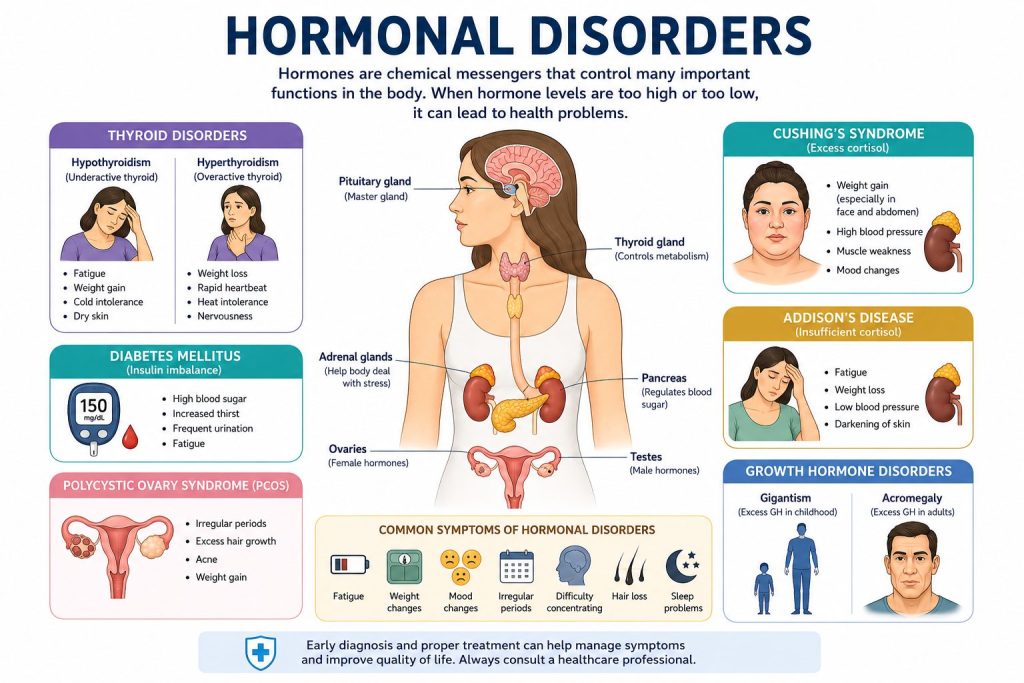
The symptoms of hormonal disorders vary depending on which gland or hormone is affected. Some symptoms may develop gradually, making them easy to overlook.
Common Hormone Disorder Symptoms :
General Symptoms :
- Persistent fatigue
- Lack of energy
- Poor concentration
- Brain fog
- Sleep disturbances
Weight-Related Symptoms :
- Unexplained weight gain
- Difficulty losing weight
- Sudden weight loss
- Increased abdominal fat
Skin and Hair Changes :
- Hair fall
- Dry skin
- Acne
- Excessive facial hair growth
- Premature aging
Emotional Symptoms :
- Mood swings
- Anxiety
- Depression
- Irritability
- Stress intolerance
Reproductive Symptoms :
- Irregular periods
- Heavy menstrual bleeding
- Infertility
- Reduced libido
- Erectile dysfunction
- Recurrent miscarriages
Metabolic Symptoms :
- Insulin resistance
- Elevated blood sugar
- Increased hunger
- Increased thirst
- High cholesterol levels
If these symptoms persist, medical evaluation is recommended to identify the underlying hormonal imbalance.
Hormonal Disorders in Females :
Women are particularly vulnerable to hormonal fluctuations because of puberty, menstruation, pregnancy, childbirth, and menopause.
Hormonal disorders in females can significantly affect fertility, metabolism, emotional health, and overall quality of life.
Polycystic Ovary Syndrome (PCOS) :
PCOS is one of the most common hormonal disorders in women.
Symptoms may include:
- Irregular menstrual cycles
- Weight gain
- Acne
- Hair fall
- Excess facial hair
- Infertility
- Insulin resistance
Thyroid Disorders :
Women are more likely than men to develop thyroid disorders.
Common symptoms include:
- Fatigue
- Hair loss
- Weight gain
- Menstrual irregularities
- Infertility
Hyperprolactinemia :
Excess prolactin hormone may result in:
- Irregular periods
- Breast discharge
- Difficulty conceiving
Menopausal Hormonal Changes :
As estrogen levels decline during menopause, women may experience:
- Hot flashes
- Night sweats
- Mood changes
- Sleep disturbances
- Vaginal dryness
Premature Ovarian Insufficiency :
This condition occurs when ovarian function declines before the age of 40 years, affecting fertility and hormonal health.
Hormonal Disorders in Males :
Although hormonal disorders are often associated with women, men are also significantly affected.
Hormonal disorders in males may impact fertility, muscle mass, metabolism, and sexual health.
Testosterone Deficiency :
Low testosterone is increasingly common due to stress, obesity, diabetes, and aging.
Symptoms include:
- Low libido
- Erectile dysfunction
- Reduced muscle mass
- Fatigue
- Mood changes
Male Infertility :
Hormonal abnormalities involving testosterone, follicle-stimulating hormone (FSH), and luteinizing hormone (LH) can impair sperm production.
Thyroid Disorders :
Men may also develop thyroid dysfunction, resulting in weight changes, fatigue, and metabolic disturbances.
Adrenal Hormone Disorders :
Abnormal cortisol production can affect:
- Energy levels
- Sleep
- Blood pressure
- Metabolism
Sex Hormone Disorders :
Sex hormones regulate reproductive function, fertility, sexual health, bone strength, muscle mass, and emotional well-being.
Important Female Sex Hormones :
- Estrogen
- Progesterone
- Testosterone
Important Male Sex Hormones :
- Testosterone
- DHEA
Common Sex Hormone Disorders :
Estrogen Dominance :
Excess estrogen relative to progesterone may contribute to:
- PMS
- Fibroids
- Weight gain
- Mood disturbances
Progesterone Deficiency :
May lead to:
- Irregular cycles
- Infertility
- Recurrent miscarriages
Hyperandrogenism :
Excess male hormones in females may cause:
- Acne
- Hair fall
- Facial hair growth
- PCOS symptoms
Low Testosterone :
Can affect both men and women, leading to reduced energy, libido, and vitality.
What are Growth Hormone Disorders ?
we can see Growth hormone is produced by the pituitary gland and plays a vital role in growth, tissue repair, body composition, and metabolism.
Growth Hormone Deficiency :
In children:
- Delayed growth
- Short stature
- Delayed puberty
In adults:
- Fatigue
- Reduced muscle mass
- Increased body fat
- Low exercise tolerance
Growth Hormone Excess :
Gigantism:
Occurs during childhood and results in excessive growth.
Acromegaly :
Occurs in adults and may cause:
- Enlargement of hands and feet
- Coarse facial features
- Joint pain
- Excessive sweating
- Metabolic complications
Early diagnosis is important to prevent long-term complications.
Pituitary Hormone Disorders :
The pituitary gland is often called the “Master Gland” because it regulates the function of many other endocrine organs.
Pituitary hormone disorders can affect growth, fertility, metabolism, thyroid function, and adrenal function.
Common Pituitary Hormone Disorders :
Hyperprolactinemia :
Excess prolactin production may lead to infertility and menstrual disturbances.
Growth Hormone Disorders :
Both deficiency and excess growth hormone production can result from pituitary dysfunction.
ACTH Disorders :
Abnormal ACTH production may affect adrenal gland function.
TSH Disorders :
We can see clinically Pituitary abnormalities can influence thyroid hormone production.
Pituitary Tumors :
Pituitary adenomas may cause:
- Headaches
- Vision disturbances
- Hormonal imbalance
- Infertility
Because the pituitary gland controls multiple endocrine pathways, its disorders often produce widespread symptoms affecting several body systems.
Ayurvedic Understanding of Hormonal Disorders: The Role of Agni, Ama, Doshas, Dhatus and Srotas :
While modern medicine explains hormonal disorders through dysfunction of endocrine glands such as the thyroid, pituitary, pancreas, adrenal glands, ovaries, and testes, Ayurveda approaches these conditions from a broader perspective. Classical Ayurvedic texts do not specifically describe hormones as understood today, but they provide a sophisticated framework for understanding physiological regulation through concepts such as Agni, Ama, Dosha, Dhatu, Srotas, and Ojas.
From an Ayurvedic perspective, hormonal disorders are rarely isolated glandular problems. They are usually manifestations of deeper systemic imbalances involving digestion, metabolism, tissue nutrition, circulation, mental health, and reproductive function. Therefore, Ayurvedic treatment focuses not only on correcting symptoms but also on restoring overall physiological balance.
At Ayusanjivani Ayurveda Clinic, our approach to endocrine disorders involves identifying the root cause of hormonal imbalance and addressing it through individualized Ayurvedic therapies, Panchakarma, diet correction, lifestyle modifications, and Rasayana treatment.
Agni and Hormonal Regulation :
Agni is considered one of the most important concepts in Ayurveda. It governs digestion, absorption, metabolism, transformation, and tissue nourishment throughout the body.
Classical texts describe Agni as the force responsible for converting food into energy and nourishing all bodily tissues. When Agni functions properly, nutrients are absorbed efficiently, tissues remain healthy, and physiological processes remain balanced.
Modern endocrinology recognizes metabolism as a central component of hormonal regulation. Similarly, Ayurveda views impaired Agni as the starting point of many endocrine disorders.
How Agni Influences Hormonal Health :
When Agni is balanced:
- Nutrient absorption improves
- Cellular metabolism functions efficiently
- Tissue nourishment remains optimal
- Reproductive health is maintained
- Energy production remains stable
- Hormonal communication functions normally
When Agni becomes weak (Agnimandya):
- Metabolism slows
- Toxins accumulate
- Obesity develops
- Insulin resistance increases
- Thyroid dysfunction may occur
- Reproductive disorders become more common
Many conditions such as PCOS, hypothyroidism, obesity, infertility, diabetes, and metabolic syndrome can be understood through the lens of impaired Agni.
Ama and Endocrine Disorders :
One of the most important pathological concepts in Ayurveda is Ama.
Ama refers to incompletely digested, improperly metabolized substances that accumulate within the body due to weak digestive and metabolic activity.
Ama is considered sticky, heavy, obstructive, and inflammatory in nature.
Formation of Ama :
Ama develops due to:
- Poor digestion
- Excessive intake of processed foods
- Irregular eating habits
- Sedentary lifestyle
- Chronic stress
- Sleep deprivation
- Weak Agni
As Ama accumulates, it begins to obstruct physiological channels known as Srotas.
Connection Between Ama and Hormonal Disorders :
Modern medicine increasingly recognizes chronic inflammation and metabolic dysfunction as major contributors to endocrine disease.
The Ayurvedic concept of Ama closely resembles these mechanisms.
Accumulated Ama may contribute to:
- Insulin resistance
- PCOS
- Obesity
- Thyroid dysfunction
- Autoimmune disorders
- Metabolic syndrome
- Infertility
When Ama combines with Doshas, hormonal symptoms often become more severe and persistent.
Dhatwagni Dysfunction and Hormonal Imbalance :
Ayurveda describes seven bodily tissues known as Dhatus.
Each tissue possesses its own metabolic fire called Dhatwagni.
These tissue-level metabolic processes are responsible for proper nourishment, transformation, and maintenance of physiological function.
The seven Dhatus include:
- Rasa
- Rakta
- Mamsa
- Meda
- Asthi
- Majja
- Shukra
When Dhatwagni becomes impaired, tissue metabolism becomes abnormal.
Consequences of Dhatwagni Dysfunction :
- Poor tissue nourishment
- Hormonal imbalance
- Reproductive dysfunction
- Reduced fertility
- Metabolic disorders
- Chronic inflammation
For example, dysfunction of Meda Dhatwagni may contribute to obesity and insulin resistance, while dysfunction of Shukra Dhatwagni may affect reproductive hormones and fertility.
Thus, correction of Dhatwagni is an essential component of Ayurvedic management of hormonal disorders.
Srotas Involvement in Hormonal Disorders :
Srotas are physiological channels responsible for transportation, communication, nourishment, and waste removal throughout the body.
Healthy Srotas ensure proper distribution of nutrients and maintenance of physiological balance.
When Srotas become obstructed due to Ama and Dosha imbalance, normal tissue function is disturbed.
Srotorodha (Channel Obstruction) :
Srotorodha refers to blockage of physiological channels.
This blockage may result in:
- Hormonal imbalance
- Metabolic dysfunction
- Reproductive disorders
- Menstrual irregularities
- Infertility
- Obesity
Many endocrine disorders can be interpreted as disturbances involving multiple interconnected Srotas.
Therefore, Ayurvedic therapies aim to cleanse, restore, and normalize these channels.
Vata, Pitta and Kapha in Hormonal Disorders :
The three Doshas regulate all physiological functions.
Hormonal disorders often involve disturbances in one or more Doshas.
Vata and Hormonal Disorders :
Vata governs movement, communication, signaling, and nervous system activity.
Hormones function as signaling molecules, making Vata particularly important in endocrine regulation.
Vata imbalance may manifest as:
- Irregular menstruation
- Infertility
- Delayed ovulation
- Menopausal symptoms
- Anxiety
- Sleep disorders
- Premature ovarian insufficiency
Disturbed Vata often affects the hypothalamic-pituitary axis and neuroendocrine communication.
Pitta and Hormonal Disorders :
Pitta governs metabolism, transformation, digestion, and biochemical reactions.
When aggravated, Pitta may contribute to:
- Hyperthyroidism
- Autoimmune endocrine disorders
- Inflammatory reproductive conditions
- Acne associated with hormonal imbalance
- Excessive bleeding
- Hot flashes
Pitta-related endocrine disorders often exhibit inflammatory characteristics.
Kapha dosha and Hormonal Disorders :
Kapha dosha governs structure, growth, stability, and nourishment.
vitiated Kapha imbalance is commonly associated with:
- Obesity
- PCOS
- Hypothyroidism
- Insulin resistance
- Metabolic syndrome
- Ovarian cysts
Aggravated Kapha aggravation often results in sluggish metabolism and accumulation of Ama.
Artavavaha Srotas and Female Hormonal Health :
Artavavaha Srotas refers to the channels responsible for female reproductive function.
These channels regulate:
- Menstrual cycles
- Ovulation
- Fertility
- Reproductive tissue nourishment
Disturbance of Artavavaha Srotas may contribute to:
- PCOS
- Irregular periods
- Dysmenorrhea
- Infertility
- Recurrent miscarriage
- Premature ovarian insufficiency
From an Ayurvedic perspective, hormonal disorders in females frequently involve dysfunction of Artavavaha Srotas combined with Vata and Kapha aggravation.
Therefore, treatment focuses on restoring reproductive tissue health and improving channel function.
Shukravaha Srotas and Male Hormonal Health :
Shukravaha Srotas are the channels responsible for reproductive tissue formation and male fertility.
These channels influence:
- Testosterone production
- Sperm formation
- Libido
- Sexual performance
- Reproductive vitality
Disorders involving Shukravaha Srotas may manifest as:
- Low sperm count
- Poor sperm motility
- Erectile dysfunction
- Low testosterone
- Male infertility
Ayurvedic management aims to nourish Shukra Dhatu, improve reproductive tissue metabolism, and restore hormonal balance.
Medovaha Srotas and Metabolic Hormonal Disorders :
Medovaha Srotas govern fat metabolism and energy storage.
Modern endocrine disorders frequently involve abnormalities in fat metabolism.
Examples include:
- Obesity
- Insulin resistance
- Type 2 diabetes
- PCOS
- Metabolic syndrome
When Medovaha Srotas become obstructed:
- Excess fat accumulation occurs
- Metabolic efficiency declines
- Hormonal signaling becomes impaired
- Chronic inflammation increases
Correction of Medovaha Srotas is often a major therapeutic goal in endocrine disorders.
Majjavaha Srotas and Neuroendocrine Function :
Majjavaha Srotas are associated with nervous tissue and neurological function.
The endocrine and nervous systems are closely interconnected through the hypothalamic-pituitary axis.
Disturbances of Majjavaha Srotas may contribute to:
- Chronic stress
- Anxiety
- Sleep disturbances
- Neuroendocrine dysfunction
- Mood disorders associated with hormonal imbalance
Because stress significantly influences hormone production, Majjavaha Srotas play an important role in hormonal health.
Ojas and Endocrine Health :
Ojas is considered the essence of all bodily tissues and the foundation of vitality, immunity, strength, and resilience.
Healthy Ojas supports:
- Reproductive health
- Fertility
- Mental stability
- Immune function
- Longevity
- Endocrine balance
Chronic hormonal disorders often lead to depletion of Ojas.
Signs of reduced Ojas may include:
- Fatigue
- Poor immunity
- Infertility
- Anxiety
- Weakness
- Reduced vitality
Therefore, Ayurvedic management of endocrine disorders does not stop at symptom control. The ultimate goal is restoration of Ojas through proper digestion, tissue nourishment, Panchakarma, Rasayana therapy, and healthy lifestyle practices.
Ayurvedic Perspective: A Root-Cause Approach to Hormonal Disorders :
According to Ayurveda, hormonal disorders develop through a sequence involving Agnimandya (metabolic dysfunction), Ama accumulation, Dosha aggravation, Dhatu imbalance, Srotas obstruction, and eventual depletion of Ojas.
This explains why many endocrine disorders affect multiple body systems simultaneously rather than remaining confined to a single gland.
By addressing Agni, removing Ama, correcting Dosha imbalance, restoring Srotas function, nourishing Dhatus, and strengthening Ojas, Ayurveda seeks to create a foundation for long-term endocrine health.
In the next section, we will explore the scientific basis of Panchakarma therapies and their potential role in supporting hormonal balance, metabolic regulation, stress reduction, fertility enhancement, and overall endocrine function.
Panchakarma and Hormonal Disorders – Scientific and Ayurvedic Perspective :
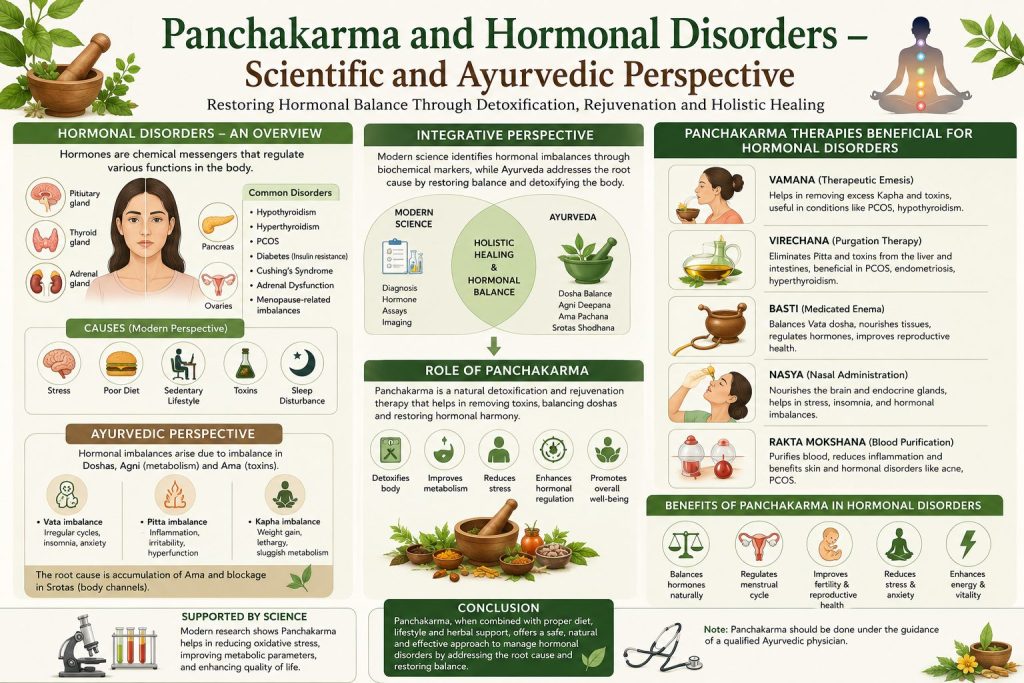
After understanding the Ayurvedic concepts of Agni, Ama, Dosha, Dhatu, Srotas, and Ojas in hormonal disorders, the next step is understanding how Panchakarma helps restore endocrine balance.
Hormonal disorders often develop over several years. Poor dietary habits, chronic stress, sleep deprivation, environmental toxins, obesity, and sedentary lifestyles gradually impair metabolism and disrupt normal endocrine function. As a result, the body accumulates metabolic waste, inflammatory mediators, and physiological imbalances that affect multiple endocrine pathways.
Panchakarma is Ayurveda’s detoxification and bio-purification system designed to eliminate accumulated Doshas, improve metabolic efficiency, restore tissue function, and support the body’s natural healing mechanisms.
At Ayusanjivani Ayurveda Clinic, Panchakarma is frequently incorporated into comprehensive treatment protocols for PCOS, thyroid disorders, obesity, infertility, insulin resistance, metabolic syndrome, menopausal symptoms, and male hormonal disorders.
Understanding the Gut-Brain-Endocrine Axis in hormonal disorders :
Modern research increasingly recognizes the connection between the gut, brain, and endocrine system.
The gut microbiome influences:
- Metabolism
- Insulin sensitivity
- Thyroid function
- Estrogen metabolism
- Immune regulation
- Stress response
Disruptions in gut health may contribute to:
- PCOS
- Obesity
- Diabetes
- Autoimmune thyroid disorders
- Chronic inflammation
Ayurveda recognized this connection centuries ago through the concept of Agni. When digestive function becomes impaired, Ama accumulates and systemic disease develops.
Many Panchakarma procedures are designed to restore digestive efficiency and improve gut health, thereby indirectly supporting endocrine function.
Poorvakarma: Preparing the Body for Detoxification :
Before the main Panchakarma procedures are performed, the body undergoes preparatory therapies known as Poorvakarma.
These include:
Deepana and Pachana :
Deepana improves digestive fire, while Pachana helps digest Ama.
Benefits may include:
- Improved metabolism
- Better nutrient absorption
- Reduced bloating
- Improved insulin sensitivity
Snehapana :
Medicated ghee is administered internally in a controlled manner.
Potential benefits include:
- Mobilization of accumulated toxins
- Improved cellular nourishment
- Enhanced tissue lubrication
- Support for hormonal communication
Abhyanga :
Therapeutic oil massage helps improve circulation and lymphatic flow.
Benefits include:
- Stress reduction
- Improved blood circulation
- Muscle relaxation
- Better nervous system regulation
Swedana :
Medicated sweating therapies help liquefy accumulated Doshas and facilitate their elimination.
Vamana Therapy and Hormonal Disorders :
Vamana is a therapeutic emesis procedure primarily indicated for Kapha-dominant disorders.
Many endocrine conditions involve Kapha aggravation and metabolic sluggishness.
Examples include:
- PCOS
- Obesity
- Insulin resistance
- Hypothyroidism
- Metabolic syndrome
Potential Mechanisms :
Vamana may contribute to:
- Reduction of excess Kapha
- Improved metabolic activity
- Better glucose utilization
- Weight management
- Reduced inflammatory burden
Patients with obesity-related endocrine disorders often report improvements in energy levels, digestion, and metabolic function after appropriate Vamana therapy.
Virechana Therapy and Endocrine Health :
Virechana is therapeutic purgation primarily used to eliminate aggravated Pitta Dosha.
The liver plays a major role in hormone metabolism. Many hormones undergo processing and detoxification within the liver.
Potential Benefits of Virechana :
- Supports liver function
- Enhances metabolic efficiency
- Reduces inflammatory load
- Improves digestive health
- Supports estrogen metabolism
Conditions where Virechana may be beneficial include:
- Hormonal acne
- Estrogen dominance
- Autoimmune endocrine disorders
- Thyroid dysfunction
- Metabolic disorders
Many patients experience improved digestion, better skin health, and enhanced metabolic regulation following properly administered Virechana.
Basti Therapy: The Most Important Panchakarma for Hormonal Disorders :
Among all Panchakarma procedures, Basti is considered particularly valuable for endocrine and reproductive disorders.
Ayurveda describes Vata as the primary regulator of movement, communication, and signaling within the body.
Since hormonal activity depends upon signaling pathways, Vata balance is critical for endocrine health.
Types of Basti :
Niruha Basti :
Uses herbal decoctions.
Anuvasana Basti :
Uses medicated oils or ghee.
Yoga Basti
A planned sequence combining both therapies.
Scientific Perspective :
The large intestine contains extensive neural, immune, and microbial networks.
Basti may influence:
- Gut microbiota
- Neuroendocrine signaling
- Inflammatory pathways
- Stress hormones
- Autonomic nervous system function
Conditions Where Basti May Be Useful :
- PCOS
- Infertility
- Menopause
- Low AMH
- Male infertility
- Thyroid disorders
- Stress-induced hormonal imbalance
At Ayusanjivani Ayurveda Clinic, Basti therapy frequently forms the foundation of long-term hormonal management programs.
Uttar Basti and Reproductive Hormonal Health :
Uttar Basti is a specialized Panchakarma procedure used in selected gynecological and reproductive conditions.
Traditionally it is utilized to support:
- Female infertility
- Tubal dysfunction
- Reproductive tissue nourishment
- Endometrial health
Potential benefits may include:
- Improved uterine environment
- Better reproductive tissue nourishment
- Enhanced fertility support
The procedure should only be performed under the supervision of qualified Ayurvedic physicians.
Nasya Therapy and Neuroendocrine Function :
Nasya involves administration of medicated oils through the nasal passages.
According to Ayurveda, the nose serves as an important gateway to the head region.
Possible Benefits :
- Improved sleep quality
- Reduced stress
- Better mental clarity
- Support for neuroendocrine balance
Because the hypothalamus and pituitary gland regulate many endocrine functions, Nasya is often incorporated into hormonal treatment protocols.
Shirodhara and Stress Hormones :
Chronic stress is one of the most underestimated causes of hormonal imbalance.
Persistent stress elevates cortisol levels and disrupts:
- Thyroid function
- Reproductive hormones
- Insulin sensitivity
- Sleep quality
Shirodhara involves a continuous stream of medicated liquid poured over the forehead.
Potential Benefits :
- Relaxation of the nervous system
- Improved sleep
- Reduced anxiety
- Better emotional well-being
- Support for hormonal balance
Many patients report significant improvements in stress-related symptoms following Shirodhara therapy.
Kerala Panchakarma Protocols for Hormonal Disorders :
Kerala Ayurveda has developed highly structured Panchakarma protocols.
These often include:
- Deepana-Pachana
- Internal oleation
- Abhyanga
- Swedana
- Virechana
- Basti
- Nasya
- Rasayana therapy
Treatment protocols are customized according to:
- Dosha predominance
- Disease stage
- Age
- Strength of the patient
- Reproductive goals
- Associated metabolic disorders
Panchakarma as a Comprehensive Endocrine Support Strategy :
Panchakarma should not be viewed merely as a detoxification procedure.
Its broader objectives include:
- Restoring metabolic efficiency
- Improving digestive health
- Enhancing tissue nutrition
- Supporting reproductive function
- Reducing stress
- Improving sleep
- Promoting hormonal balance
When integrated with diet, lifestyle modification, and appropriate herbal medicines, Panchakarma can become an important component of long-term endocrine health management.
In the next section, we will discuss Ayurvedic medicines, Kerala formulations, specific hormonal disorders treated at Ayusanjivani Ayurveda Clinic, and practical approaches to achieving long-term hormonal balance.
Ayurvedic Treatment hormonal disorders :
Shamana Chikitsa for Hormonal Disorders :
While Panchakarma helps remove accumulated Doshas and restore physiological balance, Shamana Chikitsa focuses on long-term management through herbal formulations, dietary correction, lifestyle modification, and Rasayana therapy.
Treatment is always individualized according to:
- Dosha predominance
- Age
- Disease severity
- Metabolic status
- Fertility goals
- Associated medical conditions
Kerala Ayurvedic Formulations Used in Hormonal Disorders :
For Female Hormonal Disorders :
Commonly used formulations may include:
- Sukumaram Kashayam
- Asokarishtam
- Kumaryasavam
- Shatapushpa Churnam
- Pushyanuga Churnam
- Dhanwantharam Gulika
- Kalyanaka Ghrita
These formulations are selected according to menstrual patterns, reproductive health, and associated Dosha imbalances.
For PCOS and Metabolic Disorders :
Common formulations may include:
- Varunadi Kashayam
- Triphala preparations
- Gandharvahastadi Kashayam
- Kanchanar Guggulu
- Medohara formulations
The objective is to support metabolism, improve insulin sensitivity, and promote healthy ovarian function.
For Thyroid Disorders :
Treatment protocols may include:
- Kanchanar Guggulu
- Varunadi Kashayam
- Punarnavadi formulations
- Trikatu-based preparations
Selection depends upon the patient’s constitution and thyroid status.
For Male Hormonal Disorders :
Commonly prescribed formulations may include:
- Ashwagandha preparations
- Musali formulations
- Narasimha Rasayana
- Saraswatarishta
- Gokshura-based preparations
These may support reproductive health, vitality, and hormonal balance.
Hormonal Disorders Commonly Managed at Ayusanjivani Ayurveda Clinic :
PCOS and PCOD :
PCOS remains one of the most common hormonal disorders among women.
Management focuses on:
- Weight management
- Menstrual regulation
- Improving ovulation
- Supporting fertility
- Enhancing metabolic health
Thyroid Disorders:
Patients commonly seek Ayurvedic support for:
- Hypothyroidism
- Autoimmune thyroid disorders
- Thyroid-related metabolic issues
Management includes dietary guidance, Panchakarma, and individualized herbal support.
Insulin Resistance and Diabetes :
Insulin resistance is often considered the foundation of many modern endocrine disorders.
Management strategies focus on:
- Improving Agni
- Reducing Ama
- Correcting Medovaha Srotas dysfunction
- Supporting healthy metabolism
Female Infertility :
Hormonal factors contributing to infertility may include:
- PCOS
- Ovulatory disorders
- Hormonal imbalance
- Poor reproductive tissue nourishment
Treatment aims to optimize reproductive health before conception.
Male Infertility :
Ayurvedic management may support:
- Sperm quality
- Sperm count
- Reproductive vitality
- Hormonal balance
Menopause Management :
Common symptoms include:
- Hot flashes
- Sleep disturbances
- Mood changes
- Joint discomfort
Ayurvedic treatment focuses on maintaining quality of life and healthy aging.
Low Testosterone :
Many men experience declining testosterone levels due to aging, obesity, stress, and metabolic disorders.
Management focuses on:
- Lifestyle correction
- Weight optimization
- Stress reduction
- Reproductive tissue nourishment
Why Choose Ayusanjivani Ayurveda Clinic?
For more than 15 years, Ayusanjivani Ayurveda Clinic has specialized in endocrine and hormonal disorders.
Our approach includes:
- Detailed Ayurvedic consultation
- Nadi Parikshan
- Panchakarma therapies
- Kerala treatment protocols
- Personalized herbal medicines
- Diet planning
- Lifestyle modification
- Long-term follow-up
We regularly manage:
- PCOS
- Thyroid disorders
- Infertility
- Diabetes
- Insulin resistance
- Obesity
- Menopause
- Low testosterone
- Metabolic syndrome
Conclusion :
Hormonal disorders are among the most common health challenges affecting modern society. From thyroid dysfunction and PCOS to infertility, insulin resistance, and menopause, endocrine disorders impact physical, emotional, and reproductive health.
Ayurveda offers a holistic perspective that focuses on correcting Agni, removing Ama, balancing Doshas, restoring Srotas function, nourishing Dhatus, and strengthening Ojas. Through individualized Panchakarma therapies, Kerala formulations, dietary regulation, lifestyle modification, and Rasayana support, patients can work toward long-term hormonal balance and improved overall well-being.
Author :
Professor Dr. Shailesh Phalle, MD (Ayurveda)
Medical Reviewer :
Professor Dr. Shailesh Phalle, MD (Ayurveda)
Disclaimer :
This article is intended for educational purposes only and should not be considered medical advice. Hormonal disorders require proper diagnosis and individualized treatment. Patients should consult a qualified healthcare professional before starting any treatment program.