Allergic Rhinitis Medicine: Ayurvedic & Modern Treatment :
Introduction :
Have you ever experienced repeated sneezing, a blocked nose, itchy eyes, or a runny nose every morning? If these symptoms keep returning whenever the weather changes, during dust exposure, or after contact with pollen, you may be suffering from allergic rhinitis.Millions of people rely on different allergic rhinitis medicines to control symptoms. While modern medicines can provide quick relief, many individuals continue to experience recurring episodes because they only suppress symptoms instead of addressing the underlying imbalance.
Ayurveda offers a holistic approach by improving immunity, reducing hypersensitivity, balancing the body’s doshas, and helping prevent frequent recurrences.
In this detailed guide, you will learn:
- What allergic rhinitis is
- Best allergic rhinitis medicines
- Ayurvedic medicines
- Modern medicines
- Panchakarma therapy
- Home remedies
- Diet recommendations
- Prevention strategies
- Frequently asked questions
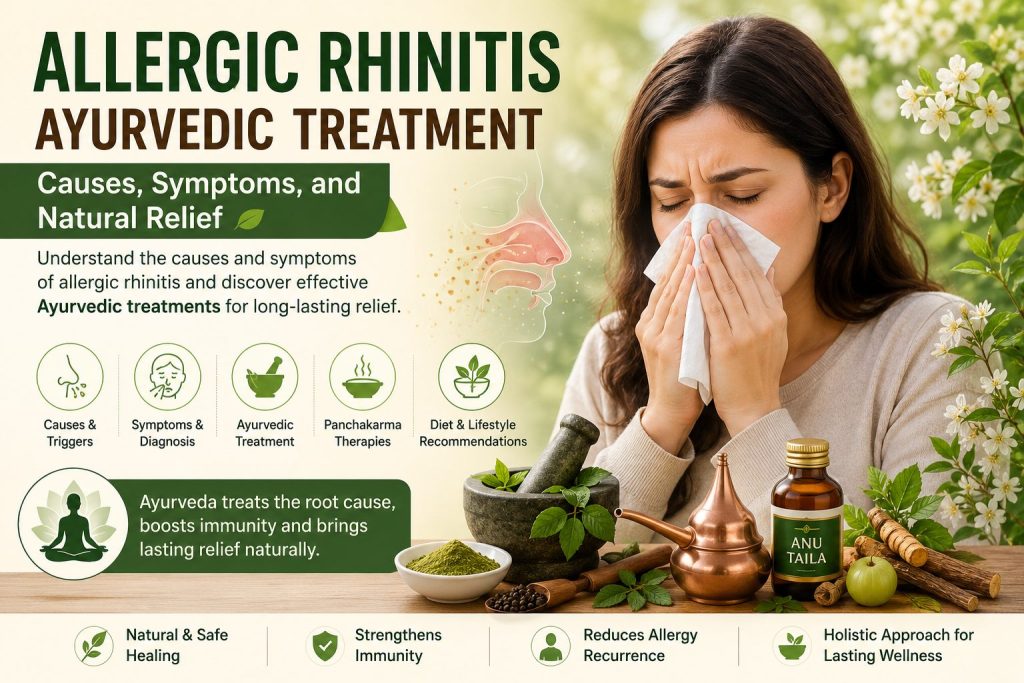
What Is Allergic Rhinitis?
Allergic rhinitis is an immune system reaction to harmless environmental allergens. When allergens enter the nose, the immune system releases histamine and other inflammatory chemicals, causing nasal irritation.
Common allergens include:
- House dust mites
- Pollen
- Pet dander
- Mold spores
- Air pollution
- Smoke
- Strong perfumes
- Cold weather
According to research, allergic rhinitis affects nearly 10–30% of the global population and is becoming increasingly common due to pollution, urbanization, and changing lifestyles.
Symptoms of Allergic Rhinitis:
Symptoms may vary from mild to severe.
Nasal Symptoms
- Frequent sneezing
- Runny nose
- Blocked nose
- Nasal itching
- Postnasal drip
Eye Symptoms
- Itchy eyes
- Redness
- Watering
- Puffy eyelids
Throat Symptoms
- Itchy throat
- Dry cough
- Hoarseness
General Symptoms
- Headache
- Poor sleep
- Fatigue
- Reduced concentration
- Mouth breathing
Children may also develop allergic shiners, frequent nose rubbing, and difficulty concentrating at school.
Causes of Allergic Rhinitis :
The condition develops when the immune system overreacts to allergens.
Common triggers include:
Environmental
- Dust
- Pollen
- Grass
- Trees
- Mold
Indoor Allergens
- House dust mites
- Cockroaches
- Pet fur
- Upholstery dust
Weather
- Cold air
- Humidity changes
- Rainy season
Occupational
- Flour dust
- Chemicals
- Textile fibers
- Cement dust
Lifestyle Factors
- Smoking
- Air pollution
- Poor indoor ventilation
- Stress
- Lack of sleep
How Allergic Rhinitis Develops?
When allergens enter the nasal cavity:
- The immune system identifies them as harmful.
- IgE antibodies are produced.
- Mast cells release histamine.
- Histamine causes inflammation.
- Sneezing, itching, congestion, and watery discharge begin.
Repeated exposure increases sensitivity, leading to chronic allergic rhinitis.
Best Allergic Rhinitis Medicine (Modern Medicine) :
Modern treatment mainly aims to reduce inflammation and control symptoms.
1. Antihistamines
These block histamine release and help reduce:
- Sneezing
- Runny nose
- Itching
Common examples include:
- Cetirizine
- Levocetirizine
- Loratadine
- Fexofenadine
2. Nasal Steroid Sprays:
These are considered one of the most effective options for moderate to severe allergic rhinitis.
They reduce:
- Nasal swelling
- Congestion
- Sneezing
- Mucus production
Examples include:
- Fluticasone
- Budesonide
- Mometasone
3. Decongestants :
Used for short-term relief of severe nasal blockage.
Examples:
- Oxymetazoline nasal spray
- Pseudoephedrine
These should not be used for prolonged periods because they may cause rebound nasal congestion.
4. Leukotriene Receptor Antagonists :
Medicines such as Montelukast may help selected patients, particularly those with allergic rhinitis associated with asthma.
5. Saline Nasal Irrigation :
Saline rinses help remove allergens, mucus, and irritants from the nasal passages and can be used alongside other treatments.
Limitations of modern medicine: While these medicines can effectively relieve symptoms, they do not eliminate the underlying allergic tendency. Symptoms often return after stopping treatment, and some medications may cause side effects such as drowsiness, dry mouth, or nasal irritation. Long-term management should always be guided by a qualified healthcare professional.
Ayurvedic View of Allergic Rhinitis :
In Ayurveda, allergic rhinitis closely resembles Vata-Kaphaja Pratishyaya, where aggravated Vata and Kapha doshas affect the nasal passages.
Contributing factors include:
- Weak digestive fire (Agni)
- Accumulation of Ama (metabolic toxins)
- Impaired immunity (Vyadhikshamatva)
- Seasonal changes
- Exposure to dust, smoke, and cold
- Irregular diet and lifestyle
Instead of only reducing symptoms, Ayurvedic management focuses on correcting the root cause by improving digestion, balancing doshas, enhancing immunity, and reducing sensitivity to allergens.
Best Ayurvedic Medicine for Allergic Rhinitis: A Holistic Approach to Long-Term Relief
Unlike conventional medicines that primarily focus on controlling symptoms, Ayurveda aims to identify and address the root cause of allergic rhinitis. According to Ayurvedic principles, recurrent sneezing, nasal congestion, itching, and watery discharge are often associated with Vata-Kaphaja Pratishyaya, a condition caused by an imbalance of Vata and Kapha doshas along with weakened digestion (Agni) and accumulation of Ama (metabolic toxins).
The treatment plan is individualized based on the patient’s constitution (Prakriti), symptom severity, seasonal triggers, digestive health, and associated conditions such as asthma or sinusitis. Therefore, Ayurvedic medicines should always be prescribed by a qualified Ayurvedic physician after a detailed clinical evaluation.
Commonly Used Ayurvedic Medicines for Allergic Rhinitis :
1. Haridra (Turmeric)
Haridra is one of Ayurveda’s most valued herbs for allergic disorders. Its active compound, curcumin, has anti-inflammatory and antioxidant properties that may help reduce allergic responses.
Potential benefits include:
- Reduces nasal inflammation
- Supports healthy immune function
- Helps decrease sneezing and itching
- Assists in reducing recurrent allergic episodes
2. Guduchi (Tinospora cordifolia)
Guduchi is known as an immunomodulatory herb in Ayurveda.
It may help:
- Improve immunity
- Reduce hypersensitivity
- Support recovery from recurrent respiratory allergies
- Promote overall respiratory health
3. Shirish (Albizia lebbeck)
Shirish has traditionally been described as an important herb for allergic conditions.
It is commonly used to:
- Reduce allergic reactions
- Support respiratory health
- Help manage recurrent sneezing
- Improve nasal comfort
4. Yashtimadhu (Licorice)
Yashtimadhu possesses soothing properties that may benefit inflamed mucous membranes.
Benefits include:
- Soothes irritated throat
- Reduces inflammation
- Supports healthy nasal passages
- Helps relieve dry cough associated with allergies
5. Sitopaladi Churna
Sitopaladi Churna is frequently prescribed in Ayurveda for upper respiratory conditions.
It may help:
- Reduce cough
- Improve mucus clearance
- Support respiratory immunity
- Ease throat irritation
6. Talisadi Churna
Talisadi Churna is traditionally used when allergic rhinitis is associated with cough or excess Kapha.
Potential benefits:
- Clears respiratory passages
- Improves breathing comfort
- Reduces Kapha accumulation
7. Anu Taila
Anu Taila is a medicated oil commonly used for Nasya Karma, where drops are instilled into the nostrils under professional guidance.
Potential benefits include:
- Lubricates nasal passages
- Helps remove accumulated Kapha
- Supports sinus health
- May reduce recurrent nasal irritation
Important: These herbs and formulations are examples of medicines used in Ayurvedic practice. Self-medication is not recommended, as treatment should be tailored to the individual.
Panchakarma Treatment for Allergic Rhinitis :
Panchakarma is a specialized detoxification and rejuvenation therapy that aims to eliminate accumulated doshas and restore balance. In patients with chronic or recurrent allergic rhinitis, Panchakarma may be considered after proper clinical assessment.
1. Nasya Karma :
Nasya is considered one of the most important therapies for disorders affecting the nose, sinuses, and head.
Procedure
- Gentle facial massage
- Mild steam therapy
- Administration of medicated oil into each nostril
- Rest followed by post-procedure care
Benefits
- Helps clear nasal passages
- Supports sinus drainage
- May reduce sneezing and congestion
- Improves nasal breathing
- Nourishes nasal tissues
Nasya is often recommended in recurrent allergic rhinitis because it directly targets the nasal passages.
2. Vamana Therapy :
In selected patients with significant Kapha aggravation, therapeutic emesis (Vamana) may be advised under strict medical supervision.
Possible indications include:
- Chronic Kapha disorders
- Recurrent respiratory allergies
- Excess mucus production
Vamana should only be performed in a licensed Panchakarma center under expert supervision.
3. Virechana Therapy :
Virechana (therapeutic purgation) is used to eliminate excess Pitta and Ama.
Potential benefits include:
- Supports detoxification
- Helps reduce chronic inflammation
- Improves digestion
- Enhances overall metabolic balance
4. Dhoomapana :
Medicated herbal fumigation (Dhoomapana) may be advised in selected cases after assessment by an Ayurvedic physician.
It aims to:
- Reduce Kapha accumulation
- Improve nasal comfort
- Support respiratory health
5. Swedana (Herbal Steam Therapy) :
Swedana helps loosen mucus and relieve nasal congestion.
Benefits include:
- Opens blocked nasal passages
- Improves circulation
- Supports sinus drainage
- Enhances the effects of other therapies
Ayurvedic vs Modern Medicine for Allergic Rhinitis :
| Feature | Modern Medicine | Ayurveda |
|---|---|---|
| Primary goal | Symptom control | Address underlying imbalance |
| Immediate relief | Usually faster | Gradual but sustained improvement |
| Recurrence | Symptoms may recur after stopping medicines | Aims to reduce recurrence through holistic management |
| Immune support | Limited | Focuses on strengthening overall immunity |
| Lifestyle guidance | Limited | Diet, lifestyle, seasonal routines, and stress management are integral parts of treatment |
Scientific Evidence :
Recent research suggests that certain Ayurvedic herbs such as turmeric (curcumin), Guduchi, and Shirish possess anti-inflammatory, antioxidant, and immunomodulatory properties that may help in allergic conditions. Preliminary studies on Ayurvedic interventions for allergic rhinitis have shown promising improvements in symptoms such as sneezing, nasal obstruction, and rhinorrhea. However, larger, high-quality clinical trials are still needed to establish definitive evidence. Ayurveda should be viewed as a complementary, individualized system of care delivered by qualified practitioners.
Why Personalized Treatment Matters ?
Every patient experiences allergic rhinitis differently. Some primarily have sneezing, while others struggle with persistent nasal blockage, sinus infections, or associated asthma. At Ayusanjivani Ayurveda Clinic, treatment plans are customized after a detailed consultation, considering:
- Individual constitution (Prakriti)
- Symptom pattern
- Seasonal aggravating factors
- Digestive health (Agni)
- Lifestyle and occupational exposures
- Associated medical conditions
A personalized approach helps optimize treatment outcomes and supports long-term respiratory health.
Living with Allergic Rhinitis: Diet, Lifestyle, Prevention, and Long-Term Care :
Managing allergic rhinitis is not just about taking medicine when symptoms appear. Long-term control requires identifying triggers, adopting healthy lifestyle habits, improving immunity, and following a personalized treatment plan. Combining Ayurvedic principles with evidence-based preventive measures can help reduce the frequency and severity of allergic episodes.
Best Diet for Allergic Rhinitis :
A balanced diet supports the immune system and may reduce inflammation.
Foods to Include
- Fresh seasonal fruits (except known allergy triggers)
- Green leafy vegetables
- Turmeric
- Ginger
- Garlic
- Amla (Indian gooseberry)
- Tulsi leaves
- Warm soups
- Whole grains
- Plenty of warm water
Foods to Limit
- Cold drinks
- Ice cream
- Processed foods
- Deep-fried foods
- Excess sugar
- Refrigerated leftovers
- Artificial food colors and preservatives
- Foods that trigger your allergies
Lifestyle Tips :
- Keep your home dust-free.
- Wash bedding regularly in hot water.
- Use air purifiers if needed.
- Wear a mask while cleaning or during high-pollen seasons.
- Avoid smoking and secondhand smoke.
- Maintain regular exercise.
- Practice stress management.
- Get 7–8 hours of quality sleep.
Home Remedies :
Some home remedies may provide temporary symptom relief:
- Warm turmeric milk
- Ginger herbal tea
- Steam inhalation
- Saline nasal rinse
- Honey (only if not allergic and not for infants under one year)
- Tulsi and black pepper herbal infusion
These remedies are supportive and should not replace professional medical treatment.
Yoga and Breathing Exercises :
Regular practice may improve respiratory health.
Recommended practices include:
- Anulom Vilom
- Bhramari Pranayama
- Deep diaphragmatic breathing
- Gentle yoga stretches
- Meditation for stress reduction
Can Allergic Rhinitis Be Prevented?
Although allergies cannot always be prevented, you can reduce flare-ups by:
- Avoiding known allergens
- Keeping indoor air clean
- Following a healthy diet
- Maintaining strong immunity
- Managing stress
- Taking prescribed treatment regularly
- Following seasonal preventive measures
When Should You Consult a Doctor?
Seek medical advice if you experience:
- Symptoms lasting more than two weeks
- Frequent sinus infections
- Persistent nasal blockage
- Difficulty breathing
- Fever with nasal symptoms
- Reduced smell or taste
- Symptoms interfering with sleep or daily activities
Why Choose Ayusanjivani Ayurveda Clinic?
At Ayusanjivani Ayurveda Clinic, we believe that successful management of allergic rhinitis requires individualized care rather than a one-size-fits-all approach.
Our treatment plans may include:
- Detailed Ayurvedic consultation
- Prakriti assessment
- Personalized herbal medicines
- Panchakarma therapies when indicated
- Diet and lifestyle counseling
- Seasonal preventive care
- Long-term follow-up
Our goal is to improve quality of life by addressing the root cause while helping reduce the recurrence of allergic episodes.
Frequently Asked Questions (FAQs) :
1. What is the best medicine for allergic rhinitis?
The best medicine for allergic rhinitis depends on the severity of your symptoms and their underlying cause. Modern treatment commonly includes antihistamines and nasal steroid sprays to relieve symptoms. Ayurveda takes a holistic approach by using personalized herbal medicines, Panchakarma therapies, and lifestyle modifications under the guidance of a qualified Ayurvedic doctor.
2. Can allergic rhinitis be cured permanently with medicine ?
Many people can achieve long-term symptom control by avoiding triggers, improving immunity, and following appropriate treatment. The tendency toward allergies may persist in some individuals.
3. Which Ayurvedic medicine is commonly used for allergic rhinitis?
Ayurvedic physicians may prescribe formulations containing herbs such as Haridra, Guduchi, Shirish, Yashtimadhu, Sitopaladi, or Talisadi based on individual assessment.
4. Is Panchakarma effective for allergic rhinitis?
Selected Panchakarma therapies such as Nasya may help suitable patients. The treatment should be recommended only after clinical evaluation.
5. Can allergic rhinitis lead to sinusitis?
Yes. Chronic nasal inflammation may increase the risk of recurrent sinus infections if not managed properly.
6. Is allergic rhinitis contagious?
No. Allergic rhinitis is an immune reaction and cannot spread from one person to another.
7. What foods should I avoid if I have allergic rhinitis?
Avoid foods that trigger your symptoms, as well as excessive processed foods, sugary foods, and cold beverages if they worsen your condition.
8. Can children develop allergic rhinitis?
Yes. Allergic rhinitis is common in children and should be evaluated if symptoms are frequent or persistent.
9. How is allergic rhinitis diagnosed?
Diagnosis is usually based on medical history, physical examination, and sometimes allergy testing when indicated.
10. Is allergic rhinitis the same as a common cold?
No. Allergic rhinitis is caused by allergens, whereas the common cold is caused by viral infections.
11. Can allergic rhinitis trigger asthma?
Yes. Many people with allergic rhinitis also have asthma, and both conditions often require coordinated management.
12. Is it safe to use nasal sprays every day?
Some saline sprays are suitable for regular use, but medicated nasal sprays should only be used as advised by your healthcare provider.
13. Can stress make allergic rhinitis worse?
Stress does not directly cause allergies but may worsen symptoms or make flare-ups more noticeable in some individuals.
14. When should I visit an Ayurvedic doctor for allergic rhinitis?
If symptoms are recurrent, affect your daily life, or keep returning despite treatment, consult a qualified Ayurvedic physician for a comprehensive evaluation.
15. Why choose Ayusanjivani Ayurveda Clinic for allergic rhinitis treatment?
Ayusanjivani Ayurveda Clinic provides personalized Ayurvedic consultations, evidence-informed treatment plans, Panchakarma therapies where appropriate, diet and lifestyle guidance, and long-term follow-up focused on holistic respiratory health.
Conclusion:
Allergic rhinitis is a common but manageable condition. While modern medicines often provide quick symptom relief, long-term management benefits from identifying triggers, maintaining a healthy lifestyle, and following an individualized treatment plan. Ayurveda offers a holistic approach by focusing on improving immunity, balancing the body’s natural systems, and supporting overall well-being.
If you experience persistent sneezing, nasal congestion, watery nasal discharge, or recurrent allergies, consult a qualified healthcare professional for an accurate diagnosis and personalized treatment plan.
Medical Disclaimer :
Last Updated: June 2026
The information on Ayusanjivani Ayurveda Clinic (www.ayusanjivani.com) serves educational and informational purposes only. We publish blogs, articles, videos, social media posts, patient education materials, and downloadable resources to raise awareness about Ayurveda, health conditions, preventive healthcare, and wellness. However, this content does not replace professional medical advice, diagnosis, or treatment. Always consult a qualified healthcare professional before making any medical or treatment decisions.
Professional Medical Advice :
We strive to provide accurate, up-to-date, and reliable information based on classical Ayurvedic principles and current scientific evidence whenever available. However, medical knowledge and treatment guidelines continue to evolve over time. Therefore, you should not use the information on this website as the sole basis for making healthcare decisions. Always seek advice from a qualified healthcare professional for diagnosis, treatment, and personalized medical guidance.
Every individual is unique, and treatment recommendations vary depending on age, medical history, body constitution (Prakriti), current health status, investigations, allergies, and other clinical factors. Always consult a qualified healthcare professional before starting, stopping, or modifying any medicine, herbal preparation, dietary supplement, Panchakarma therapy, or lifestyle program.
No Doctor–Patient Relationship :
Reading articles, submitting enquiry forms, sending messages through WhatsApp, email, social media, or using any information available on this website does not establish a doctor–patient relationship with Professor Dr. Shailesh Phalle, Ayusanjivani Ayurveda Clinic, or any associated healthcare professional. A formal consultation and clinical evaluation are necessary before any treatment recommendations can be made.
Ayurvedic Treatment Disclaimer :
Ayurvedic treatment follows a personalized approach. A qualified Ayurvedic physician recommends medicines, Panchakarma therapies, dietary changes, and lifestyle modifications only after a detailed consultation and clinical evaluation. The herbal medicines and classical Ayurvedic formulations mentioned on this website are shared for educational purposes only. Do not use them for self-medication without professional medical advice.
Panchakarma therapies, including Nasya, Vamana, Virechana, Basti, Raktamokshana, Shirodhara, and other specialized procedures, require proper assessment and should only be performed under the supervision of qualified Ayurvedic physicians in a well-equipped clinical setting. Attempting these therapies without medical guidance may not be safe and can lead to unwanted health risks.
Modern Medicine Information :
Where modern medicines, investigations, or treatment options are discussed, the information is intended to improve public understanding of available healthcare approaches. It should not be considered a prescription or recommendation for self-treatment. Prescription medicines should only be taken under the guidance of a registered medical practitioner.
Medical Emergencies :
The content on this website is not intended for medical emergencies. If you experience severe breathing difficulty, chest pain, severe allergic reactions, loss of consciousness, uncontrolled bleeding, stroke symptoms, or any other medical emergency, seek immediate emergency medical care or contact your nearest emergency healthcare facility without delay.
Results May Vary :
The effectiveness of Ayurvedic treatment depends on multiple factors, including:
- Nature and severity of the disease
- Duration of illness
- Individual body constitution (Prakriti)
- Existing medical conditions
- Diet and lifestyle
- Patient compliance
- Regular follow-up
- Response to treatment
Individual results may vary. We do not guarantee specific outcomes, permanent cures, or identical treatment responses for every patient.
Scientific References :
Our articles may include references to published scientific studies, classical Ayurvedic texts, and evidence-based literature. These references are provided to support educational discussion and should not be interpreted as proof that a particular treatment is effective for every individual. Healthcare decisions should always be made in consultation with a qualified healthcare professional.
External Links Disclaimer :
Our website may contain links to external websites, government resources, medical journals, or educational organizations for additional information. Ayusanjivani Ayurveda Clinic does not control the content, accuracy, availability, or privacy practices of external websites and is not responsible for any information, services, or products offered by third-party websites.
Website Content :
We strive to keep all information accurate and updated. However, medical guidelines, treatment recommendations, and scientific evidence may change over time. Ayusanjivani Ayurveda Clinic reserves the right to update, modify, or remove website content without prior notice.
Copyright Notice :
All original content published on www.ayusanjivani.com, including articles, text, graphics, photographs, videos, logos, and educational materials, is protected by applicable copyright laws. Unauthorized copying, reproduction, republication, distribution, or commercial use of our content without prior written permission is prohibited.
Privacy :
Any personal information submitted through contact forms, appointment requests, WhatsApp, email, or other communication channels will be handled in accordance with our Privacy Policy. We take reasonable steps to protect patient confidentiality and personal information.
Author Information :
Author:
Professor Dr. Shailesh Phalle, MD (Ayurveda)
Consultant Ayurvedic Physician & Panchakarma Specialist
Ayusanjivani Ayurveda Clinic, Pune
Medical Review :
All health-related content published on this website is reviewed for medical accuracy before publication. However, readers should always consult a qualified healthcare professional for personalized medical advice.
Consent :
By accessing and using www.ayusanjivani.com, you acknowledge that you have read, understood, and agreed to this Medical Disclaimer. If you do not agree with any part of this disclaimer, please discontinue the use of this website and seek professional medical advice directly from a qualified healthcare provider.
For appointments and personalized Ayurvedic consultation, please visit Ayusanjivani Ayurveda Clinic or schedule a consultation with Professor Dr. Shailesh Phalle.
References :
- World Health Organization (WHO) – Allergic diseases and respiratory health
https://www.who.int - American Academy of Allergy, Asthma & Immunology (AAAAI) – Allergic Rhinitis Information
https://www.aaaai.org - American College of Allergy, Asthma & Immunology (ACAAI) – Allergic Rhinitis (Hay Fever)
https://acaai.org/allergies/allergic-conditions/hay-fever/ - MedlinePlus (U.S. National Library of Medicine) – Allergic Rhinitis
https://medlineplus.gov/allergicrhinitis.html - National Center for Biotechnology Information (NCBI) – Allergic Rhinitis: Current Concepts and Management
https://www.ncbi.nlm.nih.gov/pmc/ - PubMed – Research Articles on Allergic Rhinitis
https://pubmed.ncbi.nlm.nih.gov/?term=allergic+rhinitis - Allergic Rhinitis and its Impact on Asthma (ARIA) Guidelines
https://www.whiar.org - National Institute of Allergy and Infectious Diseases (NIAID)
https://www.niaid.nih.gov
Why Patients Trust Ayusanjivani Ayurveda Clinic :
At Ayusanjivani Ayurveda Clinic, we are committed to providing personalized, evidence-informed Ayurvedic care for patients with allergic rhinitis, allergic sinusitis, and other chronic health conditions. Every treatment plan is tailored after a detailed consultation, considering the patient’s symptoms, body constitution (Prakriti), medical history, and overall health. Our experienced team offers authentic Panchakarma therapies, individualized herbal medicines, diet and lifestyle guidance, and comprehensive follow-up care to support long-term wellness. The trust and satisfaction of our patients are reflected in our 4.9+ Google rating and hundreds of genuine Google reviews from people who have shared their treatment experiences.
Read more verified patient reviews on our Google Business Profile:
https://maps.app.goo.gl/WK6abMaNbVYUWc3x8