Nadi Pariksha Explained for First-Time Patients: What It Can and Cannot Tell You About Your Consultation
An honest, research-based guide to Nadi Pariksha in Pune— what pulse diagnosis actually reveals, where its limits are, and what to expect at your first consultation with the best Ayurvedic doctor in Pune at Ayusanjivani's Kharadi and Wagholi clinics.
Clinics in Wagholi and Kharadi, Pune
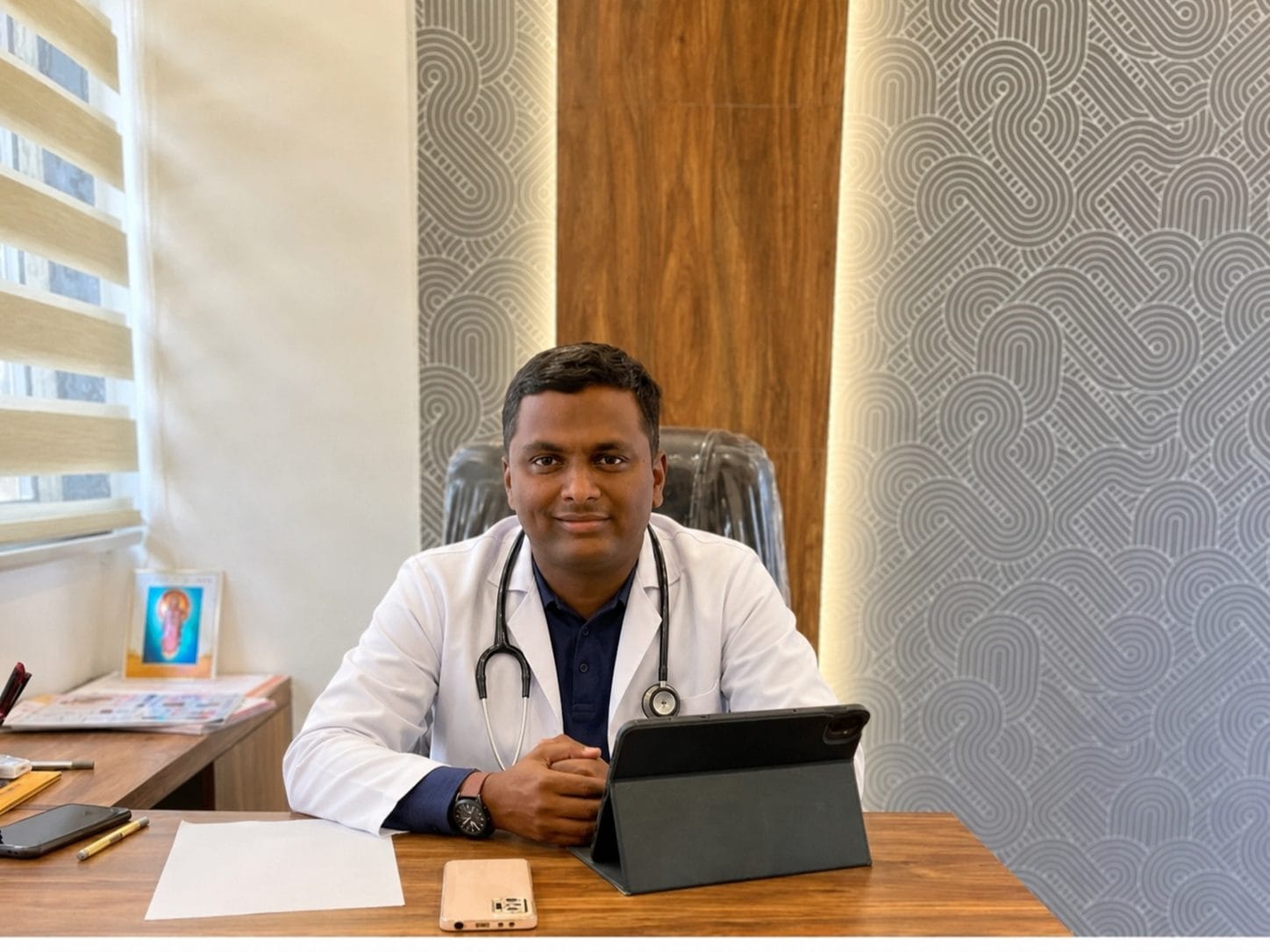
Medically reviewed by Dr. Shailesh Shamkant Phalle, BAMS, M.D. (Kayachikitsa) — Ayurvedic Physician, Ayusanjivani Ayurveda Centre.
Written for patient education. This article does not replace an in-person consultation.
Quick Answer
Nadi Pariksha (pulse diagnosis) is a classical Ayurvedic examination where a trained physician reads the radial pulse at the wrist to assess Vata-Pitta-Kapha dosha balance, digestive strength, and functional imbalances — often before clear symptoms appear. It is genuinely useful for guiding an individualised treatment plan, but it is not a replacement for blood tests, imaging, or a confirmed clinical diagnosis of disease. A trustworthy Nadi Pariksha in Pune consultation treats it as one part of a full Ayurvedic assessment (Ashtavidha Pariksha), not a standalone "magic diagnosis" — and should never be used to avoid necessary lab testing for a serious or unclear symptom.
What Is Nadi Pariksha?
Nadi Pariksha combines two Sanskrit words — Nadi (pulse) and Pariksha (examination) — and refers to the classical Ayurvedic practice of reading the radial pulse at the wrist to understand a person's constitution and current state of balance. It is described across foundational and later Ayurvedic texts, including the Charaka Samhita, Sushruta Samhita, and in more structured detail in the 17th-century text Yogratnakar, which lays out 48 verses specifically on pulse examination — including the correct time of day, the physician's conduct, and the preparation expected of the patient.
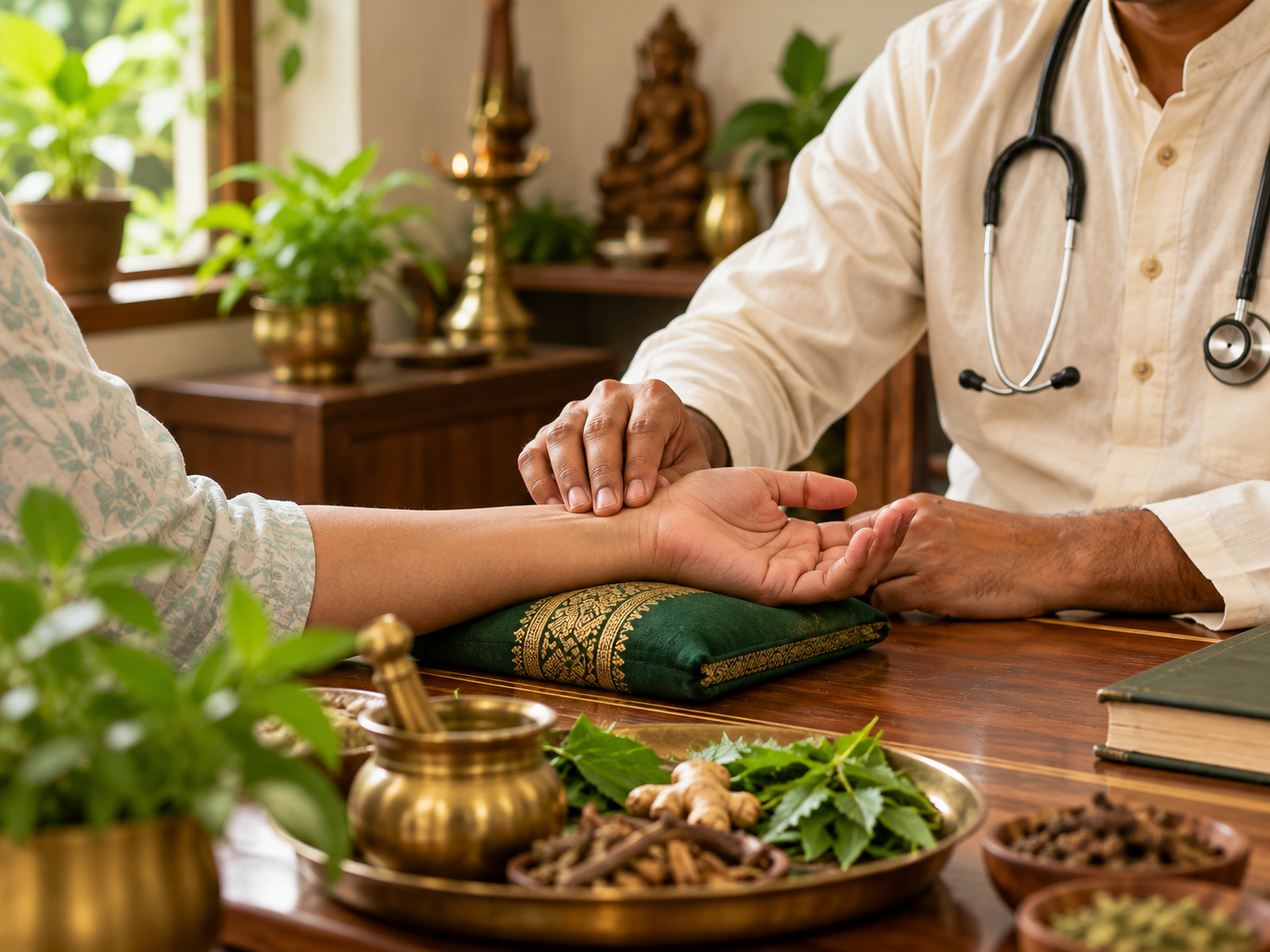
Unlike a routine pulse check that simply counts heartbeats per minute, Nadi Pariksha involves a trained physician placing three fingers over the radial artery to read multiple qualities simultaneously — rate, rhythm, force, consistency, movement pattern, and tension. If you've been researching Nadi Pariksha in Pune ahead of a first visit, this guide explains exactly what that examination involves, what it's genuinely useful for, and — just as importantly — where its limits are.
The Science Behind the Pulse: Vata, Pitta, Kapha
In Ayurveda, the three fingers used during Nadi Pariksha — index, middle, and ring — are classically mapped to Vata, Pitta, and Kapha respectively. Each dosha is said to produce a distinct pulse quality:
- Vata pulse: Thin, irregular, and quick — traditionally compared to the movement of a snake.
- Pitta pulse: Firm, moderate, and jumping — traditionally compared to the movement of a frog.
- Kapha pulse: Strong, steady, and slow — traditionally compared to the gliding movement of a swan.
A physician reads the relative dominance of these patterns to understand your Prakriti (natural constitution) and Vikriti (current imbalance). The pulse is also known to vary with time of day, season, age, and even recent food or activity, which is why classical texts specify ideal conditions — typically a calm state, on an empty stomach, in the morning — for an accurate reading.
What Happens During Your First Consultation
If this is your first time visiting a Nadi Pariksha-based consultation, here's a realistic walkthrough of what to expect:
- Case history (Nidan Parikshan): The doctor asks about your main complaint, duration, daily routine, diet, sleep, stress levels, and relevant medical history.
- A brief rest period: You're usually asked to sit calmly for a few minutes before the pulse is read, since recent exertion or anxiety can temporarily alter the pulse.
- The pulse examination: The physician places three fingers on your wrist and reads the pulse for a short period, sometimes repeating this at different times if the initial reading is ambiguous.
- Correlation with other findings: The pulse reading is combined with your case history, physical examination, and — where relevant — existing lab reports or imaging, not used in isolation.
- Discussion of findings and plan: A good physician explains what the pulse indicated in plain language and how it shapes your treatment plan, rather than simply announcing a verdict.
What Nadi Pariksha Can and Cannot Tell You
This is the question most first-time patients actually want answered, and it deserves an honest, two-sided answer rather than a marketing one.
✔ What It Can Reasonably Tell You
- Your dominant Prakriti (constitutional tendency) and current dosha imbalance
- Functional patterns such as digestive strength, sluggish metabolism, or nervous system stress
- Subtle imbalances that may precede clear symptoms, guiding preventive or early lifestyle correction
- How your body may respond to a proposed therapy, diet, or Panchakarma protocol
- A prognostic sense (Sadhya-Asadhyata) of how readily a condition may respond to treatment
✘ What It Cannot Replace
- Blood tests — it cannot measure blood sugar, cholesterol, thyroid levels, or infection markers
- Imaging — it cannot replace an X-ray, MRI, ultrasound, or biopsy for structural or tissue-level diagnosis
- A definitive allopathic diagnosis or disease staging (for example, confirming cancer, a fracture, or an autoimmune condition)
- Emergency or red-flag symptom evaluation, which always needs immediate medical attention regardless of pulse findings
- A fully standardised, instrument-verified result — accuracy still depends heavily on the training and experience of the examining physician
In practice, the most reliable use of Nadi Pariksha is as one well-established input within a broader clinical picture — not a replacement for necessary investigations. Any physician who claims it can diagnose every disease with certainty, or discourages you from getting a recommended lab test or scan, should be treated with caution.
Nadi Pariksha vs a Modern Pulse Check
A routine clinical pulse check — the kind done with two fingers at the wrist or a pulse oximeter — measures rate (beats per minute) and basic rhythm, primarily to flag cardiovascular concerns. Nadi Pariksha works with a considerably wider set of qualitative parameters — force, consistency, depth, and movement pattern read across three finger positions — aimed at understanding functional and constitutional balance rather than only cardiac rate and rhythm. The two are not interchangeable and are best understood as answering different questions: a modern pulse check screens for acute cardiovascular status; Nadi Pariksha contributes to a broader, individualised Ayurvedic assessment. Research groups have also explored sensor-based "Nadi Tarangini" devices to make pulse-parameter capture more consistent, though hands-on clinical reading by a trained physician remains the standard in practice today.
Nadi Pariksha Within Ashtavidha Pariksha
Nadi Pariksha is one of eight classical examination methods that together form Ashtavidha Pariksha (eightfold examination) in Ayurveda — alongside examination of urine, stool, tongue, voice, touch, vision, and overall body build. A physician who relies on pulse reading alone, without correlating it against these other findings, is working with an incomplete picture. At Ayusanjivani, Nadi Pariksha is routinely used together with Jivha Pariksha (tongue examination), which offers a complementary, visually verifiable window into digestive and metabolic health — the combination gives a more reliable picture than either examination alone.
How Nadi Pariksha Supports Assessment of Skin Conditions
Chronic skin conditions are a good example of where pulse-based dosha assessment genuinely adds value alongside visual examination and history-taking, because the same visible condition can stem from different underlying imbalances in different patients. At our Pune clinics, Nadi Pariksha is routinely used as part of the initial workup for:
Vitiligo
Pulse assessment helps identify the dominant dosha pattern and digestive-metabolic factors often associated with pigment loss, informing a more individualised protocol.
Psoriasis
Since psoriasis is classically linked to Vata-Kapha vitiation with blood-tissue involvement, pulse findings help guide whether internal purification therapies are appropriate and when.
Eczema
Pulse examination, alongside history and visual findings, helps distinguish Pitta-dominant from Kapha-dominant presentations of eczema, which are managed differently.
This is also why our physicians sometimes recommend reviewing how psoriasis and eczema differ in Ayurvedic diagnosis — the visible presentation can overlap, but the underlying dosha pattern, partly understood through Nadi Pariksha, often doesn't. In all three cases, pulse findings inform the treatment direction; they are never used as the sole basis for confirming the skin condition itself, which still relies primarily on direct visual and clinical examination.
What a Genuine Nadi Pariksha Consultation Looks Like
Because Nadi Pariksha has become something of a buzzword in Pune's wellness market, it's worth knowing what separates a clinically grounded consultation at a best Ayurvedic clinic in Pune-type establishment from a quick, theatrical "pulse reading" offered as an add-on gimmick.
- It's performed by a BAMS/MD-qualified doctor — not a wellness counsellor or front-desk staff member.
- It's combined with a real case history — your complaint, routine, diet, and relevant reports are discussed, not skipped.
- Findings are explained, not just announced. You should be told what was observed and how it connects to your treatment plan.
- It doesn't replace recommended investigations. If your symptoms warrant a blood test or scan, a responsible physician will say so.
- It isn't rushed. A reliable reading typically takes a few focused minutes, sometimes repeated, not a few seconds between other tasks.
Nadi Pariksha & Consultation Pricing in Pune
A frequent question from first-time patients is simply what a Nadi Pariksha Pune consultation costs. Based on publicly listed consultation fees across Pune's Ayurvedic practitioners (via platforms like Practo and Lybrate), here's a general sense of the current market range:
| Consultation Type | Typical Range (At Clinic) | What's Usually Included |
|---|---|---|
| General Ayurvedic consultation | ₹200 – ₹800 | Case history, examination (including Nadi Pariksha where relevant), and a basic treatment plan |
| Senior / specialist consultation | ₹500 – ₹1,000+ | More detailed assessment, often for chronic or complex conditions |
| Follow-up consultation | Often lower than the initial fee | Progress review and plan adjustment |
These are general Pune market reference ranges compiled from publicly listed practitioner fees as of this writing, not a quote from any single clinic — actual pricing varies by practitioner, clinic, and case complexity, and can change over time.
An important point for first-time patients: at a clinically run practice, Nadi Pariksha is typically included within the standard consultation fee as part of the overall physical examination — it is not meant to be sold as a separate, premium "pulse diagnosis package." If a centre is charging a large additional fee purely for a pulse reading, disconnected from an actual doctor consultation, that's worth questioning. At Ayusanjivani Ayurveda Centre, Nadi Pariksha is built into the standard doctor consultation at both our Kharadi and Wagholi clinics — call or WhatsApp us for current consultation fees, since these are reviewed periodically.
Nadi Pariksha in Kharadi & Wagholi, Pune
Ayusanjivani Ayurveda Centre offers doctor-led Nadi Pariksha consultations at both our Pune locations, so patients from across the eastern IT corridor and surrounding areas can access consistent, individualised Ayurvedic assessment.
📍 Ayusanjivani — Kharadi
Full consultation, Nadi Pariksha, and Panchakarma facilities under doctor supervision. Learn more about our Ayurvedic clinic in Kharadi.
Call Kharadi Clinic📍 Ayusanjivani — Wagholi
The same doctor-led consultation and diagnostic approach, extended to patients across Wagholi, Vadgaon Sheri, and the Nagar Road belt.
WhatsApp Wagholi ClinicBoth clinics are supervised directly by Dr. Phalle, and if your consultation points toward a structured purification protocol, our physicians will explain whether Panchakarma or a lighter Upakarma therapy such as Abhyanga (therapeutic oil massage) is the more appropriate next step for your condition.
Reviewed by Dr. Shailesh Shamkant Phalle
BAMS, M.D. (Kayachikitsa) — Ayurvedic Physician, Ayusanjivani Ayurveda Centre, Kharadi & Wagholi, Pune.
This article is for general health education and does not replace an in-person medical evaluation. Nadi Pariksha is a supportive Ayurvedic diagnostic tool and should be used alongside, not instead of, any lab tests or investigations your physician recommends.
Frequently Asked Questions
No. It is a completely non-invasive examination — the physician simply rests three fingers lightly on your wrist for a few minutes. There are no needles, instruments, or discomfort involved.
Its reliability depends heavily on the training and experience of the examining physician, since there is no universally standardised instrument-based benchmark in routine clinical practice. It is best understood as a well-established, experience-based clinical tool — genuinely useful within an Ayurvedic framework — rather than a laboratory-grade diagnostic test.
No. It cannot measure biochemical markers like blood sugar or cholesterol, and it cannot replace imaging for structural issues. If your doctor recommends a lab test or scan, that recommendation should be followed regardless of what the pulse examination shows.
Classical guidance suggests a calm state and ideally an empty stomach, since recent exertion, strong emotion, or a heavy meal can temporarily alter the pulse. Avoid caffeine and vigorous exercise shortly before your appointment if possible.
At a clinically run practice, it's typically included within the standard consultation fee as part of the overall physical examination. Being asked to pay a large separate fee purely for a "pulse reading" detached from an actual consultation is a sign worth questioning.
Not on its own — the skin condition itself is identified through visual examination and history. Nadi Pariksha adds value by helping identify the underlying dosha pattern, which guides which treatment approach is likely to suit you.
Yes, Ayusanjivani Ayurveda Centre offers doctor-led Nadi Pariksha consultations at both our Kharadi and Wagholi clinics in Pune. Call +91 84323 29371 or message us on WhatsApp to book at your preferred location.