PCOD/PCOS & Ayurveda: Questions to Ask About Diet, Cycle Tracking, Diagnosis and Treatment Planning
A research-based guide for anyone comparing PCOD ayurvedic treatment in Pune or PCOS ayurvedic treatment in Pune — the exact questions to ask your doctor about diet, your cycle, diagnosis, and how a treatment plan is actually built at the >best ayurvedic clinic in Pune.
Clinics in Wagholi and Kharadi, Pune
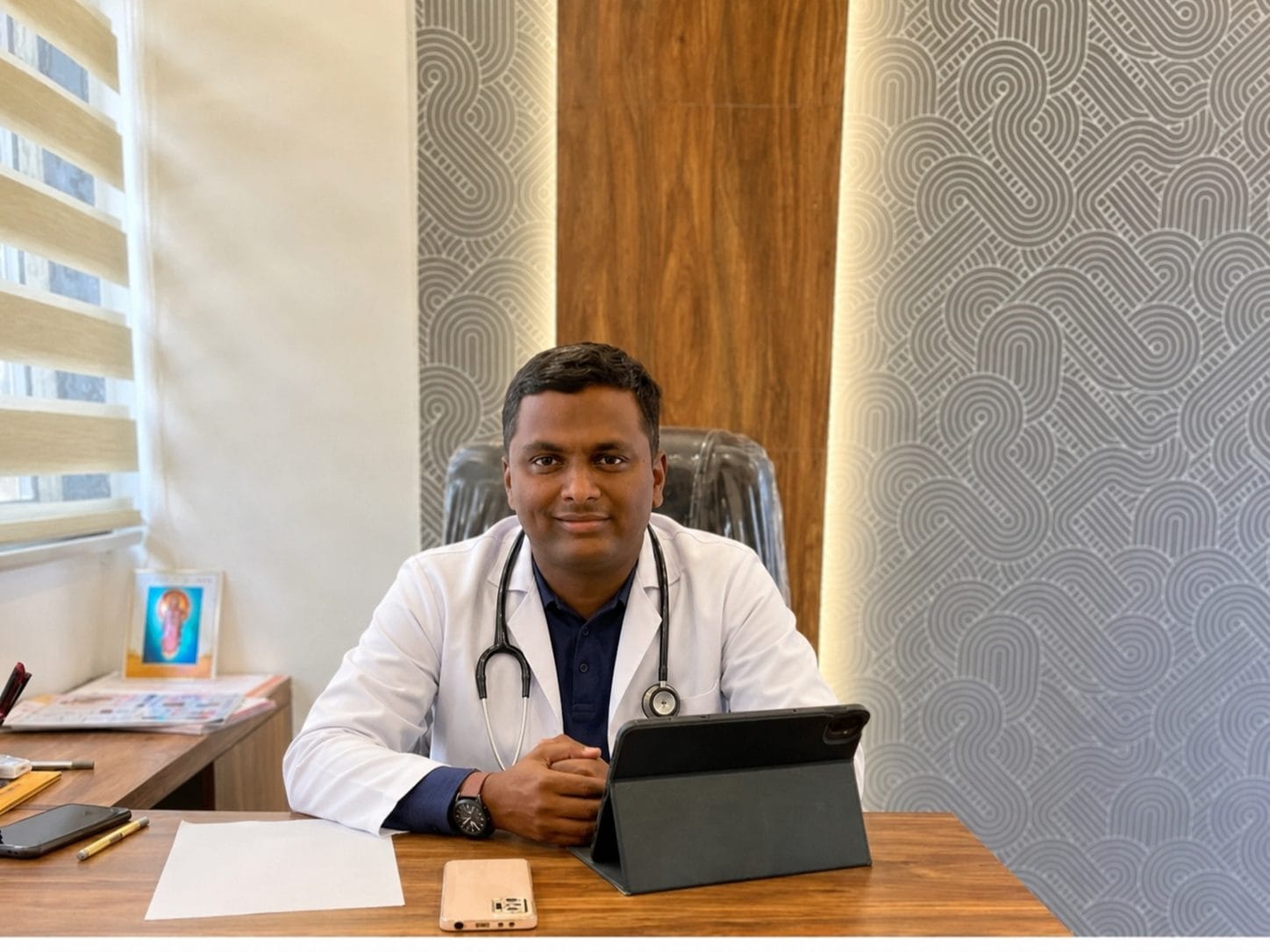
Medically reviewed by Dr. Shailesh Shamkant Phalle, BAMS, M.D. (Kayachikitsa) — Ayurvedic Physician, Ayusanjivani Ayurveda Centre.
Written for patient education. This article does not replace an in-person consultation.
Quick Answer
Before starting any PCOD or PCOS ayurvedic treatment in Pune, ask four things: what specifically you should eat and avoid (and why, for your case), how your cycle will be tracked and reviewed, which tests and assessments were used to actually diagnose you, and what your individualised treatment plan looks like — including which therapies (Virechana, Basti, Uttar Basti, or local applications like Janu, Kati, or Manya Basti), how long it runs, and what it costs, itemised. A doctor-led clinic will answer all four clearly; a generic wellness package usually can't.
What Is PCOD/PCOS? Why the Distinction Matters
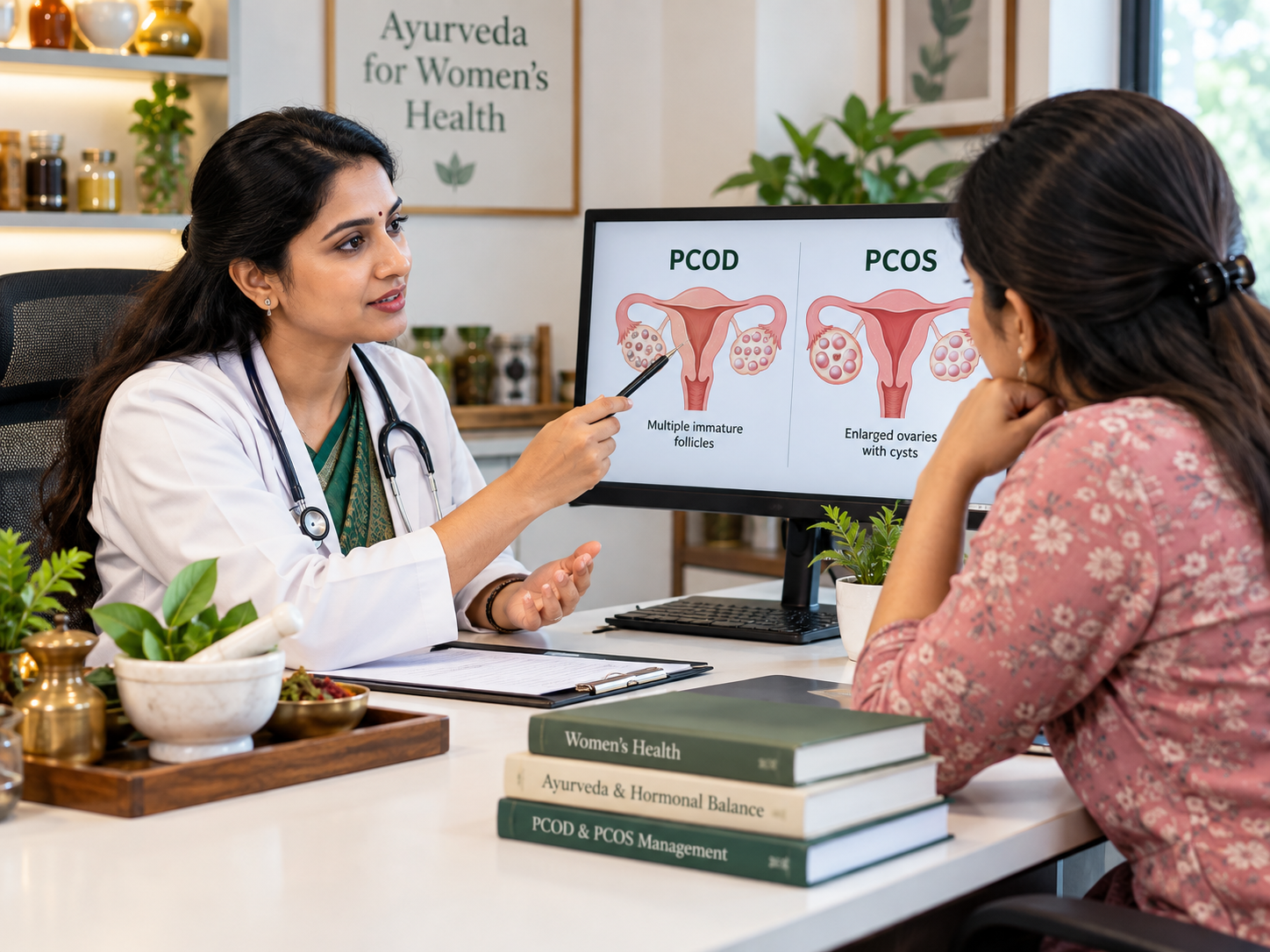
PCOD (Polycystic Ovarian Disease) and PCOS (Polycystic Ovary Syndrome) are often used interchangeably, but they aren't clinically identical. PCOD describes ovaries that produce multiple immature or partially mature eggs, often linked to lifestyle and metabolic factors, and tends to respond well to diet and lifestyle correction. PCOS is a broader endocrine disorder involving hormonal imbalance — typically raised androgens and insulin resistance — that can affect ovulation, metabolism, and long-term health more significantly, and usually needs more structured medical management alongside lifestyle change.
We've covered this distinction in more technical depth in our dedicated guide on PCOD vs PCOS: understanding the difference and Ayurvedic treatment, and answered common patient questions in our PCOD vs PCOS FAQ. This guide focuses on something different: the exact questions you should be asking before you commit to a treatment plan, whichever diagnosis applies to you.
PCOD/PCOS in Ayurveda: The Dosha Perspective
Classical Ayurveda does not use the terms PCOD or PCOS, but the clinical picture — irregular Artava (menstruation), weight gain, and reduced fertility — is understood as a disturbance of Kapha dosha, often with secondary involvement of Vata in the Artavavaha Srotas (the channels governing menstrual and reproductive function). Excess Kapha leads to sluggish metabolism, fluid retention, and follicular stagnation, while aggravated Vata disturbs the timing and regularity of ovulation and menstruation. Treatment is therefore built around reducing excess Kapha, correcting Vata-driven irregularity, and restoring healthy function to the reproductive channels — not simply "regulating hormones" as a black box.
For a broader look at how Ayurveda frames hormonal conditions generally, see our explainer on hormonal disorders: symptoms, types, causes and Ayurvedic treatment, and our approach-specific piece on healing PCOD with Panchakarma.
Questions to Ask About Diet
Diet advice for PCOD/PCOS is often generic online — "cut sugar, eat protein." A genuine Ayurvedic consultation should answer these more specific questions for your case.
A good answer names foods that aggravate Kapha and disturb Agni (digestive fire) for your specific Prakriti — heavy dairy, deep-fried food, excess sweets, and cold/refrigerated food are common culprits — rather than a generic "avoid sugar and carbs" instruction that ignores your constitution.
No. Ayurveda focuses on food quality, warmth, and digestibility rather than strict macronutrient counting, and generally avoids extreme carbohydrate restriction, which can aggravate Vata and disturb Agni further. Ask your doctor how their recommendation differs from a generic low-carb plan.
It shouldn't be. Your Prakriti, current Vikriti, weight status, insulin sensitivity, and food preferences should all shape the plan. See our detailed PCOD diet chart for Indian women for the kind of individualised structure to expect, and our Ayurvedic diet for PCOD guide for the underlying principles.
For mild, recently-developed PCOD, diet and lifestyle correction alone can meaningfully improve symptoms. For longer-standing PCOS with marked hormonal imbalance, diet is usually combined with Panchakarma-based therapies and internal medicines for a more complete result — ask your doctor which category your case falls into.
Because menstrual cycles are monthly, meaningful diet-related change is usually assessed over at least 2–3 cycles, not days or weeks. Be cautious of any plan promising fast, dramatic results.
Questions to Ask About Cycle Tracking
Cycle-tracking apps are useful, but they don't replace a doctor's interpretation of your pattern. These are the questions worth asking.
A cycle consistently shorter than 21 days or longer than 35 days, or one that varies by more than 7–9 days month to month, generally warrants evaluation. Ask your doctor to review your specific pattern rather than relying only on an app's generic "irregular" flag.
Flow duration and heaviness, cycle length variation, and associated symptoms (pain, acne flare-ups, mood changes) all give your doctor more to work with than dates alone. Bring at least 3–6 months of this data to your first consultation if you have it.
Fluctuating cycle length often points to inconsistent ovulation, which in Ayurvedic terms reflects Vata disturbance layered on top of Kapha-driven irregularity. This pattern is exactly what a Basti-based protocol is often used to address — see our piece on the role of Basti in ovulation disorders.
No. Cycle tracking is supportive evidence, not a diagnosis. It should be combined with a clinical examination and, where indicated, hormone testing and ultrasound — covered in the diagnosis section below.
A good clinic uses your cycle history to time therapies (some Basti protocols are timed around your cycle phase), monitor progress course-to-course, and decide when a plan needs adjusting — not just to confirm the diagnosis once.
Questions to Ask During Diagnosis
A confident diagnosis needs more than a single symptom checklist. Ask these before accepting a PCOD/PCOS label — or a treatment plan based on it.
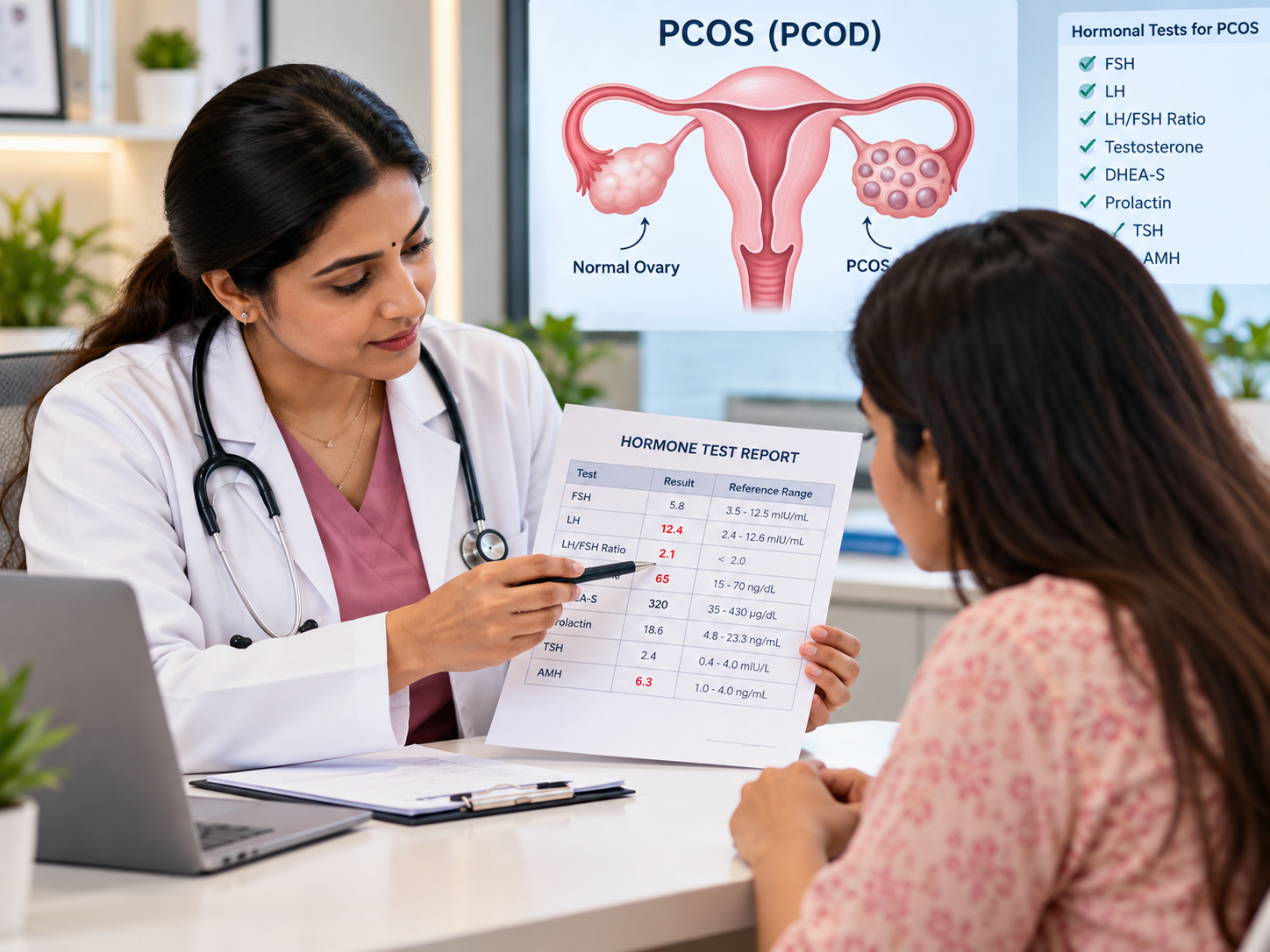
Commonly relevant tests include LH, FSH, testosterone, prolactin, thyroid profile, and fasting insulin, though not every patient needs every test. Ask your doctor which specific tests apply to your symptoms rather than accepting a blanket "full hormone panel" by default.
A pelvic ultrasound is commonly used at diagnosis to assess ovarian appearance, but it isn't usually required repeatedly unless your treatment plan or symptoms specifically call for a follow-up scan. Ask why a repeat scan is being recommended if one is suggested.
Prakriti is your natural constitution; Vikriti is your current dosha imbalance. Together they help the doctor decide which therapies and diet suit you specifically, rather than applying a single "PCOD protocol" to every patient. This should happen at your first visit, not be skipped.
Symptoms can strongly suggest it, but a confident diagnosis — and a correctly targeted treatment plan — usually benefits from at least basic hormone and metabolic screening, especially to rule out thyroid dysfunction, which can mimic PCOD symptoms. See our related guide on signs of hormonal imbalance.
Often yes — insulin resistance and thyroid dysfunction frequently coexist with or mimic PCOD/PCOS, and treating PCOD in isolation without addressing an underlying thyroid issue can limit results. Ask your doctor whether your symptom profile warrants this additional screening.
Questions to Ask About Treatment Planning
This is where most patients get the least information upfront — and where it matters most.
It should be built around your dosha imbalance, symptom severity, and goals (symptom relief vs. fertility planning vs. long-term management). If every PCOD patient is offered the identical "X-day package," ask why.
Because a single cycle takes weeks to complete, meaningful improvement is usually assessed over 2–3 months of consistent treatment at minimum, with longer courses for cases involving significant weight or insulin resistance.
Often yes, but this should be explicitly discussed and coordinated between your treating doctors rather than decided unilaterally by either side. Never stop a prescribed medication without your prescribing doctor's guidance.
Yes — fertility-focused PCOD/PCOS management often incorporates Uttar Basti and preconception protocols rather than a purely symptom-management approach. See our guides on Ayurvedic treatment for infertility in Pune and female infertility causes.
PCOD/PCOS is generally a condition managed long-term rather than resolved in a single course. A responsible clinic will discuss diet, lifestyle, and periodic follow-up after your initial treatment block, not leave you without guidance once it ends.
Core Ayurvedic Therapies Used for PCOD/PCOS
Once diagnosis and planning are clear, treatment for PCOD/PCOS typically draws from these core Panchakarma-based therapies, selected based on your specific dosha imbalance.
Virechana — Therapeutic Purgation
Used to clear excess Pitta and support metabolic correction, often considered where weight gain and skin symptoms (acne, pigmentation) are prominent alongside cycle irregularity.
Basti — Medicated Enema
Considered the most important therapy for Vata-driven irregularity, used to restore consistent ovulatory rhythm and reduce menstrual pain and irregularity.
Uttar Basti
A specialised Basti variant targeted at the uterus and reproductive tract, commonly used where fertility support is a specific goal alongside general PCOD/PCOS management.
Nasya — Nasal Administration
Used as part of broader Kapha-reduction protocols and to support hormonal-headache and stress-related symptoms that often accompany PCOD/PCOS.
Udvartana (Herbal Powder Massage)
A dry, herbal powder massage frequently used alongside core therapies to support weight management and improve circulation in Kapha-dominant cases.
Internal Herbal Formulations
Classical formulations aimed at Kapha reduction, Agni correction, and reproductive-channel support are prescribed individually based on your Prakriti and current imbalance — never as an unsupervised, self-selected over-the-counter product.
Upakarma: Janu Basti, Kati Basti & Manya Basti
Alongside the core Panchakarma procedures above, Ayurveda uses a set of localised oil-retention therapies — often grouped under Upakarma (supportive procedures) — to address specific areas of tension and discomfort that frequently accompany PCOD/PCOS, particularly where weight gain, prolonged sitting, and hormonal stress contribute to joint and postural strain.
Janu Basti
A localised oil-retention therapy over the knee joint, often relevant for PCOD/PCOS patients dealing with weight-related knee strain or early joint discomfort.
Kati Basti
Warm medicated oil retained over the lower back, useful for the lower-back tension and stiffness that can accompany hormonal weight gain and prolonged desk-bound routines. See how this is used more broadly in our guide on Kati Basti for spinal conditions.
manya Basti
A similar localised oil-retention therapy applied over the neck and cervical region, often used for the neck and shoulder tension linked to PCOD/PCOS-related stress and disturbed sleep. Read more about how Basti therapies are structured in our scientific overview of Basti Chikitsa.
These local Upakarma therapies are typically added to — never used as a substitute for — the core Virechana, Basti, or Uttar Basti protocol that actually addresses the underlying dosha imbalance.
Choosing the Best Ayurvedic Clinic & Doctor in Pune
With Pune's Panchakarma and wellness market growing quickly, finding the best Ayurvedic clinic in Pune and the best Ayurvedic doctor in Pune for a condition as individual as PCOD/PCOS means looking past star ratings and package menus.
✔ Signs of a Genuine Clinic
- BAMS/MD doctor personally assesses your case and history
- Prakriti-Vikriti assessment done before any therapy is fixed
- Relevant hormone and metabolic tests reviewed or ordered
- Written, individualised treatment plan with clear duration
- Follow-up and diet guidance continue after the initial course
✘ Red Flags to Watch For
- Same "PCOD package" sold to every patient regardless of case
- No health screening or test review before starting therapy
- Vague or undisclosed pricing with no itemised breakdown
- Promises of guaranteed or unusually fast results
- No follow-up plan once the paid course is completed
At Ayusanjivani Ayurveda Centre, every PCOD/PCOS case begins with a consultation with Dr. Shailesh Phalle, not a standard package menu — regardless of whether you visit our Kharadi or Wagholi clinic.
Why This Matters More for Hormonal Conditions
Unlike a localised joint issue, PCOD/PCOS involves the endocrine system, metabolism, and reproductive channels together — meaning an incorrect or generic protocol can waste months of a patient's cycle-dependent treatment window. This is exactly why individualised diagnosis and doctor supervision matter more here than in most other conditions.
PCOD/PCOS Treatment Cost in Pune: A Pricing Comparison
Cost is one of the most common questions we get, and it's fair to want clarity before committing. Based on publicly listed rates from Pune-area labs, hospitals, and general practitioners, here's how the different pieces of a PCOD/PCOS care journey are typically priced in Pune — useful context before you compare any Ayurvedic clinic's quote.
| Service | Typical Pune Range | Notes |
|---|---|---|
| Gynaecologist consultation | ₹300 – ₹500 per visit | Varies by experience and clinic |
| Basic PCOD hormone profile (lab test) | ₹1,000 – ₹2,550 | LH, FSH, prolactin, testosterone, thyroid, insulin — panel size varies by lab |
| Advanced PCOS hormone profile | ₹2,550 – ₹3,700 | Wider panel including HOMA-IR, free testosterone, 17-OHP |
| Pelvic ultrasound | Priced separately by radiology centre | Usually a one-time diagnostic step, not repeated routinely |
| Local Basti-type therapy (per session) | Roughly ₹120 – ₹600 per session | Based on published Pune teaching-hospital Panchakarma rate cards; varies by procedure and duration |
| Structured multi-day Panchakarma/PCOD course | Varies widely by duration and inclusions | Depends on number of procedures, OPD vs residential, and medicine cost — always ask for an itemised quote |
These figures are drawn from publicly available Pune lab and hospital rate references as of 2026 and are meant purely as general orientation — they are not Ayusanjivani Ayurveda Centre's own prices. Actual Panchakarma package cost depends entirely on your specific diagnosis, chosen therapies, and course duration. For a deeper breakdown of how Panchakarma pricing generally works, see our page on Panchakarma treatment cost in India and AYUSH rate references.
Treatment Timeline: What to Expect
Because PCOD/PCOS treatment is measured in menstrual cycles, not days, timelines look different from a typical pain-relief protocol:
- First 4–6 weeks: Diagnosis, Prakriti-Vikriti assessment, diet correction, and the start of therapy — often the phase where digestion, energy, and skin symptoms begin improving first.
- 2–3 months: The typical minimum window to assess whether cycle regularity and symptom severity are genuinely improving.
- 3–6 months or longer: Often needed for cases involving significant weight gain, insulin resistance, or a fertility goal, usually combining repeated Panchakarma courses with sustained diet and lifestyle correction.
Your doctor should give you a realistic, case-specific timeline at your first visit rather than a one-size-fits-all number.
Lifestyle & Yoga Support
- Regular sleep timing — irregular sleep is a recognised aggravator of hormonal imbalance
- Daily moderate activity such as brisk walking, Surya Namaskar, or swimming to support insulin sensitivity
- Gentle, guided yoga postures such as Baddha Konasana and Bhujangasana, introduced under guidance rather than generic online routines
- Stress-reduction practices like Pranayama, since chronic stress directly aggravates hormonal imbalance
- Consistent meal timing rather than skipping meals or irregular eating windows
PCOD/PCOS Care in Kharadi & Wagholi, Pune
Ayusanjivani Ayurveda Centre offers doctor-led PCOD and PCOS Ayurvedic care across two Pune clinics — in Wagholi and Kharadi — both following the same diagnostic and treatment-planning standards described in this guide.
📍 Ayusanjivani — Kharadi
Full Panchakarma facilities including Basti, Uttar Basti, and Virechana, with doctor consultation for PCOD, PCOS, and related fertility concerns. Learn more about our Ayurvedic clinic in Kharadi.
Call Kharadi Clinic📍 Ayusanjivani — Wagholi
The same doctor-supervised diagnostic and treatment protocols, extended to patients across Wagholi, Vadgaon Sheri, and the Nagar Road belt.
Visit Wagholi Clinic
Reviewed by Dr. Shailesh Shamkant Phalle
BAMS, M.D. (Kayachikitsa) — Ayurvedic Physician, Ayusanjivani Ayurveda Centre, Kharadi & Wagholi, Pune.
This article is for general health education and does not replace an in-person medical evaluation. PCOD/PCOS treatment plans, including Panchakarma procedures, should only be started after assessment by a qualified doctor, and existing prescribed medication should never be stopped without your prescribing doctor's guidance.
Frequently Asked Questions
Many patients experience significant, lasting improvement in cycle regularity and symptoms with consistent Ayurvedic treatment and lifestyle correction, particularly with earlier-stage PCOD. Long-standing PCOS with metabolic involvement usually needs ongoing management rather than a one-time fix — your doctor should be clear about which applies to your case.
Often yes, but this should be actively coordinated between your gynaecologist and Ayurvedic doctor rather than assumed. Never discontinue a prescribed medication without your prescribing doctor's advice.
Not necessarily — many therapies, including some Basti protocols, are specifically timed around your cycle phase rather than requiring you to wait. Your doctor will advise the correct starting point based on your current cycle day.
For many patients, yes — particularly seasonally or as a maintenance measure — since PCOD/PCOS is generally a long-term hormonal pattern rather than a one-time issue. Your doctor will advise a follow-up cadence based on your progress.
Fertility-focused treatment typically adds Uttar Basti and preconception protocols, and timing becomes more central to the plan. See our guide on Ayurvedic infertility treatment in Pune for more detail.
Yes, Ayusanjivani Ayurveda Centre offers the same doctor-led PCOD/PCOS diagnostic and treatment protocols at both our Kharadi and Wagholi clinics in Pune. Call +91 84323 29371 or message us on WhatsApp to book at your preferred location.