Knee Care · Ayusanjivani Ayurveda, Pune
Knee Replacement Surgery vs Ayurveda: How to Avoid Knee Surgery Naturally
A grade-wise, cost-mapped guide to understanding when knee replacement surgery is truly necessary — and how a structured ayurvedic treatment for knee arthritis protocol at Ayusanjivani helps many patients regain pain-free movement without an operation.
If your orthopaedist has mentioned the words "knee replacement," you are far from alone. Community health surveys across India place the prevalence of knee osteoarthritis somewhere between 22% and 39% of the adult population, climbing to nearly one in two adults once you look at those above 60. For most people, this diagnosis lands with a single, anxious question: is surgery my only option?
The honest answer is: usually not immediately. Knee replacement surgery is a well-established, sometimes necessary procedure for advanced joint damage — but it is also a major operation with real costs, real recovery time, and a limited implant lifespan. For a large share of patients, particularly those in the early and moderate stages of osteoarthritis, there is a genuine, evidence-informed alternative to knee replacement surgery rooted in classical Ayurveda.
This guide walks through exactly how modern orthopaedic surgery and Ayurveda each approach a damaged knee joint, what each path actually costs in India, and — most importantly — a practical, stage-by-stage roadmap our clinical team at Ayusanjivani Ayurveda uses with patients in Kharadi and Wagholi who are trying to avoid knee replacement altogether.
What Knee Replacement Surgery Actually Involves
Knee replacement (knee arthroplasty) is a surgical procedure in which the damaged surfaces of the knee joint — worn-out cartilage and bone — are removed and replaced with a metal-and-plastic implant. Orthopaedic surgeons generally offer two versions of this procedure:
Total Knee Replacement (TKR)
The entire joint surface is resurfaced. Recommended for advanced, "bone-on-bone" osteoarthritis, typically Kellgren-Lawrence Grade 4.
Partial (Unicompartmental) Replacement
Only the damaged compartment of the knee is replaced. Shorter recovery, but suitable for a narrower group of patients.
Revision Surgery
A second, more complex operation to replace a worn-out or loosened implant, usually 10–15 years after the first.
Surgeons typically recommend surgery once conservative treatment — physiotherapy, weight management, pain medication, injections — has failed to control pain and mobility loss, and imaging confirms severe, Grade 4 joint degeneration. Like any major surgery, it carries real risks: infection, blood clots, stiffness, nerve irritation, and a finite implant life that may eventually require a second surgery. None of this is meant to alarm you — it is simply the honest picture that should inform your decision, alongside your surgeon's opinion and, ideally, a second opinion from an Ayurvedic physician trained in joint disorders such as those covered in our detailed arthritis diagnosis and Ayurveda treatment guide.
The Ayurvedic View: Understanding Sandhivata
In classical Ayurveda, knee osteoarthritis is described as Sandhivata — a Vata-dominant degenerative joint condition. Ayurveda explains that aggravated Vata dosha settles in the joint (Sandhi), depleting Asthi dhatu (bone tissue) and Sleshaka Kapha, the lubricating substance that keeps cartilage smooth and joints moving without friction. The result is exactly what X-rays later confirm: joint space narrowing, stiffness, crepitus (a grinding sound), and pain that worsens with damp weather or after rest.
Where this understanding becomes clinically useful is that it does not treat the knee joint in isolation. An Ayurvedic evaluation looks at digestive strength (Agni), body constitution (Prakriti), weight, occupation, and lifestyle — all of which influence how quickly Vata accumulates in the joints. This is why two patients with an identical X-ray can respond very differently to treatment, and why a personalised protocol — not a generic capsule — is central to how we approach joint disorders at Ayusanjivani.
Clinical note
Ayurveda does not claim to regrow lost cartilage overnight. What a well-run Panchakarma-based protocol reliably achieves is a reduction in inflammation, restoration of joint lubrication, strengthening of surrounding musculature, and significant pain and mobility improvement — which is precisely what most Grade 1–3 patients need to avoid or postpone surgery.
Knee Replacement Surgery vs Ayurvedic Treatment: Side-by-Side
Here is the comparison most patients actually want before they decide — how the two paths differ across cost, recovery, invasiveness, and long-term outlook.
Knee Replacement Surgery
- Immediate structural correction of a severely damaged joint
- Requires general/spinal anaesthesia & hospital stay
- 3–6 months of physiotherapy-led recovery
- Implant typically lasts 10–15 years
- ₹1.8–3.5 lakh per knee (private hospitals, India)
Ayurvedic Treatment
- Non-surgical, addresses inflammation & joint nourishment from within
- No anaesthesia; most therapies are outpatient (OPD)
- Structured 3–6 month protocol, minimal downtime
- Focused on long-term joint health, not a one-time fix
- ₹40,000–₹1.2 lakh for a complete protocol (varies by grade)
| Factor | Knee Replacement Surgery | Ayurvedic Treatment |
|---|---|---|
| Invasiveness | Major surgery, joint resurfacing | Non-invasive: Panchakarma, herbs, external therapies |
| Anaesthesia | General/spinal, required | None required |
| Hospital stay | 4–7 days typical | OPD-based; short stay only for intensive Panchakarma |
| Recovery time | 3–6 months to full activity | Gradual improvement over 6–12 weeks, ongoing maintenance |
| Risk profile | Infection, clotting, implant loosening | Minimal; mainly requires practitioner supervision for Panchakarma |
| Best suited for | Grade 4 OA, bone-on-bone, failed conservative care | Grade 1–3 OA, early-to-moderate degeneration |
| Long-term outlook | 10–15 year implant life; revision surgery possible | Ongoing joint health with diet, yoga & periodic Panchakarma |
| Indicative cost (per knee) | ₹1.8–3.5 lakh | ₹40,000–₹1.2 lakh (full protocol) |
Costs are indicative ranges compiled from typical Indian private-hospital pricing and our own clinic protocols; your exact plan and cost will depend on OA grade, associated conditions, and consultation findings.
The Real Cost Comparison, Explained
Cost is rarely the only factor in this decision, but it is almost always the one families ask about first — so let's be specific.
Knee replacement surgery cost in India for a single knee at a reputed private hospital typically ranges from ₹1.8 lakh to ₹3.5 lakh, and can go higher depending on implant brand, hospital tier, and city. This figure usually covers the surgery and a short hospital stay — it does not include post-surgical physiotherapy (often ₹40,000–₹1,00,000 over several months), medication, or the cost of a second surgery on the other knee, which a large number of osteoarthritis patients eventually need. If revision surgery is required after implant wear, you are effectively paying the full surgical cost again.
A complete ayurvedic treatment for knee arthritis protocol — including consultation, a course of Panchakarma therapies such as Janu Basti, internal medicines, and follow-up visits over 3–6 months — is generally priced well below a single knee replacement. You can review our detailed, transparent breakdown of therapy-wise pricing in our Panchakarma treatment cost guide (AYUSH rates 2026). Importantly, Ayurvedic treatment is not a one-time expense you write off after a single course — many patients continue with lighter seasonal maintenance protocols, which is a genuinely different cost model than surgery, but one that keeps both knees healthier for longer at a fraction of the surgical bill.
Being fair to both sides
Ayurveda is significantly more economical and far less invasive, but it is not a guaranteed substitute for surgery in every case. If your OA has progressed to Grade 4 with complete cartilage loss and bone deformity, no non-surgical approach — Ayurvedic or otherwise — can fully reverse that. The financial and physical case for Ayurveda is strongest when treatment begins early, at Grade 1–3.
How Ayurveda Treats Knee Arthritis Naturally
Our protocol at Ayusanjivani draws on classical Panchakarma therapies, targeted herbal formulations, and lifestyle correction — always sequenced according to the patient's Sandhivata stage. Here are the core pillars:
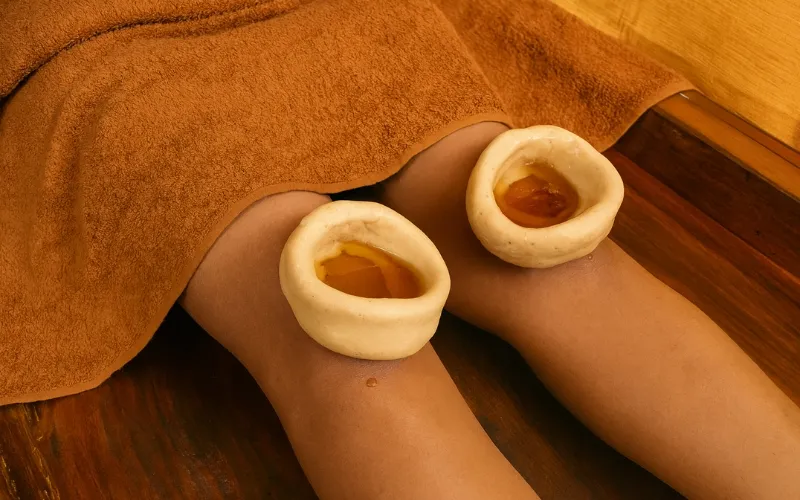
Janu Basti
Warm medicated oil is pooled over the knee in a dam of dough, deeply nourishing the joint, easing stiffness, and calming local Vata. Read our full Janu Basti treatment guide.
Panchakarma Detoxification
Snehana (oleation) and Swedana (fomentation), often followed by Basti (medicated enema), clear Ama and pacify aggravated Vata at a systemic level, not just locally.
Herbal Formulations
Classical combinations of Shallaki (Boswellia), Guggulu, Rasna, and Ashwagandha reduce joint inflammation and support cartilage and bone tissue nourishment.
Cartilage-Supportive Care
Targeted internal medicines and diet aim to slow further cartilage wear. See our approach in 10 Ayurvedic tips for knee cartilage regeneration.
Guided Movement & Yoga
Gentle, joint-safe strengthening exercises and specific asanas rebuild the quadriceps support structure around the knee, reducing load on the joint itself.
Diet & Weight Correction
Since every extra kilo adds multiplied load to the knee with each step, an Agni-balancing, anti-Vata diet plan is built into every protocol.
If ligament involvement or an old injury complicates the picture, our team also combines Janu Basti with supportive therapies — you can read more in our guide on healing knee ligament tears naturally with Ayurveda. For a full walkthrough of what happens in clinic, our osteoarthritis treatment page covers the exact sequence we follow at both our Kharadi and Wagholi centres.
Your Grade-Wise Roadmap to Avoid Knee Replacement
Not every knee is at the same stage, and treatment should never be one-size-fits-all. Here is how we typically sequence care based on Kellgren-Lawrence grading, so you know realistically what to expect at your stage. For a deeper look at how symptoms map to each stage, see our knee arthritis symptoms guide.
Prevent progression before symptoms worsen
Occasional stiffness, minimal pain. Focus: Agni correction, weight management, daily joint-safe movement, and light Abhyanga (oil massage). Goal is to stop Vata accumulation early — this is the stage where avoiding surgery entirely is most realistic.
Build joint resilience
Visible joint space narrowing on X-ray, pain after activity. Focus: Janu Basti courses, herbal anti-inflammatory formulations, and structured strengthening exercises to offload the joint.
Intensive Panchakarma protocol
Frequent pain, stiffness after rest, reduced range of motion. Focus: A supervised Panchakarma course (Snehana, Swedana, Basti) combined with Janu Basti cycles over 4–8 weeks, closely monitored for response.
Honest evaluation, supportive care
Bone-on-bone contact, visible deformity, significant mobility loss. Ayurveda can still meaningfully reduce pain and improve function, but at this stage we are transparent with patients about when a surgical opinion is genuinely warranted alongside supportive Ayurvedic care.
When Knee Replacement Surgery May Still Be the Right Call
Part of practising responsible Ayurveda is knowing where its limits are. We do not tell every patient they can avoid surgery — that would not be honest medicine. Surgery is likely the better path when:
Complete cartilage loss
Imaging shows bone-on-bone contact with no cartilage cushioning left in the joint.
Structural deformity
Visible bow-leg or knock-knee deformity that affects your ability to walk or stand.
Failed conservative care
A genuine, adequately long trial of physiotherapy, medication, and Ayurvedic therapy hasn't improved pain or function.
Even in these cases, many patients choose to combine both worlds — using Ayurveda before surgery to strengthen the body, and after surgery to speed recovery, reduce scar stiffness, and protect the other knee from following the same path. This integrative approach is something we regularly guide patients through in consultation, alongside related conditions such as rheumatoid arthritis and gouty arthritis (Vatarakta), which can sometimes coexist with knee OA.
What to Expect When You Start Treatment at Ayusanjivani
Every patient begins with a detailed clinical evaluation — Nadi Pariksha (pulse diagnosis), a review of prior X-rays or MRI reports if available, and an assessment of Prakriti and lifestyle factors contributing to Vata aggravation. From there, we design a protocol specific to your OA grade, occupation, and daily routine, rather than prescribing a generic joint-pain package.
Most patients notice a reduction in morning stiffness and pain within the first two to three weeks of Panchakarma and Janu Basti sessions, with more substantial gains in mobility and reduced dependency on painkillers by the eighth to twelfth week. From there, treatment shifts into a maintenance phase — periodic Basti and Abhyanga sessions, seasonal detox, and a joint-friendly diet — designed to protect the joint over the years ahead, not just get you through a single flare-up.
Week 1–3
Detailed evaluation, Panchakarma begins, initial pain and stiffness reduction.
Week 4–8
Janu Basti cycles, herbal formulations, structured strengthening exercises begin.
Month 3–6
Noticeable mobility gains, transition to a maintenance and prevention plan.
Frequently Asked Questions
For Grade 1–3 knee osteoarthritis, a structured Ayurvedic protocol combining Panchakarma, Janu Basti, herbal medicines, and lifestyle correction can significantly reduce pain and improve mobility, allowing many patients to delay or avoid surgery. For Grade 4, bone-on-bone OA, Ayurveda can support pain relief and function but is less likely to eliminate the need for surgery entirely.
Knee replacement surgery in India typically costs ₹1.8–3.5 lakh per knee, plus physiotherapy. A complete Ayurvedic protocol generally ranges from ₹40,000–₹1.2 lakh depending on OA grade and duration, making it considerably more economical, especially when both knees are affected.
Most patients notice reduced stiffness and pain within 2–3 weeks of starting Panchakarma and Janu Basti therapy, with more significant mobility improvements by 8–12 weeks. Long-term joint protection continues through periodic maintenance sessions.
No. Janu Basti involves warm medicated oil pooled gently over the knee joint. Most patients describe it as deeply relaxing rather than uncomfortable, with pain relief often noticeable after just a few sessions.
Surgery is usually the more appropriate option when imaging shows complete cartilage loss (bone-on-bone contact), visible joint deformity, or when an adequate trial of conservative and Ayurvedic treatment has not improved pain and function.
Yes. Post-surgical Ayurvedic care can support faster recovery, reduce scar tissue stiffness, and help protect the other knee from following the same degenerative path, particularly if it also shows early signs of osteoarthritis.
Not necessarily — this is decided case by case during your consultation. Many patients continue physiotherapy alongside Ayurvedic therapy, and painkiller dependency is typically reduced gradually as symptoms improve, under guidance.
Who You'll Be Treated By
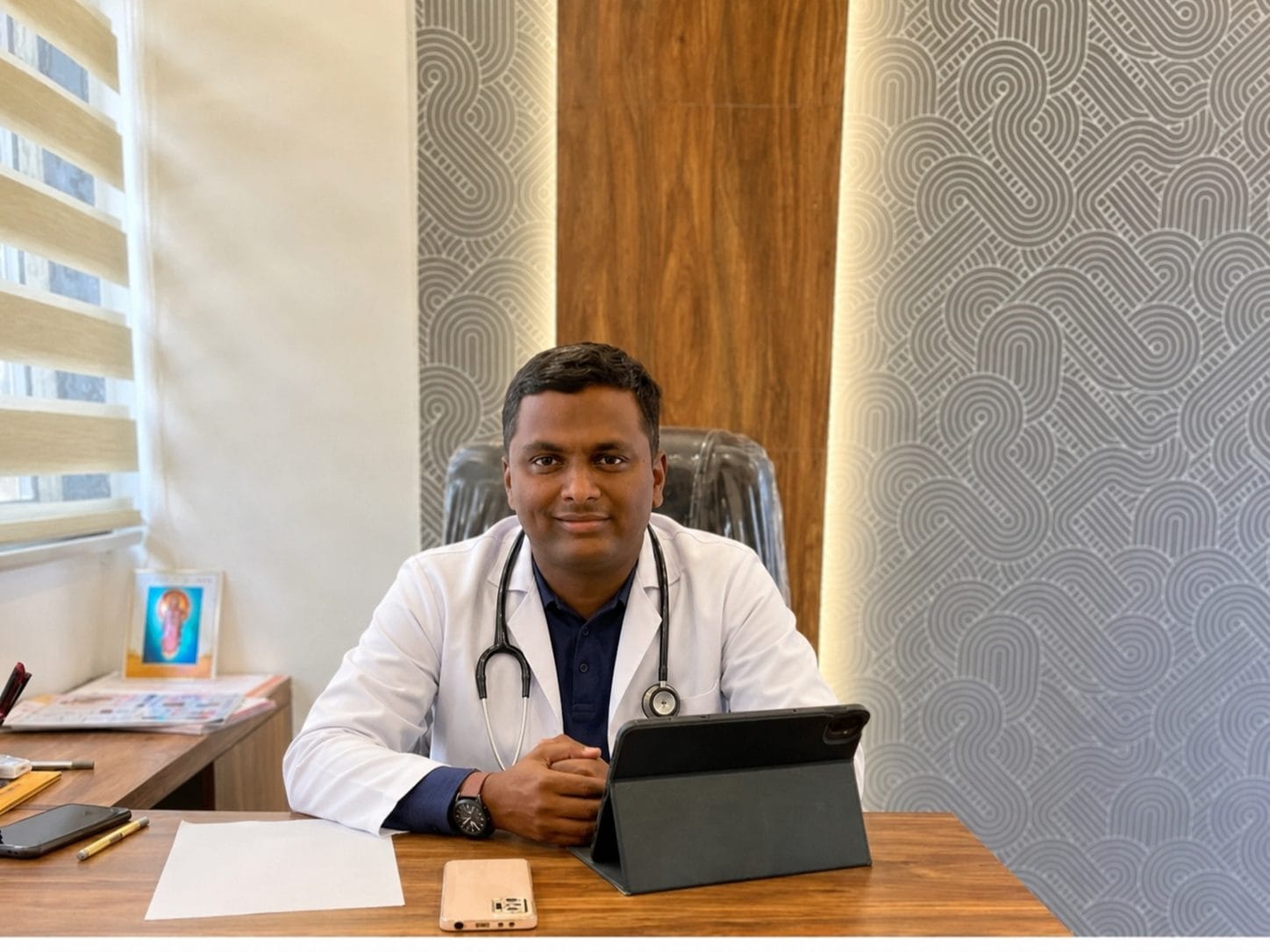
Dr. Phalle leads the joint-care and Panchakarma protocols at Ayusanjivani Ayurveda, with a treatment philosophy centred on classical diagnosis (Nadi Pariksha), individualised Sandhivata management, and honest guidance on when surgery genuinely is the better option. His clinical approach to knee arthritis draws on the same principles detailed in our knee arthritis and cartilage regeneration guide.
Ayusanjivani — Kharadi Clinic
Full Panchakarma and Janu Basti facility for knee osteoarthritis patients across East Pune. Read more about our Kharadi Ayurvedic clinic.
Call Kharadi ClinicAyusanjivani — Wagholi Clinic
Dedicated joint-care consultations and therapy sessions, convenient for patients across Wagholi and surrounding areas.
WhatsApp Wagholi ClinicReady to Explore a Non-Surgical Path for Your Knee?
Book a consultation with our Ayurvedic joint-care team at Kharadi or Wagholi and get a personalised, grade-wise treatment roadmap for your knee.