Knee Arthritis Treatment Without Surgery : A Complete Ayurvedic Guide to Long-Term Relief
Knee arthritis is one of the most common causes of chronic pain, stiffness, and reduced mobility among adults and senior citizens. Millions of people struggle with knee joint degeneration, making everyday activities such as walking, climbing stairs, sitting, and standing difficult and painful.In this article we will discuss in detail about knee arthritis treatment without surgery.
While many patients are advised to undergo knee replacement surgery, a large number of individuals seek safer and natural alternatives. Fortunately, effective knee arthritis treatment without surgery is possible through Ayurveda, lifestyle modifications, Panchakarma therapies, and personalized treatment plans.
At Ayusanjivani Ayurveda Hospital, Kharadi and Wagholi, Pune, we specialize in comprehensive Ayurvedic management of knee osteoarthritis, helping patients reduce pain, improve joint function, and delay or avoid surgery whenever possible.
What Is Knee Arthritis?
Knee arthritis refers to inflammation and degeneration of the knee joint cartilage. Cartilage acts as a cushion between bones. Over time, wear and tear can lead to cartilage breakdown, causing bones to rub against each other.
This results in:
- Knee pain
- Joint stiffness
- Swelling
- Reduced mobility
- Difficulty walking
- Grinding or cracking sounds
- Weakness around the knee
The condition can gradually worsen if not treated properly.
Types of Knee Arthritis :
1. Osteoarthritis (OA)
The most common form of arthritis.
Characteristics include:
- Age-related degeneration
- Cartilage wear and tear
- Progressive joint damage
- Common after age 45
2. Rheumatoid Arthritis (RA) :
An autoimmune condition where the body’s immune system attacks healthy joint tissues.
Symptoms include:
- Bilateral knee involvement
- Morning stiffness
- Joint swelling
- Fatigue
3. Post-Traumatic Arthritis :
Develops after:
- Knee injuries
- Ligament tears
- Fractures
- Sports injuries
Causes of Knee Arthritis:
Several factors contribute to knee arthritis development:
Ageing
Natural degeneration of cartilage with age.
Obesity
Excess body weight increases pressure on knee joints.
Previous Injuries
Past injuries accelerate joint degeneration.
Genetics
Family history increases susceptibility.
Sedentary Lifestyle
Weak muscles fail to support knee joints adequately.
Autoimmune Disorders
Conditions such as rheumatoid arthritis increase inflammation.
Symptoms of Knee Arthritis :
Common symptoms include:
Persistent Knee Pain :
Pain may worsen during:
- Walking
- Standing
- Climbing stairs
- Exercise
Joint Stiffness :
Especially noticeable:
- After waking up
- After prolonged sitting
Swelling :
Inflammation causes fluid accumulation around the knee.
Reduced Range of Motion :
Difficulty bending or straightening the knee.
Crepitus :
Grinding or cracking sensation during movement.
Instability :
Feeling that the knee may “give way.”
Can Knee Arthritis Be Treated Without Surgery?
Yes.
Many patients with mild, moderate, and even advanced osteoarthritis can experience significant improvement through non-surgical treatments.
The goals of conservative treatment are:
- Reduce pain
- Control inflammation
- Improve mobility
- Strengthen supporting muscles
- Slow cartilage degeneration
- Improve quality of life
- Delay or avoid surgery
Ayurveda provides a holistic approach that addresses the root cause rather than merely suppressing symptoms.
Understanding Knee Arthritis in Ayurveda :
In Ayurveda, knee arthritis is primarily associated with:
Sandhigata Vata :
“Sandhi” means joint and “Vata” refers to the dosha responsible for movement.
When aggravated Vata enters the joints, it causes:
- Pain (Shoola)
- Stiffness (Stambha)
- Cracking sounds (Atopa)
- Restricted movement
The degeneration seen in osteoarthritis closely resembles the Ayurvedic concept of Sandhigata Vata.
Why Ayurveda Is Effective for Knee Arthritis ?
Ayurveda aims to:
- Balance aggravated Vata Dosha
- Nourish joint tissues
- Improve lubrication
- Reduce inflammation
- Strengthen muscles and ligaments
- Improve overall mobility
Unlike painkillers that provide temporary relief, Ayurveda focuses on long-term management.
Ayurvedic Treatments for Knee Arthritis Without Surgery :
1. Panchakarma Therapy :
Panchakarma is one of the most effective treatments for chronic arthritis.
Benefits include:
- Detoxification
- Vata balancing
- Pain reduction
- Improved joint function
2. Janu Basti :
Janu Basti is a specialized Ayurvedic treatment for knee disorders.
Procedure:
- Warm medicated oil is retained over the knee joint.
- The oil penetrates deep tissues.
- Nourishes cartilage and ligaments.
Benefits :
- Reduces stiffness
- Relieves pain
- Improves flexibility
- Enhances lubrication
3. Abhyanga (Therapeutic Oil Massage) :
Medicated herbal oils are used to massage affected joints.
Benefits:
- Improves circulation
- Reduces pain
- Relaxes muscles
- Enhances mobility
4. Swedana (Herbal Fomentation) :
Heat therapy helps:
- Relieve stiffness
- Improve blood circulation
- Reduce muscle spasm
5. Patra Pinda Sweda :
Warm herbal leaf boluses are applied over joints.
Benefits include:
- Pain relief
- Reduced swelling
- Improved movement
6. Kati and Janu Therapies :
Localized treatments target affected joints and surrounding structures.
7. Basti Therapy :
Basti is considered one of the best Ayurvedic therapies for Vata disorders.
Benefits :
- Balances Vata
- Reduces inflammation
- Nourishes tissues
- Improves overall joint health
Many chronic arthritis patients experience remarkable improvement after a properly planned Basti course.
Ayurvedic Medicines for Knee Arthritis :
Treatment is individualized based on:
- Age
- Disease severity
- Constitution (Prakriti)
- Associated health conditions
Common Ayurvedic formulations may include:
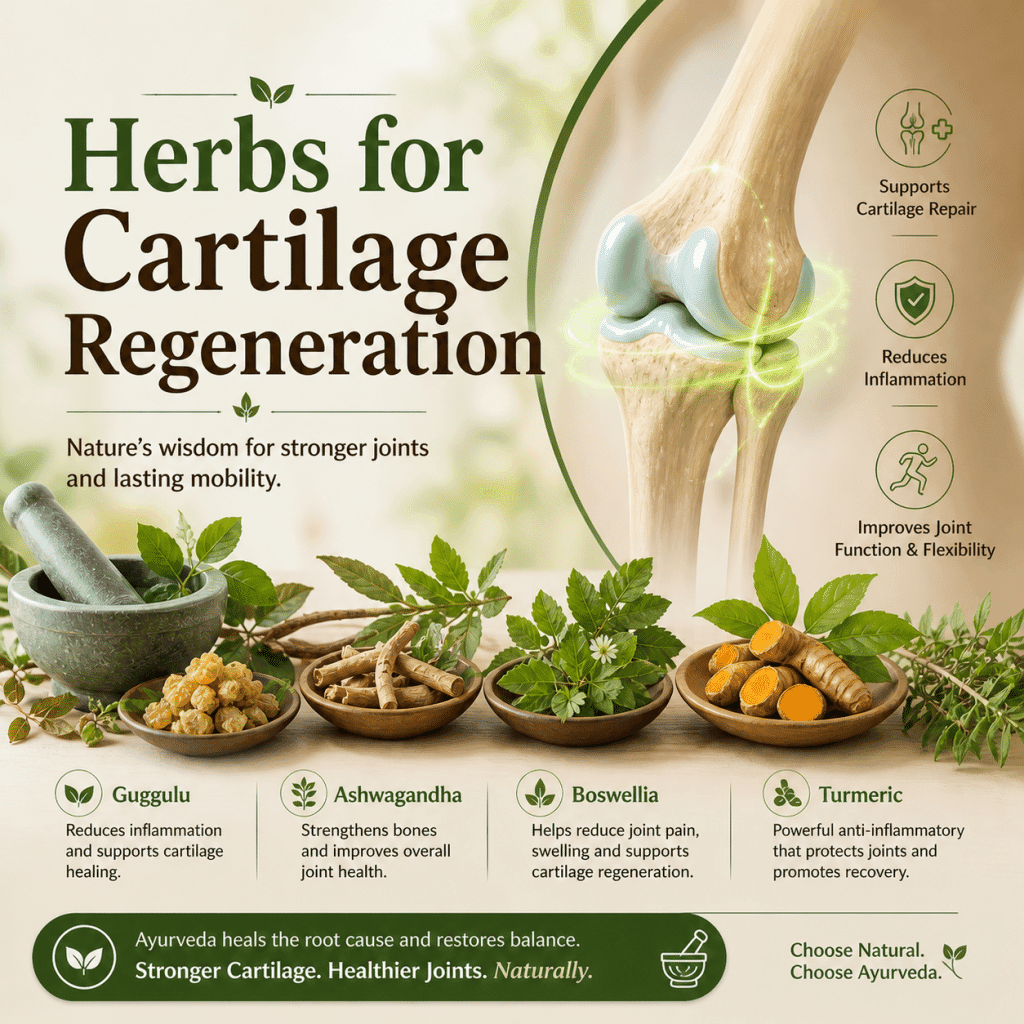
- Yograj Guggulu
- Mahayograj Guggulu
- Simhanad Guggulu
- Shallaki preparations
- Ashwagandha formulations
- Rasna-based medicines
- Dashmool preparations
Note: Medicines should always be prescribed by a qualified Ayurvedic physician.
Dietary Recommendations for Knee Arthritis :
Diet plays a crucial role in arthritis management.
Foods to Include :
Warm Foods :
- Soups
- Khichadi
- Cooked vegetables
Healthy Fats :
- Cow ghee
- Sesame oil
- Flax seeds
Anti-Inflammatory Foods :
- Turmeric
- Ginger
- Garlic
Protein Sources :
- Moong dal
- Lentils
- Paneer in moderation
Hydration :
Drink warm water throughout the day.
Foods to Avoid :
Avoid:
- Cold foods
- Refrigerated items
- Excess curd at night
- Processed foods
- Junk food
- Deep-fried foods
- Carbonated drinks
- Excess sugar
These foods may aggravate inflammation and Vata imbalance.
Exercises for Knee Arthritis :
Regular exercise strengthens supporting muscles.
Recommended exercises:
Quadriceps Strengthening :
Improves knee stability.
Straight Leg Raises :
Strengthens thigh muscles.
Hamstring Stretching :
Improves flexibility.
Cycling :
Low-impact exercise beneficial for joints.
Walking :
Moderate walking maintains mobility.
Yoga :
Beneficial asanas include:
- Tadasana
- Trikonasana
- Vrikshasana
- Setu Bandhasana
Always exercise under professional guidance.
Weight Management and Knee Arthritis :
Weight reduction is one of the most effective non-surgical treatments.
Research shows that even modest weight loss can significantly reduce pressure on knee joints.
Benefits include:
- Less pain
- Better mobility
- Reduced progression of arthritis
When Should You Consider Knee Replacement Surgery?
Surgery may be considered if:
- Severe cartilage loss is present
- Daily activities become impossible
- Conservative treatment fails
- Significant deformity develops
However, many patients can postpone surgery for years with proper Ayurvedic management.
Advantages of Knee Arthritis Treatment Without Surgery :
Natural Approach :
No artificial implants.
Reduced Risk :
Avoids surgical complications.
Cost Effective :
Often more affordable than surgery.
Personalized Treatment :
Tailored according to individual needs.
Whole Body Healing :
Improves overall health and well-being.
Success of Ayurvedic Treatment in Knee Arthritis :
Many patients experience:
- Reduced pain
- Improved walking ability
- Better joint flexibility
- Reduced dependence on painkillers
- Enhanced quality of life
Results vary depending on:
- Disease severity
- Age
- Lifestyle
- Treatment compliance
Early intervention generally yields better outcomes.
Why Choose Ayusanjivani Ayurveda Hospital for Knee Arthritis Treatment?
At Ayusanjivani Ayurveda Hospital, we provide comprehensive and evidence-based Ayurvedic care for knee arthritis.
Our approach includes:
- Detailed Ayurvedic assessment
- Personalized treatment protocols
- Specialized Panchakarma therapies
- Janu Basti treatments
- Basti therapy programs
- Diet and lifestyle counseling
- Exercise guidance
- Long-term arthritis management
We focus on helping patients achieve sustainable relief and improved mobility without unnecessary surgery.
Frequently Asked Questions :
Can Ayurveda cure knee arthritis permanently?
Cartilage degeneration may not always be completely reversible, but Ayurveda can significantly reduce symptoms and improve quality of life.
How long does treatment take?
Most patients notice improvement within a few weeks, while chronic cases may require several months of treatment.
Is Panchakarma effective for knee arthritis?
Yes. Panchakarma therapies, especially Basti and Janu Basti, are highly beneficial for managing Sandhigata Vata.
Can I avoid knee replacement surgery?
Many patients can delay or avoid surgery with timely and consistent Ayurvedic treatment.
Is treatment safe for elderly patients?
Yes, Ayurvedic therapies are generally safe when administered by qualified Ayurvedic physicians.
Conclusion :
Knee arthritis does not automatically mean knee replacement surgery. Through a combination of Ayurvedic medicines, Panchakarma therapies, dietary modifications, therapeutic exercises, and lifestyle correction, many patients can achieve significant pain relief and improved mobility.
If you are looking for knee arthritis treatment without surgery, Ayurveda offers a holistic, safe, and effective path toward better joint health and a more active life.
Consult Ayusanjivani Ayurveda Hospital :
Ayusanjivani Ayurveda Hospital
Kharadi & Wagholi, Pune
Dr. Shailesh Phalle (MD Ayurveda)
Phone: 9011609371
Website: www.ayusanjivani.com
Book your consultation today and explore natural, non-surgical solutions for knee arthritis management.
Disclaimer :
The information provided in this article, “Knee Arthritis Treatment Without Surgery: Ayurvedic Treatment in Pune,” is intended for educational and informational purposes only. It should not be considered medical advice, diagnosis, or a guarantee of treatment outcomes.
Ayurvedic treatment results may vary from person to person depending on factors such as the severity of arthritis, age, overall health condition, lifestyle, and adherence to the prescribed treatment plan. While Ayurveda aims to help manage symptoms, improve joint function, and enhance quality of life, no claim is made that every patient can completely avoid surgery or achieve identical results.
Patients experiencing knee pain, swelling, stiffness, difficulty walking, or other joint-related symptoms should consult a qualified healthcare professional for proper evaluation and diagnosis. Any decision regarding medical, surgical, or Ayurvedic treatment should be made after a thorough clinical assessment.
Ayusanjivani Ayurveda Clinic and Dr. Shailesh Phalle do not claim guaranteed cures, permanent results, or universal avoidance of surgery for all cases of knee arthritis. Treatment recommendations are individualized and based on the patient’s condition.
For personalized medical advice, please consult a qualified Ayurvedic physician or healthcare provider.
About the Author :
Dr. Shailesh Phalle, MD (Ayurveda) is a practicing Ayurvedic physician with over 15 years of clinical experience in managing chronic musculoskeletal disorders, arthritis, infertility, spine disorders, lifestyle diseases, and Panchakarma therapies. He is the Founder and Chief Consultant at Ayusanjivani Ayurveda Hospital, Pune.
Dr. Phalle specializes in evidence-based Ayurvedic treatment protocols that integrate classical Ayurvedic principles with modern diagnostic approaches. His clinical focus includes non-surgical management of knee arthritis, cervical spondylosis, lumbar disc disorders, rheumatoid arthritis, and chronic pain conditions.
He regularly educates patients through health awareness programs, medical articles, and Ayurvedic wellness initiatives aimed at promoting natural and holistic healthcare.
Qualifications:
- B.A.M.S.
- M.D. (Ayurveda)
- Panchakarma Specialist
- Consultant Ayurvedic Physician
Practice Locations:
- Ayusanjivani Ayurveda Hospital, Kharadi, Pune
- Ayusanjivani Ayurveda Hospital, Wagholi, Pune
Contact: 9011609371
Medically Reviewed By :
This article has been medically reviewed by Dr. Shailesh Phalle, MD (Ayurveda) to ensure the accuracy, relevance, and authenticity of the Ayurvedic information presented.
The content is based on classical Ayurvedic texts, current clinical practices, and practical experience in treating patients with knee arthritis and other musculoskeletal disorders.
Last Reviewed: June 2026