Ayurvedic Skin Care in Pune: How to Choose Between a General Skin Page and a Condition-Specific Consultation
Not every skin concern needs the same answer. This guide helps you decide when a general Ayurvedic skin-care routine is enough — and when it's time to book a condition-specific consultation with the best Ayurvedic doctor in Pune for your particular skin diagnosis.
Clinics in Wagholi and Kharadi, Pune
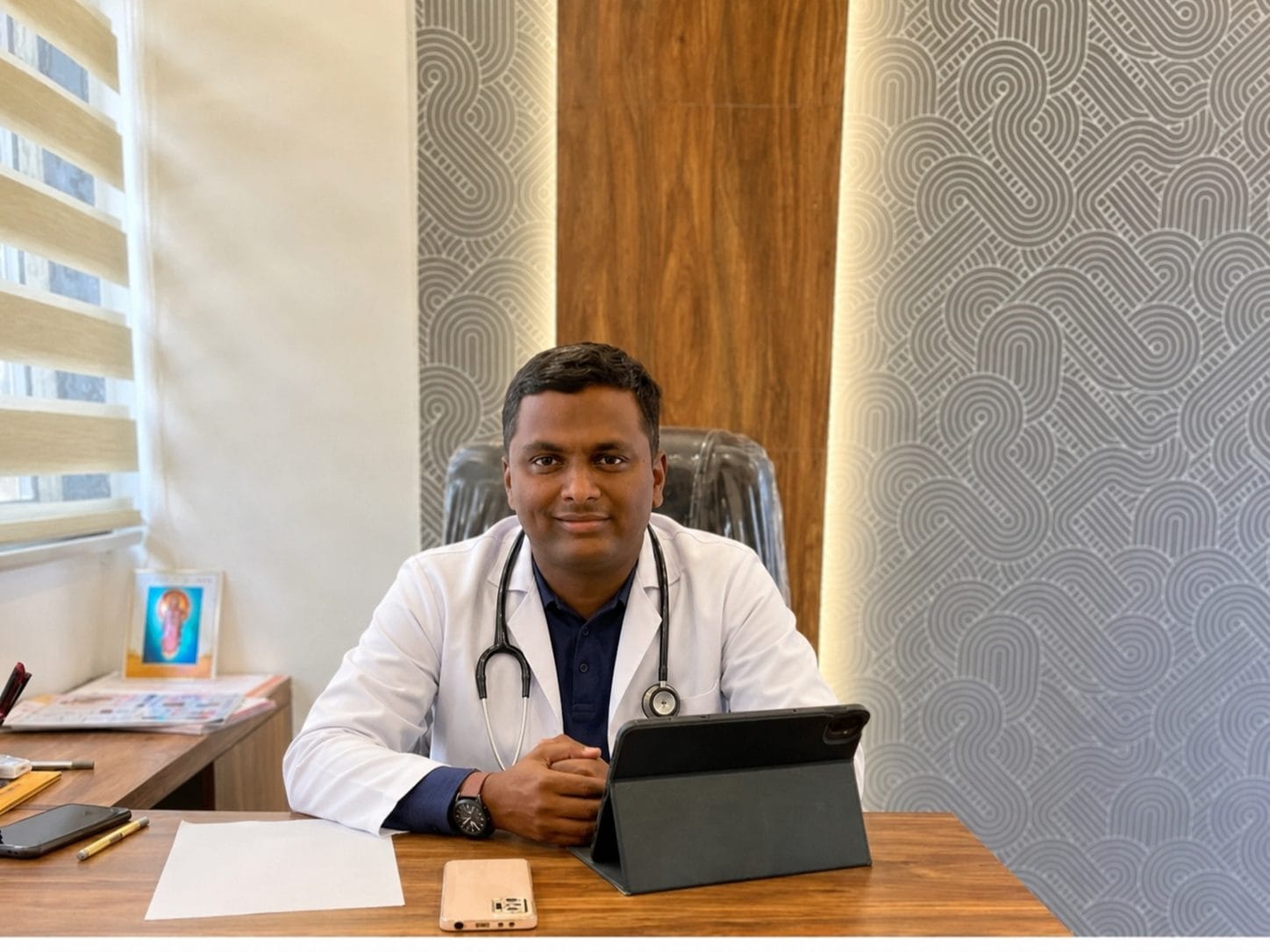
Medically reviewed by Dr. Shailesh Shamkant Phalle, BAMS, M.D. (Kayachikitsa) — Ayurvedic Physician, Ayusanjivani Ayurveda Centre.
Written for patient education. This article does not replace an in-person consultation.
Quick Answer
A general Ayurvedic skin-care page is enough if you're managing ordinary dryness, oiliness, or dullness tied to your Prakriti (Vata, Pitta, or Kapha skin type). You need a condition-specific consultation with the best Ayurvedic doctor in Pune if you have a diagnosed or suspected skin disease — such as vitiligo, psoriasis, eczema, or a persistent rash — since these fall under classical Kushtha Roga and require dosha-specific diagnosis, internal medicine, and often Panchakarma procedures like Virechana or Raktamokshana, not just topical oils.
What Does "Ayurvedic Skin Care" Actually Mean?
In classical Ayurveda, Twak (skin) is described as having seven layers, each connected to a deeper tissue (dhatu) — from Rasa and Rakta near the surface down to Asthi, Majja, and Shukra. Skin colour, texture, and complexion are governed primarily by Bhrajaka Pitta, a sub-type of Pitta dosha responsible for metabolic and pigment-related functions in the skin, while Rakta Dhatu (blood tissue) directly nourishes it. This is precisely why Ayurveda treats skin problems as signals from deeper systems, not as a surface-only issue to be creamed over.
"Ayurvedic skin care" is often used loosely online to mean anything from a home oil-massage routine to a full clinical treatment protocol for a diagnosed skin disease. That looseness is exactly the problem this guide addresses: before you search for the best Ayurvedic clinic in Pune, it helps to know which category your concern actually falls into.
General Skin Page vs Condition-Specific Consultation: What's the Real Difference?
A general skin-care page (the kind most clinic websites publish) typically covers Prakriti-based skin types, seasonal routines, Abhyanga (oil massage), and broad dietary advice for glow and texture. It's written for someone without a diagnosed condition — the Ayurvedic equivalent of a dermatologist's general skincare blog.
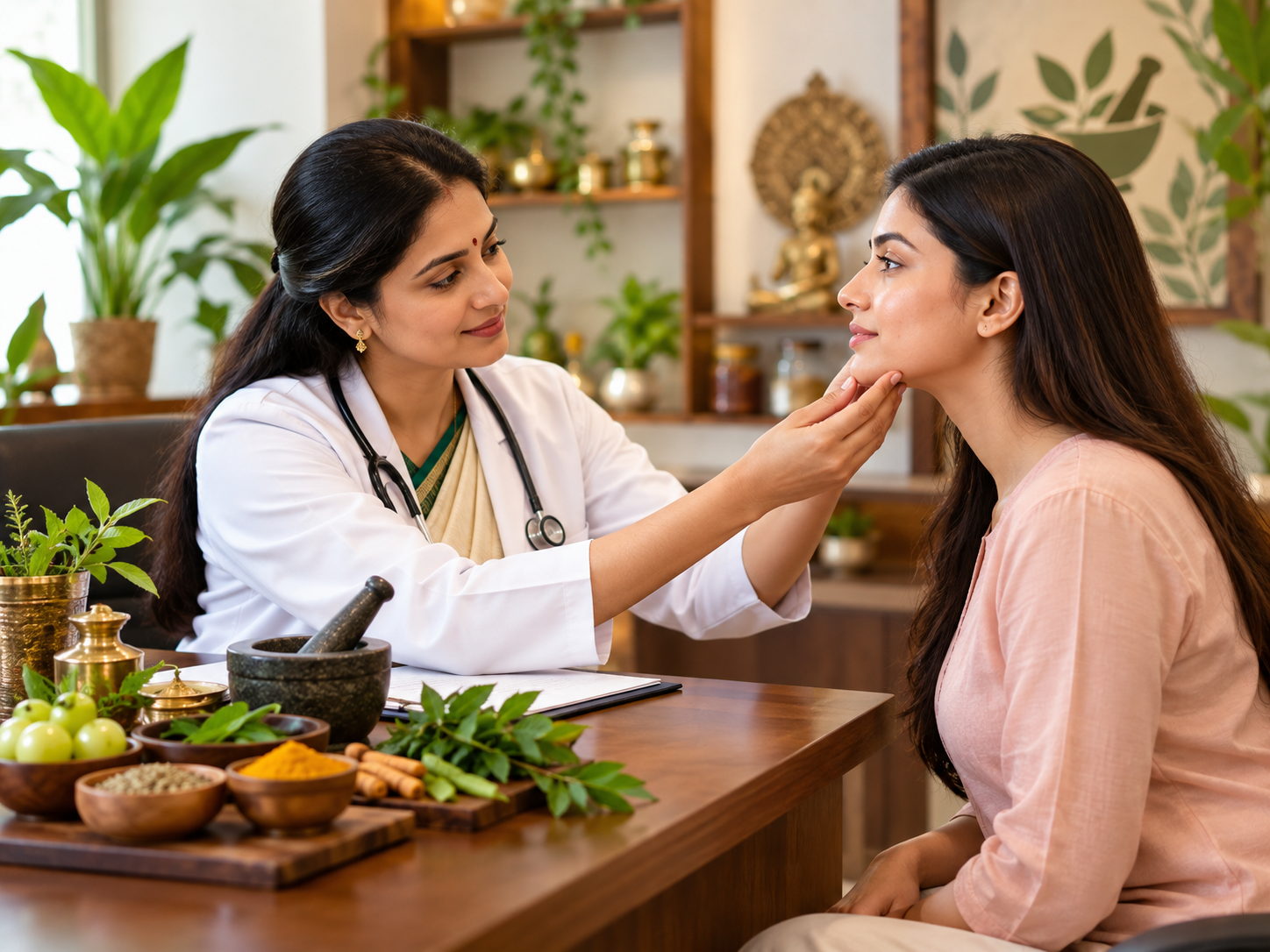
A condition-specific consultation is an actual clinical visit built around a named or suspected diagnosis — vitiligo, psoriasis, eczema, fungal infection, lichen planus, or persistent acne — where the doctor needs to examine the lesion, take a detailed history, identify the dosha and Kushtha type involved, and often combine internal medicine with Panchakarma procedures. Reading a general page will not tell you whether your patch of discoloured skin is simply sun-related pigmentation or early vitiligo — only an in-person consultation can.
When a General Skin-Care Routine Is Enough
You can usually start with general Prakriti-based skin care — Abhyanga, seasonal diet adjustments, and basic routine changes — if your concern looks like this:
- Occasional dryness, dullness, or rough texture that changes with the season
- Mild oiliness or enlarged pores without inflamed breakouts
- General "glow" or anti-ageing goals with no specific lesion, rash, or discolouration
- Skin that reacts predictably to known triggers (sun, heat, specific cosmetics) and settles on its own
For this category, our page on Abhyanga for ayurvedic skin nourishment is a good starting point.
When You Need a Condition-Specific Consultation
Book an actual consultation — not just a home routine — if you notice any of the following:
✔ General Routine Is Usually Fine
- Seasonal dryness or oiliness
- No defined patch, lesion, or rash
- Skin reacts to a known, avoidable trigger
- No itching, scaling, or spreading over time
- Goal is glow/texture, not a diagnosis
⚠ See a Doctor for a Condition-Specific Plan
- A white or depigmented patch that is growing or new
- Thick, scaly, silvery plaques with redness
- Persistent itching with oozing or crusting
- A rash lasting more than 2–3 weeks despite home care
- Lesions affecting the face, scalp, or nails
How Ayurveda Classifies Skin Disease: Dosha & Kushtha
Classical Ayurvedic texts group almost all skin diseases under the umbrella term Kushtha, further divided into Maha Kushtha (major/deep-rooted) and Kshudra Kushtha (minor/localised) types, based on which doshas and tissues (Vata, Pitta, Kapha, Rakta, Mamsa, Lasika) are involved and how deep the vitiation runs. This is also why your constitutional skin type matters even outside a diagnosed condition:
Vata Skin Type
Naturally dry, thin, and rough; prone to flaking and premature fine lines, especially in winter.
Pitta Skin Type
Naturally warm, oily-to-combination, prone to redness, sensitivity, acne, and pigmentation — the dosha most implicated in inflammatory skin conditions.
Kapha Skin Type
Naturally thick, oily, and resilient; prone to clogged pores, cystic breakouts, and slower-healing, thicker lesions when vitiated.
Most diagnosed skin diseases involve vitiated Pitta and Rakta (blood) working together, which is precisely why blood-purifying therapies like Raktamokshana and Virechana feature so often in condition-specific skin protocols rather than in routine skin-care advice.
Common Skin Conditions We Treat as Specific Cases
These are the conditions where a general page genuinely cannot substitute for a diagnosis and individualised protocol:
Vitiligo (Shwitra)
Depigmented patches linked to Bhrajaka Pitta and Rakta vitiation. Needs early, accurate diagnosis — several myths around this condition make self-treatment risky.
Psoriasis (Kitibha/Eka Kushtha)
Thick, scaly, Vata-Kapha dominant plaques, often managed with a combination of internal medicine and Panchakarma-based protocols.
Eczema (Vicharchika)
Itchy, oozing, Kapha-Pitta dominant lesions. See how it differs diagnostically from psoriasis in our psoriasis vs eczema comparison.
Melasma & Pigmentation
Patchy facial pigmentation tied to Pitta aggravation, often worsened by sun exposure and hormonal factors.
Acne Vulgaris
Recurrent, inflamed, or cystic acne that hasn't responded to basic topical care — a Kapha-Pitta pattern requiring internal correction.
Fungal Infections (Dadru)
Classically Kapha-Pitta dominant, ring-shaped, itchy lesions needing accurate identification before treatment.
How We Diagnose Skin Conditions at Ayusanjivani
Before recommending any skin protocol, our approach combines classical assessment with careful clinical examination:
- Nidan Parikshan (case history): Onset, triggers, family history, diet, and lifestyle factors.
- Direct lesion examination: Colour, border, scaling, distribution, and progression of the affected area.
- Prakriti-Vikriti assessment: Identifying your natural constitution and the current dosha imbalance driving the condition.
- Kushtha-type classification: Narrowing down which classical skin-disease category and dosha combination applies, which determines whether internal medicine alone is enough or Panchakarma is needed.
This same structured, doctor-led approach is what we use across other chronic conditions — for example, our arthritis diagnosis process follows the same principle of assessment before protocol.
Panchakarma & Upakarma Therapies Used in Skin Care
Where a condition is confirmed to need more than topical care, treatment typically draws from two categories: the five classical Panchakarma procedures, and supporting Upakarma (secondary) therapies.
Virechana
Therapeutic purgation to eliminate excess Pitta — one of the most frequently used Panchakarma procedures for chronic, Pitta-dominant skin disease.
Raktamokshana
Blood-purification therapy, commonly via medicinal leech application, for localised and inflammatory skin lesions.
Basti
Used in select chronic, Vata-dominant skin presentations alongside other procedures, as part of a broader constitutional correction.
Abhyanga (Upakarma)
A supporting oil-massage therapy used both independently for general skin health and as preparatory Snehana before main Panchakarma procedures.
For the full breakdown of how Panchakarma packages are structured and priced in Pune, see our detailed guide on Panchakarma treatment cost in India.
Choosing the Best Ayurvedic Clinic in Pune for Skin Care
Once you know you need a condition-specific consultation, the next question is who to see. A few checks separate a genuinely qualified setup from a generic wellness centre using Ayurveda as a marketing label:
- The doctor is BAMS/MD-qualified and personally examines the lesion — not a technician or front-desk assessment.
- They ask about your full history — diet, stress, prior treatments, family history — not just the visible patch.
- They explain the Kushtha type and dosha involved in plain language, so you understand why a specific protocol is recommended.
- Panchakarma is offered only where clinically indicated, not pushed as a default package for every skin complaint.
- They set realistic expectations about timelines and give written aftercare and diet (Pathya-Apathya) guidance.
This is the standard we hold ourselves to as a best Ayurvedic clinic in Pune candidate for skin care — every case, whether at our Wagholi or Kharadi clinic, starts with the doctor, not a package menu.
Pune Pricing Comparison: General vs Condition-Specific Skin Care
Ayurvedic consultation fees across Pune's dermatology and Ayurveda clinics commonly fall into a few broad bands, and skin-care costs scale sharply depending on whether you need general advice or a full condition-specific protocol. Here's a realistic comparison to set expectations before you call any clinic — including ours.
| Type of Visit | Typical Fee Range (Pune) | What It Usually Includes |
|---|---|---|
| General Ayurvedic skin consultation | ₹200 – ₹500 | Prakriti assessment, basic diet/routine advice, no lab or lesion workup |
| Condition-specific first consultation (vitiligo/psoriasis/eczema) | ₹500 and above | Detailed history, lesion examination, Kushtha-type diagnosis, written treatment plan |
| Short internal-medicine course (2–4 weeks) | Varies by medicines prescribed and follow-up frequency | Herbal formulations, dietary protocol, periodic doctor review |
| Panchakarma-based protocol (Virechana/Raktamokshana course) | Priced per procedure and duration, quoted after assessment | Purvakarma, the main procedure, medicines, and Paschatkarma diet guidance |
These ranges reflect general market patterns across Pune's Ayurveda and dermatology clinics and are not a quote for any specific provider. The only way to get an accurate number for your situation is a doctor's assessment — self-diagnosing from a price list online is a common mistake that delays proper treatment.
Treatment Timeline: What to Expect
Skin conditions respond at different speeds depending on chronicity and the tissue depth involved:
- Mild, recent-onset conditions (acute rash, early acne flare): Often show visible change within 2–4 weeks of starting a tailored protocol.
- Moderate, established conditions (ongoing eczema, mild-to-moderate psoriasis): Typically need 6–12 weeks of combined internal medicine and lifestyle correction for meaningful improvement.
- Chronic or deep-rooted conditions (long-standing vitiligo, extensive psoriasis): May require several months of phased treatment, sometimes including a Panchakarma course, with progress reviewed periodically rather than expected all at once.
Your doctor will outline a realistic, condition-specific timeline at your first visit — be cautious of any clinic that promises a fixed, universal timeframe before even examining you.
Skin Care in Kharadi & Wagholi, Pune
Ayusanjivani Ayurveda Centre offers both general skin-care guidance and condition-specific consultations across two Pune clinics, with the same doctor-led standard at each.
📍 Ayusanjivani — Kharadi
Full skin-condition consultations, Panchakarma facilities, and doctor-led diagnosis for vitiligo, psoriasis, eczema, and other skin disorders. See our Ayurvedic clinic in Kharadi and Panchakarma treatments in Kharadi, Pune.
Call Kharadi Clinic📍 Ayusanjivani — Wagholi
The same doctor-supervised skin-care and Panchakarma protocols, extended to patients across Wagholi and the Nagar Road belt.
WhatsApp Wagholi ClinicBoth clinics follow the same treatment philosophy and are supervised directly by Dr. Phalle, ensuring consistent quality of care regardless of which location is more convenient for you.
Reviewed by Dr. Shailesh Shamkant Phalle
BAMS, M.D. (Kayachikitsa) — Ayurvedic Physician, Ayusanjivani Ayurveda Centre, Kharadi & Wagholi, Pune.
This article is for general health education and does not replace an in-person medical evaluation. Skin conditions can resemble one another visually; a proper diagnosis should always come from a qualified doctor before starting any treatment.
Frequently Asked Questions
If you notice a defined patch, persistent itching, scaling, spreading, or a rash lasting more than 2–3 weeks despite basic care, it's time for a consultation rather than continuing home remedies. See the comparison table earlier in this guide for a quick self-check.
Ayurveda offers structured, dosha-specific management for these conditions using internal medicine, diet correction, and Panchakarma procedures where indicated. Results vary by individual, chronicity, and extent of the condition — a doctor's assessment is needed to set realistic expectations for your specific case.
No. Many mild or recent-onset skin conditions respond well to internal medicine and diet correction alone. Panchakarma procedures like Virechana or Raktamokshana are generally reserved for chronic, deep-rooted, or Pitta-Rakta dominant conditions, based on the doctor's assessment.
General Ayurvedic skin consultations in Pune typically range from about ₹200 to ₹500, while a detailed condition-specific consultation involving diagnosis and a treatment plan is usually ₹500 and above. Exact pricing depends on the clinic and the complexity of your case.
Mild cases may show change within 2–4 weeks, moderate conditions often need 6–12 weeks, and chronic or extensive conditions can take several months of phased treatment. Your doctor will give you a realistic, condition-specific estimate after examination.
In many cases, yes — but any combined approach should be discussed with both treating doctors, especially if internal medicines are involved, to avoid interactions or conflicting advice.
Yes, Ayusanjivani Ayurveda Centre offers both general skin-care guidance and condition-specific consultations at both our Kharadi and Wagholi clinics in Pune. Call +91 84323 29371 or message us on WhatsApp to book at your preferred location.