Thyroid & Ayurveda in Pune: How to Evaluate a Practitioner's Approach, Diagnosis and Follow-Up
A research-based guide to thyroid treatment in Ayurveda in Pune — how to recognise the best Ayurvedic doctor in Punefor your case, what a proper diagnosis should include, how follow-up should work, and what the whole journey realistically costs, compared with other routes.
Clinics in Kharadi and Wagholi, Pune · Last reviewed September 2026
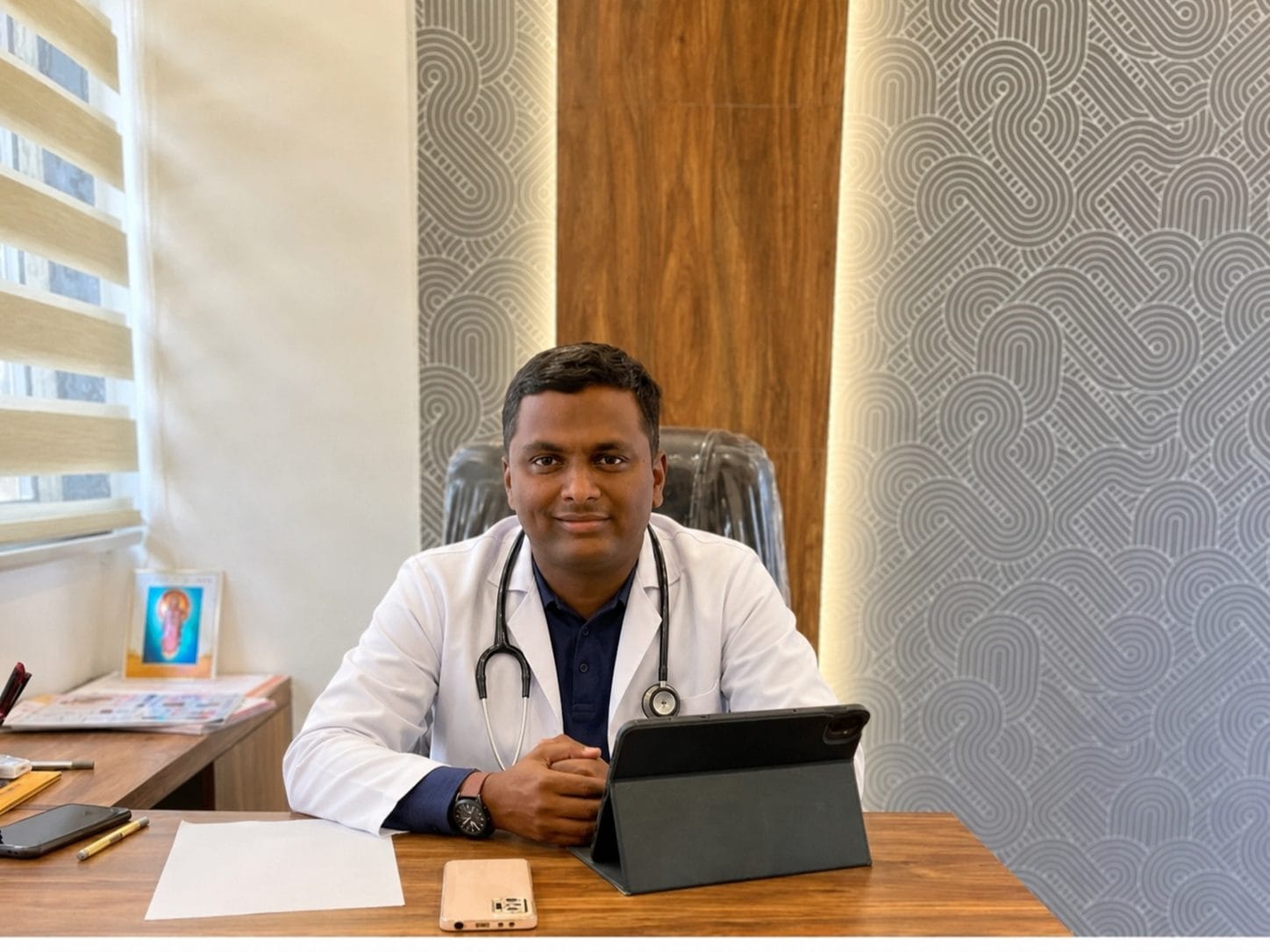
Medically reviewed by Dr. Shailesh Shamkant Phalle, BAMS, M.D. (Kayachikitsa) — Ayurvedic Physician, author of Thyroidology in Ayurveda, Ayusanjivani Ayurveda Centre.
Written for patient education. It does not replace an in-person consultation or your endocrinologist's advice.
Quick Answer
Good thyroid treatment in Ayurveda in Pune is a supervised, documented plan that runs alongside — not instead of — your blood tests and any thyroid medicine your physician has prescribed. A credible practitioner should read your TSH/FT4 reports (and antibodies or neck ultrasound where relevant), assess your Prakriti and digestive strength, explain every herb and therapy in plain language, never ask you to stop levothyroxine or antithyroid tablets on your own, avoid "permanent reversal" promises, and schedule repeat testing — commonly 6–8 weeks after any change and every 3–6 months while things settle.
Why Thyroid Problems Are So Common in Pune
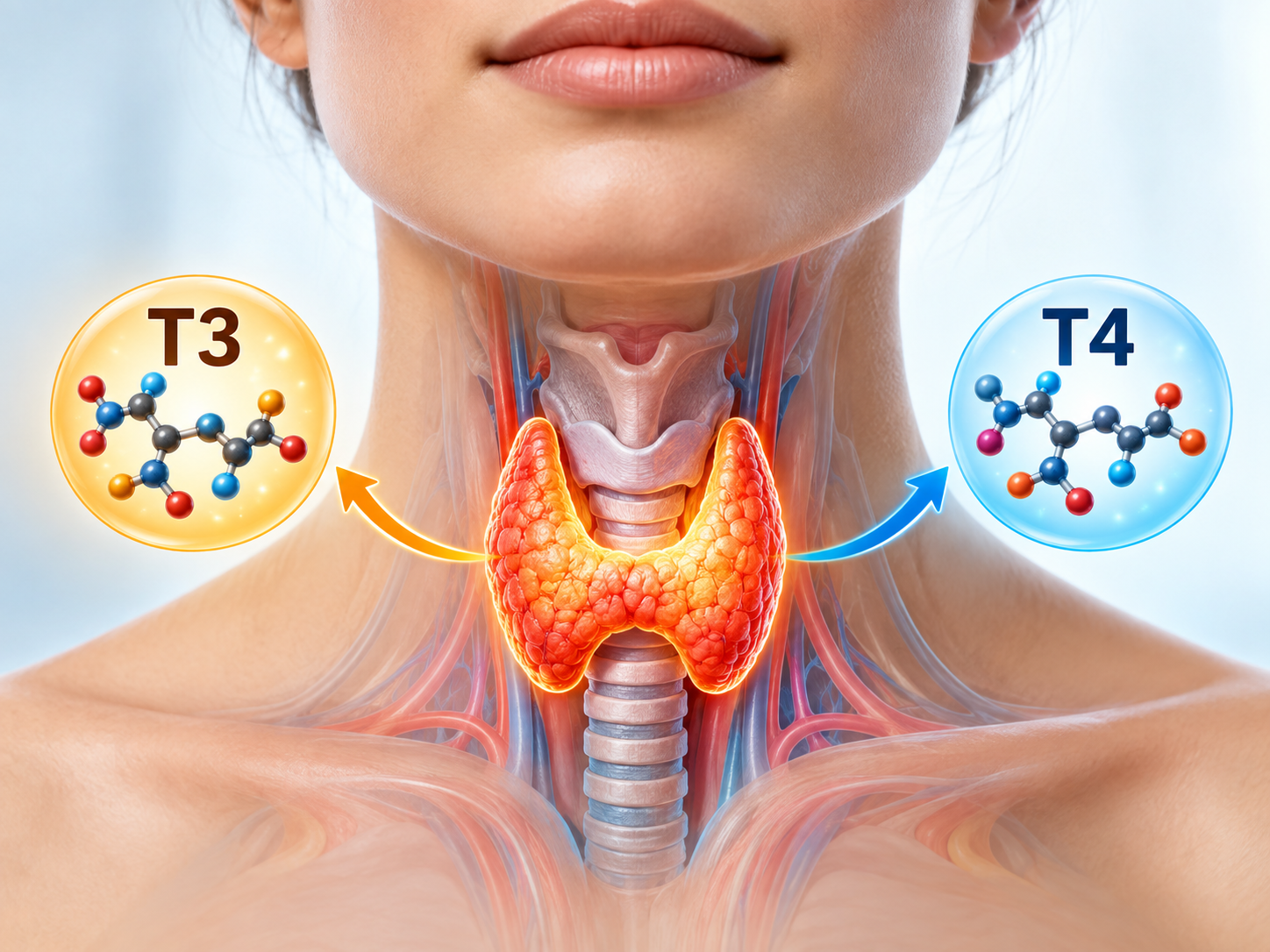
The thyroid is a small, butterfly-shaped gland at the base of the neck that releases thyroxine (T4) and triiodothyronine (T3). These hormones set the pace of nearly every tissue — heart rate, digestion, body temperature, mood, skin, hair, menstrual rhythm and energy. When the gland makes too little, everything slows; when it makes too much, everything speeds up. Indian population studies have reported hypothyroidism in roughly one in ten adults, with women affected considerably more often than men, and Pune's profile makes the picture familiar in clinics here: long desk hours in Kharadi, Hinjewadi and Magarpatta, disturbed sleep, chronic stress, postpartum and perimenopausal changes, and a strong pool of autoimmune thyroid disease.
The difficulty is that thyroid symptoms — tiredness, weight change, hair fall, low mood, constipation, palpitations, irregular periods — overlap with dozens of other conditions. That is why so many people arrive at an Ayurvedic clinic after months of self-diagnosis, and why the first thing a responsible practitioner should do is confirm what is actually happening with a blood test. Our short explainer on the causes of constant tiredness shows why fatigue alone should never be labelled "thyroid" without testing, and our note on thyroid and weight gain explains why the scale is a poor stand-alone marker.
Types of Thyroid Disorders (and Why the Type Decides Everything)
"Thyroid problem" is not one diagnosis. Whether a practitioner is Ayurvedic or allopathic, the first question is which thyroid problem you have, because the safe approach differs sharply between an underactive gland, an overactive one, an autoimmune flare and a lump. If a clinic offers one universal "thyroid package" without asking which type you have, treat that as a warning sign. Our comparison of hypothyroidism versus hyperthyroidism lays out the differences in more depth.
Hypothyroidism (Underactive)
Raised TSH with low or low-normal FT4. Typical features: fatigue, weight gain, cold intolerance, constipation, dry skin, hair thinning, low mood, heavy or irregular periods.
Hyperthyroidism (Overactive)
Suppressed TSH with raised T3/T4. Typical features: weight loss despite appetite, palpitations, tremor, heat intolerance, anxiety, loose stools. Needs medical assessment first.
Hashimoto's Thyroiditis
An autoimmune cause of hypothyroidism, identified by anti-TPO antibodies. Course is often long-term and fluctuating, so steady follow-up matters more than any single test.
Subclinical Hypothyroidism
Mildly raised TSH with normal FT4. Whether to treat depends on the TSH level, antibodies, symptoms, age and pregnancy plans — a judgement call best made with your physician.
Goitre & Thyroid Nodules
Visible or palpable neck swelling needs an ultrasound and, when advised, further tests. A lump is never something to manage by guesswork or by massaging the neck.
Pregnancy & Postpartum Thyroid Changes
Thyroid needs change in each trimester and after delivery, and untreated dysfunction can affect both mother and baby. Co-ordinated care is essential.
The Ayurvedic View: Galaganda, Doshas, Agni and Ama
Classical Ayurvedic texts, including the Sushruta Samhita, describe neck swellings under the heading Galaganda and discuss glandular swellings (Granthi) and their dosha basis. Modern thyroid disease — defined by hormone levels and antibodies — is not a one-to-one match with those classical categories, and an honest practitioner will say so. What Ayurveda offers is a framework for interpreting the patient: how strong is digestion (Agni), is there accumulated metabolic residue (Ama), which doshas are dominant, and how do sleep, stress, food timing and bowel habit feed the picture.
In practice, many Ayurvedic physicians read hypothyroid patterns as Kapha-Vata predominant with sluggish Agni (Mandagni), Ama and disturbed fat tissue metabolism (Medo-dhatu) — matching the heaviness, weight gain, coldness and constipation. Hyperthyroid patterns are more often read as Pitta-Vata predominant, with heat, sharpness, restlessness and rapid metabolism. These are interpretive maps that guide diet, lifestyle and therapy selection; they are not substitutes for measuring TSH and FT4.
Why the Dosha Map Still Matters
Two people with the same TSH can feel completely different — one exhausted and constipated, the other wired and sleepless. Blood tests describe the hormone level; the Ayurvedic assessment describes the person carrying it. A good plan uses both, and a good practitioner can explain in simple words why your therapy is different from your neighbour's.
Where Ayurveda Fits Alongside Modern Thyroid Care
Thyroid hormone replacement (levothyroxine) for established hypothyroidism, and antithyroid drugs, radioactive iodine or surgery for hyperthyroidism, are the mainstays of modern management, and their doses are set by measuring blood levels. Ayurvedic care, at its most credible, does not compete with that framework. It supports the parts of thyroid illness that hormone tablets alone often leave untouched: persistent tiredness despite "normal" reports, digestive sluggishness and constipation, weight and metabolism, hair and skin, sleep, stress load, muscle and joint aches, and menstrual regularity.
It is also important to be candid about evidence. Controlled clinical trials of Ayurvedic protocols in thyroid disease are still limited, so a trustworthy practitioner speaks in terms of "supporting symptoms and overall wellbeing, monitored by your reports" rather than "reversing" the disease. Any change in thyroid medication should be made only by the prescribing physician after repeat testing. Our note on why a single pill is not the whole story explores this balance in more detail.
Important Safety Rule
Never stop or reduce levothyroxine, carbimazole, methimazole or any prescribed thyroid medicine on your own — whatever a clinic, video or advertisement suggests. Stopping abruptly can cause a relapse or complications. Any adjustment should follow repeat blood tests and be agreed with your prescribing doctor.
How to Evaluate a Practitioner: An 8-Point Checklist
Search results for the best Ayurvedic clinic in Pune or the best Ayurvedic doctor in Pune are dominated by ratings, ads and directory listings — none of which tell you whether your thyroid will be handled safely. These eight questions do.
- Registered, qualified and identifiable. Is the treating doctor a BAMS or MD (Ayurveda) with registration in the State Council (in Maharashtra, the Maharashtra Council of Indian Medicine)? Can you see the name and qualification of the person who will actually treat you, not just the clinic brand?
- Your reports are read before anything is prescribed. A serious thyroid consultation begins with your TSH, FT4/FT3 and any antibody or ultrasound reports. If nobody asks to see them, the plan is not personalised to your thyroid.
- You are told which thyroid condition you have. The practitioner should name the pattern (for example, autoimmune hypothyroidism, subclinical, Graves' type) and explain it in both modern and Ayurvedic terms.
- A clear stance on your current medication. The right answer is "continue your tablets; we will review with repeat tests and your physician." Anything else is a red flag.
- Herbs and formulations are named and explained. You should be able to ask what each medicine is, why it was chosen, from which manufacturer, and what to watch for. Some herbs and iodine-rich supplements can alter thyroid readings, so transparency is a safety issue.
- Promises are realistic. Statements such as "thyroid free forever" or "stop tablets in a month" are not consistent with how chronic thyroid disease behaves. Progress is described as symptom relief, stability of reports and reduced dependence if your physician agrees.
- A written plan with a follow-up schedule. Dates for review, dates for repeat blood tests, and what happens if symptoms worsen.
- Openness to co-management. A confident practitioner is comfortable with you sharing notes with your endocrinologist or family physician, and will refer you when something falls outside Ayurvedic scope.
Green Flags vs Red Flags
✔ Green Flags
- Asks for TSH, FT4/FT3, antibody and ultrasound reports
- Explains your diagnosis and the reasoning behind each therapy
- Tells you to continue prescribed thyroid medicine until reports say otherwise
- Schedules repeat tests and reviews in writing
- Discloses herbs, formulations and possible interactions
- Refers you for scans, endocrinology or emergency care when needed
- Quotes fees per consultation, therapy and medicine
✘ Red Flags
- Prescribes without looking at any blood report
- Advises stopping levothyroxine or antithyroid tablets immediately
- Promises "permanent" or "guaranteed" reversal in a fixed number of days
- Sells a single sealed "thyroid kit" without naming the ingredients
- Never repeats a blood test during treatment
- Recommends massaging or pressing a neck lump
- Large prepaid packages with no itemised breakdown or clear exit terms
What a Proper Diagnosis Should Include
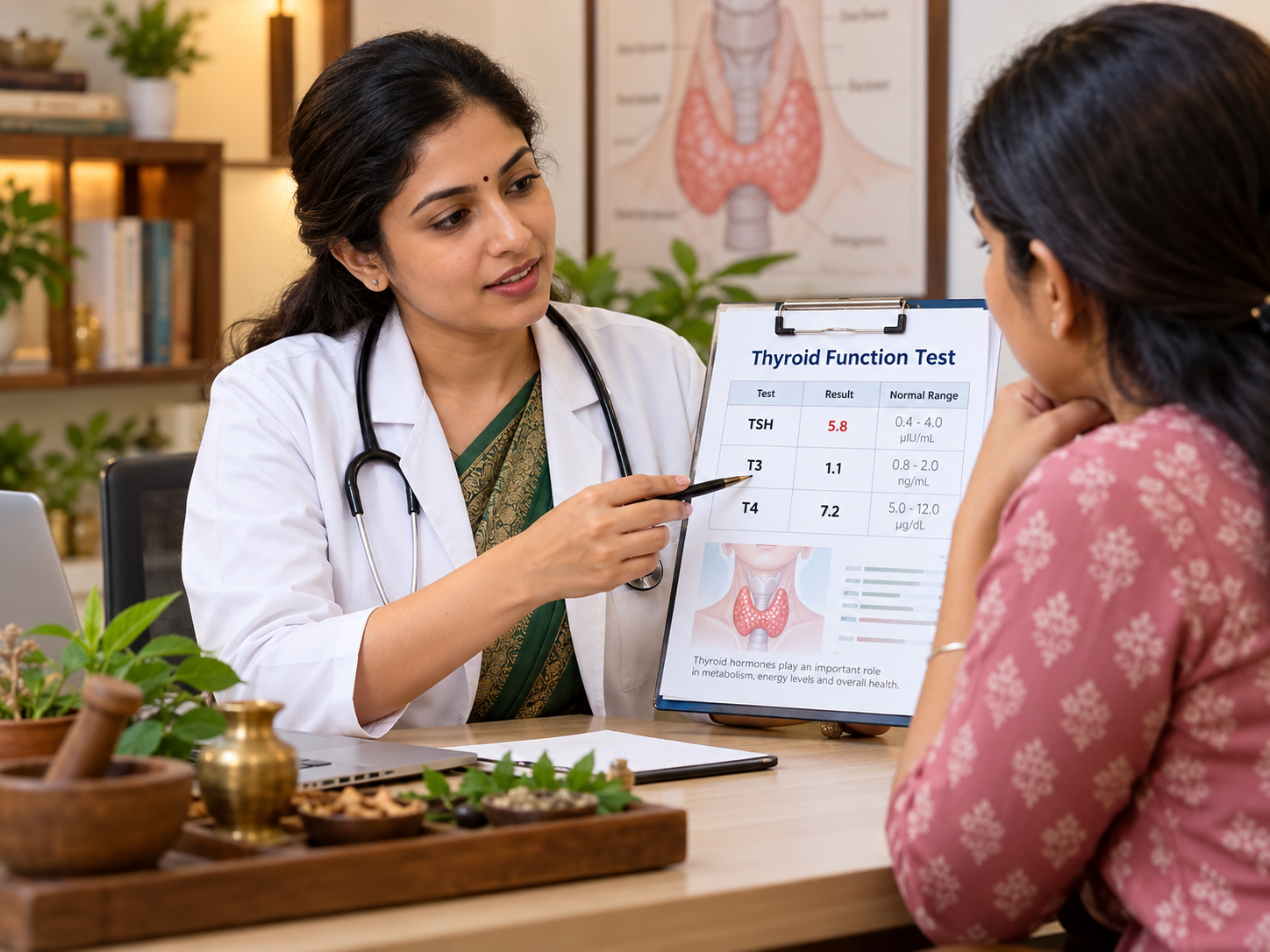
Diagnosis is where most of the difference between a careful clinic and a careless one shows up. A good Ayurvedic thyroid consultation blends laboratory evidence with classical examination.
1. Blood Tests
TSH is usually the first screen. FT4 (and FT3 when needed) show the actual hormone level. Anti-TPO antibodies point to autoimmune disease; TSH-receptor antibodies matter in suspected Graves' disease. Reference ranges differ between labs, so always use the range printed on your own report.
2. Neck Examination & Ultrasound
A physical examination of the neck, and an ultrasound when there is swelling, a nodule or a strong family history, help separate simple functional problems from structural ones.
3. Medicine & Supplement History
Levothyroxine timing, calcium, iron, biotin, kelp or iodine supplements and certain herbs can change either your absorption or your test results. Biotin in particular can distort some thyroid immunoassays — tell the lab and your doctor before testing.
4. Ayurvedic Assessment
Prakriti (constitution), Vikriti (current imbalance), Agni, bowel habit (Koshtha), sleep, appetite, pulse (Nadi) and signs of Ama guide the choice of diet, herbs and therapy.
5. Baseline Symptom Record
Weight, resting pulse, energy, bowel pattern, sleep, hair fall and cycle dates are noted at the start so progress can be judged against something real, not memory.
6. Life-Stage Context
Age, pregnancy plans, postpartum status, menopause, PCOS, diabetes and family history change both the targets and the safe therapies.
Ayurvedic Medicines, Panchakarma and Upakarma: What a Thyroid Plan May Contain
A thyroid plan at a reputable Ayurvedic centre is usually assembled from four layers, and the practitioner should be able to tell you which layers apply to you and why.
Layer 1 — Internal Medicines
Ayurvedic physicians commonly use classical formulations and single herbs such as Guggulu preparations (for example Kanchanar Guggulu, traditionally used for glandular swellings), Punarnava, Triphala, Brahmi, Ashwagandha and Shilajit, selected according to your pattern. Two cautions apply. First, "herbal" does not mean risk-free: Ashwagandha and iodine-rich seaweed or kelp products can raise thyroid hormone levels in some people, which matters greatly if you are hyperthyroid or on a fixed levothyroxine dose. Second, ask about quality — manufacturer, batch and licensing — because product standards vary widely.
Layer 2 — Panchakarma (When Appropriate)
Panchakarma is the classical purification sequence, and it is not compulsory for every thyroid patient. When the doctor judges that the patient is strong enough and the pattern is suitable, one or more of these may be included after preparation with oleation and sudation:
- Vamana — therapeutic emesis, traditionally considered for Kapha-dominant patterns with heaviness, weight gain and congestion.
- Virechana — therapeutic purgation, traditionally used for Pitta-related patterns and metabolic sluggishness.
- Basti — medicated enema therapy, the principal treatment for Vata disorders, used for constipation, digestive irregularity and Vata-type aches.
- Nasya — nasal administration of medicated oil, used for head-and-neck related complaints, hair fall and sleep disturbance.
These procedures are unsuitable in pregnancy, uncontrolled hypertension, significant palpitations from an overactive thyroid, severe weakness or recent illness, which is why a doctor — not a therapist — must decide. If you would like to understand the sequence itself, see our overview of Panchakarma at Ayusanjivani and our guide to comparing Panchakarma clinics in Pune.
Layer 3 — Upakarma (Supportive Therapies)
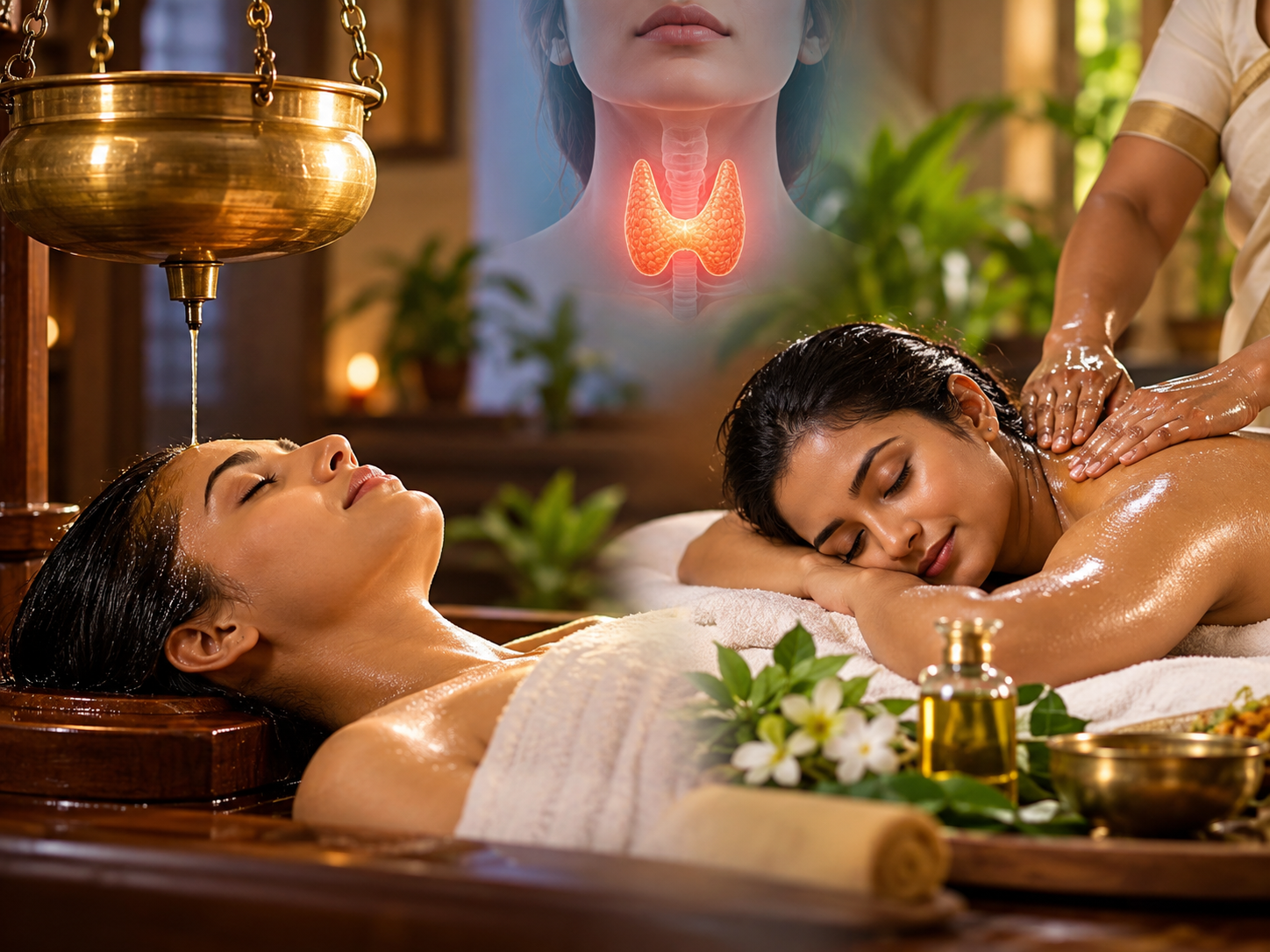
Upakarma refers to the supportive external therapies that complement Panchakarma. For thyroid-related complaints, physicians commonly consider Abhyanga (therapeutic oil massage) to ease stiffness and support circulation and sleep, and Shirodhara for stress, restlessness and disturbed sleep — factors that often travel with thyroid illness. Browse our full range on the Upakarma therapies page.
Layer 4 — Diet, Yoga and Routine
Food timing, sleep hygiene, stress management and movement are the most under-rated parts of any thyroid plan. They are covered in the next sections.
Kati, Janu and Manya Basti: Supporting Thyroid-Associated Aches
Many people with an underactive thyroid also report stiff shoulders, an aching lower back, heavy knees and general muscle soreness. These complaints can arise from hypothyroid muscle and connective-tissue changes, from long desk hours, or from independent spine and joint problems — so they need to be assessed, not assumed. Where the doctor judges that the aches are Vata-related and the person is otherwise suitable, three localised oil-retention therapies from the Upakarma family are commonly used as supportive care. They do not treat the thyroid gland itself.
Kati Basti
Warm medicated oil is retained over the lower back within a dough ring. It is used for lumbar stiffness, spasm and aching — a frequent complaint among desk workers and hypothyroid patients. See also our article on Kati Basti for disc problems.
Janu Basti
Medicated oil is retained around the knee joint to ease stiffness and pain and support mobility. For a deeper explanation, read our comprehensive Janu Basti guide.
Manya Basti
Medicated oil is retained over the back of the neck and upper spine. It is used for neck stiffness and tension — but because the thyroid sits at the front of the neck, it is used only after the neck has been examined. Related reading: cervical and lumbar spondylitis.
Neck Therapies and the Thyroid
If you have a goitre, nodule, recent neck pain with swelling or hoarseness, get it examined and imaged first. Persistent muscle weakness, severe fatigue or unexplained swelling should also be evaluated medically before any oil therapy is started.
Diet, Iodine and Common Food Myths
Diet advice online about thyroid is often contradictory. Here is what holds up.
- Use iodised salt in normal amounts. Iodine deficiency can cause thyroid problems, but excess iodine — from kelp tablets or heavy supplementation — can also disturb the gland. Avoid taking iodine or seaweed supplements without advice.
- Cruciferous vegetables need not be banned. Cabbage, cauliflower and broccoli contain goitrogens, but in ordinary cooked portions they are generally fine for most people. Extreme raw-juice habits are the problem, not the vegetables. Our article on thyroid food restrictions: myth or reality covers this in detail.
- Time your levothyroxine. It is usually taken on an empty stomach, 30–60 minutes before breakfast, and kept several hours apart from calcium and iron supplements. Tea or coffee too soon after the tablet can reduce absorption. Follow your prescriber's instructions.
- Gluten is a personal question. It matters mainly if you have coeliac disease or a clear sensitivity, which is more common in autoimmune thyroid disease. See our piece on the hypothyroidism and gluten-free diet.
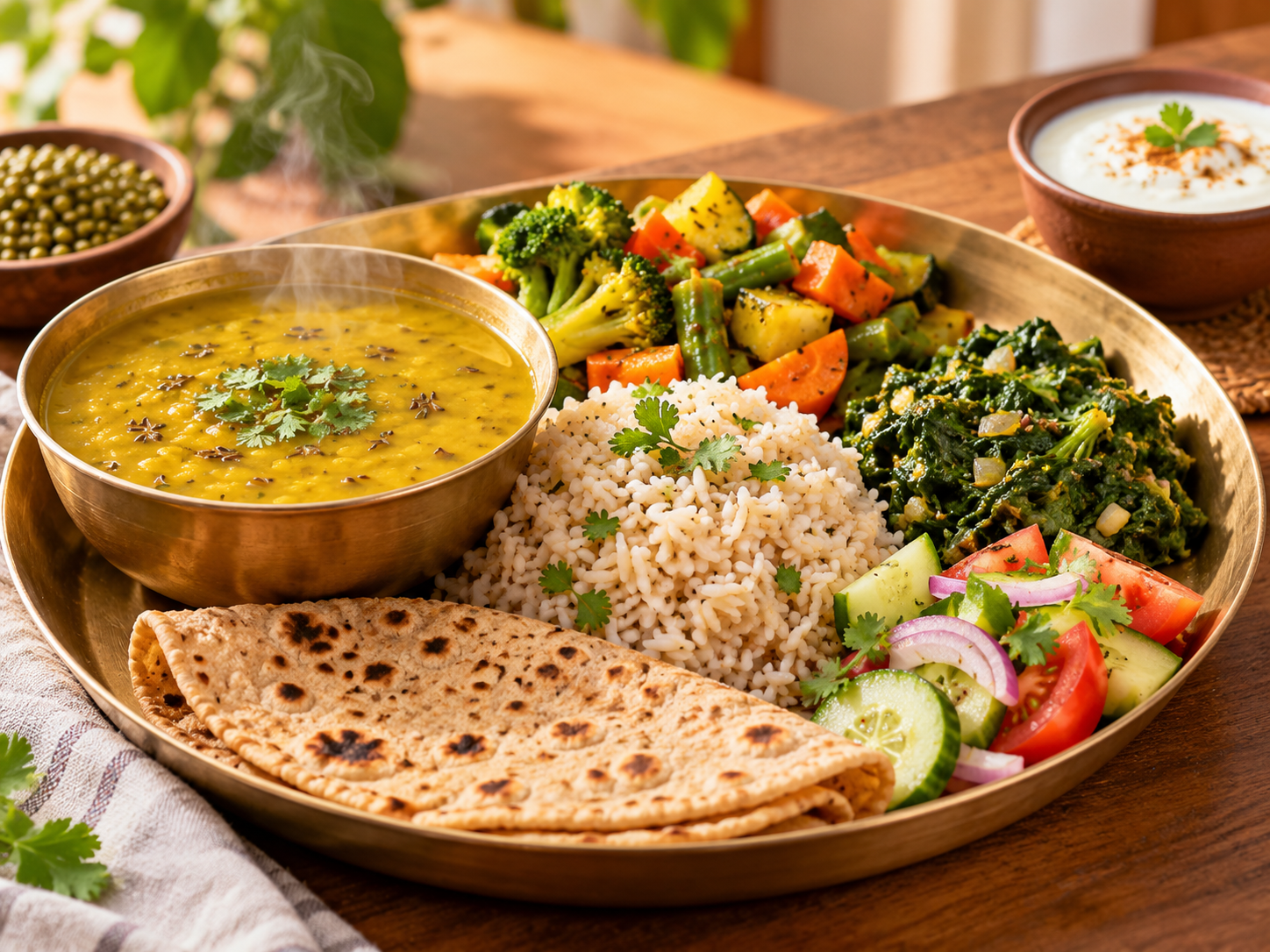
- Eat in the Ayurvedic rhythm. Warm, freshly cooked meals; regular timings; moong, seasonal vegetables, ghee in moderation; ginger, cumin, coriander and turmeric in cooking; less cold, heavy, fried, fermented and ultra-processed food. Our guide to an Ayurvedic diet for thyroid health and home remedies for managing hypothyroidism give practical examples.
- Sleep and meal timing count. Late-night eating and short sleep make Agni worse and fatigue more stubborn.
Yoga, Sleep and Stress
Stress and poor sleep do not cause every thyroid disorder, but they clearly worsen how people feel with one. A steady, gentle routine is more useful than an ambitious one.
- Gentle movement daily: a 30-minute walk, Surya Namaskar at a comfortable pace, Bhujangasana, Setu Bandhasana and Matsyasana as the body allows.
- Pranayama: Anulom Vilom, Bhramari and slow Ujjayi breathing to calm the nervous system.
- Caution with inversions: avoid strong neck-loading postures such as Sarvangasana and Halasana if you have a goitre, neck pain or cervical problems, and avoid vigorous, breath-holding practices if you are hyperthyroid with palpitations.
- Sleep: fixed sleeping and waking times, screens off an hour before bed, and a warm oil foot massage at night as recommended by your physician.
- Stress: short daily meditation, time outdoors and protected rest matter as much as any tablet for how you feel day to day.
Follow-Up: What Good Monitoring Looks Like
Follow-up is where trust is earned. Thyroid disease is monitored by numbers and by how you feel, and the two do not always move together. A well-run plan usually looks like this:
- Baseline visit: reports reviewed, diagnosis explained, medicines and therapies listed in writing, symptom baseline recorded.
- 2–4 weeks: a short review of tolerance, digestion, sleep and any side effects; adjustment of diet and herbs.
- 6–8 weeks after any change: repeat TSH (and FT4 where advised). Thyroid hormone levels take several weeks to settle, so testing sooner rarely helps.
- Every 3–6 months while settling: review of reports, weight trend, energy, cycles and medication dose with your physician.
- Once stable: most people are checked about once a year, or sooner if symptoms change, pregnancy is planned or a new medicine is started.
Ask for a simple symptom diary — weight, energy score, bowel pattern, sleep and periods — so each review is anchored in evidence. Seek prompt medical attention for a rapidly enlarging neck swelling, difficulty swallowing or breathing, new hoarseness, a very fast or irregular heartbeat, fainting, or severe drowsiness and confusion.
Thyroid Care in Pune: A Realistic Cost Comparison
Cost is one of the most common questions patients ask when comparing the best Ayurvedic clinic in Pune options, and also one of the least transparent. Prices vary by lab, doctor, therapy and duration, so the table below shows indicative market ranges observed from public listings in Pune in September 2026 to help you compare like with like. It is a guide, not a price list, and every figure should be confirmed at the time of booking.
| Item | Indicative range in Pune | What to know |
|---|---|---|
| Thyroid profile (TSH, T3, T4) at a diagnostic lab | ≈ ₹400 – ₹700 | Major chains list roughly ₹400 to ₹700; hospital-linked labs are often costlier. Home collection is widely available; no fasting needed. |
| TSH alone | from ≈ ₹150 | Useful for screening; if abnormal, a fuller profile is usually needed. |
| Free T3 / Free T4 and Anti-TPO antibodies | FT3/FT4 ≈ ₹200–₹300 each; Anti-TPO ≈ ₹900 at some national labs | Add-ons your doctor may request for diagnosis or autoimmune confirmation. |
| Endocrinologist consultation | ≈ ₹700 – ₹1,500 | Based on clinic listings in areas such as Kharadi, Kothrud and Swargate; follow-ups may cost less. |
| Ayurvedic physician consultation | ≈ ₹200 – ₹1,000 | Wide range depending on experience and setting; ask what the fee includes and whether follow-ups are charged. |
| Ayurvedic therapies / Panchakarma | ≈ ₹200 – ₹1,500 per day (general listing range) | Courses commonly run 7–10 days or more; cost depends on which therapies, oils and medicines are used. Always request an itemised quote. |
| Thyroid hormone tablets (levothyroxine) | Generally low monthly cost | Depends on dose and brand; ask your pharmacist about equivalent generics — never change brand or dose without your doctor. |
| Thyroid surgery or radioactive iodine | Separate hospital pathway; highly variable | Used only when a physician advises; not comparable with routine follow-up costs. |
| Ayusanjivani (Kharadi & Wagholi) | Itemised estimate after assessment | Fees depend on your diagnosis, chosen therapies and duration. Call or WhatsApp to get a clear estimate before you commit. |
Sources: publicly listed rates from national diagnostic chains, Practo and Lybrate doctor listings, and general Panchakarma cost listings, reviewed September 2026. Figures change frequently; confirm with the provider.
How to Compare Total Cost Fairly
Think in 3-Month Blocks
Add consultation fees, two or three blood tests, therapy sessions, medicines and travel for a full quarter. A cheap first visit can become the costliest option if it needs frequent repeat sessions.
Ask What Is Included
Does the fee cover follow-up reviews, diet charts, and phone or WhatsApp queries? Are medicines charged separately? Written answers prevent surprises.
Be Wary of Large Prepaid Packages
High upfront "reversal programmes" with no itemised breakdown or exit terms are a warning sign. A fair plan lets you pay in stages tied to review points.
Don't Skip the Tests to Save Money
A ₹400–₹700 profile every few months is the cheapest safeguard you have. Treating without measuring costs far more in the long run.
For a fuller explanation of how Ayurvedic therapy pricing is worked out, see our page on Panchakarma treatment cost in India and AYUSH rate references.
Pregnancy, PCOS and Hashimoto's: Special Situations
Pregnancy and Preconception
Thyroid hormone needs rise in pregnancy, and TSH targets are trimester-specific. If you are planning a baby or are pregnant, your gynaecologist and endocrinologist must lead thyroid management. Panchakarma procedures are not undertaken during pregnancy. For couples preparing for conception, a supervised approach is described in our article on preconception Panchakarma and our note on thyroid and reproduction.
PCOS and Thyroid Together
Irregular periods, weight gain and hair changes can arise from PCOS, thyroid disease or both. A careful practitioner tests thyroid function in anyone with menstrual irregularity. Our guides on PCOS versus PCOD and hormonal disorders explain how these conditions overlap.
Hashimoto's and Long-Term Autoimmune Disease
Because Hashimoto's thyroiditis tends to fluctuate over years, the value of any practitioner lies in consistent monitoring and steady lifestyle support rather than a short intensive course. Children with suspected thyroid disease should first be assessed by a paediatrician or paediatric endocrinologist.
Questions to Ask on Your First Visit
Take this list to any clinic — including ours — and note the answers.
- Who exactly will treat me, and what are their qualifications and registration?
- What is my thyroid diagnosis, in modern and Ayurvedic terms?
- Should I continue my current thyroid tablets, and who will review the dose?
- Which herbs or medicines are you prescribing, from which manufacturer, and what are the cautions?
- Which therapies do you recommend for me, and why those?
- What will you look at to decide whether it is working, and by when?
- When do I repeat blood tests, and who reads them?
- What will the total cost be for the first three months, itemised?
- What signs mean I should see a physician or go to hospital?
- Are you comfortable coordinating with my endocrinologist or family doctor?
Thyroid Care at Ayusanjivani: Kharadi and Wagholi, Pune
Ayusanjivani Ayurveda Centre, led by Dr. Shailesh Shamkant Phalle (BAMS, M.D. Kayachikitsa), offers thyroid treatment in Ayurveda in Pune from two clinics, and many patients searching for the best Ayurvedic clinic in Pune choose us for the following approach: a doctor-led assessment that reads your reports first, an individual plan explained in plain language, clear guidance on continuing your prescribed medicines, and scheduled follow-up. Dr. Phalle is also the author of Thyroidology in Ayurveda. You can read more about our thyroid care programme, and for Kharadi-specific details see our Ayurvedic clinic in Kharadi and Panchakarma centre in Kharadi.
📍 Ayusanjivani — Kharadi
1st Floor, Vitthal Heights, Opp. Radisson Hotel, Bypass Road, Kharadi, Pune – 411014. Convenient for Kharadi, Viman Nagar, Chandan Nagar and the EON corridor.
Call Kharadi Clinic📍 Ayusanjivani — Wagholi
Shop No. 207, Gat No. 1114, Siddhi Complex, PMT Bus Stop, Kesanand Phata, Wagholi – 412207. Convenient for Wagholi, Lohegaon, Vadgaon Sheri and the Nagar Road belt.
WhatsApp Wagholi Clinic
Reviewed by Dr. Shailesh Shamkant Phalle
BAMS, M.D. (Kayachikitsa) — Ayurvedic Physician and author of Thyroidology in Ayurveda, Ayusanjivani Ayurveda Centre, Kharadi & Wagholi, Pune.
This article is for general health education and does not replace medical advice. Do not start, stop or change any thyroid medicine without consulting your prescribing doctor. Ayurvedic therapies should be undertaken only after an in-person assessment.
Further Reading & References
- American Thyroid Association — patient information on thyroid function tests, hypothyroidism and hyperthyroidism.
- Ministry of AYUSH, Government of India — regulatory framework for Ayurveda practice and education.
- Classical references: Sushruta Samhita (Galaganda and Granthi), Charaka Samhita (Agni, Ama and dosha principles).
- Price data: publicly listed rates from national diagnostic chains and doctor-listing platforms in Pune, reviewed September 2026.
Frequently Asked Questions
Hypothyroidism is often long-term, especially when caused by autoimmune disease, and no responsible practitioner can promise a guaranteed reversal. Ayurvedic care aims to support symptoms, digestion, metabolism and overall wellbeing, with progress checked by repeat blood tests. Any reduction of thyroid medicine should be decided only by your prescribing physician.
No. Continue prescribed medicines unless your doctor advises otherwise after repeat tests. Stopping on your own can cause symptoms to return or worsen. A credible Ayurvedic clinic will tell you the same.
Look beyond ratings. Verify registration and qualification, check that the doctor reads your reports, explains your diagnosis, takes a clear stance on continuing your medicines, discloses herbs, avoids "permanent" promises and sets a written follow-up schedule. The eight-point checklist in this guide gives you a practical way to compare clinics.
Some people notice better digestion, sleep or energy within a few weeks, while changes in hormone levels take longer and are judged by repeat tests, usually 6–8 weeks after any change. Timelines vary with the type of thyroid disorder, its duration, your age and how consistently you follow the plan.
No. Many people are managed with medicines, diet, lifestyle changes and supportive therapies alone. Panchakarma is considered only when the doctor judges that you are suitable, and it is not appropriate in pregnancy or with certain heart, blood pressure or overactive-thyroid symptoms.
They are localised oil-retention therapies for the lower back, knee and neck respectively. They may support stiffness and aches that accompany thyroid illness, but they do not treat the thyroid gland. Neck therapy is used only after the neck has been examined.
It is best not to. Some herbs and iodine-rich supplements can alter thyroid hormone levels, which is particularly important if you are overactive or on a fixed levothyroxine dose. Take herbs only under supervision, with monitoring.
Consultation fees in Pune commonly range from a few hundred to about a thousand rupees, blood tests from roughly ₹400 to ₹700 for a thyroid profile, and therapy costs depend on which therapies are used and for how long. Ask for an itemised estimate. See the comparison table above for indicative ranges.
Yes. Ayusanjivani Ayurveda Centre offers the same doctor-led thyroid assessment and follow-up at both clinics. Call +91 84323 29371 or message us on WhatsApp to book at your preferred location.