Janu Basti vs Kati Basti vs Manya Basti: Which Oil-Pooling Therapy Fits Your Pain?
Janu Basti vs Kati Basti vs Manya Basti — a detailed, research-based comparison of three of Ayurveda's most requested local oleation therapies, offered as part of a complete ayurvedic Panchakarma treatment in Pune at Ayusanjivani's Kharadi and Wagholi clinics.
Clinics in Wagholi and Kharadi, Pune

Medically reviewed by Dr. Shailesh Shamkant Phalle, BAMS, M.D. (Kayachikitsa) — Ayurvedic Physician & Panchakarma Specialist, Ayusanjivani Ayurveda Centre.
Written for patient education. This article does not replace an in-person consultation.
Quick Answer
In the comparison of Janu Basti vs Kati Basti vs Manya Basti: Janu Basti targets the knee joint and is generally chosen for knee osteoarthritis and cartilage-related pain. Kati Basti targets the lower back and is generally chosen for lumbar spondylitis, sciatica, and slip-disc-related pain. Manya Basti (Greeva Basti) targets the neck and is generally chosen for cervical spondylosis and desk-job-related neck stiffness. All three are localised, external oil-retention (Avagaha Sneha) therapies — not to be confused with the classical Basti medicated-enema procedure — and work best as part of a doctor-supervised protocol rather than a standalone spa session. The right one for you depends on where your pain originates, which only a clinical assessment can confirm.
What Is Oil-Pooling Basti Therapy?
In Ayurveda, the word "Basti" carries two distinct meanings, and confusing them is one of the most common misunderstandings patients have. The classical Basti Panchakarma procedure refers to a medicated enema administered rectally — one of the five core Panchakarma procedures. Janu Basti, Kati Basti, and Manya Basti are a different category entirely: they are external, localised oil-retention therapies, classically termed Avagaha Sneha or Sthanik Basti, where a temporary dam — traditionally built from black gram (urad dal) dough, or a reusable ring in modern clinics — is placed around a specific joint or region and filled with warm, medicated oil that is retained for a fixed duration.
These three localised therapies are commonly grouped under Upakarma — supportive procedures that accompany or prepare the body for the core Panchakarma sequence — rather than replacing it. Each is named for the body part it targets: Janu (knee), Kati (lower back/lumbar region), and Manya or Greeva (neck/cervical region). While their setup is similar, the oils used, the retention time, and — most importantly — the underlying condition each one addresses are quite different, which is exactly what the Janu Basti vs Kati Basti vs Manya Basti comparison below breaks down.

Janu Basti: Best for Knee Pain
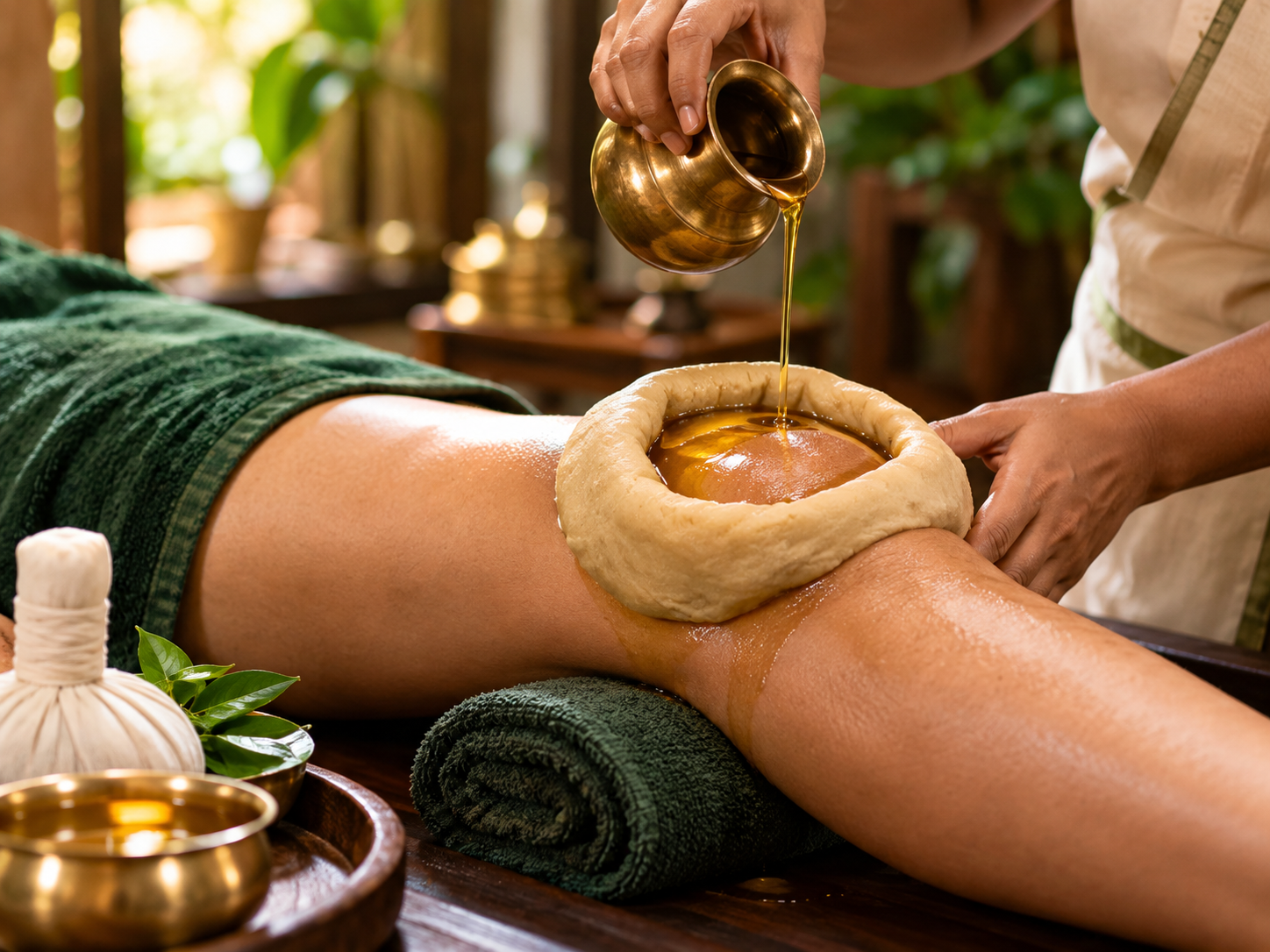
Janu Basti is the localised oil-retention therapy performed over the knee joint. It's one of the most frequently recommended therapies for Janu Sandhigata Vata — the classical Ayurvedic correlate of knee osteoarthritis — as well as general knee stiffness, ligament strain recovery, and cartilage-related discomfort. Warm medicated oil, commonly Mahanarayan Taila or Ksheerabala Taila, is retained in a ring built around the kneecap, allowing deep, sustained penetration into the joint capsule and surrounding tissue — something a brief oil massage alone cannot achieve.
Patients typically seek Janu Basti for morning stiffness in the knee, difficulty climbing stairs, cracking or grinding sensations (crepitus), and swelling after long periods of standing or walking. You can read our full breakdown of the procedure, indications, and expected outcomes on our dedicated Janu Basti treatment guide, or see how it's practised at our Pune clinics on our Janu Basti for knee pain in Pune page. It's also frequently combined with our broader knee arthritis treatment without surgery protocol for more advanced cases.
Kati Basti: Best for Lower Back Pain
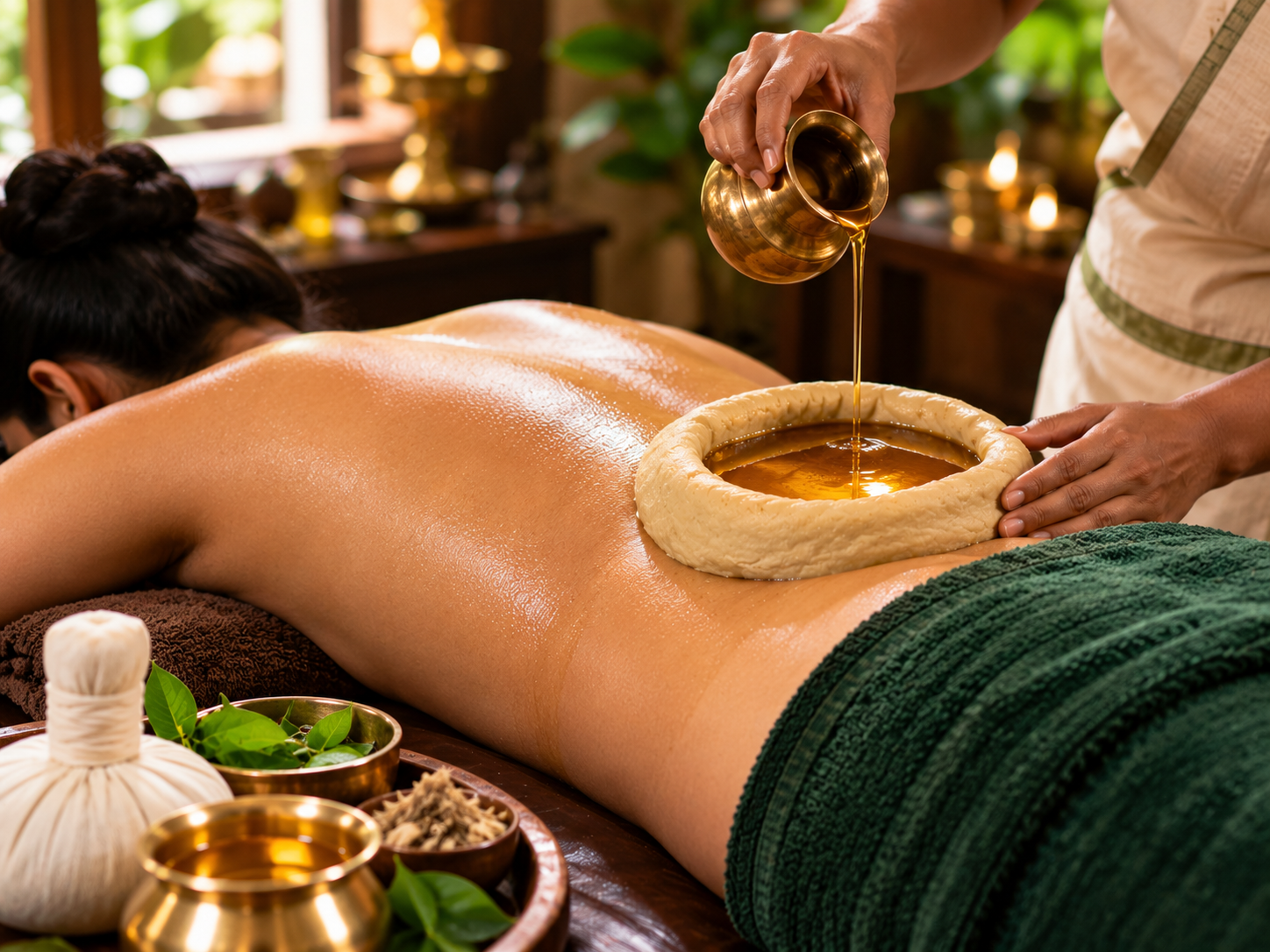
Kati Basti is the same principle applied to the lumbar spine — a dam is built over the lower back and filled with warm oil, most often Dhanwantharam Taila, Narayana Taila, or a formulation chosen for the patient's specific Vata imbalance. It is one of the most widely used therapies for chronic and acute lower back pain, lumbar spondylosis, sciatica, and the muscular guarding that follows a disc bulge. The sustained heat and oil penetration relax paraspinal muscle spasm, improve local circulation, and reduce the stiffness that makes bending and sitting painful.
Kati Basti is particularly relevant for Pune's large desk-job and IT population, where prolonged sitting is one of the most common contributors to lower back complaints. For the full procedure, benefits, and what to expect in a session, see our dedicated Kati Basti treatment in Pune page. We've also covered this therapy as part of our guide on slip disc treatment without surgery using Kati Basti, and it's a core component of how we manage lumbar spondylitis and related spinal conditions at our clinic.
Manya Basti (Greeva Basti): Best for Neck Pain
Manya Basti, also called Greeva Basti, is performed over the back of the neck and upper cervical spine. It's most commonly recommended for cervical spondylosis, chronic neck stiffness, restricted neck rotation, and the tension-related neck and shoulder pain that has become extremely common among laptop and smartphone users. The retained warm oil relaxes the cervical paraspinal muscles, improves local blood flow around the cervical nerve roots, and helps reduce the referred pain that often radiates into the shoulder or upper arm.
Because the neck is a smaller and more delicate region than the knee or lower back, Manya Basti requires careful ring placement and a shorter, more closely monitored retention time. For the full procedure, indications, and what a session involves, see our dedicated Manya Basti treatment page. It is frequently combined with the same Vata-pacifying principles we use for related conditions, including our approach to cervical spondylitis, and is often paired with Nasya when neck stiffness is accompanied by headache or sinus involvement — see our Nasya treatment page for more on that combination.
Janu Basti vs Kati Basti vs Manya Basti: Side-by-Side Comparison
Here's a quick way to see how the three therapies in the Janu Basti vs Kati Basti vs Manya Basti comparison differ at a glance:
🦵 Janu Basti
Target area: Knee joint
Best for: Knee osteoarthritis (Janu Sandhigata Vata), cartilage wear, post-strain stiffness
Typical duration: 25–35 minutes per session
🔻 Kati Basti
Target area: Lower back / lumbar spine
Best for: Lumbar spondylosis, sciatica, disc-related pain, chronic backache
Typical duration: 30–45 minutes per session
🧣 Manya Basti
Target area: Neck / cervical spine
Best for: Cervical spondylosis, neck stiffness, desk-job neck-shoulder tension
Typical duration: 20–30 minutes per session
How These Fit Into a Full Panchakarma Protocol
Janu, Kati, and Manya Basti are rarely prescribed as one-off treatments in isolation — they're most effective when built into a broader, individualised course of care. As Upakarma (supportive procedures), they're commonly combined with:
- Abhyanga and Swedana — full-body oil massage and herbal steam that prepare the tissue and improve overall circulation before or after localised Basti
- Core Panchakarma procedures — such as internal Basti (medicated enema), which addresses the root Vata imbalance rather than just the local symptom
- Navarakizhi — medicated rice-bolus fomentation, often alternated with localised Basti for joint and neuromuscular support
- Internal herbal medicines — Vata-pacifying and nerve-nourishing formulations that support the effect of the external therapy
If you'd like the fuller picture of how a structured Panchakarma course is planned, sequenced, and priced, our detailed guide on what Panchakarma actually involves is a useful companion read to this one.
Why This Matters
A clinic that offers Janu, Kati, or Manya Basti as a single "relaxation session" without evaluating whether it should sit inside a broader protocol is treating a symptom, not the underlying imbalance. At Ayusanjivani Ayurveda Centre, these localised therapies are prescribed by Dr. Phalle as part of an individualised plan — not sold as a generic wellness add-on.
The Procedure: What Happens in a Session
While the specific site changes, the core steps are similar across all three therapies:
- Assessment: The doctor confirms the diagnosis, checks for skin integrity at the treatment site, and selects the appropriate medicated oil.
- Dam construction: A ring — traditionally black gram dough, or a reusable medical-grade ring in a clinical setting — is placed securely around the target joint or region and sealed to prevent leakage.
- Oil pooling: Warm medicated oil, maintained at a comfortable therapeutic temperature, is poured into the ring and topped up as it's absorbed or cools.
- Retention: The oil is left in place for the prescribed duration while the patient rests comfortably.
- Removal and gentle massage: The remaining oil is removed, and a brief, gentle massage is often given to the area to aid absorption.
- Rest period: Patients are generally advised to rest briefly and avoid immediate exposure to cold air, wind, or a cold shower.
Who Should Avoid These Therapies
These are generally gentle, well-tolerated therapies, but they aren't appropriate for everyone. A responsible clinic will screen for the following before proceeding:
- Open wounds, active skin infection, or eczema flare at the treatment site
- Acute inflammation, fever, or an active infection anywhere in the body
- Known allergy or sensitivity to the specific medicated oil being used
- Uncontrolled diabetes, where skin healing and infection risk need closer monitoring
- Recent surgery, injection, or injury at or near the treatment site
- Pregnancy, particularly for Kati Basti, where the site is closer to the lower abdomen and pelvis — this should always be discussed with the treating doctor
This is another reason doctor supervision matters even for what looks like a "simple" localised therapy — the decision to proceed, modify, or postpone should never be left to a therapist alone.
Janu, Kati & Manya Basti Cost in Pune: What to Expect
Pricing for these localised Basti therapies varies across Pune depending on whether you're visiting a teaching-hospital Panchakarma department, a private Ayurveda clinic, or a wellness spa loosely using the term. To give you a grounded reference point rather than a guess, published Panchakarma rate cards at Maharashtra teaching hospitals typically list these individual therapies in a similar band, with course-based private clinic pricing running higher once doctor consultation, follow-up, and medicated oil quality are factored in.
| Therapy | Typical single-session range | Typical 5–7 day course range |
|---|---|---|
| Janu Basti | ₹300 – ₹900 per session | ₹2,000 – ₹6,000+ |
| Kati Basti | ₹300 – ₹900 per session | ₹2,000 – ₹6,000+ |
| Manya Basti (Greeva Basti) | ₹300 – ₹800 per session | ₹2,000 – ₹5,500+ |
Ranges are indicative, based on publicly available Panchakarma rate references from Maharashtra teaching-hospital Panchakarma departments and typical private-clinic pricing patterns. Actual cost depends on oil grade, session duration, whether the therapy is combined with a broader Panchakarma protocol, and doctor consultation — always confirm an exact, itemised quote directly with the clinic before booking.
How Many Sessions Will You Need?
As with any individualised Ayurvedic protocol, the exact number of sessions depends on severity and chronicity, but as a general guide:
- Mild, recent-onset stiffness: Often 3–5 sessions bring noticeable relief, sometimes combined with a short course of Abhyanga.
- Moderate, recurring pain: A structured 7-day course is commonly recommended, often alongside internal Vata-pacifying medicines.
- Chronic conditions (long-standing osteoarthritis, cervical or lumbar spondylosis): May require 10–14 sessions across 2–3 weeks, sometimes repeated as a maintenance protocol every few months.
Your doctor will confirm the exact number and frequency during your first consultation, based on your specific diagnosis and response to the initial sessions.
Janu, Kati & Manya Basti in Kharadi & Wagholi, Pune
Ayusanjivani Ayurveda Centre offers all three localised Basti therapies — alongside our full ayurvedic Panchakarma treatment in Pune — at both our Kharadi and Wagholi clinics, under the same doctor-led protocol.
📍 Ayusanjivani — Kharadi
Full Panchakarma facilities including Janu, Kati, and Manya Basti, alongside doctor consultation for joint, spine, and neck conditions. See our Ayurvedic clinic in Kharadi and Panchakarma treatments in Kharadi, Pune.
Call Kharadi Clinic📍 Ayusanjivani — Wagholi
The same doctor-supervised Janu, Kati, and Manya Basti protocols, extended to patients across Wagholi, Vadgaon Sheri, and the Nagar Road belt.
WhatsApp Wagholi ClinicBoth clinics follow the same treatment philosophy and are supervised directly by Dr. Phalle, ensuring consistent quality of care regardless of which location is more convenient for you.
Reviewed by Dr. Shailesh Shamkant Phalle
BAMS, M.D. (Kayachikitsa) — Ayurvedic Physician & Panchakarma Specialist, Ayusanjivani Ayurveda Centre, Kharadi & Wagholi, Pune.
This article is for general health education and does not replace an in-person medical evaluation. Janu, Kati, and Manya Basti carry contraindications and should only be undergone after assessment by a qualified Ayurvedic doctor.
Frequently Asked Questions
They use the same oil-pooling technique but on three different body parts: Janu Basti on the knee, Kati Basti on the lower back, and Manya (Greeva) Basti on the neck. The choice depends entirely on where your pain or joint condition originates.
No. Janu, Kati, and Manya Basti are external, localised oil-retention therapies. The classical Panchakarma Basti is an internal medicated-enema procedure. Both share the Sanskrit name "Basti" (meaning "to retain") but are clinically very different procedures.
Mild cases often improve within 3–5 sessions, while moderate to chronic conditions typically need a structured 7 to 14-session course. Your doctor will confirm the exact number after assessment and your response to the first few sessions.
Yes — they're frequently used as Upakarma alongside core Panchakarma procedures such as internal Basti, Abhyanga, and Swedana, particularly for chronic joint and spine conditions where addressing the root Vata imbalance matters as much as local symptom relief.
Manya Basti is commonly used for cervical spondylosis and related neck stiffness, but the oil, duration, and technique must be adapted to the severity of the condition and any accompanying symptoms like dizziness or radiating arm pain, which should always be evaluated by a doctor first.
Based on publicly available Panchakarma rate references, individual sessions in Pune-area clinics generally fall in the ₹300–₹900 range, with a 5–7 day course running higher depending on oil grade and whether it's combined with a broader protocol. Ask your clinic for an itemised quote before booking.
Yes, Ayusanjivani Ayurveda Centre offers Janu Basti, Kati Basti, and Manya Basti at both our Kharadi and Wagholi clinics in Pune, under the same doctor-led protocol. Call +91 84323 29371 or message us on WhatsApp to book at your preferred location.