Shirodhara, Takra Dhara & Shirobasti: Which Head Therapy for Stress, Insomnia or Hair Fall?
A detailed, doctor-reviewed comparison of the three classical Ayurvedic head therapies — helping you choose the right shirodhara ayurvedic treatment in Pune, understand real shirodhara treatment cost in Pune, and know exactly what each therapy is (and isn't) meant to treat.
Clinics in Wagholi and Kharadi, Pune

Medically reviewed by Dr. Shailesh Shamkant Phalle, BAMS, M.D. (Kayachikitsa) — Ayurvedic Physician & Panchakarma Specialist, Ayusanjivani Ayurveda Centre.
Written for patient education. This article does not replace an in-person consultation.
Quick Answer
Shirodhara (warm medicated oil poured in a continuous stream on the forehead) is the standard first choice for stress, anxiety, and general insomnia. akra Dhara (medicated buttermilk) is preferred when there's a "heat" component — scalp psoriasis, burning sensation, irritability, or premature greying. Shirobasti (oil retained over the scalp in a reservoir for longer contact) is the most intensive of the three and is typically chosen for chronic insomnia, hair fall, dry scalp, and certain neurological conditions that need deeper, longer oil penetration.
All three are Vata-pacifying "Murdha Taila" (head-oiling) therapies from classical Ayurveda, and the right one for you depends on your Prakriti, current dosha imbalance, and the specific complaint — which is exactly what a doctor consultation before booking should establish.
What Are Shirodhara, Takra Dhara & Shirobasti?
In classical Ayurveda, treatments applied specifically to the head fall under a group called Murdha Taila ("oiling of the head"), described in the Ashtanga Hridaya as four related procedures — Shiro-Abhyanga (head massage), Shiro-Seka/Dhara (pouring), Shiro-Pichu (oil-soaked cloth), and Shiro-Basti (oil retention). Shirodhara, Takra Dhara, and Shirobasti are the three most commonly practised of these today, and while they look superficially similar — all involve warm medicated liquid applied to the head — they differ in the medium used, how long the liquid stays in contact with the scalp, and which conditions they're classically indicated for.
If you've been comparing options for a shirodhara treatment in Pune, understanding these differences matters more than picking whichever therapy a spa happens to offer that day — the wrong choice for your specific complaint simply won't give you the result you're looking for.
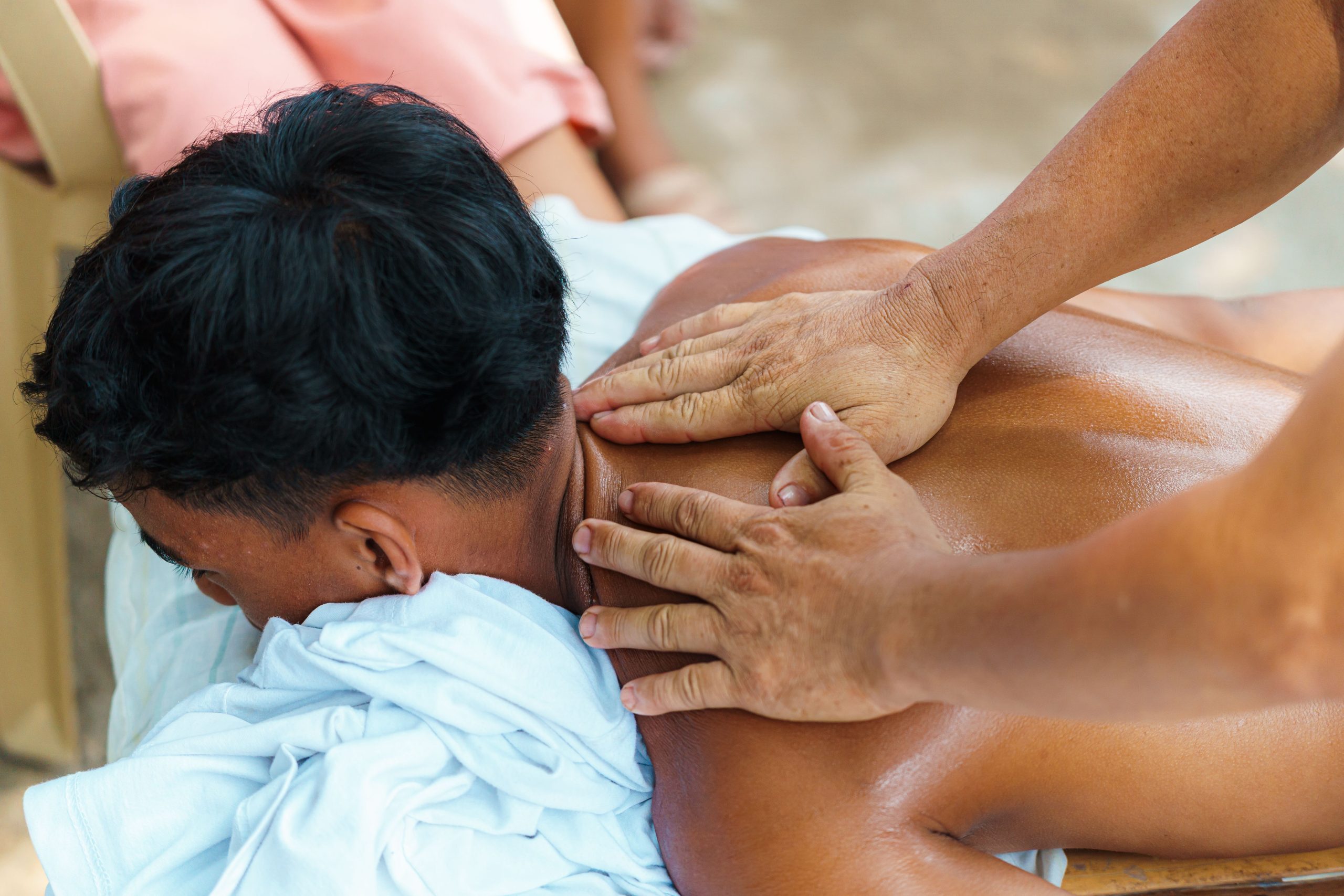
Shirodhara Explained: Procedure & Benefits
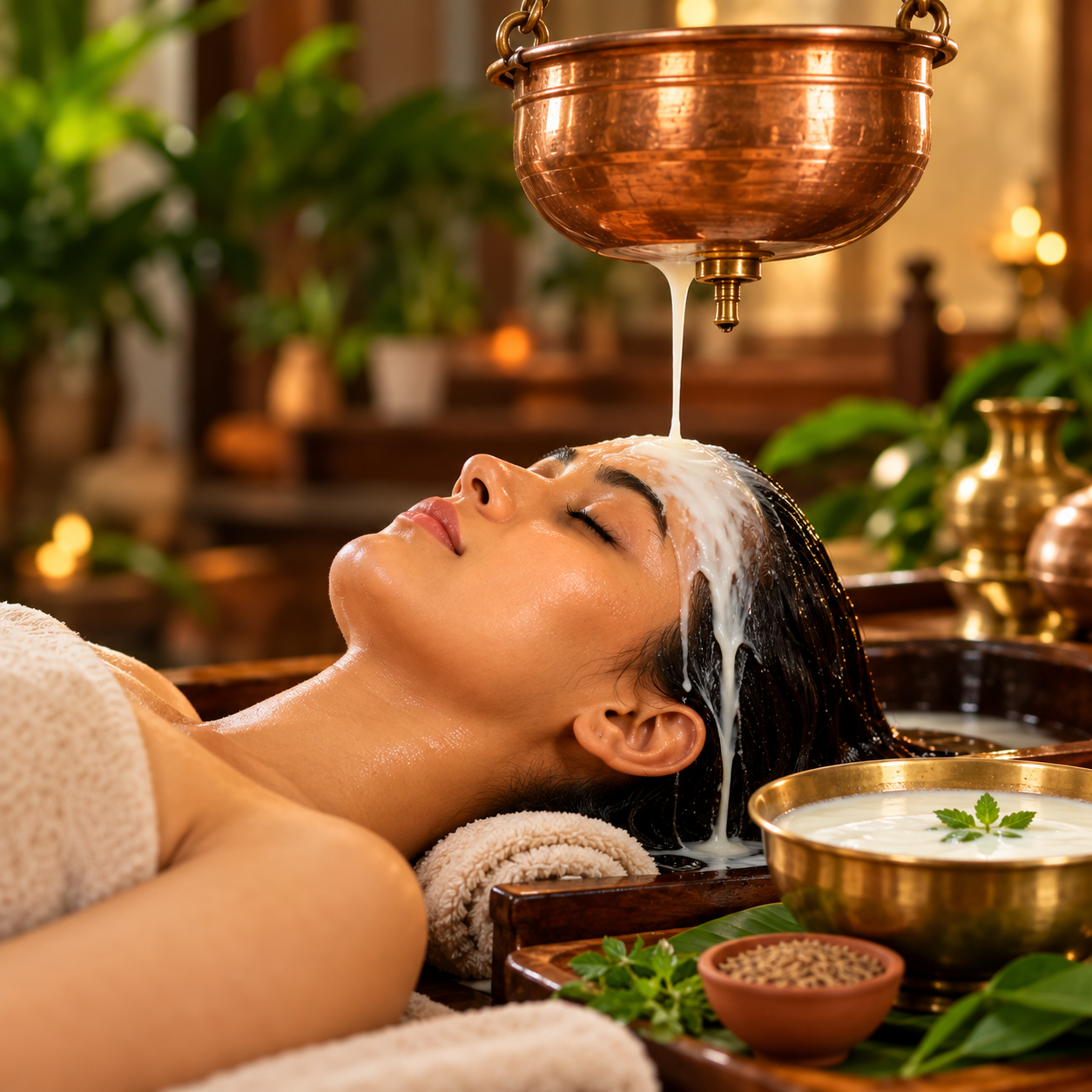
Shiro means head, dhara means a continuous flowing stream. Shirodhara involves pouring warm medicated oil (or occasionally milk, buttermilk, or a herbal decoction, though "oil dhara" is what most people mean by the term) in a steady, rhythmic stream onto the forehead — specifically the area between the eyebrows, often referred to as the "third eye" region — for approximately 30 to 60 minutes. The rhythmic warmth and gentle pressure are believed to calm the hypothalamus and pacify aggravated Vata and Pitta doshas, which is why Shirodhara is the most widely recommended of the three for stress-related complaints.
Shirodhara Treatment Benefits in Pune: What It's Typically Used For
- Chronic stress, anxiety, and mental fatigue
- Insomnia and disturbed sleep patterns
- Tension-type headaches and mild migraine
- Mild hypertension linked to stress (used as a supportive therapy, not a replacement for BP medication)
- General mental clarity, focus, and nervous-system relaxation
A typical course runs 7 to 14 consecutive days of daily sessions for a meaningful effect, though a single session can still offer noticeable short-term relaxation. Oils commonly used include Ksheerabala Taila, Brahmi oil, and Chandanadi Taila, selected by the doctor based on your Prakriti and the specific complaint.
Takra Dhara Explained: Procedure & Benefits
Takra Dhara follows the same continuous-stream technique as Shirodhara, but the medium is medicated buttermilk (takra) — often prepared with herbs like Musta boiled and fermented into a specific consistency — instead of oil. Because buttermilk is cooling in nature, Takra Dhara is specifically chosen when there's a "heat" or Pitta-dominant component to the condition, whereas plain oil-based Shirodhara is generally better suited to Vata-dominant dryness and anxiety.
What Takra Dhara Is Typically Used For
- Scalp psoriasis and certain inflammatory scalp conditions
- A burning or heated sensation on the scalp or in the head
- Insomnia accompanied by irritability, anger, or a "heated" mental state
- Premature greying of hair
- Tension headaches with a Pitta-dominant presentation
A standard course is usually 7 to 14 days, with each session lasting around 45 minutes. Because the buttermilk needs to be freshly medicated and maintained at the correct temperature, this therapy depends heavily on correct preparation — another reason doctor-led, freshly prepared formulations matter more here than in a generic spa setting.
Shirobasti Explained: Procedure & Benefits
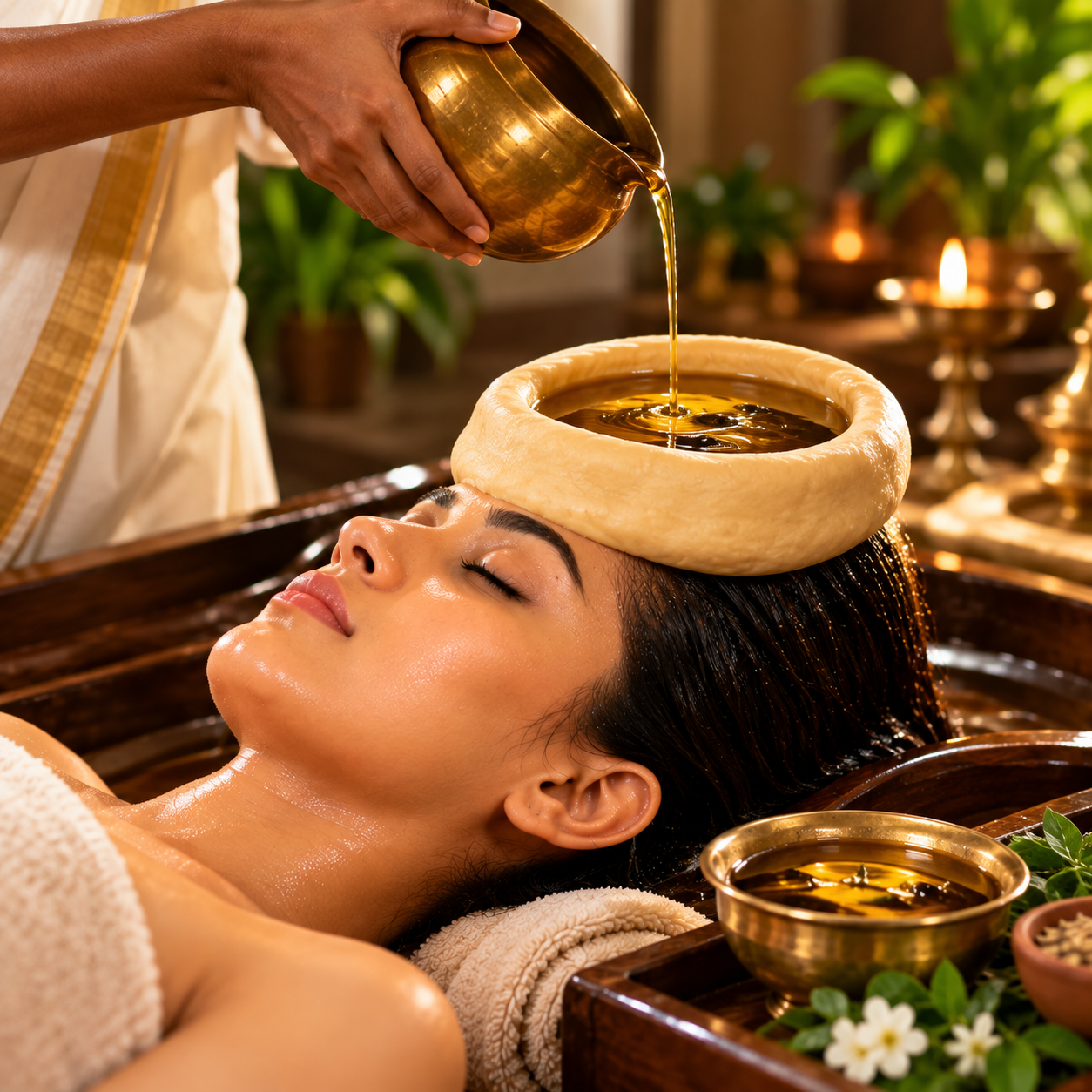
Shirobasti (also called Shirovasti) is the most intensive of the three. Instead of a flowing stream, a leather or specially designed cap-like reservoir is fitted around the head using a sealing paste (traditionally black gram flour dough) to prevent leakage, and warm medicated oil is poured in and retained in direct contact with the entire scalp for 20 to 45 minutes. This significantly longer, more concentrated contact time allows deeper oil penetration into the scalp than either Shirodhara or Takra Dhara.
What Shirobasti Is Typically Used For
- Chronic or severe insomnia unresponsive to standard Shirodhara
- Hair fall, thinning, and premature greying
- Dry, flaky, or undernourished scalp
- Certain neurological conditions such as facial palsy and cervical-origin headaches, used under close medical supervision
- Memory and cognitive support as part of a broader rejuvenation protocol
Because of the longer duration and more involved setup, Shirobasti is generally recommended in a structured, doctor-supervised course rather than as a casual one-off spa visit, and is often positioned as a step up from Shirodhara when a patient's condition is more chronic or scalp-focused rather than purely stress-related.
Shirodhara vs Takra Dhara vs Shirobasti: Side-by-Side Comparison
Shirodhara
Medium: Warm medicated oil
Sensation: Warming, grounding
Best for: Stress, anxiety, general insomnia, tension headache
Typical duration: 30–60 min/session, 7–14 day course
Takra Dhara
Medium: Medicated buttermilk (cooling)
Sensation: Cooling, soothing
Best for: Scalp psoriasis, burning sensation, Pitta-type insomnia, premature greying
Typical duration: ~45 min/session, 7–14 day course
Shirobasti
Medium: Warm medicated oil, retained (not poured continuously)
Sensation: Deep, prolonged warmth
Best for: Chronic insomnia, hair fall, dry scalp, select neurological conditions
Typical duration: 20–45 min/session, structured course
Best Therapy for Stress & Anxiety
For most people dealing with everyday stress, work-related anxiety, or mental fatigue, Shirodhara remains the classical first choice — the continuous, rhythmic oil flow has a well-documented calming effect on the nervous system and is the therapy most people are referring to when they search for a "stress-relief head massage." If your stress presents with heat-type symptoms — irritability, a flushed feeling, or a tendency toward anger — a doctor may instead recommend Takra Dhara, since its cooling nature is better suited to that particular imbalance.
Best Therapy for Insomnia
Shirodhara is typically the starting point for sleep-related complaints, and many patients notice improved sleep onset within the first few sessions of a 7–14 day course. For chronic, long-standing insomnia that hasn't responded well to standard Shirodhara, or where the person also has a dry, undernourished scalp, Shirobasti is often the next step, since the longer oil-contact time can have a more sustained calming effect on Vata. Takra Dhara is considered when insomnia comes with a "heated," restless quality rather than pure anxiety.
If insomnia is a persistent, diagnosed concern rather than the occasional bad night — especially when it's tied to an underlying neurological or nervous-system imbalance — it's worth reading our dedicated page on Ayurvedic treatment for insomnia, which covers the fuller diagnostic and treatment picture beyond head therapy alone.
Best Therapy for Hair Fall & Scalp Health
Of the three, Shirobasti is generally the most targeted option for hair fall and scalp nourishment, simply because the oil stays in direct contact with the entire scalp for a longer, more concentrated period, allowing deeper penetration into the hair follicles than a flowing stream can achieve. Takra Dhara is a strong option specifically when hair fall is linked to an inflammatory or itchy scalp condition, since its cooling, anti-inflammatory action addresses the underlying scalp environment. Plain Shirodhara can still support hair health indirectly by reducing stress-related hair fall, but it isn't the most targeted choice for a scalp-focused concern.
Hair fall is rarely caused by one single factor, so it's worth reading our related guides on Ayurvedic approaches to hair fall, patchy hair loss, and Alopecia management with Ayurveda alongside this comparison, since your doctor may combine a head therapy with a broader hair-fall protocol rather than treating it in isolation.
How These Fit Into a Wider Ayurvedic Protocol
Shirodhara, Takra Dhara, and Shirobasti are rarely the only therapy in a treatment plan — they're frequently combined with other Basti (oil-retention) procedures targeting different body regions, depending on what's actually causing your symptoms. This is a key part of the broader Panchakarma framework and its supporting Upakarma (secondary) procedures, explained in more depth in our overview of Basti Chikitsa and its classification.
- Kati Basti (lower back) is often added when stress or insomnia is linked to chronic low-back pain — see our guide on Kati Basti for slip disc and low-back pain.
- Janu Basti (knee) is combined in for patients also managing knee joint pain — see our comprehensive guide to Janu Basti.
- Manya Basti (over the cervical/neck region) is used when neck stiffness or cervical spondylosis is contributing to tension headaches — related concerns are covered in our piece on cervical and lumbar spondylitis; a dedicated Manya Basti guide is in progress and will be linked here once published.
- Nasya (nasal administration) is frequently paired with head therapies for sinus-related headaches and ENT complaints — read more on our Nasya treatment page.
None of this is decided by a fixed package — it's built around your specific combination of symptoms during the initial consultation.
Doctor Supervision & Safety: What to Check Before Booking
All three therapies are generally very safe when administered correctly, but each involves real physiological effects — sustained heat exposure to the scalp, prolonged reclined positioning, and, for Shirobasti in particular, a sealed reservoir on the head — that require basic clinical judgement to manage well.
What a Genuine Clinic Should Confirm Before Your Session
A BAMS-qualified doctor should screen for uncontrolled hypertension, epilepsy or seizure disorders, recent head injury, active scalp infection, fever, and pregnancy before recommending Shirobasti or Takra Dhara specifically, since these carry more caveats than standard Shirodhara. Oil or buttermilk temperature should be checked on the therapist's own hand before application, hygiene protocols (single-use dough seals, clean vessels) should be visible, and you should be told clearly how many sessions are being recommended and why — not sold a fixed "7-day package" without an assessment.
This is the same standard we apply across our Panchakarma programmes in Kharadi, Pune — every head therapy plan at Ayusanjivani Ayurveda Centre begins with a doctor consultation, not a walk-in package booking.
Shirodhara Treatment Cost in Pune: A Pricing Comparison
One of the most common questions we get is simply: what does a shirodhara treatment cost in Pune actually look like? Prices vary a great deal depending on where you go, and it helps to understand the three broad tiers you'll typically encounter in the market before comparing quotes.
| Setting | Typical Per-Session Range | What You're Usually Getting |
|---|---|---|
| Government / teaching-hospital Ayurveda units | Often under ₹500 per session (subsidised OPD rates) | Very affordable, doctor-linked, but typically shorter individual attention and longer waiting times |
| Established, doctor-led Ayurveda clinics | Roughly ₹1,500 – ₹3,500 per session, or bundled into a 7–14 day course | Doctor consultation, individualised oil/liquid selection, structured follow-up — this is where most serious clinical Panchakarma centres in Pune fall |
| Premium spas & wellness resorts | ₹4,000 and upward per session | Strong ambience and comfort focus; not always led by a registered Ayurvedic doctor, so clinical individualisation can vary |
These figures are general market reference points to help you understand what a fair price range looks like — not a quote for any specific clinic, since actual pricing always depends on which therapy (Shirodhara, Takra Dhara, or Shirobasti), how many sessions your condition needs, and whether it's a single session or a structured course with doctor follow-up. The only reliable way to know your shirodhara treatment cost in Pune is to have a doctor assess your condition first, then get an itemised quote — exactly the approach we follow at Ayusanjivani.
Head Therapy in Kharadi & Wagholi, Pune
Ayusanjivani Ayurveda Centre offers Shirodhara, Takra Dhara, and Shirobasti at both our Pune clinics, following the same doctor-led assessment described throughout this guide.
📍 Ayusanjivani — Kharadi
Full head-therapy facilities alongside our broader Ayurvedic clinic services in Kharadi, including combined Basti and Panchakarma protocols where needed.
Call Kharadi Clinic📍 Ayusanjivani — Wagholi
The same doctor-supervised Shirodhara, Takra Dhara, and Shirobasti protocols, extended to patients across Wagholi and the Nagar Road belt.
WhatsApp Wagholi Clinic
Reviewed by Dr. Shailesh Shamkant Phalle
BAMS, M.D. (Kayachikitsa) — Ayurvedic Physician & Panchakarma Specialist, Ayusanjivani Ayurveda Centre, Kharadi & Wagholi, Pune.
This article is for general health education and does not replace an in-person medical evaluation. Head therapies carry contraindications (uncontrolled hypertension, epilepsy, pregnancy, active infection) and should only be undergone after assessment by a qualified Ayurvedic doctor.
Frequently Asked Questions
Shirobasti is generally the more targeted option for hair fall, since the oil stays in direct contact with the entire scalp for a longer period, allowing deeper penetration than the continuous flowing stream used in Shirodhara. Shirodhara can still help indirectly by reducing stress-related hair fall.
Yes, but the buttermilk is kept at a comfortable warm temperature (not cold) and the session is done in a warm, draft-free room. Your doctor may also adjust the frequency or recommend Shirodhara instead if your constitution is very Vata-dominant and cold-sensitive.
Many people notice improved sleep onset within the first few sessions, but a standard course for lasting benefit typically runs 7 to 14 consecutive days. Chronic, long-standing insomnia may need a longer or repeated course, decided after assessment.
Shirodhara is often used supportively for stress-related mild hypertension, but it should never replace prescribed BP medication, and uncontrolled or severe hypertension needs to be disclosed and evaluated by the doctor before starting any head therapy.
Most people can resume normal activity shortly after, but you may feel drowsy or deeply relaxed immediately following the session, so it's sensible to avoid driving right away and to keep the head covered for a short period afterward, especially in windy or cold weather.
Shirodhara pours oil in a continuous moving stream mainly over the forehead for a shorter session, while Shirobasti retains oil in a sealed reservoir over the entire scalp for a longer, more concentrated contact time — making Shirobasti the more intensive option, generally reserved for chronic or scalp-focused conditions.
Yes, Ayusanjivani Ayurveda Centre offers all three head therapies under Dr. Shailesh Phalle's supervision at both our Kharadi and Wagholi clinics in Pune. Call +91 84323 29371 or message us on WhatsApp to book at your preferred location.