Introduction :
For many couples, In Vitro Fertilization (IVF) brings hope after months or years of trying to conceive. While IVF has helped millions achieve parenthood, not every cycle results in a successful pregnancy. Experiencing IVF failure can be emotionally, physically, and financially challenging.In this article we will discuss about causes of IVF failure in detail.
Understanding the IVF failure reasons, recognizing potential IVF failure symptoms, and identifying the causes of implantation failure in IVF can help couples make informed decisions about their next steps. Alongside modern fertility treatments, Ayurveda offers holistic support aimed at improving reproductive health, reducing stress, and preparing the body for future conception attempts.
In this comprehensive guide, we explore why IVF cycles fail, when to try again after a failed cycle, and how Ayurvedic therapies may support fertility naturally.
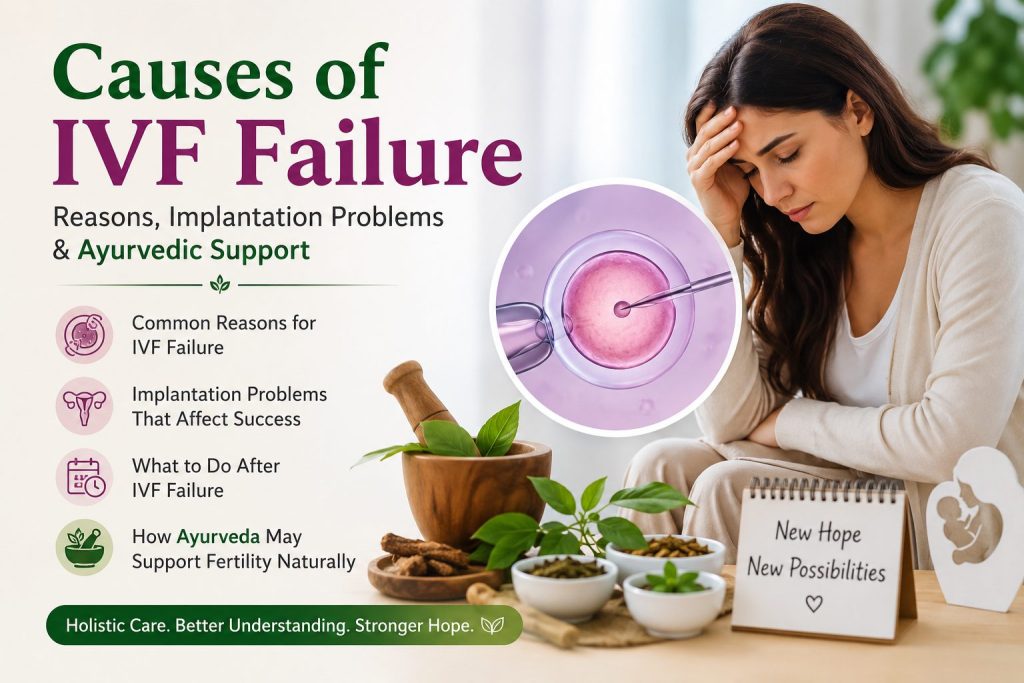
Causes of IVF Failure: Common Reasons, Implantation Problems and Ayurvedic Support :
IVF failure occurs when an IVF cycle does not result in a successful pregnancy. Failure may happen at different stages, including:
- Poor egg development
- Fertilization failure
- Embryo development issues
- Implantation failure
- Early pregnancy loss after implantation
Although IVF technology continues to advance, success rates are influenced by multiple factors, including age, egg quality, sperm quality, uterine health, hormonal balance, and lifestyle factors.
Common IVF Failure Symptoms :
Many patients wonder whether there are specific IVF failure symptoms that indicate an unsuccessful cycle.
Common signs may include:
- Menstrual bleeding after embryo transfer
- Falling hCG levels
- Negative pregnancy test
- Cramping similar to a menstrual period
- Disappearance of early pregnancy symptoms
- Spotting followed by full menstrual flow
However, symptoms alone cannot confirm IVF success or failure. Blood tests and ultrasound evaluations remain the most reliable methods.
Major IVF Failure Reasons :
Understanding the primary IVF failure reasons can help couples and fertility specialists develop better treatment strategies.
1. Poor Embryo Quality
Embryo quality significantly affects implantation and pregnancy outcomes.
Factors affecting embryo quality include:
- Advanced maternal age
- Poor egg quality
- Chromosomal abnormalities
- Poor sperm quality
- Genetic defects
Even when embryos appear healthy under laboratory conditions, hidden genetic abnormalities may prevent successful implantation.
2. Advanced Maternal Age
Female fertility naturally declines with age.
Women over 35 often experience:
- Reduced ovarian reserve
- Lower egg quality
- Increased chromosomal abnormalities
- Higher miscarriage rates
Age remains one of the strongest predictors of IVF success and failure.
3. Implantation Problems
One of the most common causes of implantation failure in IVF is the inability of the embryo to attach successfully to the uterine lining.
Successful implantation requires:
- Healthy embryo
- Receptive endometrium
- Balanced hormones
- Proper immune response
Any disruption in these factors can lead to implantation failure.
Causes of Implantation Failure in IVF :
Implantation is a complex biological process. Several conditions may contribute to failure.
Thin Endometrium :
The uterine lining must be thick enough to support implantation.
A thin endometrium may reduce the chances of embryo attachment.
Uterine Fibroids :
Fibroids can interfere with implantation by:
- Distorting the uterine cavity
- Affecting blood flow
- Reducing embryo attachment potential
Endometriosis :
Endometriosis creates inflammation within the reproductive system.
Read our detailed guide on Causes of female infertility to understand causes, symptoms, and Ayurvedic management.
This inflammatory environment may negatively affect:
- Egg quality
- Embryo quality
- Implantation success
Immune System Imbalances :
An overactive immune response may mistakenly attack the embryo, resulting in implantation failure.
Hormonal Imbalances :
Hormones play a vital role in preparing the uterus for pregnancy.
Problems involving:
- Progesterone
- Estrogen
- Thyroid hormones
- Prolactin
may contribute to implantation failure.
IVF Implantation Failure Reasons :
Many couples specifically search for IVF implantation failure reasons after receiving good-quality embryos but still experiencing unsuccessful outcomes.
Important IVF implantation failure reasons include:
- Poor endometrial receptivity
- Chromosomal abnormalities in embryos
- Uterine abnormalities
- Endometriosis
- Chronic inflammation
- Blood clotting disorders
- Hormonal dysfunction
- Autoimmune conditions
- Lifestyle factors such as smoking and obesity
Identifying these factors often requires detailed fertility investigations.
Donor Egg IVF Failure: Why Can It Still Happen?
Many couples believe donor eggs guarantee success. However, donor egg IVF failure can still occur.
Possible reasons include:
Uterine Factors:
Even with healthy donor eggs, implantation depends on the recipient’s uterus.
Endometrial Issues :
Poor uterine lining development may prevent implantation.
Immune Dysfunction :
Immune-related implantation problems can still occur despite excellent embryo quality.
Embryo Abnormalities :
Although donor eggs improve success rates, embryo development still depends partly on sperm quality.
Lifestyle Factors :
Stress, poor nutrition, smoking, alcohol use, and obesity may negatively affect IVF outcomes.
Read our detailed guide on How to Improve Egg Quality naturally for IVF Success.
Lifestyle Factors That Increase IVF Failure Risk :
Several lifestyle habits may contribute to IVF failure.
Smoking :
Smoking damages both egg and sperm quality.
Obesity :
Excess body weight affects:
- Hormonal balance
- Egg quality
- Implantation success
Chronic Stress :
Long-term stress can disrupt reproductive hormones and affect fertility outcomes.
Poor Sleep :
Sleep disturbances may negatively influence hormonal regulation.
Nutritional Deficiencies :
Deficiencies in essential nutrients can affect reproductive health and embryo development.
After IVF Failure When to Try Again?
One of the most common questions couples ask is: After IVF failure when to try again?
The answer varies depending on individual circumstances.
Many fertility specialists recommend:
- Allowing one complete menstrual cycle
- Evaluating the previous cycle
- Investigating possible failure factors
- Improving overall reproductive health
In some cases, another IVF cycle may begin within a few months.
However, rushing into another cycle without addressing underlying issues may reduce the likelihood of success.
This recovery period can be an excellent opportunity to focus on improving fertility naturally through nutrition, lifestyle modifications, and Ayurvedic support.
IVF Failure: When the Period Start?
Many women wonder: IVF failure when the period start?
If implantation does not occur, menstruation typically begins within a few days after stopping progesterone medications.
Common experiences include:
- Mild cramping
- Spotting
- Full menstrual bleeding
- Emotional fluctuations
The exact timing varies depending on the treatment protocol and hormonal medications used during the IVF cycle.
Patients should always follow their fertility specialist’s guidance regarding medication discontinuation and testing.
How to Cope with IVF Failure :
Learning how to cope with IVF failure is an important part of emotional healing.
Allow Yourself to Grieve
A failed IVF cycle represents the loss of hopes and expectations. Emotional reactions are completely normal.
Seek Support
Talking with:
- Your partner
- Family members
- Fertility counselors
- Support groups
can help process difficult emotions.
Avoid Self-Blame
IVF failure rarely occurs because of a single action or mistake.
Most failures involve complex biological factors beyond anyone’s control.
Focus on Physical Recovery
Proper sleep, nutrition, and stress management help prepare the body for future fertility treatments.
Develop a Future Plan
Meeting with your fertility specialist to review the cycle can provide clarity and direction.
Ayurveda and IVF Failure: A Holistic Perspective :
According to Ayurveda, fertility depends on the balance of:
- Doshas (Vata, Pitta, Kapha)
- Healthy reproductive tissues (Shukra Dhatu and Artava Dhatu)
- Strong digestion (Agni)
- Proper circulation
- Emotional well-being
Ayurveda views fertility challenges as manifestations of deeper systemic imbalances rather than isolated reproductive issues.
How Ayurveda May Support After IVF Failure :
Ayurvedic care is not a replacement for IVF but may serve as a complementary approach.
Improving Reproductive Tissue Health
Ayurvedic therapies aim to nourish reproductive tissues and support overall fertility.
Stress Reduction
Chronic stress can negatively impact hormonal balance.
Ayurvedic approaches such as:
- Meditation
- Yoga
- Pranayama
- Relaxation therapies
may support emotional well-being.
Supporting Hormonal Balance
Individualized Ayurvedic treatment plans may help support hormonal regulation through diet, lifestyle, and herbal recommendations.
Detoxification Through Panchakarma
Selected Panchakarma therapies may be recommended under professional supervision to support overall health and reproductive wellness.
Enhancing Uterine Health
Ayurveda focuses on improving circulation, tissue nourishment, and reproductive vitality to create a healthier environment for conception.
Ayurvedic Lifestyle Tips After IVF Failure :
To support fertility naturally:
- Eat fresh and nourishing foods
- Maintain healthy body weight
- Sleep 7–8 hours daily
- Practice yoga regularly
- Reduce stress levels
- Avoid smoking and alcohol
- Stay physically active
- Follow personalized Ayurvedic guidance
Frequently Asked Questions :
Can Ayurveda cure IVF failure?
Ayurveda does not guarantee IVF success. However, it may help improve overall reproductive health, hormonal balance, stress management, and preparation for future fertility treatments.
How long should I wait after IVF failure?
The timing varies based on individual circumstances. Many patients wait at least one menstrual cycle while undergoing evaluation and recovery.
Can implantation failure happen with good-quality embryos?
Yes. Even healthy embryos may fail to implant due to uterine, hormonal, immune, or genetic factors.
Can donor egg IVF fail?
Yes. Donor egg IVF failure can occur because implantation depends on multiple factors beyond egg quality.
Conclusion :
Experiencing IVF failure can be heartbreaking, but understanding the underlying IVF failure reasons, recognizing potential IVF failure symptoms, and investigating the causes of implantation failure in IVF can provide valuable direction for future treatment.
Whether the concern involves IVF implantation failure reasons, questions about after IVF failure when to try again, uncertainty about IVF failure when the period start, or the challenges of donor egg IVF failure, a comprehensive evaluation is essential.
Alongside modern fertility care, Ayurveda offers a holistic framework that focuses on improving reproductive health, supporting emotional well-being, balancing the body, and preparing couples for future conception attempts with renewed confidence and hope.
Medical Disclaimer :
The information provided in this article is intended for educational and informational purposes only and should not be considered medical advice, diagnosis, or treatment. Every individual’s health condition is unique, and treatment outcomes may vary. Readers should consult a qualified healthcare professional, fertility specialist, or Ayurvedic physician before making any healthcare decisions or starting any treatment. Ayurveda may support overall reproductive health but should not replace professional medical care when required.
Reviewed By :
Professor Dr. Shailesh Phalle, MD (Ayurveda)
Senior Ayurvedic Physician, Infertility & Panchakarma Specialist
This article has been medically reviewed by Professor Dr. Shailesh Phalle, MD (Ayurveda), for clinical accuracy, evidence-based information, and patient education. Dr. Phalle specializes in Ayurvedic infertility management, women’s health, reproductive wellness, Panchakarma therapies, and holistic fertility care.
Medical Reviewer :
Professor Dr. Shailesh Phalle, MD (Ayurveda)
Reviewed for medical accuracy and patient education by Professor Dr. Shailesh Phalle, an experienced Ayurvedic physician specializing in infertility, reproductive health, and Panchakarma treatment.