Detailed Case Study: Oligoasthenoteratozoospermia Managed with Ayurveda & Panchakarma
Introduction :
Oligoasthenoteratozoospermia is one of the most common causes of male infertility affecting natural conception and reproductive health. Many couples frequently search for:
- oligoasthenoteratozoospermia pregnancy rate
- chances of pregnancy in oligoasthenoteratozoospermia
- severe oligoasthenoteratozoospermia treatment
- Ayurvedic treatment for oligoasthenoteratozoospermia
- how to improve sperm motility and morphology naturally
Male infertility contributes to nearly 40–50% of infertility cases among couples. One of the major semen abnormalities associated with male infertility is Oligoasthenoteratozoospermia (OAT) — a condition characterized by:
- Oligozoospermia → Low sperm count
- Asthenozoospermia → Reduced sperm motility
- Teratozoospermia → Abnormal sperm morphology
This detailed case study demonstrates significant improvement in semen parameters after comprehensive Ayurvedic treatment including:
- Panchakarma
- Basti therapy
- Vajikarana Chikitsa
- Rasayana therapy
- Diet correction
- Lifestyle modifications
What is Oligoasthenoteratozoospermia?
Oligoasthenoteratozoospermia Meaning :
Oligoasthenoteratozoospermia is a semen abnormality where three major sperm defects occur together:
| Condition | Meaning |
|---|---|
| Oligozoospermia | Low sperm count |
| Asthenozoospermia | Poor sperm motility |
| Teratozoospermia | Abnormal sperm morphology |
This condition significantly affects male fertility potential and chances of natural conception.
Oligoasthenoteratozoospermia Pregnancy Rate :
One of the most searched questions is:
“What is the oligoasthenoteratozoospermia pregnancy rate?”
The pregnancy rate in oligoasthenoteratozoospermia depends on:
- Severity of sperm abnormalities
- Female partner fertility status
- Age of couple
- Lifestyle factors
- Duration of infertility
- Response to treatment
Mild to Moderate OAT :
Natural pregnancy may still occur with:
- lifestyle correction
- antioxidant therapy
- Ayurvedic treatment
- stress reduction
Severe OAT :
Pregnancy chances may reduce significantly, but improvement in sperm quality through integrative treatment may improve fertility outcomes.
Ayurveda focuses on:
- improving sperm production
- motility enhancement
- morphology correction
- stress reduction
- improving overall reproductive strength
Patient Profile :
- Age: 33 years
- Chief Complaint: Difficulty conceiving for prolonged duration
- Marital History: Married life with infertility concerns
- Associated Symptoms:
- Mental stress
- Fatigue
- Reduced vitality
- Sexual weakness
- Disturbed sleep occasionally
- Anxiety related to fertility
Patient identity and doctor details intentionally concealed for confidentiality.
Semen Analysis Findings :
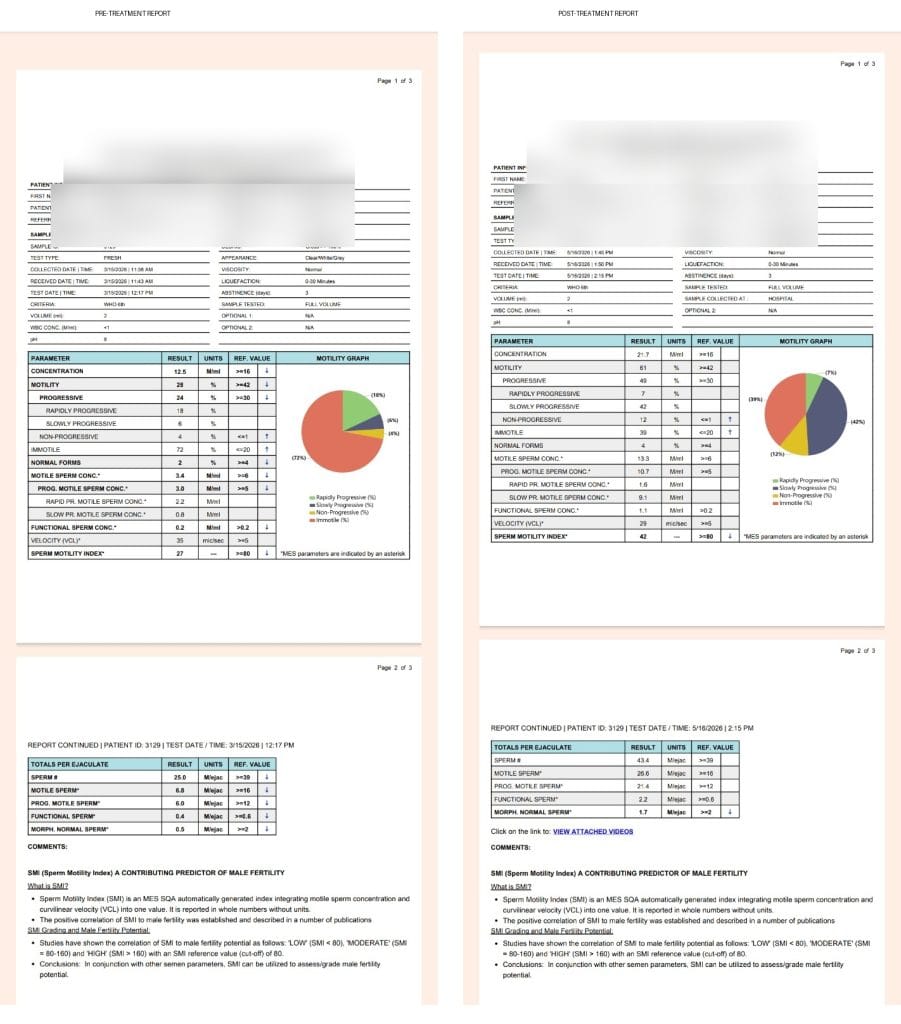
Pre-Treatment Findings :
| Parameter | Result | Reference |
|---|---|---|
| Sperm Concentration | 12.5 M/ml | ≥16 |
| Total Motility | 28% | ≥42% |
| Progressive Motility | 24% | ≥30% |
| Immotile Sperms | 72% | ≤20% |
| Normal Morphology | 2% | ≥4% |
| Total Sperm Count | 25 Million | ≥39 Million |
| Functional Sperms | 0.4 Million | ≥0.6 |
| SMI (Sperm Motility Index) | 27 | ≥80 |
Interpretation of Report :
The semen analysis suggested:
- Low sperm count
- Poor progressive motility
- High immotile sperms
- Abnormal morphology
- Reduced fertility potential
- Low Sperm Motility Index (SMI)
Final Diagnosis :
Oligoasthenoteratozoospermia (OAT)
Ayurveda Correlation of Oligoasthenoteratozoospermia :
Ayurveda correlates OAT with:
- Shukra Dushti
- Ksheena Shukra
- Beeja Dushti
- Klaibya
- Dhatu Kshaya
- Shukravaha Srotodushti
Ayurvedic Understanding of Male Infertility :
According to Ayurveda:
“Shuddha Shukra” is essential for healthy conception.
Healthy Shukra should have:
- proper quantity
- good motility
- normal morphology
- adequate viscosity
- reproductive vitality
Disturbance in:
- Doshas
- Dhatus
- Agni
- Srotas
may impair fertility potential.
Ayurveda Correlation of OAT Components :
1. Oligozoospermia → Ksheena Shukra
Low sperm count correlates with:
- reduced Shukra Dhatu
- Dhatu Kshaya
- Agnimandya
- poor tissue nourishment
2. Asthenozoospermia → Vata Dushti :
Poor sperm motility correlates with:
- Apana Vata dysfunction
- Vata aggravation
- dryness and weakness
3. Teratozoospermia → Pitta Dushti :
Abnormal morphology correlates with:
- Pitta vitiation
- Dhatvagni Dushti
- Rakta Dushti
- oxidative stress pattern
Ayurvedic Samprapti (Pathogenesis) :
Improper diet & lifestyle
↓
Agnimandya
↓
Ama Formation
↓
Srotorodha
↓
Vata-Pitta aggravation
↓
Dhatu Kshaya
↓
Shukra Dushti
↓
Oligoasthenoteratozoospermia
Causes of Oligoasthenoteratozoospermia :
Dietary Causes :
- Junk food
- Excess spicy foods
- Preservatives
- Alcohol
- Smoking
- Excess tea/coffee
Lifestyle Causes :
- Late nights
- Stress
- Sedentary lifestyle
- Heat exposure
- Tight undergarments
- Laptop heat exposure
Psychological Causes :
- Anxiety
- Chronic stress
- Depression
- Fertility-related stress
Ayurvedic Clinical Diagnosis :
- Shukra Dushti
- Ksheena Shukra
- Vata-Pittaja Klaibya
- Dhatu Kshaya
- Beeja Dushti
Treatment Principles in Ayurveda :
Main Goals :
- Improve sperm count
- Improve sperm motility
- Improve morphology
- Reduce oxidative stress
- Nourish Shukra Dhatu
- Improve fertility potential
- Reduce stress
Panchakarma Treatment for Oligoasthenoteratozoospermia :
Purva Karma :
Deepana-Pachana :
Improves:
- digestion
- metabolism
- Ama reduction
Snehana :
- Internal oleation
- External Abhyanga
Swedana :
Helps:
- improve circulation
- reduce Vata
- relax tissues
Main Panchakarma Procedure :
Yoga Basti Chikitsa :
Basti is considered:
“Ardha Chikitsa” for Vata disorders.
Since Apana Vata governs:
- ejaculation
- semen transport
- reproductive function
Basti plays a major role in infertility treatment.
Detailed Basti Procedure :
Anuvasana Basti :
Oils Used
- Bala Taila
- Ashwagandha Taila
- Sahacharadi Taila
Benefits
- tissue nourishment
- Vata pacification
- reproductive strengthening
Niruha Basti :
Ingredients
- Dashamoola Kwatha
- Honey
- Saindhava
- Ghrita
- Herbal paste
Benefits
- detoxification
- improved pelvic circulation
- Apana Vata regulation
- improved Shukra metabolism
Vajikarana Chikitsa :
Vajikarana helps:
- improve fertility
- improve libido
- enhance semen quality
- improve stamina
Ayurvedic Medicines Commonly Used :
Ashwagandha :
- stress reduction
- adaptogenic effect
- supports reproductive health
Kapikacchu
- improves sperm count
- improves motility
Shilajit
- Rasayana effect
- vitality enhancement
Gokshura
- reproductive support
- urinary health
Safed Musli
- semen nourishing
- Vajikarana effect
Diet Recommendations :
Recommended Foods :
- Cow ghee
- Milk
- Dates
- Almonds
- Black raisins
- Pumpkin seeds
- White sesame
Avoid :
- Smoking
- Alcohol
- Junk food
- Carbonated drinks
- Excess spicy food
Lifestyle Advice :
- Proper sleep
- Stress management
- Yoga
- Meditation
- Regular exercise
- Avoid excessive heat exposure
Yoga Helpful in OAT :
- Baddha Konasana
- Bhujangasana
- Vajrasana
- Sarvangasana
- Nadi Shodhana
- Bhramari Pranayama
Post-Treatment Improvements :
| Parameter | Before | After |
|---|---|---|
| Sperm Concentration | 12.5 | 21.7 |
| Total Motility | 28% | 61% |
| Progressive Motility | 24% | 49% |
| Immotile Sperms | 72% | 39% |
| Morphology | 2% | 4% |
| SMI | 27 | 42 |
| Total Sperm Count | 25 M | 43.4 M |
Clinical Outcome :
After Ayurvedic management:
- improved sperm count
- improved motility
- improved morphology
- reduced immotile sperms
- better energy and confidence
- improved fertility potential
Modern Scientific Perspective :
Ayurvedic therapies may help through:
- antioxidant action
- reduction in oxidative stress
- hormonal modulation
- mitochondrial support
- stress reduction
- improved microcirculation
Frequently Asked Questions (FAQ) :
Can oligoasthenoteratozoospermia be cured naturally?
Some cases improve significantly with lifestyle correction, Ayurvedic support, and medical management.
What is the oligoasthenoteratozoospermia pregnancy rate?
Pregnancy rate depends on severity, female fertility factors, and treatment response. Mild to moderate cases may achieve natural conception after sperm quality improvement.
Can Ayurveda improve sperm motility?
Ayurvedic therapies including Panchakarma and Vajikarana may support motility improvement.
Is Panchakarma useful in male infertility?
Yes, Panchakarma helps detoxification and improves tissue nourishment.
How long does treatment take?
Usually 3–6 months depending on severity.
Can morphology improve with treatment?
Yes, improvement may occur with antioxidant support, stress reduction, and proper fertility treatment.
Conclusion :
This case demonstrates that a comprehensive Ayurvedic approach including:
- Panchakarma
- Basti therapy
- Vajikarana medicines
- Rasayana therapy
- Diet correction
- Lifestyle modification
may significantly improve semen parameters in oligoasthenoteratozoospermia.
Ayurveda focuses not only on improving reports but also on:
- reproductive strength
- mental wellbeing
- tissue nourishment
- long-term fertility health
“Healthy lifestyle + Ayurveda may help improve reproductive wellness naturally.”