Diabetes is one of the fastest-growing health conditions worldwide. Millions of people are searching online for answers to questions such as “Is Diabetes Reversible “,“Can diabetes be reversed permanently?”, “How to reverse diabetes naturally?”, and “Can Ayurveda cure diabetes?”
The good news is that many people can significantly improve their blood sugar levels through proper lifestyle changes, weight management, dietary modifications, and holistic healthcare approaches. However, understanding what “reversal” actually means is important before believing common myths.
In this article, we explore seven important facts about diabetes reversal and understand how Ayurveda may support long-term diabetes management.
What Does Diabetes Reversal Mean?
Diabetes reversal generally refers to achieving normal or near-normal blood sugar levels without requiring diabetes medications for a prolonged period. Healthcare professionals often call this diabetes remission rather than a permanent cure.
A person may be considered in remission when:
- HbA1c remains below diabetic range
- Blood sugar levels stay controlled
- Diabetes medications are reduced or discontinued under medical supervision
- Healthy lifestyle practices are maintained consistently
It is important to understand that diabetes can return if healthy habits are abandoned.
Fact 1: Type 2 Diabetes Is More Likely to Be Reversible Than Type 1 Diabetes :
Type 2 diabetes develops when the body becomes resistant to insulin or cannot produce enough insulin.
Research suggests that early-stage Type 2 diabetes may enter remission through:
- Significant weight loss
- Healthy dietary changes
- Regular physical activity
- Better sleep quality
- Stress management
Type 1 diabetes is an autoimmune condition where insulin-producing cells are destroyed. Currently, complete reversal of Type 1 diabetes is not established.
Fact 2: Early Diagnosis Improves the Chances of Remission :
The earlier diabetes is identified, the greater the opportunity to improve metabolic health.
People who take action soon after diagnosis often experience:
- Better insulin sensitivity
- Reduced pancreatic stress
- Improved blood sugar regulation
- Lower risk of complications
Ignoring elevated blood sugar for years can make reversal more difficult.
Fact 3: Weight Loss Plays a Major Role :
Excess body fat, especially around the abdomen, contributes significantly to insulin resistance.
Studies have shown that losing even 5-15% of body weight may help:
- Improve insulin function
- Lower fasting blood sugar
- Reduce HbA1c levels
- Enhance overall metabolic health
Healthy weight reduction should focus on sustainable lifestyle changes rather than crash diets.
Fact 4: Diet Is More Powerful Than Most People Realize :
One of the biggest factors influencing blood sugar control is daily food intake.
A diabetes-friendly diet typically includes:
- Fresh vegetables
- Whole grains in moderation
- Lean proteins
- Healthy fats
- High-fiber foods
Foods that should be limited include:
- Sugary beverages
- Refined flour products
- Processed snacks
- Excess sweets
- Ultra-processed foods
Consistent dietary discipline often produces remarkable improvements in blood sugar levels.
Fact 5: Physical Activity Improves Insulin Sensitivity :
Exercise acts like a natural glucose regulator.
Regular physical activity helps:
- Increase glucose uptake by muscles
- Improve insulin sensitivity
- Support weight loss
- Reduce cardiovascular risk
Activities such as walking, yoga, cycling, swimming, and strength training can all be beneficial.
Experts generally recommend at least 150 minutes of moderate exercise weekly.
Fact 6: Stress and Sleep Directly Affect Blood Sugar :
Many people focus only on diet while ignoring sleep and stress.
Chronic stress may elevate cortisol levels, which can increase blood sugar.
Poor sleep can contribute to:
- Insulin resistance
- Increased cravings
- Weight gain
- Hormonal imbalance
Practices such as meditation, pranayama, mindfulness, and maintaining a regular sleep schedule may support better diabetes control.
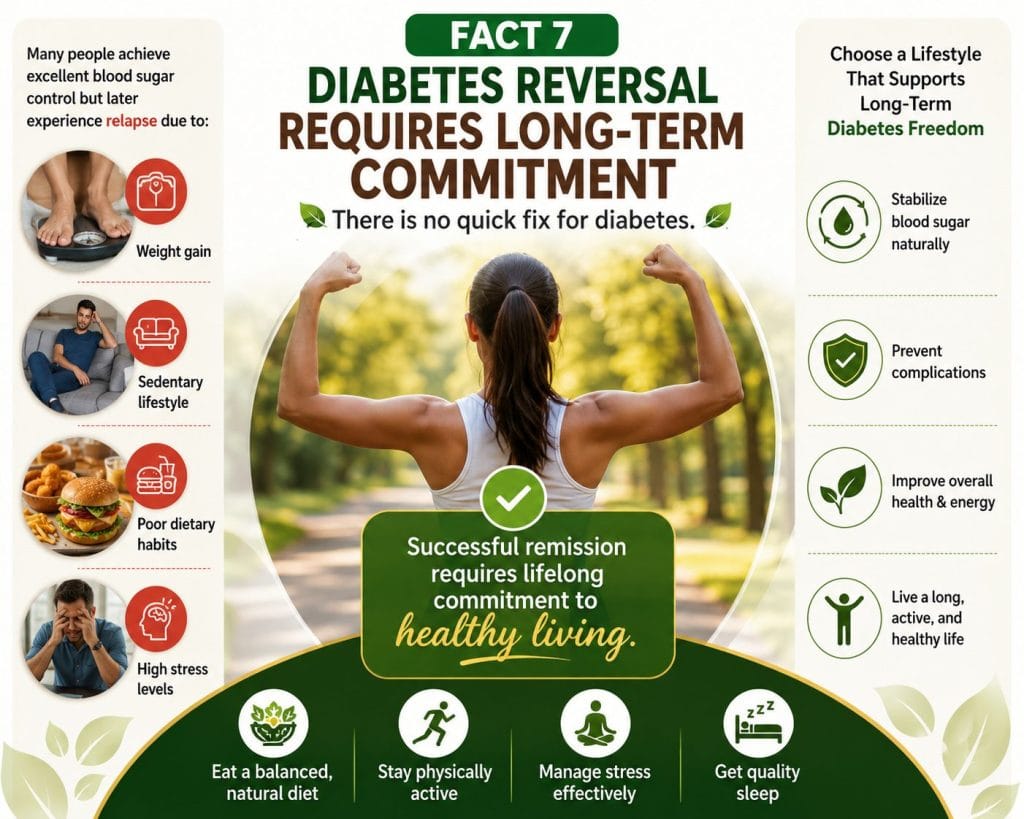
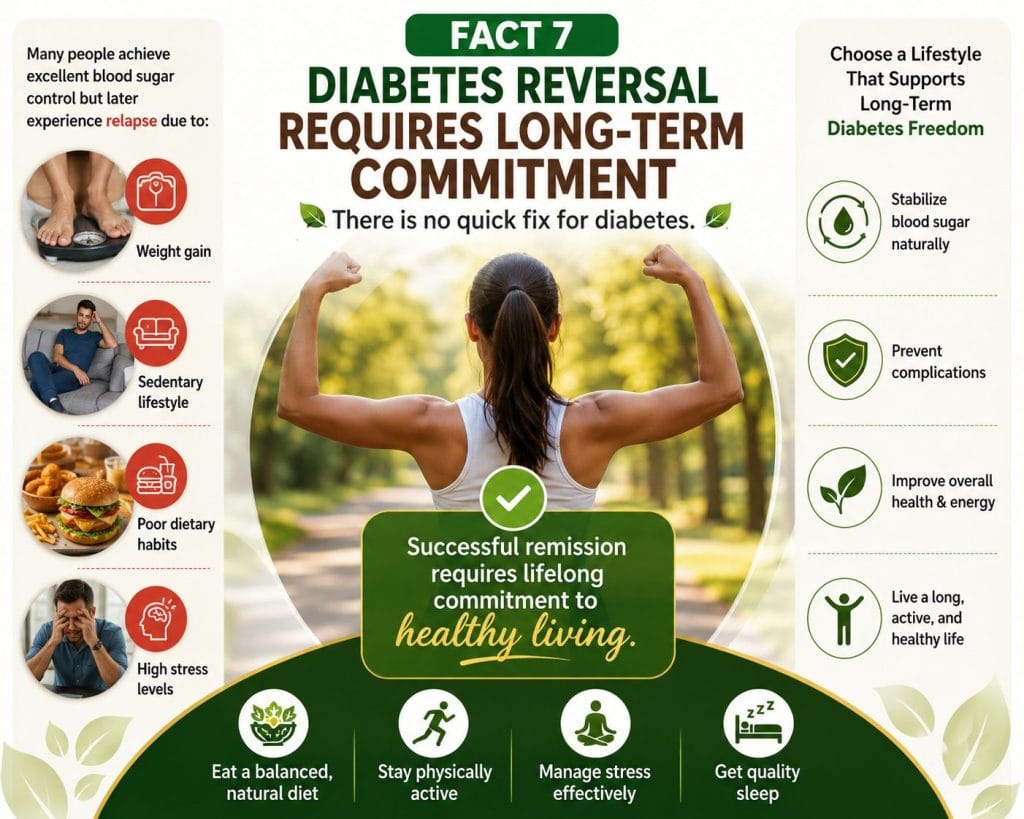
Fact 7: Diabetes Reversal Requires Long-Term Commitment :
There is no quick fix for diabetes.
Many people achieve excellent blood sugar control but later experience relapse due to:
- Weight gain
- Sedentary lifestyle
- Poor dietary habits
- High stress levels
Successful remission requires lifelong commitment to healthy living.
Ayurvedic Perspective on Diabetes (Madhumeha) :
In Ayurveda, diabetes is often correlated with Madhumeha , a condition described under Prameha disorders.
According to Ayurvedic principles, imbalances involving:
- Kapha Dosha
- Meda Dhatu (fat tissue)
- Mutravaha Srotas (urinary channels)
- Agni (metabolic fire)
can contribute to the development of Madhumeha.
Ayurvedic management focuses on identifying the individual’s constitution and addressing root causes rather than merely targeting blood sugar levels.
Ayurvedic Point 1: Personalized Dietary and Lifestyle Management :
Ayurveda emphasizes individualized care.
A treatment plan may include:
- Pathya Ahara (appropriate diet)
- Dinacharya (daily routine)
- Weight management strategies
- Physical activity recommendations
- Stress reduction practices
The goal is to improve overall metabolic balance and support healthy glucose metabolism.
Ayurvedic Point 2: Panchakarma and Ayurvedic Therapies :
In suitable patients, Ayurvedic physicians may recommend therapies such as:
- Virechana
- Basti
- Udwartana
- Lifestyle correction programs
These therapies are selected only after proper clinical assessment and may be integrated with ongoing diabetes care when appropriate.
Can Diabetes Be Reversed Permanently?
The word “permanently” can be misleading.
Current medical understanding suggests that many individuals with Type 2 diabetes can achieve long-term remission, but maintaining remission requires continued healthy habits.
Rather than focusing on a permanent cure, it is more practical to focus on:
- Sustainable lifestyle changes
- Healthy body weight
- Balanced nutrition
- Regular exercise
- Ongoing medical monitoring
When Should You Consult a Doctor? :
Seek professional evaluation if you experience:
- Excessive thirst
- Frequent urination
- Unexplained weight loss
- Persistent fatigue
- Blurred vision
- Slow wound healing
- Recurrent infections
Early diagnosis can significantly improve long-term outcomes.
Conclusion :
So, is diabetes reversible?
For many people with Type 2 diabetes, significant improvement and even remission may be possible through weight management, healthy nutrition, regular exercise, stress reduction, and appropriate medical supervision.
Ayurveda offers a holistic approach that focuses on dietary regulation, lifestyle optimization, metabolic balance, and individualized care. While no responsible healthcare professional can guarantee a permanent cure, integrating healthy habits with expert medical guidance can help many individuals achieve better blood sugar control and improve their quality of life.
At Ayusanjivani Ayurveda Clinic, diabetes management programs are designed to support overall metabolic health through personalized Ayurvedic assessment, diet guidance, lifestyle counseling, and traditional Ayurvedic therapies where appropriate.
References
- American Diabetes Association (ADA) Standards of Care.
- World Health Organization (WHO) Diabetes Fact Sheet.
- International Diabetes Federation (IDF) Diabetes Atlas.
- Diabetes Remission Clinical Research Studies.
- Charaka Samhita – Prameha Chikitsa.
- Sushruta Samhita – Madhumeha Description.
- National Institute of Diabetes and Digestive and Kidney Diseases (NIDDK).
Disclaimer :
Medical Disclaimer:
This article is intended for educational and informational purposes only. It does not claim to cure, treat, reverse, or permanently eliminate diabetes. Individual results may vary depending on health condition, disease duration, lifestyle, and medical history. Diabetes management should always be undertaken under the guidance of a qualified healthcare professional. Ayurvedic treatments and therapies are personalized and should be prescribed only after proper consultation with a registered Ayurvedic physician. Do not discontinue prescribed medications or alter your treatment plan without consulting your doctor.