Introduction :
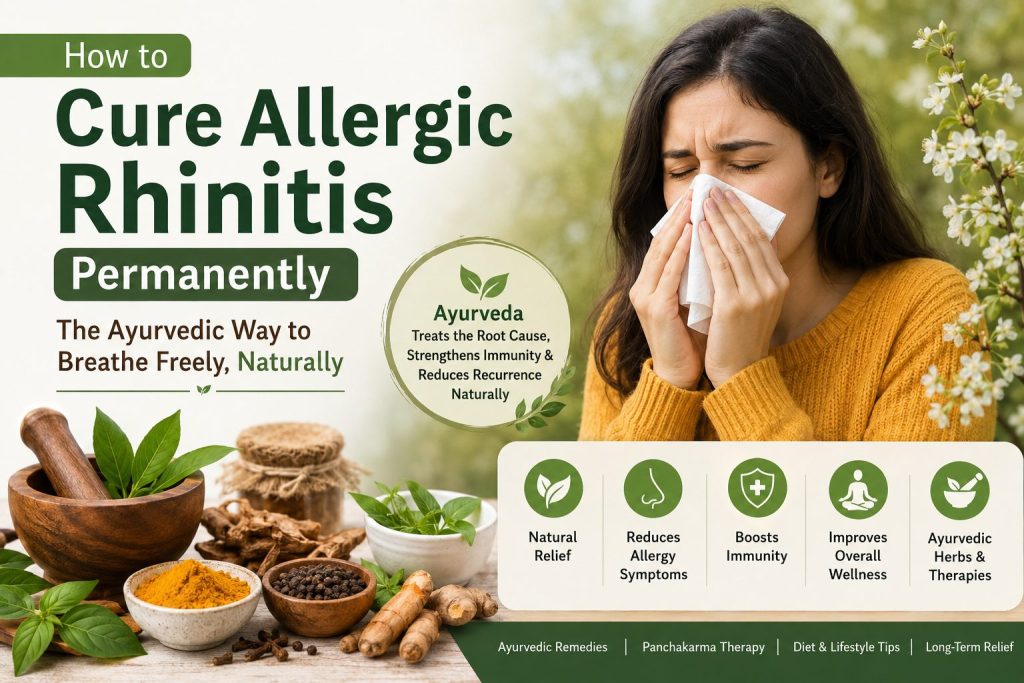
Allergic rhinitis is one of the most common allergic conditions affecting millions of people worldwide. Frequent sneezing, a blocked or runny nose, itchy eyes, throat irritation, and nasal congestion can significantly affect daily life. Many people ask, “How to cure allergic rhinitis permanently?” While there is currently no guaranteed permanent cure for allergic rhinitis in modern medicine, long-term symptom control and a significant reduction in recurrence are possible through proper diagnosis, allergen avoidance, medical treatment, and holistic Ayurvedic management.
According to Ayurveda, allergic rhinitis is associated with an imbalance of Kapha and Vata doshas, impaired digestion (Agni), and weakened immunity (Ojas). Ayurvedic treatment aims to correct the root cause rather than simply suppress symptoms, helping reduce the frequency and severity of allergic episodes over time.
What Is Allergic Rhinitis?
Allergic rhinitis is an immune system reaction that occurs when the body overreacts to normally harmless airborne allergens. When exposed to allergens, the immune system releases histamine and other inflammatory chemicals, leading to typical allergy symptoms.
Common allergens include:
- House dust mites
- Pollen
- Mold spores
- Pet dander
- Cockroach allergens
- Air pollution
- Smoke
- Strong perfumes and chemicals
Symptoms may occur seasonally (seasonal allergic rhinitis) or throughout the year (perennial allergic rhinitis).
Can Allergic Rhinitis Be Permanently Cured?
This is one of the most frequently searched questions online.
The answer is not always.
Scientific evidence suggests there is currently no universal permanent cure for allergic rhinitis. However, many people can achieve long-term remission and excellent symptom control through:
- Identifying and avoiding triggers
- Strengthening the immune system
- Following prescribed treatment
- Lifestyle modification
- Ayurvedic therapies
- Allergy immunotherapy (selected patients)
From an Ayurvedic perspective, restoring dosha balance, improving digestion, detoxification, and enhancing immunity may reduce recurrent episodes and improve long-term respiratory health.
Common Symptoms of Allergic Rhinitis :
Symptoms usually begin within minutes after allergen exposure.
Nasal Symptoms
- Repeated sneezing
- Runny nose
- Nasal congestion
- Blocked nose
- Itchy nose
Eye Symptoms
- Itchy eyes
- Redness
- Watering
- Puffy eyelids
Other Symptoms
- Itchy throat
- Ear itching
- Cough
- Fatigue
- Reduced concentration
- Poor sleep
- Mouth breathing
What Causes Allergic Rhinitis?
Several factors contribute to allergic rhinitis.
Genetic Predisposition
A family history of allergies increases the risk.
Environmental Exposure
Continuous exposure to allergens can trigger symptoms.
Pollution
Vehicle emissions and industrial pollution may worsen nasal inflammation.
Weak Immune Regulation
An overactive immune response causes excessive histamine release.
Seasonal Changes
Pollen levels increase during specific seasons, leading to seasonal allergies.
Risk Factors :
You are more likely to develop allergic rhinitis if you have:
- Asthma
- Eczema
- Family history of allergies
- Frequent dust exposure
- Pet exposure
- Urban pollution
- Smoking exposure
Diagnosis of Allergic Rhinitis :
A healthcare professional may recommend:
Medical History
Symptoms, seasonal variation, family history, and triggers.
Physical Examination
Nasal examination for swelling and inflammation.
Allergy Testing
- Skin prick test
- Blood IgE testing
Additional Tests
If needed:
- Nasal endoscopy
- CT scan of sinuses
- Lung function testing
How Ayurveda Explains Allergic Rhinitis :
In Ayurveda, allergic rhinitis resembles Vata-Kaphaja Pratishyaya.
Contributing factors include:
- Agnimandya (poor digestion)
- Ama accumulation
- Kapha aggravation
- Vata imbalance
- Weak Ojas
The goal is not only symptom relief but also restoring internal balance.
Ayurvedic Treatment for Long-Term Relief :
Treatment is individualized after Ayurvedic assessment.
Nasya Therapy
Nasya involves administering medicated oil through the nostrils.
Potential benefits include:
- Improved nasal breathing
- Reduced congestion
- Lubrication of nasal passages
- Better sinus drainage
Vamana
Therapeutic emesis vaman may be recommended in selected patients with excess Kapha under medical supervision.
Virechana
Virechan ,Medicinal purgation helps balance Pitta and eliminate toxins in appropriately selected individuals.
Swedana
Herbal steam therapy may help reduce congestion.
Dhoomapana
Medicated herbal smoke is used selectively after professional evaluation.
Rasayana Therapy
Rejuvenation therapy focuses on strengthening immunity and reducing recurrence.
Ayurvedic Herbs Used in Allergic Rhinitis :
Herbal medicines should only be taken under qualified Ayurvedic supervision.
Commonly used herbs include:
- Haridra (Turmeric)
- Guduchi
- Tulsi
- Pippali
- Yashtimadhu
- Sitopaladi
- Trikatu
- Vasa
The choice depends on the patient’s constitution and symptoms.
Diet for Allergic Rhinitis :
Diet plays an important role in reducing allergic episodes.
Foods to Include
- Warm water
- Fresh vegetables
- Ginger
- Turmeric
- Black pepper
- Garlic
- Tulsi tea
- Seasonal fruits
- Light homemade meals
Foods to Limit
- Cold drinks
- Ice cream
- Processed foods
- Deep-fried foods
- Excess sweets
- Refrigerated foods
- Excess curd, especially at night
Lifestyle Tips :
Daily habits can significantly reduce symptoms.
Maintain Good Indoor Air Quality
- Keep rooms dust-free.
- Use HEPA air filters if possible.
- Wash bedding regularly.
Avoid Smoke
Avoid active and passive smoking.
Practice Steam Inhalation
Warm steam may temporarily relieve nasal congestion.
Stay Hydrated
Adequate hydration supports healthy mucus clearance.
Exercise Regularly
Moderate exercise improves overall respiratory health.
Practice Yoga and Breathing Exercises
Helpful practices include:
- Anulom Vilom
- Bhramari
- Deep breathing exercises
Individuals with asthma or severe respiratory disease should consult their healthcare provider before starting new breathing exercises.
Can Panchakarma Help?
Panchakarma aims to eliminate accumulated doshas and restore physiological balance.
Potential benefits may include:
- Better nasal airway function
- Reduced frequency of allergy episodes
- Improved digestion
- Enhanced immunity
- Better quality of life
Treatment protocols vary according to age, body constitution, disease severity, and overall health.
Preventing Allergic Rhinitis Recurrence :
Although complete prevention is not always possible, recurrence may be reduced by:
- Identifying personal allergens
- Avoiding dust exposure
- Wearing a mask during high pollen seasons
- Maintaining household cleanliness
- Following a healthy diet
- Practicing regular exercise
- Managing stress
- Following medical advice consistently
When Should You Consult a Doctor?
Seek medical evaluation if you experience:
- Symptoms lasting several weeks
- Severe nasal blockage
- Recurrent sinus infections
- Persistent cough
- Difficulty breathing
- Wheezing
- High fever
- Poor response to treatment
Frequently Asked Questions (FAQs) :
1. Can allergic rhinitis be cured permanently?
There is no guaranteed permanent cure, but many people achieve long-term symptom control through allergen avoidance, medical treatment, and lifestyle modification. Ayurveda focuses on reducing recurrence by addressing contributing factors.
2. Is allergic rhinitis lifelong?
Not always. Symptoms may improve with age or effective treatment in some individuals.
3. Is allergic rhinitis contagious?
No. It is an allergic condition and cannot spread from person to person.
4. Which season is worst for allergic rhinitis?
Spring and autumn are common seasons for pollen allergies, though triggers vary by region.
5. Can Ayurveda help allergic rhinitis?
Ayurvedic treatment may help reduce symptom frequency and improve quality of life when provided by a qualified practitioner.
6. Is Panchakarma useful for allergic rhinitis?
Selected Panchakarma therapies may be recommended after individual assessment.
7. Can allergic rhinitis cause asthma?
Some people with allergic rhinitis also have asthma. Proper management may help improve overall respiratory health.
8. Is steam inhalation beneficial?
Warm steam may provide temporary relief from nasal congestion but does not cure allergies.
9. Which foods should be avoided?
Cold beverages, processed foods, excessive sweets, and refrigerated foods may worsen symptoms in some individuals.
10. Can children develop allergic rhinitis?
Yes. Allergic rhinitis commonly affects children and adolescents.
11. Is allergic rhinitis hereditary?
Family history increases the likelihood of developing allergies.
12. Can stress worsen allergic rhinitis?
Stress may influence immune responses and make symptoms feel worse in some people.
13. How is allergic rhinitis diagnosed?
Diagnosis is based on medical history, examination, and allergy testing when required.
14. Can exercise help?
Regular moderate exercise supports general respiratory health and overall well-being.
15. How long does Ayurvedic treatment take?
Treatment duration varies depending on the severity, chronicity, body constitution, and individual response. A qualified Ayurvedic physician can recommend an appropriate treatment plan.
Conclusion :
If you are searching for how to cure allergic rhinitis permanently, it is important to understand that no single treatment guarantees a permanent cure for everyone. However, long-term control is achievable through accurate diagnosis, allergen avoidance, healthy lifestyle habits, and individualized treatment. Ayurveda approaches allergic rhinitis by addressing digestion, immunity, dosha balance, and overall health, aiming to reduce the frequency and severity of recurrent episodes while improving quality of life.
Disclaimer: The information provided in this article is intended for educational and informational purposes only and should not be considered a substitute for professional medical advice, diagnosis, or treatment. Although every effort has been made to ensure the accuracy of the content, medical knowledge and treatment guidelines continue to evolve.
Allergic rhinitis is a chronic allergic condition that may require evaluation and management by a qualified healthcare professional. While Ayurveda may help reduce the frequency and severity of symptoms, improve immunity, and support overall respiratory health, there is currently no scientifically established treatment that guarantees a permanent cure for allergic rhinitis in every individual. Treatment outcomes vary depending on the patient’s age, allergy triggers, immune response, disease severity, and adherence to the prescribed treatment plan.
References :
- World Health Organization (WHO). Allergic Diseases and Respiratory Health.
https://www.who.int - American Academy of Allergy, Asthma & Immunology (AAAAI). Allergic Rhinitis.
https://www.aaaai.org - American College of Allergy, Asthma & Immunology (ACAAI). Allergic Rhinitis (Hay Fever).
https://acaai.org/allergies/allergic-conditions/hay-fever/ - Mayo Clinic. Allergic Rhinitis (Hay Fever): Symptoms and Causes.
https://www.mayoclinic.org/diseases-conditions/hay-fever - MedlinePlus (U.S. National Library of Medicine). Allergic Rhinitis.
https://medlineplus.gov/allergicrhinitis.html - MSD Manual Professional Edition. Allergic Rhinitis.
https://www.msdmanuals.com/professional - National Center for Biotechnology Information (NCBI). Allergic Rhinitis – Review Articles.
https://www.ncbi.nlm.nih.gov - ARIA (Allergic Rhinitis and its Impact on Asthma) Guidelines.
https://www.whiar.org - National Institute of Allergy and Infectious Diseases (NIAID). Allergic Diseases.
https://www.niaid.nih.gov/diseases-conditions/allergic-diseases - Ministry of AYUSH, Government of India. Ayurveda Resources and Clinical Information.
https://www.ayush.gov.in