Best Treatment for PCOS in Ayurveda: A Personalized Approach
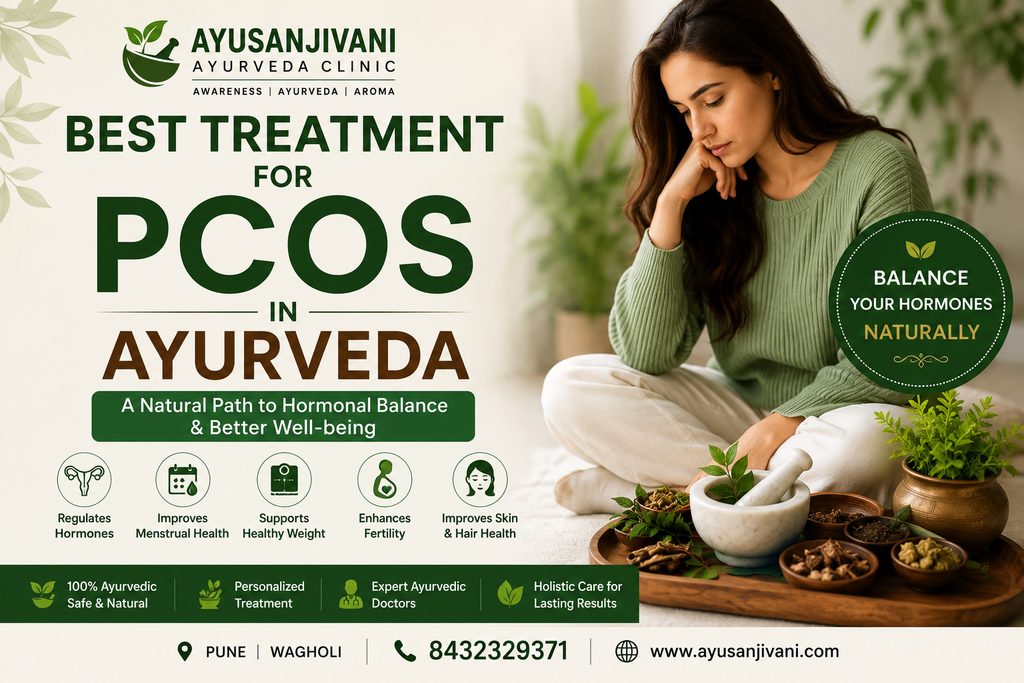
Polycystic Ovary Syndrome (PCOS) is a common hormonal and metabolic condition that can affect menstrual cycles, ovulation, skin, hair, weight and fertility. Many women looking for the best treatment for PCOS in Ayurveda want a natural, personalized approach rather than relying only on symptom-based treatment.
Ayurveda focuses on understanding the individual rather than treating every woman with PCOS in exactly the same way. At Ayusanjivani Ayurveda, the treatment approach may include Ayurvedic medicines, diet and lifestyle guidance and selected therapies when clinically appropriate.
It is important to understand that PCOS is a long-term condition. There is no single treatment that is considered the “best” for every woman. Modern international guidelines also emphasize individualized care, healthy lifestyle, metabolic health, reproductive goals and shared decision-making.
What Is PCOS?
PCOS is a hormonal condition associated with features such as irregular menstrual cycles, excess androgen activity and, in some women, polycystic ovarian morphology.
Symptoms can vary significantly from one woman to another.
Common Symptoms of PCOS
- Irregular or delayed periods
- Acne or oily skin
- Excess facial or body hair
- Hair thinning or hair fall
- Difficulty with ovulation
- Weight gain or difficulty managing weight
- Darkening of skin in certain areas
- Difficulty conceiving in some women
- Mood and psychological concerns
Not every woman experiences all of these symptoms.
PCOS can also be associated with metabolic concerns, including increased risk of abnormal glucose regulation and other long-term health issues. The international guideline recommends considering reproductive, metabolic, cardiovascular, psychological and other aspects of PCOS rather than focusing on one symptom alone.
What Is the Best Treatment for PCOS in Ayurveda?
There is no single Ayurvedic medicine or therapy that can be called the best treatment for every PCOS patient.
The most appropriate approach is usually an individualized treatment plan based on:
- Menstrual pattern
- Age
- Weight and body composition
- Digestion and bowel habits
- Lifestyle
- Sleep
- Symptoms
- Reproductive goals
- Medical history
- Existing medications
- Relevant laboratory and clinical findings
From an Ayurvedic perspective, the physician may assess Prakriti, Vikriti, Agni and other relevant factors before designing a treatment plan.
The goal is not simply to make periods occur temporarily. A comprehensive approach aims to address the patient’s overall health and the symptoms that matter most to her.
How Ayurveda May Approach PCOS?
Ayurvedic management may involve a combination of therapies rather than relying on one medicine.
Ayurvedic Medicines
Depending on the individual assessment, an Ayurvedic physician may prescribe appropriately selected classical or proprietary Ayurvedic formulations.
The choice, dose and duration should be individualized.
Patients should avoid self-medication, particularly when they are taking hormonal medicines, diabetes medicines, fertility medicines or other prescription drugs.
Diet and Lifestyle
Lifestyle management is an important part of PCOS care.
The 2023 international evidence-based PCOS guideline recommends healthy lifestyle intervention for women with PCOS and emphasizes that benefits can occur even without weight loss. It also notes that there is no single diet composition proven to be superior for every woman with PCOS.
An Ayurvedic plan may therefore focus on sustainable habits such as:
- Regular meal timings
- Balanced, nutrient-dense meals
- Appropriate portion control
- Adequate protein and fibre
- Regular physical activity
- Better sleep routine
- Stress management
- Reduction of highly processed foods where appropriate
The plan should be practical enough to follow long term.
Yoga and Physical Activity :
Regular physical activity can support metabolic health, weight management and overall wellbeing.
The international guideline recommends physical activity for women with PCOS and states that there is not enough evidence to recommend one particular type or intensity of exercise as universally superior.
Depending on the patient’s health and preferences, activities may include:
- Walking
- Strength training
- Yoga
- Cycling
- Swimming
- Aerobic exercise
Consistency is more important than choosing a fashionable exercise program.
Can Ayurveda Help With Irregular Periods in PCOS?
Irregular periods are one of the most common reasons women seek PCOS treatment.
Ayurvedic treatment may be planned to support menstrual health after assessing the individual patient’s symptoms and underlying health factors.
However, persistent menstrual irregularity should not simply be attributed to PCOS without appropriate medical evaluation.
Women with very infrequent periods may require assessment because prolonged untreated menstrual irregularity can have implications for the endometrium. The international PCOS guideline recommends ongoing management and monitoring of reproductive and metabolic health.
Ayurveda and PCOS-Related Weight Management :
Weight management can be challenging for some women with PCOS.
Ayurveda may provide individualized diet, lifestyle and behavioral recommendations according to the patient’s needs.
However, treatment should not be based on unrealistic promises of rapid weight loss.
The international guideline emphasizes sustainable healthy lifestyle practices, prevention of excess weight gain and individualized weight-management strategies.
Even women who are not overweight can benefit from healthy nutrition, exercise, sleep and stress management.
Ayurveda for PCOS and Fertility :
PCOS is a common cause of ovulatory dysfunction and can affect fertility in some women.
If pregnancy is the goal, treatment should be planned specifically around the patient’s reproductive objectives.
For more detail kinldy read :
Related Read : PCOS vs PCOD: Ayurvedic Treatment & Fertility Guide in Pune
Preconception Care :
Before trying to conceive, women with PCOS should discuss:
- Menstrual and ovulation patterns
- Weight and metabolic health
- Blood pressure
- Nutrition
- Folic acid
- Exercise
- Sleep
- Existing medications
- Other fertility factors
The international guideline recommends optimizing preconception health and reproductive risk factors in women with PCOS who are planning pregnancy.
Ayurvedic treatment should therefore complement appropriate fertility assessment rather than delay necessary reproductive care.
When Should You Consult a Doctor?
Professional evaluation is especially important if you have:
- Periods that are consistently very irregular
- No periods for several months
- Excessive menstrual bleeding
- Severe pelvic pain
- Rapidly increasing facial or body hair
- Sudden severe acne
- Significant unexplained weight changes
- Difficulty conceiving
- Symptoms of diabetes or metabolic problems
- Pregnancy or plans for pregnancy
PCOS can overlap with other hormonal and medical conditions, so diagnosis should be based on appropriate clinical assessment.
Why Choose Ayusanjivani Ayurveda for PCOS Treatment?
At Ayusanjivani Ayurveda, we believe PCOS treatment should be personalized rather than based on a fixed package.
18+ Years of Clinical Experience
Prof. Dr. Shailesh Phalle has more than 18 years of clinical experience in Ayurveda and focuses on individualized Ayurvedic treatment planning.
Customized Treatment Plan
Each patient may have a different combination of menstrual, hormonal, metabolic, digestive, lifestyle and reproductive concerns.
Therefore, the treatment plan is customized according to individual assessment.
Disease-Specific Ayurvedic Assessment
Rather than prescribing the same medicines to every PCOS patient, the treatment approach considers the individual’s presentation and treatment objectives.
Regular Doctor Follow-Up
Regular follow-up helps assess progress, treatment response, lifestyle adherence and any changes in symptoms.
Patient-Centered Care
The focus is on educating patients about their condition and helping them develop realistic, sustainable habits.
What Can You Expect During a PCOS Consultation?
During an Ayurvedic consultation, the doctor may discuss:
Your Menstrual History
- Cycle length
- Period frequency
- Duration of bleeding
- Pain
- Previous menstrual patterns
Your Hormonal and Metabolic Concerns
The doctor may review available investigations and relevant symptoms.
Depending on the situation, investigations may include tests recommended by the treating healthcare professional.
Lifestyle :
- Diet
- Exercise
- Sleep
- Stress
- Daily routine
- Weight changes
Treatment Goal :
Your goal may be:
- Better menstrual regularity
- Weight management
- Skin or hair concerns
- Improving overall wellbeing
- Supporting fertility
- Long-term PCOS management
Treatment should be aligned with that goal.
Is Ayurveda Alone Enough for PCOS?
This is an important question.
PCOS management should be individualized and may involve lifestyle intervention, medical treatment, fertility care or other specialist care depending on the patient’s symptoms and goals.
Ayurveda can be considered as part of an individualized healthcare approach, but it should not be presented as a guaranteed cure or as a replacement for necessary evidence-based medical care.
The international guideline emphasizes evidence-based treatment, lifestyle management and shared decision-making.
If you are already taking prescription medicines, do not stop or change them without consulting the prescribing doctor.
Frequently Asked Questions About the Best Treatment for PCOS in Ayurveda
What is the best treatment for PCOS in Ayurveda?
There is no single treatment suitable for every woman. Ayurvedic management should be customized according to symptoms, menstrual pattern, lifestyle, health status and reproductive goals.
Can Ayurveda cure PCOS permanently?
PCOS is generally considered a long-term condition. Treatment focuses on managing symptoms, improving overall health and reducing associated health risks. Avoid claims of a guaranteed permanent cure.
Can Ayurveda help regulate periods in PCOS?
An individualized Ayurvedic treatment plan may be considered for menstrual irregularity after proper assessment. Persistent irregular periods should be medically evaluated.
Can Ayurveda help with PCOS-related weight gain?
Ayurveda may provide personalized diet, lifestyle and activity guidance. Sustainable lifestyle management remains an important part of PCOS care.
Can PCOS be treated naturally?
Healthy eating, regular physical activity, adequate sleep and stress management are important components of PCOS management. Ayurvedic care may be incorporated according to individual needs.
Can women with PCOS take Ayurvedic medicines?
Some women may be prescribed Ayurvedic medicines after consultation. Medicines should be selected by a qualified practitioner, particularly if other medications are being taken.
Is Ayurveda useful for PCOS fertility problems?
PCOS can cause ovulation problems. Ayurvedic care may be considered as part of an individualized approach, but women trying to conceive should receive appropriate fertility assessment and not delay necessary treatment.
How long does PCOS treatment take?
The duration varies from person to person. PCOS management is usually a long-term process involving ongoing lifestyle and clinical care.
Author and Medical Reviewer :
Prof. Dr. Shailesh Phalle MD
Ayurveda Physician & Panchakarma Consultant
18+ Years of Clinical Experience
Ayusanjivani Ayurveda Clinic, Pune, Maharashtra
Prof. Dr. Shailesh Phalle has more than 18 years of clinical experience in Ayurveda and focuses on individualized Ayurvedic treatment planning and patient-centered care.
About Ayusanjivani Ayurveda and our team:
Ayusanjivani Ayurveda – About Us
Official website:
Ayusanjivani Ayurveda
Medical Reviewer :
Prof. Dr. Shailesh Phalle
Ayurveda Physician & Panchakarma Consultant
18+ Years of Clinical Experience
This article has been medically reviewed from an Ayurvedic clinical perspective for terminology, treatment considerations, precautions and patient-safety information.
Last reviewed: September 2026
External References :
2023 International Evidence-Based PCOS Guideline – American Society for Reproductive Medicine
ASRM – International PCOS Guideline Recommendations
Monash Centre for Health Research and Implementation – PCOS Guideline
Monash University – PCOS Guideline
International Evidence-Based PCOS Guideline – 2023 Technical Report
Monash University – International PCOS Guideline
Medical Disclaimer :
This article is provided for general educational purposes and does not replace individualized medical consultation, diagnosis or treatment.
PCOS can have reproductive, metabolic and psychological implications. If you have persistent menstrual irregularity, fertility concerns, severe symptoms or other medical conditions, consult an appropriately qualified healthcare professional.
Ayurvedic treatment should be selected and supervised according to individual assessment. Individual results may vary.
Consult Ayusanjivani Ayurveda :
If you are looking for the best treatment for PCOS in Ayurveda, start with a detailed consultation rather than choosing a treatment only on the basis of online claims.
At Ayusanjivani Ayurveda, treatment is planned according to the individual patient, with a focus on customized Ayurvedic care, lifestyle guidance and regular follow-up.
Ayusanjivani Ayurveda Clinic, Pune
Contact: 8432329371
www.ayusanjivani.com