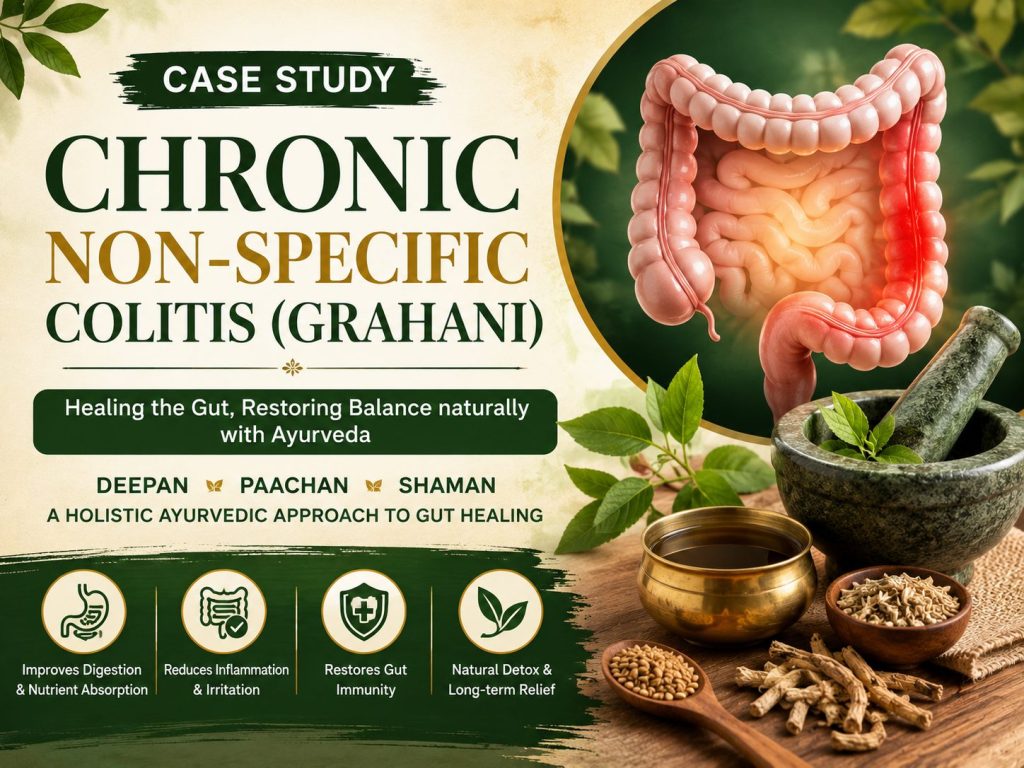
Chronic Non-Specific Colitis Managed with Individualized Ayurvedic Therapy: A Clinical, Endoscopic and Histopathological Case Study
A single-patient observational report combining colonoscopy, histopathology and Ayurvedic Grahaṇī-oriented management, with pre- and post-treatment endoscopic comparison.
Abstract
Chronic non-specific colitis may present with gastrointestinal symptoms and objective mucosal inflammation without establishing a specific inflammatory bowel disease. This case describes a 39-year-old female with gastrointestinal symptoms including impaired digestion, abdominal discomfort, abdominal distension and Āṭopa.
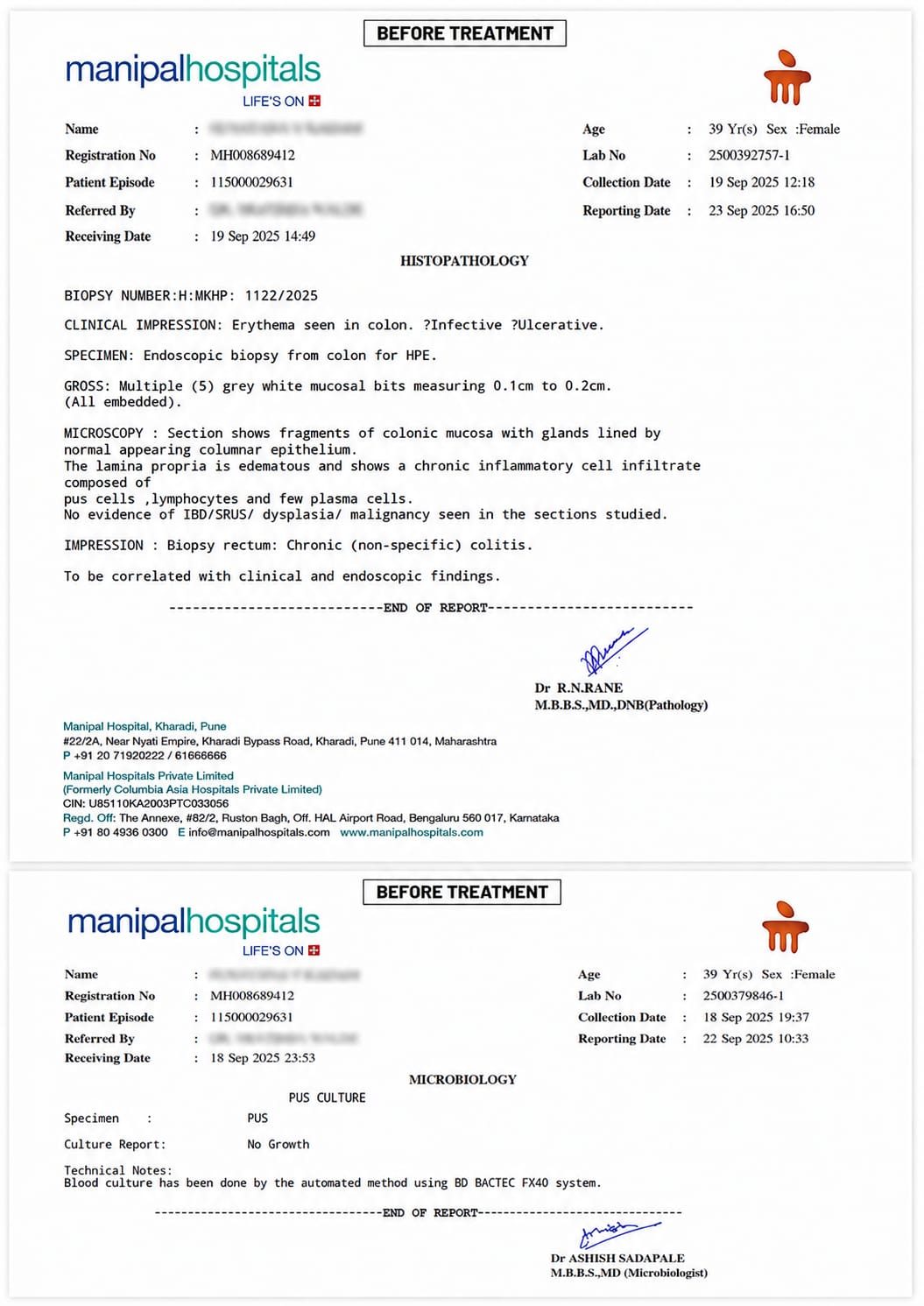
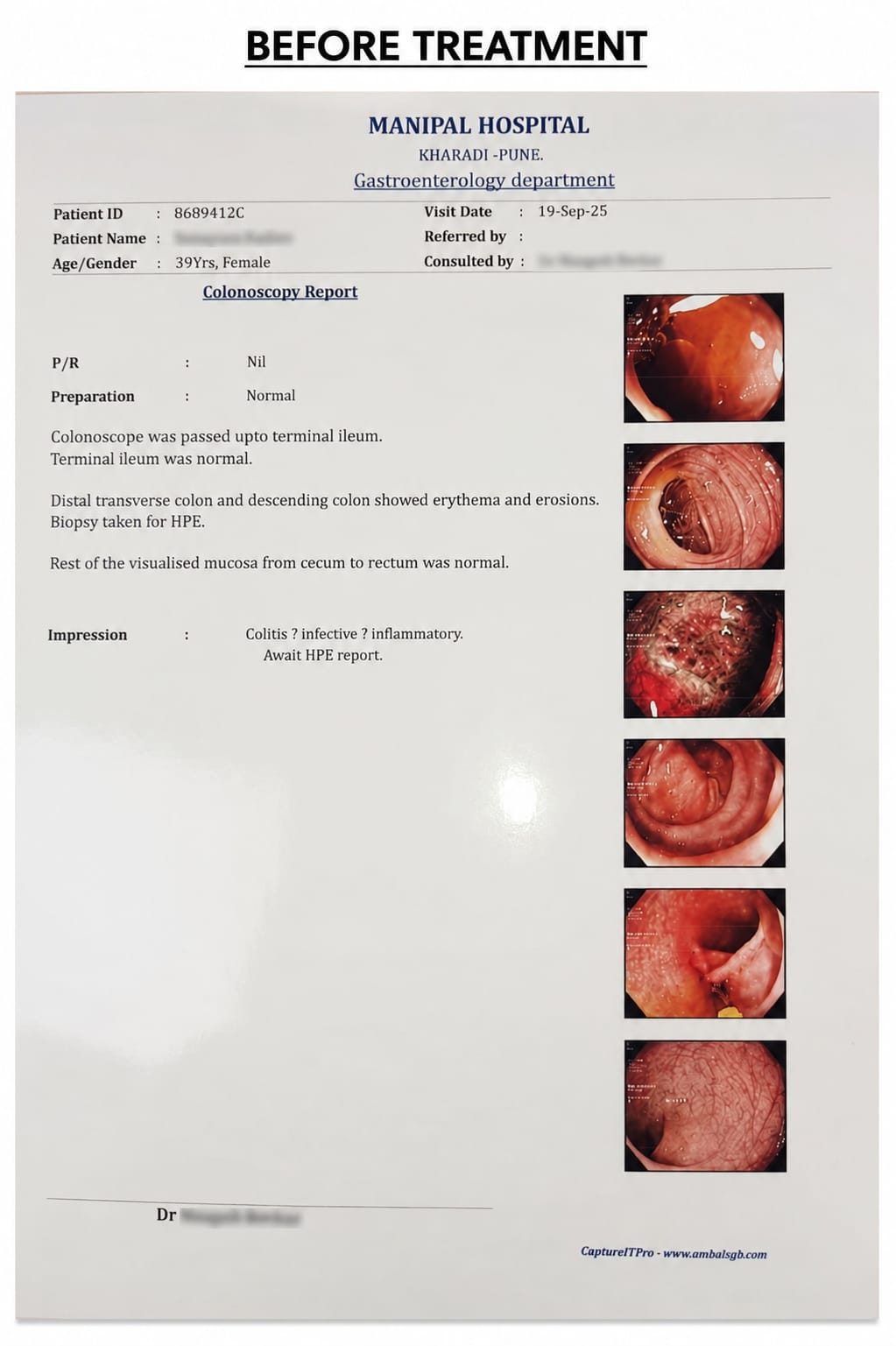
Initial colonoscopy demonstrated erythema and erosions involving the distal transverse and descending colon, while the terminal ileum and remaining visualized colonic mucosa were normal. Histopathological examination demonstrated oedematous lamina propria with chronic inflammatory cell infiltration, predominantly lymphocytes with few plasma cells and pus cells. No evidence of inflammatory bowel disease, SRUS, dysplasia or malignancy was identified. The pathological impression was chronic non-specific colitis, while the reported microbiological culture showed no growth.
The earliest documented Ayurvedic treatment was initiated in February 2026. Management comprised individualized Agni- and Grahaṇī-oriented medicines, bowel regulation, dietary and lifestyle modification and Panchakarma including Snehana, Swedana, Shastika Shali Pinda Swedana and Piccha Basti Chikitsa.
During follow-up, the patient experienced improvement in digestive symptoms, with the clinical record documenting "relief good" and subsequently "digestion good." A later assessment documented Vāta–Pitta Nadi and Grahani, following which treatment was further individualized.
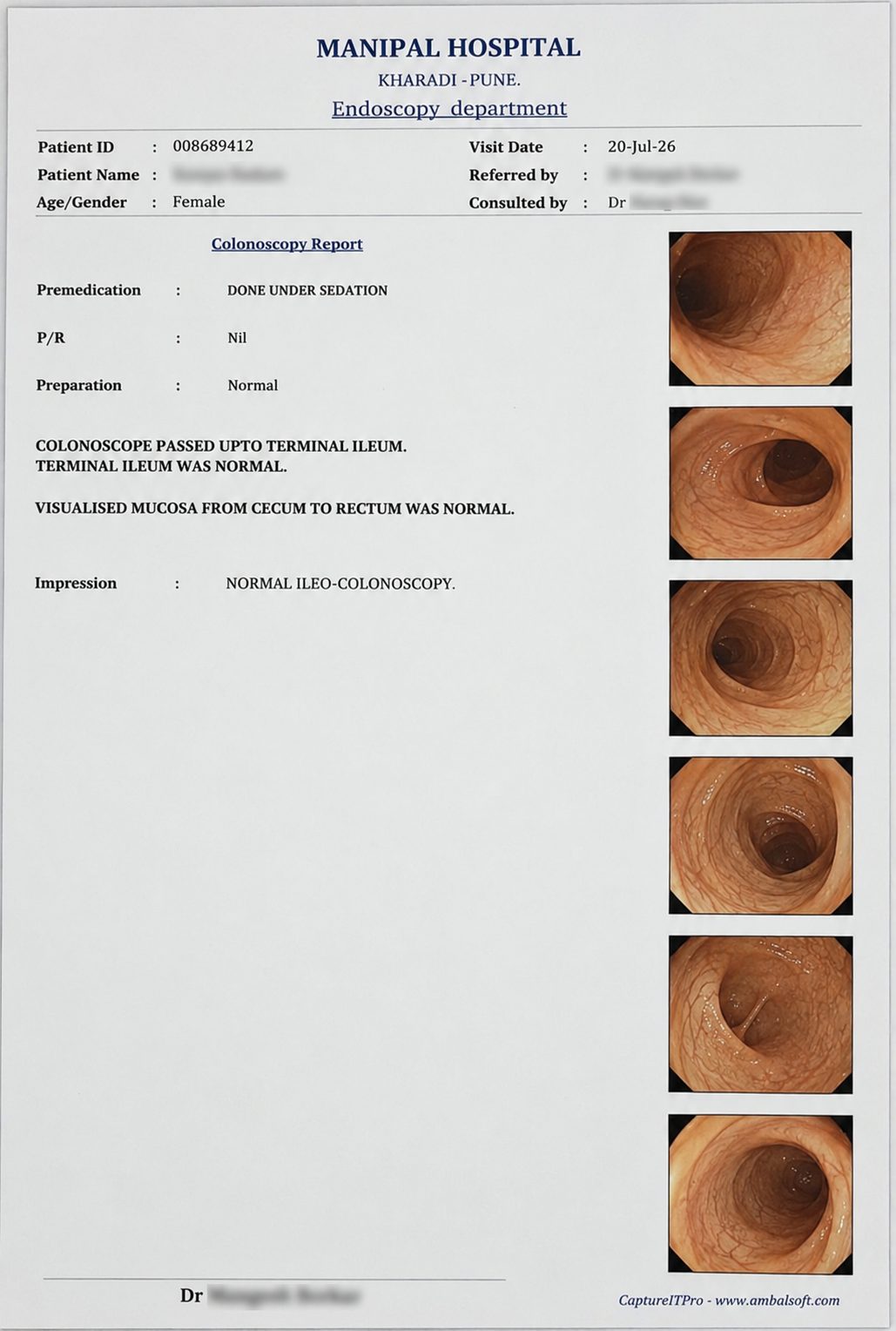
Follow-up ileo-colonoscopy demonstrated normal visualized ileocolonic mucosa. A repeat histopathological biopsy was not performed because the patient had experienced clinical relief and the follow-up endoscopy showed no apparent mucosal abnormality.
The case demonstrates symptomatic improvement accompanied by endoscopic normalization during individualized Ayurvedic management. As this is a single clinical observation without a comparator and without follow-up histopathology, the findings should not be interpreted as definitive evidence of histological remission or causality.
1. Introduction
Chronic colitis represents a spectrum of inflammatory conditions affecting the colonic mucosa. In some patients, endoscopic inflammation and histological chronic inflammatory changes are present without sufficient evidence to establish a specific inflammatory bowel disease.
Ayurveda approaches gastrointestinal disorders through assessment of Agni, Grahaṇī, Doṣa, Koṣṭha and Srotas, with emphasis on the patient's digestive function, bowel pattern and associated symptoms.
The present case describes a patient with histopathologically documented chronic non-specific colitis who subsequently underwent individualized Ayurvedic treatment with longitudinal clinical and endoscopic assessment.
2. Patient Profile
| Parameter | Details |
|---|---|
| Sex | Female |
| Age at initial report | 39 years |
| Initial investigation | Colonoscopy |
| Initial date | 19 September 2025 |
| Initial endoscopic finding | Erythema and erosions in distal transverse and descending colon |
| Terminal ileum | Normal |
| Histopathological impression | Chronic non-specific colitis |
| Microbiological culture | No growth |
| Earliest documented Ayurvedic treatment | 18 February 2026 |
| Follow-up endoscopy | July 2026 |
| Follow-up impression | Normal ileo-colonoscopy |
3. Clinical Presentation
The patient's predominant presentation was gastrointestinal and was clinically suggestive of Grahani dysfunction.
The documented symptoms included:
- poor/impaired digestion,
- abdominal discomfort,
- abdominal distension,
- Āṭopa/gaseous abdominal symptoms,
- disturbed digestion,
- and fatigue.
The symptoms fluctuated during the treatment period. Improvement in digestive function was subsequently documented, followed by a later episode of abdominal discomfort and disturbed digestion.
From the Ayurvedic perspective, the presentation was considered in relation to Agni Vaiguṇya and Grahaṇī dysfunction, with later assessment showing Vāta–Pitta predominance.
4. Initial Investigative Findings
The initial colonoscopic examination demonstrated localized inflammatory mucosal changes, specifically erythema and erosions in the distal transverse and descending colon. The terminal ileum and remaining visualized colonic mucosa were normal.
Biopsy from the abnormal mucosa showed:
- oedematous lamina propria,
- chronic inflammatory cell infiltration,
- predominantly lymphocytes,
- few plasma cells,
- and pus cells.
There was no evidence of IBD, SRUS, dysplasia or malignancy in the examined sections.
The final histopathological impression was:
Chronic Non-Specific Colitis
The reported microbiological culture showed no growth.
Thus, the baseline clinical and investigative picture was consistent with chronic non-specific colitis without documented evidence of a specific inflammatory bowel disease.
5. Ayurvedic Clinical Correlation
The gastrointestinal presentation was evaluated through the Ayurvedic concepts of:
- Agni
- Grahani
- Vāta
- Pitta
- Annavaha Srotas
- Purīṣavaha Srotas
The clinical symptoms of poor digestion, abdominal discomfort, distension and Āṭopa were considered compatible with Grahaṇī dysfunction.
During the later treatment assessment, the clinical record specifically documented:
Nadi: Vāta–Pitta
Diagnosis: Grahani
This provided the basis for further modification of treatment according to the patient's prevailing clinical state.
6. Ayurvedic Pathophysiological Correlation
A conceptual Ayurvedic sequence for the case can be represented as:
This represents an Ayurvedic clinical framework and should not be interpreted as a direct molecular explanation of the histopathological findings.
7. Treatment Initiation and Therapeutic Objectives
The earliest documented Ayurvedic treatment was on 18 February 2026.
The treatment strategy was individualized according to the patient's symptoms and Ayurvedic assessment.
The principal therapeutic objectives were:
- correction and stabilization of Agni,
- support of Grahaṇī function,
- regulation of bowel function,
- management of Pitta-associated digestive symptoms,
- Vāta regulation where clinically indicated,
- dietary correction,
- lifestyle modification,
- and supportive Panchakarma.
8. Ayurvedic Medicines Used
| Medicine / Formulation | Therapeutic Rationale |
|---|---|
| Jatiphaladi Vati | Used for digestive and Grahaṇī support and bowel stabilization. |
| Prawaladi Vati | Used as Pitta-oriented supportive therapy during digestive irritation/Amlapitta-type symptoms. |
| ACDT | Used for digestive and Amlapitta-oriented management. |
| Bilwadi Churna | Used during the initial phase for digestive and Grahaṇī support. |
| Pachak Vati | Used to support digestion during periods of impaired digestive function. |
| Swadista Rechan | Used for bowel regulation and appropriate evacuation. |
| Anuloman | Used for Vāta-anulomana and bowel regulation. |
| Laghu Sootshekhar Ras | Used during the Pitta/upper gastrointestinal symptom phase. |
| Dadimavaleha | Used during the later phase for digestive support and maintenance. |
| Ortiset | Used as supportive therapy; the supplied record does not establish a specific colitis-directed mechanism. |
| Vitamin B12 | Used as nutritional/supportive supplementation. |
| Ultra Magnesium | Used as supportive nutritional management. |
The therapeutic regimen was modified over time according to the patient's clinical condition rather than being maintained as one fixed combination.
9. Panchakarma Management
Panchakarma was incorporated as part of the individualized treatment plan.
Snehana
Sarvanga Snehana was used as a supportive Panchakarma intervention.
Swedana
Sarvanga Swedana was subsequently incorporated into the treatment programme.
Shastika Shali Pinda Swedana
This was used as a supportive therapeutic procedure during the Panchakarma phase.
Piccha Basti Chikitsa
Piccha Basti was incorporated as the Basti intervention in the treatment protocol.
The previously documented protocol included Indukantham Ghrita and Madhuyashtyadi Taila with an appropriate Kalka component.
The Ayurvedic therapeutic rationale was directed toward:
- Grahaṇī support,
- Vāta regulation,
- chronic bowel dysfunction,
- and functional intestinal stabilization.
Janu Basti is not included in this case study.
10. Dietary Management
Dietary modification was an integral part of treatment.
The patient was advised regarding:
- regular meal timing,
- freshly prepared and easily digestible food,
- appropriate portion size,
- adequate hydration,
- avoidance of individually identified food triggers,
- adequate nutritional intake,
- reduction of excessive spicy, oily and highly irritant foods during Pitta-associated symptoms,
- and warm, appropriately digestible food during Vāta-associated digestive disturbance.
The dietary objective was to support Agni and digestive stability while maintaining adequate nutrition.
11. Lifestyle Management
Lifestyle modification accompanied the dietary and medicinal treatment.
The approach included:
- regular physical activity,
- appropriate exercise,
- adequate sleep,
- stress management,
- regular meal timing,
- and maintenance of a consistent daily routine.
Diet and exercise were documented repeatedly as components of the overall management strategy.
12. Phase-wise Treatment Course
At the beginning of the documented Ayurvedic treatment, the patient had a history of colitis with poor digestion and gastrointestinal functional disturbance.
Treatment was initiated with Agni/Grahaṇī-oriented oral therapy, dietary and lifestyle advice and Panchakarma-based management.
At follow-up, the clinical record documented: "Relief good."
The digestive and bowel-supportive treatment was continued and individualized according to the response.
Digestive and Pitta-oriented formulations were continued with modification according to clinical status.
By June 2026, the clinical record documented: "Digestion good."
This represented an improvement from the earlier documentation of poor digestion.
During July, the clinical diagnosis was documented as: Amlapitta
The therapeutic approach was adjusted toward Pitta-oriented digestive management while maintaining bowel regulation.
The patient reported:
- abdominal discomfort,
- disturbed digestion,
- fatigue.
The Ayurvedic assessment documented: Vāta–Pitta Nadi and Grahani
Treatment was subsequently individualized according to the prevailing clinical presentation.
During the later phase, Dadimavaleha was used as digestive-supportive therapy.
The objective at this stage was maintenance of digestive stability.
13. Treatment Timeline
| Date | Clinical Status | Management |
|---|---|---|
| 19 Sep 2025 | Initial colonoscopy showed segmental inflammatory mucosal changes | Biopsy obtained |
| 22 Sep 2025 | Microbiological evaluation | Culture: no growth |
| 23 Sep 2025 | Histopathology | Chronic non-specific colitis |
| 18 Feb 2026 | Poor digestion with gastrointestinal dysfunction | Ayurvedic treatment initiated |
| Feb 2026 | Panchakarma phase | Snehana, Swedana, Shastika Shali Pinda Swedana, Piccha Basti |
| 3 Apr 2026 | Clinical improvement | "Relief good" |
| 6 May 2026 | Continued digestive management | Agni/Grahaṇī and Pitta-oriented treatment |
| 28 May 2026 | Maintenance | Continued individualized therapy |
| 19 Jun 2026 | Improved digestion | "Digestion good" |
| 2 Jul 2026 | Amlapitta | Pitta/digestive-oriented modification |
| 16 Jul 2026 | Continued management | Digestive/bowel support |
| 20 Jul 2026 | Follow-up endoscopy | Normal ileo-colonoscopy |
| 30 Jul 2026 | Abdominal discomfort, disturbed digestion, fatigue; Vāta–Pitta Nadi; Grahani | Further individualized management |
| 7 Aug 2026 | Maintenance | Dadimavaleha |
14. Before-and-After Endoscopic Comparison
| Parameter | Before Treatment | Follow-up |
|---|---|---|
| Terminal ileum | Normal | Normal |
| Distal transverse colon | Erythema and erosions | Normal visualized mucosa |
| Descending colon | Erythema and erosions | Normal visualized mucosa |
| Remaining visualized colon | Normal | Normal |
| Visible inflammatory lesions | Present | Not reported |
| Overall impression | Colitis – infective/inflammatory differential | Normal ileo-colonoscopy |
Objective outcome
The follow-up examination demonstrated normalization of the previously documented visible colonic abnormalities.
15. Follow-up Histopathology
A repeat biopsy was not performed during the follow-up evaluation.
The clinical reason documented for this approach was that the patient had experienced significant symptomatic relief and improvement in digestive function, and the follow-up colonoscopic examination did not demonstrate the previously observed mucosal abnormalities.
Therefore, the outcome in this case should be described as:
Clinical improvement with endoscopic normalization
rather than histological remission.
16. Integrated Ayurvedic–Scientific Correlation
| Clinical Finding | Ayurvedic Correlation |
|---|---|
| Poor digestion | Agni Vaiguṇya |
| Abdominal discomfort | Grahaṇī dysfunction with possible Vāta involvement |
| Abdominal distension | Vāta-related gastrointestinal manifestation |
| Āṭopa | Vāta-associated functional manifestation |
| Disturbed digestion | Agni/Grahaṇī dysfunction |
| Colonic erythema | Conceptually compatible with Pitta-associated inflammatory activity |
| Colonic erosions | Conceptual Pitta-related tissue disturbance |
| Chronic inflammatory infiltrate | Chronic Doṣa involvement as an Ayurvedic interpretation |
| Vāta–Pitta Nadi | Documented Ayurvedic assessment |
| Grahani | Clinical Ayurvedic diagnosis |
| Improved digestion | Functional clinical improvement |
| Normal follow-up colonoscopy | Objective endoscopic improvement |
These correlations represent an Ayurvedic clinical interpretation and should not be considered equivalent to modern histopathological mechanisms.
17. Discussion
The present case demonstrates chronic non-specific colitis documented by initial endoscopic and histopathological evaluation, followed by clinical improvement and normalization of the visible colonic mucosa during individualized Ayurvedic management.
The initial investigation demonstrated localized erythema and erosions in the distal transverse and descending colon. Histopathology showed chronic inflammatory changes without evidence of IBD, SRUS, dysplasia or malignancy. The reported culture showed no growth.
The clinical presentation was predominantly gastrointestinal, with poor digestion, abdominal discomfort, distension and Āṭopa. These manifestations were considered within the Ayurvedic framework of Agni and Grahaṇī dysfunction. During follow-up, Vāta–Pitta Nadi and Grahani were documented, supporting further individualized modification of therapy.
The treatment strategy consisted of digestive and Grahaṇī-oriented medicines, bowel regulation, dietary and lifestyle modification and Panchakarma including Piccha Basti. The patient's treatment was progressively adapted according to the changing clinical presentation.
Clinical improvement was documented during follow-up, including "relief good" in April and "digestion good" in June. Although some digestive symptoms subsequently recurred, the patient continued to be managed through individualized treatment modification.
The follow-up ileo-colonoscopy demonstrated normal visualized mucosa, with no recurrence of the previously described erythema or erosions. Because the patient had experienced clinical relief and the follow-up endoscopic examination was normal, repeat tissue biopsy was not performed.
Thus, the strongest documented outcome is clinical improvement accompanied by endoscopic normalization. Since repeat histopathology was not performed, microscopic remission cannot be established.
Clinical Reports
18. Conclusion
This case describes a 39-year-old female with chronic non-specific colitis, initially characterized by segmental erythema and erosions of the distal transverse and descending colon and confirmed histopathologically as chronic non-specific colitis.
The patient's clinical presentation was predominantly gastrointestinal, consisting of poor digestion, abdominal discomfort, abdominal distension, Āṭopa and disturbed digestion, which were subsequently correlated with Grahani and Agni dysfunction in the Ayurvedic assessment.
Individualized Ayurvedic treatment was initiated in February 2026 and included:
- Agni/Grahaṇī-oriented medicines
- Dietary and lifestyle modification
- Panchakarma including Snehana, Swedana, Shastika Shali Pinda Swedana and Piccha Basti
During follow-up, the patient reported symptomatic improvement, including documented "relief good" and subsequently "digestion good." A later assessment documented Vāta–Pitta Nadi and Grahani, following which treatment was further individualized.
Follow-up ileo-colonoscopy demonstrated:
Normal terminal ileum + normal visualized ileocolonic mucosa
with the final impression:
Normal ileo-colonoscopy
Repeat histopathology was not performed because the patient had experienced clinical relief and the follow-up endoscopic examination showed no apparent mucosal abnormality.
Overall, the case demonstrates a temporal association between individualized Ayurvedic management, symptomatic improvement and endoscopic normalization. However, as repeat histopathology was not available and multiple interventions were used, the case should be interpreted as an observational clinical report rather than definitive evidence of histological remission or efficacy of any individual treatment.
Experiencing similar digestive symptoms? Discuss your case with our Ayurvedic physicians.