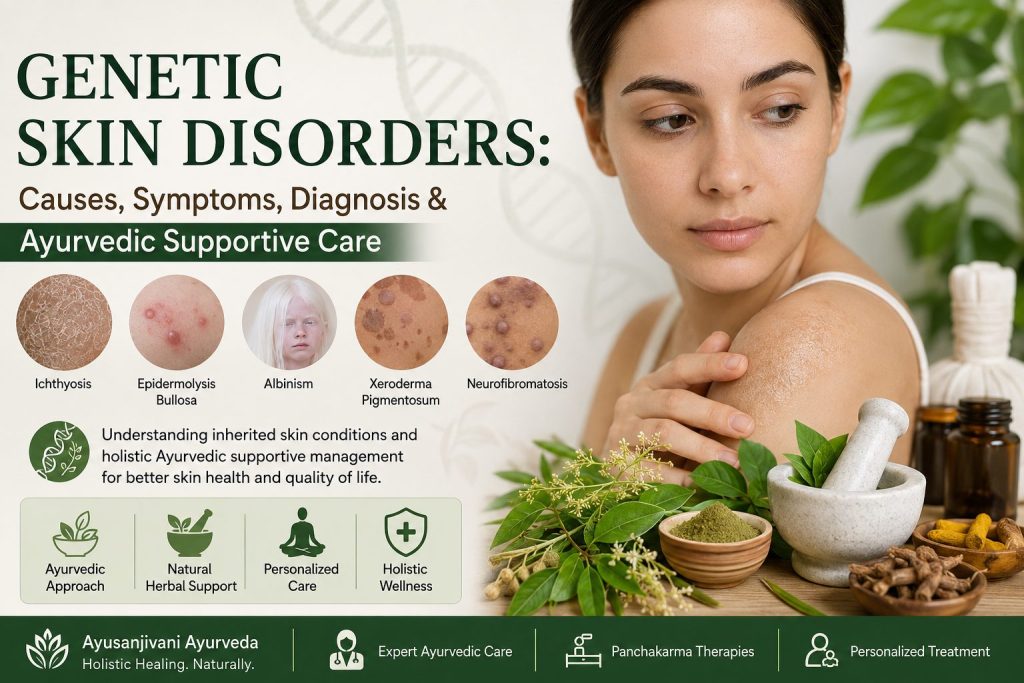
Genetic Skin Disorders: Causes, Symptoms, Diagnosis & Ayurvedic Supportive Care :
Skin reflects overall health, but for some people, skin problems begin at birth due to inherited genetic changes. Unlike common skin conditions caused by allergies, infections, or environmental factors, genetic skin disorders are inherited and often persist throughout life. These disorders may affect the skin, hair, nails, sweat glands, or connective tissues and can vary from mild cosmetic concerns to severe medical conditions.
Although many genetic skin disorders cannot be permanently cured because they arise from inherited genes, modern dermatology and Ayurveda can work together to improve skin health, reduce symptoms, prevent complications, and enhance quality of life.
This comprehensive guide explains the causes, symptoms, diagnosis, treatment options, and Ayurvedic supportive management of genetic skin disorders.
What Are Genetic Skin Disorders?
Genetic skin disorders are diseases caused by mutations or changes in one or more genes. These mutations may be inherited from parents or occur spontaneously before birth.
These conditions affect how skin cells develop, repair themselves, produce proteins, or maintain their protective barrier.
Some disorders appear immediately after birth, while others develop during childhood or adolescence.
How Do Genetic Skin Disorders Occur?
Genes contain instructions for producing proteins that maintain healthy skin.
When these genes are altered, they may cause:
- Abnormal skin cell growth
- Weak skin structure
- Poor wound healing
- Excessive scaling
- Fragile skin
- Pigmentation abnormalities
- Connective tissue weakness
The severity depends on which gene is affected and how much its function is impaired.
Common Types of Genetic Skin Disorders :
1. Ichthyosis
Ichthyosis causes dry, thick, fish-like scales over the skin.
Symptoms include:
- Rough skin
- Cracked skin
- Excessive scaling
- Itching
- Skin tightness
2. Epidermolysis Bullosa (EB)
This rare disorder makes skin extremely fragile.
Even minor friction can cause:
- Blisters
- Open wounds
- Infection
- Pain
- Scarring
3. Albinism
Albinism reduces melanin production.
People may develop:
- White skin
- Light-colored hair
- Eye problems
- Sun sensitivity
- Increased skin cancer risk
4. Xeroderma Pigmentosum
A rare inherited condition where the skin cannot repair UV damage.
Patients experience:
- Extreme sun sensitivity
- Early pigmentation
- Skin cancers
- Eye damage
5. Neurofibromatosis
Characterized by:
- Café-au-lait spots
- Multiple skin tumors
- Nerve involvement
- Learning difficulties in some patients
6. Tuberous Sclerosis
May produce:
- Facial angiofibromas
- Thick skin patches
- Nail abnormalities
- Internal organ involvement
7. Ehlers-Danlos Syndrome
A connective tissue disorder causing:
- Stretchy skin
- Easy bruising
- Poor wound healing
- Joint hypermobility
8. Darier Disease
Features include:
- Greasy skin lesions
- Wart-like bumps
- Nail abnormalities
- Recurrent infections
Signs and Symptoms :
Symptoms vary according to the disorder but may include:
- Dry skin
- Thick scales
- Fragile skin
- Frequent blisters
- Recurrent infections
- Delayed wound healing
- Pigmentation changes
- Hair abnormalities
- Nail deformities
- Sweating disorders
- Skin pain
- Cracking
- Chronic itching
- Photosensitivity
Some patients also develop problems affecting the eyes, bones, teeth, or nervous system.
Causes and Risk Factors :
Several factors increase the risk:
Family History
Most genetic skin disorders are inherited.
Gene Mutations
Mutations may occur spontaneously during fetal development.
Consanguineous Marriage
Marriages between close relatives increase the chance of recessive genetic disorders.
Inherited Chromosomal Abnormalities
Certain chromosomal conditions can affect skin development.
How Are Genetic Skin Disorders Diagnosed?
Diagnosis usually includes:
Clinical Examination
A dermatologist evaluates:
- Skin texture
- Lesion pattern
- Nail changes
- Hair abnormalities
Family History
Pedigree analysis helps determine inheritance patterns.
Skin Biopsy
Microscopic examination confirms structural abnormalities.
Genetic Testing
DNA testing identifies responsible gene mutations.
Blood Investigations
Useful for associated metabolic abnormalities.
Can Genetic Skin Disorders Be Cured?
Most inherited skin disorders cannot be completely cured because the underlying genetic mutation remains lifelong.
However, treatment aims to:
- Reduce symptoms
- Prevent infections
- Improve skin hydration
- Reduce inflammation
- Improve quality of life
- Prevent complications
Early diagnosis significantly improves long-term outcomes.
Modern Medical Treatment :
Treatment depends on the disorder.
Common options include:
Moisturizers :
Maintain skin hydration and reduce scaling.
Keratolytic Creams
Help remove thick scales.
Antibiotics
Treat secondary bacterial infections.
Retinoids
Useful in selected disorders under medical supervision.
Sun Protection
Essential for photosensitive disorders.
Wound Care
Special dressings help prevent infection.
Surgical Management
Required for severe deformities or skin cancers.
Ayurvedic Perspective on Genetic Skin Disorders :
Ayurveda describes congenital disorders under Beeja Dushti, where hereditary factors influence health from birth.
Genetic skin disorders may involve an imbalance of:
- Vata Dosha
- Pitta Dosha
- Kapha Dosha
- Rakta Dhatu
- Twak (skin tissue)
Ayurveda focuses on improving skin nourishment, enhancing digestion (Agni), supporting tissue health, and reducing associated symptoms rather than claiming to correct inherited genes.
Ayurvedic Supportive Management :
Supportive Ayurvedic care is individualized after assessing the patient’s constitution and overall health.
Internal Herbal Formulations
Depending on the condition, practitioners may consider herbs traditionally used to support skin health, digestion, and immunity, such as:
- Neem
- Manjistha
- Guduchi
- Haridra (Turmeric)
- Khadira
- Sariva
Selection and dosage should always be determined by a qualified Ayurvedic physician.
Panchakarma
In selected patients, therapies may be advised based on age, strength, and clinical condition.
Possible procedures include:
- Abhyanga
- Swedana
- Virechana
- Raktamokshana (only in suitable indications)
Not every patient with a genetic skin disorder is a candidate for Panchakarma. Treatment decisions should be individualized.
Rasayana Support
Certain rejuvenative therapies may be recommended to support general health and tissue nourishment under medical supervision.
Diet Recommendations :
A skin-friendly diet may help maintain overall skin health.
Recommended foods:
- Seasonal fruits
- Green vegetables
- Whole grains
- Fresh homemade meals
- Ghee in moderation
- Adequate hydration
- Omega-3-rich foods
- Antioxidant-rich vegetables
Limit:
- Junk food
- Highly processed foods
- Sugary beverages
- Excessively spicy foods (if they worsen symptoms)
- Smoking and alcohol
Lifestyle Tips :
Maintain healthy skin by:
- Avoiding excessive sun exposure
- Using gentle cleansers
- Applying moisturizers regularly
- Wearing soft cotton clothing
- Avoiding harsh chemicals
- Preventing skin trauma
- Sleeping adequately
- Managing stress
- Staying hydrated
- Following prescribed treatments consistently
Possible Complications :
Untreated or poorly managed genetic skin disorders may lead to:
- Chronic infections
- Skin ulcers
- Scarring
- Dehydration
- Nutritional deficiencies
- Heat intolerance
- Joint contractures
- Psychological stress
- Social isolation
- Increased skin cancer risk (in specific disorders)
When Should You Consult a Doctor?
Seek medical advice if you notice:
- Skin abnormalities present since birth
- Frequent unexplained blisters
- Severe scaling
- Non-healing wounds
- Recurrent infections
- Rapidly changing skin lesions
- Family history of inherited skin diseases
- Excessive sensitivity to sunlight
Early diagnosis allows appropriate medical care, genetic counseling, and long-term monitoring.
How Ayusanjivani Ayurveda Supports Patients :
At Ayusanjivani Ayurveda, every patient undergoes a detailed consultation to understand their symptoms, constitution (Prakriti), digestive health, lifestyle, and medical history. Supportive Ayurvedic care is planned alongside appropriate dermatological evaluation when needed.
Our approach may include:
- Personalized Ayurvedic consultation
- Individualized diet and lifestyle guidance
- Supportive herbal formulations (when appropriate)
- Panchakarma assessment for eligible patients
- Skin care counseling
- Long-term follow-up and monitoring
- Patient education for self-care and prevention of complications
Genetic skin disorders require multidisciplinary care. Ayurvedic management is supportive and should not replace necessary medical or dermatological treatment.
Frequently Asked Questions (FAQs) :
1. What are genetic skin disorders?
They are inherited conditions caused by changes in genes that affect the skin’s structure or function.
2. Are genetic skin disorders contagious?
No. They cannot spread from one person to another.
3. Can Ayurveda cure genetic skin disorders?
Ayurveda does not claim to cure inherited genetic mutations. It may help support overall skin health and symptom management under professional supervision.
4. Can children develop these disorders?
Yes. Many are present at birth or appear during childhood.
5. Are these disorders lifelong?
Most inherited skin disorders are lifelong, though symptoms and severity can vary over time.
6. Is genetic testing always necessary?
Not always. Your doctor will decide based on the suspected condition and family history.
7. Can Panchakarma help every patient?
No. Panchakarma is not suitable for every individual and should only be recommended after a proper Ayurvedic assessment.
8. Which diet supports healthy skin?
A balanced diet rich in fruits, vegetables, whole grains, healthy fats, and adequate fluids supports overall skin health.
9. Can stress worsen symptoms?
Stress may aggravate itching or discomfort in some skin conditions, making stress management beneficial.
10. Does Ayusanjivani Ayurveda provide personalized consultations?
Yes. Individualized Ayurvedic consultations are provided based on the patient’s condition, constitution, and overall health.
11. Does Ayusanjivani combine Ayurveda with modern diagnosis?
Patients are encouraged to obtain appropriate medical evaluations, and Ayurvedic care is planned with those findings in mind.
12. Can Ayusanjivani help improve quality of life?
Supportive Ayurvedic care may help improve comfort, skin care practices, and overall well-being when used alongside standard medical care.
13. Is follow-up important for genetic skin disorders?
Yes. Regular follow-up helps monitor symptoms, adjust supportive care, and identify complications early.
14. Does Ayusanjivani provide diet and lifestyle counseling?
Yes. Personalized recommendations on diet, daily routine, and skin care are part of the consultation process.
15. When should I book a consultation at Ayusanjivani Ayurveda?
If you or your child has persistent inherited skin concerns, recurring symptoms, or requires guidance on supportive Ayurvedic care, scheduling a consultation with a qualified Ayurvedic physician can help create an individualized management plan.
Conclusion :
Genetic skin disorders are lifelong conditions that require accurate diagnosis, regular monitoring, and comprehensive care. While inherited genetic changes cannot currently be reversed, early intervention, proper skin care, modern medical treatment, and evidence-informed supportive Ayurvedic management may help reduce discomfort, protect the skin, and improve quality of life. Working with qualified healthcare professionals ensures a safe, personalized approach that addresses both medical needs and overall well-being.
Author :
Author: Professor Dr. Shailesh Phalle, MD (Ayurveda)
Professor Dr. Shailesh Phalle, MD (Ayurveda) is a senior Ayurvedic physician, Panchakarma consultant, educator, and founder of Ayusanjivani Ayurveda Clinic, Pune. With extensive clinical experience in Ayurveda, he specializes in the holistic management of chronic diseases, skin disorders, musculoskeletal conditions, endocrine disorders, infertility, and lifestyle-related illnesses through evidence-informed Ayurvedic principles.
His clinical approach integrates classical Ayurvedic concepts with modern diagnostic methods to develop personalized treatment plans that focus on improving overall health, enhancing quality of life, and promoting long-term wellness. He has guided thousands of patients through individualized Ayurvedic consultations, Panchakarma therapies, dietary modifications, and lifestyle interventions.
Professor Dr. Shailesh Phalle is committed to patient education and regularly publishes medically reviewed health articles designed to simplify complex medical topics into practical, evidence-based information for the public. His mission is to promote safe, ethical, and scientific Ayurveda while encouraging informed healthcare decisions.
Special Interests
- Panchakarma Therapy
- Chronic Skin Disorders
- Psoriasis & Eczema Management
- Autoimmune Diseases
- Arthritis & Joint Disorders
- Infertility & Reproductive Health
- PCOS/PCOD Management
- Thyroid Disorders
- Diabetes & Lifestyle Diseases
- Preventive Ayurveda & Wellness
Medical Reviewer :
Medically Reviewed By: Professor Dr. Shailesh Phalle, MD (Ayurveda)
This article has been medically reviewed by Professor Dr. Shailesh Phalle to ensure that the information presented is accurate, balanced, and aligned with current Ayurvedic principles and accepted medical knowledge available at the time of publication.
The review process includes verification of:
- Medical accuracy
- Ayurvedic concepts and terminology
- Clinical relevance
- Patient safety considerations
- Consistency with current healthcare recommendations
- Readability and patient education standards
The purpose of this review is to provide readers with reliable educational information while emphasizing that individual diagnosis and treatment should always be performed by qualified healthcare professionals.
Last Medical Review: June 2026
Medical Disclaimer :
Disclaimer :
The information provided in this article is intended for educational and informational purposes only and should not be considered a substitute for professional medical advice, diagnosis, or treatment.
Genetic skin disorders are inherited medical conditions caused by changes in genes and often require evaluation by qualified healthcare professionals, including dermatologists, pediatricians, genetic specialists, or other medical experts. Because these conditions vary widely in severity and presentation, treatment should always be individualized.
The Ayurvedic information presented in this article describes supportive approaches that may help improve overall skin health, comfort, and quality of life. Ayurveda does not claim to cure, reverse, or alter inherited genetic mutations responsible for genetic skin disorders. Any Ayurvedic treatment, herbal medicine, Panchakarma therapy, dietary modification, or lifestyle recommendation should be undertaken only after consultation with a qualified Ayurvedic physician.
Patients should not discontinue prescribed medications, delay medical evaluation, or replace evidence-based medical treatment with Ayurvedic or home remedies without consulting their treating healthcare provider.
Results from Ayurvedic treatment vary depending on several factors, including:
- The specific genetic disorder
- Disease severity
- Age
- Overall health
- Individual body constitution (Prakriti)
- Associated medical conditions
- Adherence to the prescribed treatment plan
The content of this article is based on classical Ayurvedic principles, current medical understanding, and clinical experience. Medical knowledge continues to evolve, and newer research may influence future recommendations.
If you or your child experiences severe skin blistering, rapidly worsening skin lesions, recurrent infections, non-healing wounds, unexplained skin changes, or any medical emergency, seek immediate medical attention from a qualified healthcare professional.
Ayusanjivani Ayurveda Clinic provides individualized Ayurvedic consultations and supportive care plans. Every treatment recommendation is personalized after a comprehensive clinical assessment and is intended to complement—not replace—appropriate conventional medical care when required.
By reading this article, you acknowledge that the information is for general educational purposes and that all healthcare decisions should be made in consultation with qualified medical professionals.
External References :
- American Academy of Dermatology (AAD) – Genetic Skin Disorders
https://www.aad.org - National Institute of Arthritis and Musculoskeletal and Skin Diseases (NIAMS)
https://www.niams.nih.gov - National Organization for Rare Disorders (NORD)
https://rarediseases.org - MedlinePlus – Genetic Skin Disorders
https://medlineplus.gov - Genetics Home Reference (MedlinePlus Genetics)
https://medlineplus.gov/genetics - National Human Genome Research Institute (NHGRI)
https://www.genome.gov - Orphanet – Rare Genetic Diseases
https://www.orpha.net - DermNet NZ – Genetic Skin Disorders
https://dermnetnz.org - World Health Organization (WHO)
https://www.who.int - National Center for Biotechnology Information (NCBI Bookshelf)
https://www.ncbi.nlm.nih.gov/books - NCBI – PubMed (Research Articles)
https://pubmed.ncbi.nlm.nih.gov - GeneReviews® – Genetic Skin Disorders
https://www.ncbi.nlm.nih.gov/books/NBK1116/ - Mayo Clinic – Genetic Disorders
https://www.mayoclinic.org - British Association of Dermatologists (BAD)
https://www.bad.org.uk - Indian Association of Dermatologists, Venereologists and Leprologists (IADVL)
https://www.iadvl.org
Ayurveda References :
- Ministry of AYUSH, Government of India
https://ayush.gov.in - Central Council for Research in Ayurvedic Sciences (CCRAS)
https://ccras.nic.in - National Institute of Ayurveda (NIA), Jaipur
https://nia.nic.in - AYUSH Research Portal
https://ayushportal.nic.in