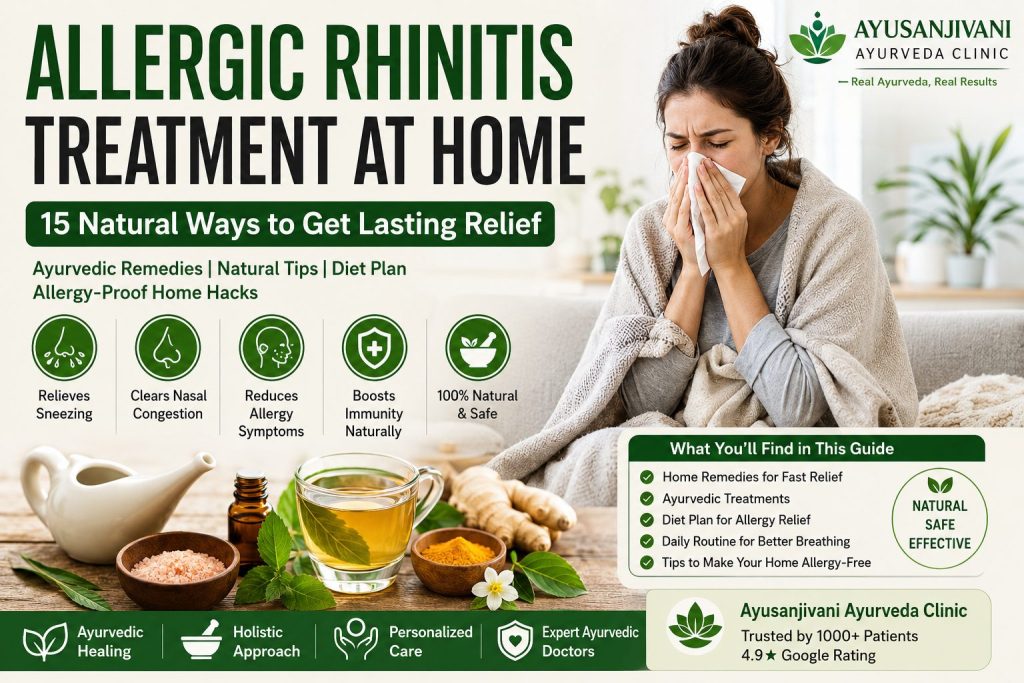
Allergic Rhinitis Treatment at Home: Natural Ways to Find Long-Term Relief
Allergic rhinitis treatment at home is one of the most searched topics by people who experience frequent sneezing, a runny nose, nasal congestion, or itchy eyes. While medicines can provide temporary relief, many people want safe and practical ways to manage their symptoms naturally from the comfort of their homes. The good news is that simple lifestyle changes, allergen control, supportive home remedies, and Ayurvedic principles can help reduce allergy flare-ups and improve your quality of life.
Allergic rhinitis, also known as hay fever or nasal allergy, occurs when the immune system overreacts to allergens such as dust mites, pollen, mold, pet dander, or air pollution. These allergens trigger inflammation inside the nose, leading to repeated sneezing, watery nasal discharge, blocked nasal passages, itching, and postnasal drip. Without proper care, recurring allergies may affect sleep, productivity, concentration, and overall well-being.
In this comprehensive guide, you will learn 15 effective allergic rhinitis treatments at home, including practical tips to reduce indoor allergens, natural remedies that may help ease symptoms, Ayurvedic home care strategies, diet recommendations, and simple daily habits that support long-term allergy management. Whether your allergies occur seasonally or throughout the year, these evidence-informed home care measures can help you breathe more comfortably while knowing when it is important to seek professional medical advice.
What is Allergic Rhinitis?
Allergic rhinitis, often called hay fever or nasal allergy, is an allergic reaction that occurs when your immune system overreacts to harmless substances such as dust, pollen, mold, pet dander, or smoke. Unlike the common cold, allergic rhinitis is not caused by a virus and usually does not cause fever.
Common symptoms include:
- Repeated sneezing
- Runny nose
- Nasal congestion
- Itchy nose
- Itchy or watery eyes
- Postnasal drip
- Poor sleep due to nasal blockage
Many people notice that symptoms become worse inside their own homes, especially in bedrooms, during cleaning, or when using air conditioners. Understanding these hidden triggers is the first step toward effective home management.
Why Do Allergy Symptoms Become Worse at Home?
Many people assume that staying indoors protects them from allergies. In reality, indoor environments often contain high levels of allergens that can trigger allergic rhinitis.
Common household allergy triggers include:
- Dust mites hiding in mattresses and pillows
- Curtains and carpets that trap dust
- Mold growing in damp bathrooms or kitchens
- Pet hair and dander
- Air-conditioner filters that are not cleaned regularly
- Strong room fresheners, incense, or perfumes
- Smoke from cooking or cigarettes
Reducing exposure to these allergens can significantly improve symptoms without relying solely on medication.
15 Effective Allergic Rhinitis Treatments at Home :
1. Keep Your Bedroom Allergy-Free :
Your bedroom is where you spend nearly one-third of your day. Dust mites thrive in pillows, mattresses, blankets, and curtains.
To reduce exposure:
- Wash bedsheets weekly in hot water.
- Use dust-proof mattress and pillow covers.
- Vacuum mattresses regularly.
- Replace old pillows every 1–2 years.
- Avoid stuffed toys if they collect dust.
Even small improvements in bedroom hygiene can make a noticeable difference in morning sneezing and nasal congestion.
2. Try Saline Nasal Rinsing :
Rinsing the nose with sterile saline solution helps remove allergens, mucus, and irritants from the nasal passages.
Benefits include:
- Clears blocked nose
- Washes away pollen and dust
- Reduces postnasal drip
- Improves breathing
Use sterile or previously boiled and cooled water to prepare saline solution, and keep irrigation devices clean to reduce the risk of infection.
3. Use Steam Inhalation Wisely :
Warm steam may temporarily relieve nasal congestion and help loosen mucus.
Tips:
- Inhale steam for 5–10 minutes.
- Avoid very hot steam to prevent burns.
- Steam relieves congestion but does not treat the underlying allergy.
4. Improve Indoor Air Quality :
Indoor air quality has a major impact on allergy symptoms.
Simple measures include:
- Open windows when outdoor pollen levels are low.
- Use an air purifier with a HEPA filter if appropriate.
- Clean ceiling fans regularly.
- Change AC filters as recommended.
- Reduce indoor humidity to discourage mold growth.
5. Wear a Mask While Cleaning :
Sweeping and dusting release allergens into the air.
Instead:
- Wear a well-fitting mask.
- Use a damp cloth instead of dry dusting.
- Vacuum with a HEPA-filter vacuum cleaner if possible.
- Avoid shaking dusty rugs indoors.
6. Stay Hydrated :
Drinking enough water helps keep mucus thin and supports overall respiratory health.
Warm water, herbal teas, and soups may also provide comfort during allergy flare-ups.
7. Identify Your Allergy Triggers :
Keep a symptom diary to note when allergies worsen.
Record:
- Foods eaten
- Weather conditions
- Cleaning activities
- Exposure to pets
- Travel
- Garden work
Recognizing patterns can help you avoid triggers and discuss them with your healthcare provider.
8. Reduce Indoor Humidity :
High humidity encourages mold and dust mites, while very dry air may irritate the nasal passages.
Aim for moderate indoor humidity and fix water leaks promptly.
9. Avoid Smoking and Strong Fragrances :
Cigarette smoke, incense, aerosol sprays, and strong perfumes can irritate the nose even if they are not true allergens.
Creating a smoke-free indoor environment benefits everyone in the household.
10. Practice Good Hand and Face Hygiene :
After returning home:
- Wash your hands.
- Rinse your face.
- Change clothes if you have been outdoors during high-pollen periods.
This helps remove allergens before they spread inside your home.
11. Follow an Allergy-Friendly Morning Routine :
The first hour after waking up can influence your allergy symptoms for the rest of the day. Many people experience severe sneezing and nasal congestion in the morning due to exposure to dust mites, pollen, or accumulated indoor allergens overnight.
A healthy morning routine includes:
- Drink a glass of warm water after waking up.
- Wash your face and rinse your nose with normal saline if advised.
- Open windows only if outdoor pollen levels are low.
- Avoid sweeping or dusting immediately after waking.
- Practice gentle breathing exercises for 5–10 minutes.
- Eat a nutritious breakfast rich in antioxidants.
Starting your day with these habits may help reduce allergy flare-ups and improve nasal comfort.
12. Create a Bedtime Allergy Routine :
Night-time care is equally important because allergens often accumulate in the bedroom.
Before going to bed:
- Shower after returning home if exposed to pollen or dust.
- Change into clean nightwear.
- Keep pets out of the bedroom.
- Wash pillow covers and bedsheets regularly.
- Keep windows closed during high-pollen seasons if outdoor pollen is a trigger.
A clean sleeping environment promotes better sleep and may reduce morning allergy symptoms.
13. Try Supportive Ayurvedic Home Remedies :
Ayurveda emphasizes improving digestion, strengthening immunity, and maintaining balance in the body. Some traditional home remedies may provide supportive relief when used appropriately.
Examples include:
- Warm turmeric milk before bedtime
- Fresh ginger herbal tea
- Tulsi (Holy Basil) infusion
- Warm water throughout the day
- Steam inhalation with plain water
- Saltwater gargling for throat irritation
These remedies support overall respiratory health but should not replace medical treatment when symptoms are severe or persistent.
14. Follow an Allergy-Friendly Diet :
Your diet can influence your immune system and overall health.
Foods to Include :
- Turmeric
- Ginger
- Amla (Indian Gooseberry)
- Fresh seasonal vegetables
- Citrus fruits (if tolerated)
- Garlic
- Warm soups
- Whole grains
- Nuts and seeds (unless allergic)
Foods to Limit :
- Ice cream
- Cold drinks
- Packaged foods
- Excess sugar
- Deep-fried foods
- Artificial food additives
- Foods that trigger your allergies
Eating a balanced diet and staying well hydrated supports overall health and may help reduce inflammation.
15. Know When Home Treatment Is Not Enough :
Home care works well for many people with mild symptoms, but professional medical care becomes important if you experience:
- Persistent symptoms lasting more than two weeks
- Frequent sinus infections
- High fever
- Severe breathing difficulty
- Wheezing
- Loss of smell
- Recurrent nosebleeds
- Poor sleep due to nasal blockage
- Symptoms affecting school or work
Early diagnosis helps prevent complications and improves long-term outcomes.
Common Mistakes That Can Make Allergic Rhinitis Worse :
Many people unknowingly worsen their symptoms by making simple mistakes at home.
Avoid these common habits:
- Sleeping on dusty pillows
- Ignoring AC filter cleaning
- Dry dusting instead of wet cleaning
- Using strong perfumes indoors
- Smoking inside the house
- Keeping damp carpets or curtains
- Self-medicating without medical advice
- Delaying treatment despite persistent symptoms
Correcting these habits can significantly improve symptom control.
Can Allergic Rhinitis Be Prevented at Home?
Although allergic rhinitis cannot always be prevented completely, you can reduce flare-ups by:
- Identifying and avoiding allergy triggers
- Keeping your home clean and well-ventilated
- Washing bedding weekly
- Wearing a mask while cleaning
- Following a healthy diet
- Staying physically active
- Managing stress
- Getting adequate sleep
- Following your doctor’s treatment plan
Why Choose Ayusanjivani Ayurveda Clinic?
At Ayusanjivani Ayurveda Clinic, we believe that successful management of allergic rhinitis requires more than temporary symptom relief. Our personalized Ayurvedic treatment plans focus on identifying the root cause, improving immunity, and reducing the recurrence of allergy episodes. After a detailed consultation, our experienced team recommends individualized herbal medicines, Panchakarma therapies when appropriate, dietary guidance, and lifestyle modifications tailored to each patient’s needs. With a 4.9+ Google rating and hundreds of genuine patient reviews, we remain committed to providing compassionate, evidence-informed Ayurvedic care and comprehensive follow-up support.
Frequently Asked Questions :
1. What is the best allergic rhinitis treatment at home?
The best home treatment includes avoiding allergens, keeping your home dust-free, using saline nasal rinses, staying hydrated, and following a healthy lifestyle. Some people may also benefit from supportive Ayurvedic home care under professional guidance.
2. Can allergic rhinitis be treated naturally at home?
Yes. Many people manage mild symptoms with allergen avoidance, home hygiene, steam inhalation, saline nasal irrigation, and healthy lifestyle changes. Persistent symptoms should be evaluated by a healthcare professional.
3. Does steam inhalation cure allergic rhinitis?
No. Steam inhalation may temporarily relieve nasal congestion but does not cure allergic rhinitis.
4. Which home remedy is best for nasal allergies?
Saline nasal rinses, warm fluids, ginger tea, and reducing indoor allergens are among the most helpful supportive home measures.
5. Can Ayurveda help manage allergic rhinitis at home?
Ayurveda may support long-term management through personalized herbal medicines, dietary guidance, lifestyle changes, and Panchakarma therapies prescribed by a qualified Ayurvedic physician.
6. Which foods help reduce allergy symptoms?
Foods rich in antioxidants, such as turmeric, ginger, amla, garlic, and fresh vegetables, may support overall immune health.
7. What should I avoid if I have allergic rhinitis?
Avoid dust, smoke, mold, strong fragrances, and foods that trigger your symptoms.
8. Can air conditioners worsen allergies?
Yes. Dirty air conditioner filters can circulate dust, mold, and other allergens if they are not cleaned regularly.
9. Is allergic rhinitis contagious?
No. Allergic rhinitis is an allergic condition and does not spread from one person to another.
10. Can allergic rhinitis cause sinusitis?
Yes. Ongoing nasal inflammation may increase the risk of developing sinus infections.
11. When should I see a doctor?
Consult a doctor if symptoms persist, worsen, interfere with daily activities, or are associated with fever, breathing difficulty, or recurrent sinus infections.
12. Can children use home remedies for allergic rhinitis?
Some simple measures, such as saline nasal rinses and allergen avoidance, may help. However, children should always be evaluated by a healthcare professional before starting treatment.
13. Does wearing a mask help prevent allergy symptoms?
Yes. Wearing a mask while cleaning or during high-pollen seasons can reduce exposure to airborne allergens.
14. Can stress make allergic rhinitis worse?
Stress does not directly cause allergies, but it may worsen symptoms in some people.
15. Why choose Ayusanjivani Ayurveda Clinic for allergic rhinitis treatment?
Ayusanjivani Ayurveda Clinic offers personalized Ayurvedic consultations, evidence-informed treatment plans, authentic Panchakarma therapies, diet and lifestyle counseling, and long-term follow-up to help patients manage allergic rhinitis naturally.
Conclusion :
Home management plays an important role in controlling allergic rhinitis and reducing everyday exposure to allergens. Simple measures such as maintaining a clean home, following an allergy-friendly routine, eating a balanced diet, and adopting healthy lifestyle habits can make a meaningful difference. However, if symptoms persist or frequently return, consult a qualified healthcare professional for a thorough evaluation and a personalized treatment plan. A combination of preventive care, appropriate medical treatment, and holistic Ayurvedic support can help you breathe easier and improve your overall quality of life.
Last Updated: June 2026
Reviewed for Medical Accuracy: Yes
Reading Time: 8–10 minutes
References: WHO, PubMed, NCBI, ARIA Guidelines, ACAAI
References :
- World Health Organization (WHO) – Health Topics
https://www.who.int/health-topics - American Academy of Allergy, Asthma & Immunology (AAAAI) – Allergic Rhinitis (Hay Fever)
https://www.aaaai.org - American College of Allergy, Asthma & Immunology (ACAAI) – Hay Fever (Allergic Rhinitis)
https://acaai.org/allergies/allergic-conditions/hay-fever/ - MedlinePlus – Allergic Rhinitis
https://medlineplus.gov/allergicrhinitis.html - National Institute of Allergy and Infectious Diseases (NIAID) – Allergic Diseases
https://www.niaid.nih.gov - PubMed – Research on Allergic Rhinitis
https://pubmed.ncbi.nlm.nih.gov/?term=allergic+rhinitis - National Center for Biotechnology Information (NCBI) – Allergic Rhinitis Research
https://www.ncbi.nlm.nih.gov/pmc/?term=allergic+rhinitis - ARIA (Allergic Rhinitis and its Impact on Asthma) – International Guidelines
https://www.whiar.org - Centers for Disease Control and Prevention (CDC) – Healthy Homes and Indoor Air Quality
https://www.cdc.gov - Mayo Clinic – Allergic Rhinitis (Hay Fever): Symptoms & Causes
https://www.mayoclinic.org/diseases-conditions/hay-fever