Infertility due to fallopian tube blockage is one of the most common and emotionally challenging conditions affecting women today. In India, Ayurveda offers a natural, non-surgical, and holistic approach to managing tubal blockage and improving fertility outcomes.
What is Fallopian Tube Blockage?
Fallopian tubes are essential for conception as they transport the egg from the ovary to the uterus and allow fertilization. When these tubes are blocked, the sperm cannot meet the egg, resulting in infertility.
Medical research indicates that 25–40% of female infertility cases are related to tubal factors.
Causes of Fallopian Tube Blockage :
Understanding the root cause is crucial for effective treatment. Common causes include:
- Pelvic inflammatory disease (PID)
- Previous infections (chlamydia, genital tuberculosis)
- Endometriosis
- History of abdominal or pelvic surgery
- Ectopic pregnancy
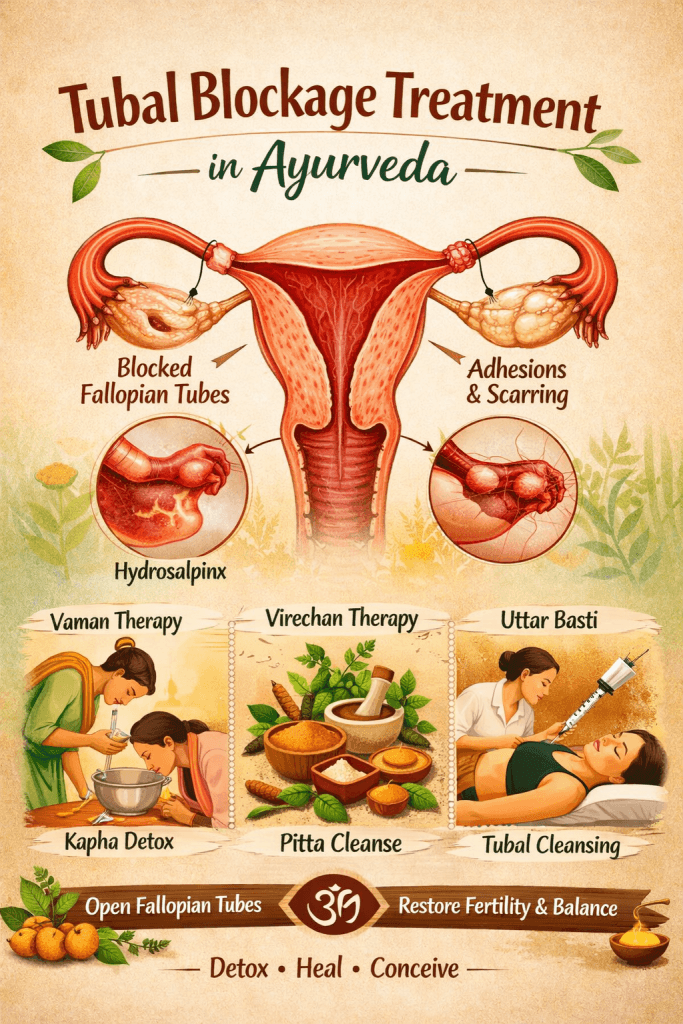
- Hydrosalpinx (fluid accumulation)
Scar tissue and adhesions formed due to infections are a major reason for blockage.
Symptoms of Blocked Fallopian Tubes
In many cases, there are no visible symptoms, making diagnosis difficult. However, some women may experience:
- Difficulty conceiving (primary symptom)
- Pelvic pain
- Painful periods (dysmenorrhea)
- Abnormal vaginal discharge
- Irregular menstrual cycles
Diagnosis of Tubal Blockage :
Modern diagnostic methods include:
- Hysterosalpingography (HSG)
- Laparoscopy
- Ultrasound (especially for hydrosalpinx detection)
Accurate diagnosis helps decide the line of treatment.
Limitations of Modern Treatment :
Conventional treatment options include:
- Tubal surgery
- IVF (In Vitro Fertilization)
However, these methods may involve:
- High cost
- No guaranteed success
- Emotional and physical stress
- Risk of complications
This is where Ayurveda offers a supportive and root-cause-based approach.
Ayurvedic Perspective on Fallopian Tube Blockage :
In Ayurveda, this condition is understood as:
- Artava Vaha Srotas Dushti (disorder of reproductive channels)
- Imbalance of Vata and Kapha dosha
- Accumulation of toxins (Ama)
Ayurveda focuses on:
✔ Clearing obstruction (Srotoshodhana)
✔ Reducing inflammation
✔ Enhancing reproductive health
✔ Supporting natural conception
Best Ayurvedic Treatment for Fallopian Tube Blockage in India :
1. Uttar Basti (Key Therapy) :
Uttar Basti is a specialized Panchakarma procedure in which medicated oils or decoctions are administered intrauterine under expert supervision.
Benefits:
- Helps in clearing tubal obstruction
- Improves uterine health
- Enhances chances of conception
2. Panchakarma Detox Therapies :
- Virechana (detox therapy)
- Basti (medicated enema)
- Swedana (steam therapy)
These therapies help remove toxins and balance doshas.
3. Ayurvedic Medicines :
Common formulations:
- Kanchanar Guggulu
- Phala Ghrita
- Ashokarishta
- Dashmool preparations
These support hormonal balance and reduce inflammation.
4. Diet & Lifestyle (Pathya-Apathya) :
Recommended:
- Warm, freshly prepared food
- Ghee and herbal decoctions
- Stress management
Avoid:
- Processed and junk food
- Cold and heavy diet
- Sedentary lifestyle
Success Rate of Ayurvedic Treatment :
Clinical observations and studies suggest:
- Improved tubal patency in many patients
- Enhanced natural conception chances
- Minimal side effects compared to invasive procedures
Why Choose Ayurveda for Tubal Blockage Treatment in India?
- Holistic and root-cause approach
- Cost-effective compared to IVF
- Personalized treatment protocols
- Strong traditional and clinical foundation
Ayurvedic Treatment vs IVF – Comparison :
| Factor | Ayurveda | IVF |
|---|---|---|
| Approach | Natural healing | Assisted reproduction |
| Cost | Affordable | Expensive |
| Side Effects | Minimal | Possible |
| Root Cause Treatment | Yes | No |
Realistic Expectations :
- Best results in mild to moderate cases
- Requires 2–3 treatment cycles
- Individual results may vary
Who is the Best Candidate?
- Partial or unilateral tubal blockage
- Patients avoiding surgery
- Women with PCOS or hormonal imbalance
- Recurrent infertility cases
FAQs :
1. Can Ayurveda open blocked fallopian tubes?
Yes, therapies like Uttar Basti may help improve tubal patency and fertility.
2. How long does treatment take?
Typically 2–3 menstrual cycles.
3. Is it safe?
Yes, when done under qualified Ayurvedic supervision.
4. What is the success rate?
Many patients show improvement, though results vary.
5. Can I conceive naturally after treatment?
Yes, natural conception is possible in many cases.
Conclusion :
Fallopian tube blockage is a significant cause of infertility, but with the right approach, it can be managed effectively. Ayurveda offers a safe, natural, and holistic pathway that focuses on restoring reproductive health and improving the chances of natural conception.
For those seeking the best fallopian tube blockage treatment in India, Ayurvedic therapies provide a promising and patient-friendly alternative.
If you are looking for authentic patient experiences and real results of Uttarbasti treatment, you can explore the Google reviews of Ayusanjivani Ayurveda Clinic and Panchakarma Centre. Many patients have shared their positive outcomes after undergoing Uttarbasti therapy for conditions like fallopian tube blockage, infertility, PCOD, and urinary disorders. These reviews highlight improvements in natural conception chances, hormonal balance, and overall reproductive health through classical Ayurvedic treatments. Reading genuine feedback on Google helps you understand the effectiveness, patient satisfaction, and trust built by the clinic over time. To check detailed patient testimonials and ratings, visit the official GMB review page here:
👉 https://www.google.com/maps/contrib/113210884612931936715/reviews
References :
- World Health Organization – Infertility prevalence and causes reports
- National Institutes of Health – Research on tubal factor infertility and reproductive health
- Charaka Samhita – Concepts of Artava Vaha Srotas and treatment principles
- Sushruta Samhita – Description of reproductive system and therapies
- Peer-reviewed studies on Uttar Basti and tubal blockage (PubMed indexed articles)
- Clinical Ayurvedic practice guidelines and Panchakarma therapy manuals
Chat with our expert Ayurvedic doctor on WhatsApp for personalized guidance :