Introduction :
Oral Submucous Fibrosis (OSMF) is a chronic, progressive, potentially malignant disorder affecting the oral cavity. It is characterized by inflammation and fibrosis (thickening and stiffening) of the oral mucosa, leading to restricted mouth opening, burning sensation, difficulty in eating, speaking, and swallowing.In this article we will discuss in detail about oral sub mucosal fibrosis treatment .
OSMF is predominantly seen in South Asian countries, especially India, where the use of areca nut (supari), gutkha, pan masala, tobacco, and betel quid is common. The disease significantly impacts quality of life and carries a considerable risk of transformation into oral cancer.
Early diagnosis and comprehensive treatment are crucial to prevent irreversible fibrosis and malignant transformation.
What is Oral submucous fibrosis?
Oral Submucous Fibrosis is a chronic disease in which excessive collagen deposition occurs beneath the oral mucosa. Over time, the oral tissues become stiff and inelastic, causing progressive limitation of mouth opening.
The disease mainly affects:
- Buccal mucosa (inner cheeks)
- Soft palate
- Retromolar region
- Lips
- Tongue
- Pharynx
As fibrosis progresses, patients may develop severe trismus (inability to open the mouth adequately), nutritional deficiencies, speech difficulties, and an increased risk of oral squamous cell carcinoma.
Epidemiology and prevalence :
OSMF is considered one of the most common precancerous oral disorders in India.
Global Prevalence :
- More than 5 million people worldwide are estimated to suffer from OSMF.
- Highest prevalence is reported in India, Pakistan, Bangladesh, Sri Lanka, Taiwan, and other South Asian countries.
- Incidence is increasing among younger populations due to the widespread availability of flavored gutkha and pan masala products.
Indian Scenario :
India accounts for the majority of global OSMF cases.
Studies suggest:
- Prevalence ranges from 0.2% to 30% depending on the region.
- Males are affected more frequently than females.
- Most patients are between 20 and 40 years of age.
- Increasing numbers of adolescents and young adults are developing OSMF due to habitual areca nut consumption.
Causes of oral submucous fibrosis :
1. Areca Nut (Supari) Chewing :
Areca nut is the single most important causative factor.
The alkaloids present in areca nut:
- Arecoline
- Arecaidine
- Guvacoline
stimulate fibroblasts, leading to excessive collagen production and fibrosis.
2. Gutkha and Pan Masala :
Commercial preparations containing:
- Areca nut
- Tobacco
- Lime
- Flavoring agents
significantly increase the risk of OSMF.
3. Tobacco Consumption :
Both smokeless and smoking forms of tobacco contribute to chronic irritation and increase cancer risk.
4. Nutritional Deficiencies :
Deficiency of:
- Iron
- Vitamin B complex
- Vitamin A
- Zinc
may predispose individuals to OSMF.
5. Genetic Factors :
Certain individuals may have genetic susceptibility affecting collagen metabolism and inflammatory responses.
6. Chronic Irritation :
Repeated trauma from:
- Spicy foods
- Hot beverages
- Sharp teeth
- Poor oral hygiene
can aggravate the condition.
Pathophysiology of OSMF :
The disease develops through a complex mechanism involving:
Increased Collagen Production
Areca nut alkaloids stimulate fibroblasts to produce excess collagen.
Reduced Collagen Breakdown
Enzymes responsible for collagen degradation become less active.
Chronic Inflammation
Persistent irritation causes inflammation and fibrosis.
Tissue Ischemia
Reduced blood supply results in pale, stiff mucosa.
Progressive Fibrosis
Fibrous bands form beneath the oral mucosa, restricting movement.
Symptoms of Oral submucous fibrosis :
Symptoms usually develop gradually.
Early Symptoms
- Burning sensation in mouth
- Intolerance to spicy food
- Dry mouth
- Recurrent oral ulcers
- Increased salivation initially
Intermediate Symptoms
- Blanching of oral mucosa
- Stiffness of cheeks
- Difficulty in tongue movement
- Reduced flexibility of oral tissues
Advanced Symptoms
- Reduced mouth opening
- Difficulty eating
- Difficulty speaking
- Difficulty swallowing
- Restricted tongue movements
- Weight loss
- Nutritional deficiencies
Clinical Signs of OSMF :
A dentist or oral physician may observe:
- Pale oral mucosa
- Marble-like appearance
- Fibrous bands in cheeks
- Reduced cheek flexibility
- Depapillation of tongue
- Shrunken uvula
- Restricted mouth opening
Stages of Oral submucous fibrosis :
Stage 1: Early OSMF
- Burning sensation
- Mild blanching
- No significant mouth opening restriction
Stage 2: Moderate OSMF
- Fibrous bands present
- Reduced mouth opening
- Difficulty eating spicy food
Stage 3: Severe OSMF
- Significant fibrosis
- Severe trismus
- Speech and swallowing difficulties
Stage 4: OSMF with Malignant Changes
- Presence of precancerous lesions
- Oral cancer development
Is Oral Submucous Fibrosis Cancer?
No.
OSMF itself is not cancer.
However, it is classified as a Potentially Malignant Disorder (PMD).
Research suggests a malignant transformation rate ranging from approximately 2% to 13%.
Therefore, regular monitoring is essential.
Warning Signs of Cancer Development :
Seek immediate evaluation if you notice:
- Non-healing ulcers
- Persistent red patches
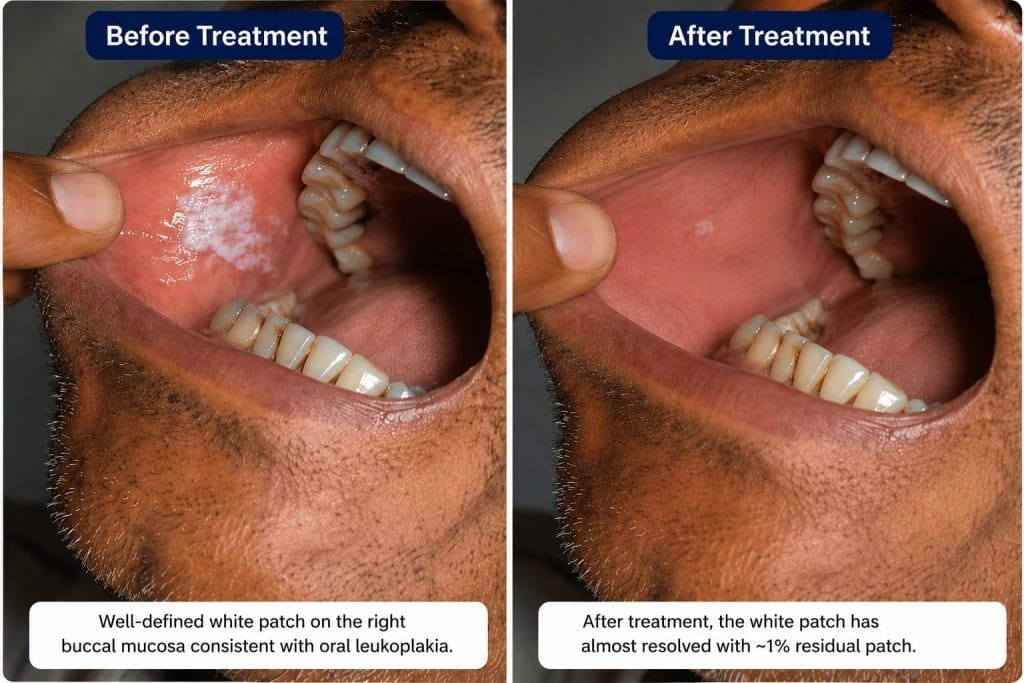
- White patches
- Bleeding lesions
- Rapidly increasing pain
- Enlarged lymph nodes
- Unexplained weight loss
Diagnosis of Oral Submucous Fibrosis :
Clinical Examination
The diagnosis is often suspected based on:
- History of gutkha/supari use
- Restricted mouth opening
- Presence of fibrous bands
Mouth Opening Measurement
Inter-incisal distance is measured.
Normal
More than 35 mm
Moderate Restriction
20–35 mm
Severe Restriction
Less than 20 mm
Biopsy :
A tissue sample may be taken to:
- Confirm diagnosis
- Rule out cancer
- Assess severity
Imaging Studies :
In selected cases:
- CT Scan
- MRI
- Ultrasound
may help assess deeper tissue involvement.
Ayurvedic Correlation of Oral Submucous Fibrosis :
Although OSMF is not directly described in classical Ayurvedic texts, its clinical features resemble conditions involving:
- Mukhagata Roga
- Sarvasara Mukharoga
- Vata-Kapha Dushti
- Mamsa Dhatu Dushti
- Raktavaha Srotas Dushti
The fibrosis, stiffness, and restricted movements indicate predominant Vata aggravation along with Kapha-mediated tissue obstruction.
Ayurvedic View of Disease Development :
According to Ayurveda:
- Excessive use of irritating substances causes Dosha imbalance.
- Vata causes dryness and stiffness.
- Kapha causes tissue thickening and obstruction.
- Impaired Rakta circulation reduces nourishment.
- Chronic inflammation leads to tissue degeneration and fibrosis.
Ayurvedic Treatment for Oral Submucous Fibrosis :
Ayurvedic management focuses on:
- Removing causative factors
- Reducing inflammation
- Improving circulation
- Enhancing tissue nutrition
- Preventing disease progression
1. Nidana Parivarjana (Elimination of Causes) :
The first and most important step is complete cessation of:
- Gutkha
- Pan masala
- Supari
- Tobacco
- Smoking
- Alcohol
Without stopping these habits, successful treatment becomes difficult.
2. Internal Ayurvedic Medicines :
Depending on patient assessment, Ayurvedic physicians may prescribe formulations aimed at:
- Rakta Shodhana
- Vata-Kapha balancing
- Tissue rejuvenation
- Anti-inflammatory action
Treatment is individualized based on:
- Prakriti
- Disease stage
- Associated symptoms
- Overall health status
3. Gandusha and Kavala :
Medicated oil holding and gargling therapies help:
- Lubricate oral tissues
- Improve circulation
- Reduce dryness
- Enhance mucosal healing
4. Local Applications :
Certain herbal preparations may be used under Ayurvedic supervision for:
- Burning sensation
- Inflammation
- Tissue nourishment
5. Rasayana Therapy :
Rasayana therapies help:
- Improve immunity
- Promote tissue repair
- Enhance healing
- Reduce disease progression
6. Panchakarma Support :
Selected patients may benefit from Panchakarma therapies such as:
These therapies assist in Dosha balancing and systemic detoxification.
Diet for Oral Submucous Fibrosis :
Recommended Foods :
- Fresh fruits
- Pomegranate
- Papaya
- Banana
- Coconut water
- Green leafy vegetables
- Moong dal
- Homemade soups
- Ghee in moderation
- Soft cooked foods
Foods to Avoid :
- Gutkha
- Pan masala
- Supari
- Tobacco products
- Very spicy food
- Excessively hot foods
- Deep-fried items
- Packaged junk foods
- Carbonated beverages
- Excess alcohol
Lifestyle Recommendations :
- Maintain excellent oral hygiene.
- Avoid chewing tobacco in any form.
- Drink adequate water.
- Practice mouth-opening exercises.
- Undergo regular dental checkups.
- Follow prescribed treatment consistently.
Prevention of Oral Submucous Fibrosis :
The disease is largely preventable.
Preventive Measures :
- Avoid areca nut products.
- Avoid tobacco consumption.
- Maintain nutritional balance.
- Treat oral lesions early.
- Undergo regular oral cancer screening.
Prognosis :
The outcome depends on:
- Stage of disease
- Duration of habit
- Compliance with treatment
- Presence of dysplasia
- Early diagnosis
Patients diagnosed in early stages generally have better outcomes and improved quality of life after appropriate treatment.
When Should You Consult a Doctor?
Seek immediate consultation if you experience:
- Burning sensation while eating
- Difficulty opening the mouth
- Oral stiffness
- White or red oral patches
- Persistent oral ulcers
- Difficulty swallowing
Early treatment can prevent serious complications.
Conclusion :
Oral Submucous Fibrosis is a serious and potentially precancerous condition that requires timely diagnosis and treatment. Habitual consumption of gutkha, tobacco, and areca nut remains the leading cause. While modern medicine focuses on symptom control and monitoring, Ayurveda offers a holistic approach aimed at correcting underlying imbalances, improving tissue health, and enhancing quality of life.
Early intervention, complete cessation of harmful habits, proper nutrition, regular follow-up, and individualized Ayurvedic care can play an important role in managing Oral Submucous Fibrosis and preventing disease progression.
Frequently Asked Questions (FAQs) :
Can Oral Submucous Fibrosis be cured completely?
Early-stage OSMF may show significant improvement when harmful habits are stopped and appropriate treatment is initiated. Advanced fibrosis may not be completely reversible.
Is OSMF a cancer?
No. OSMF is not cancer but is considered a potentially malignant disorder with an increased risk of oral cancer.
What is the main cause of OSMF?
Areca nut (supari), gutkha, and pan masala consumption are the most common causes.
Can Ayurveda help in OSMF?
Ayurveda may help improve symptoms, reduce inflammation, support tissue nourishment, and improve overall oral health when used under professional supervision.
Is mouth opening exercise useful?
Yes. Regular physiotherapy and mouth-opening exercises may help improve jaw mobility in selected patients.
Why Choose Ayusanjivani Ayurveda for Non-Surgical Treatment of Oral Submucous Fibrosis (OSMF)?
A Holistic and Patient-Centered Approach to OSMF Management :
Oral Submucous Fibrosis (OSMF) is a chronic, progressive, and potentially precancerous condition that requires timely intervention and long-term management. While many patients are advised invasive procedures or symptomatic treatments, Ayusanjivani Ayurveda Clinic focuses on a comprehensive non-surgical Ayurvedic approach aimed at addressing the root cause of the disease, improving oral function, and enhancing overall quality of life.
Under the guidance of Dr. Shailesh Phalle, MD (Ayurveda), Ayusanjivani Ayurveda Clinic has helped numerous patients suffering from OSMF through personalized Ayurvedic treatment protocols and lifestyle modifications.
Why Patients Trust Ayusanjivani Ayurveda for OSMF Treatment :
1. Root Cause-Based Treatment Approach :
Instead of focusing only on symptoms such as burning sensation or restricted mouth opening, our Ayurvedic treatment aims to address the underlying factors responsible for disease progression, including:
- Chronic irritation from gutkha, tobacco, and supari
- Tissue fibrosis and stiffness
- Poor oral tissue nourishment
- Dosha imbalance (primarily Vata and Kapha)
- Inflammatory changes within oral tissues
This holistic approach helps support long-term oral health and disease management.
2. Personalized Ayurvedic Treatment Plans :
Every OSMF patient presents differently. Factors such as:
- Duration of gutkha or tobacco use
- Severity of mouth opening restriction
- Presence of burning sensation
- Associated oral lesions
- General health condition
are carefully evaluated before designing an individualized treatment protocol.
No two patients receive exactly the same treatment plan.
3. Focus on Improving Mouth Opening :
One of the major concerns in OSMF is progressive reduction in mouth opening.
Our treatment protocols are designed to support:
- Improved oral tissue flexibility
- Better jaw mobility
- Reduced stiffness
- Improved chewing and speaking ability
- Enhanced quality of life
4. Non-Surgical and Natural Treatment Approach :
Many patients seek alternatives before considering surgical intervention.
Ayurvedic management at Ayusanjivani focuses on:
- Herbal medicines
- Oral healing therapies
- Rasayana support
- Panchakarma-based approaches (where indicated)
- Dietary and lifestyle modifications
The goal is to support oral tissue health naturally while minimizing dependence on invasive procedures.
5. Experienced Ayurvedic Expertise :
Dr. Shailesh Phalle has extensive clinical experience in managing chronic diseases through Ayurveda.
Patients benefit from:
- Detailed Ayurvedic assessment
- Comprehensive treatment planning
- Regular follow-up monitoring
- Long-term guidance for habit cessation and recovery
6. Panchakarma and Supportive Therapies :
Selected patients may benefit from specialized Ayurvedic therapies such as:
- Gandusha (oil holding)
- Kavala (medicated gargling)
- Nasya
- Virechana
- Rasayana therapies
These therapies help support oral tissue nourishment and systemic balance.
7. Strong Focus on Habit De-Addiction :
The most important step in OSMF management is complete cessation of:
- Gutkha
- Pan masala
- Tobacco
- Supari
- Smoking products
At Ayusanjivani Ayurveda Clinic, patients receive continuous counseling and support to overcome these habits and prevent disease progression.
8. Comprehensive Diet and Lifestyle Guidance :
Recovery from OSMF requires more than medicines alone.
Patients receive detailed recommendations regarding:
- Oral hygiene
- Nutritional support
- Anti-inflammatory diet
- Foods to avoid
- Mouth-opening exercises
- Lifestyle modifications
This integrated approach helps maximize treatment outcomes.
9. Early Detection and Monitoring of Cancer Risk :
Since OSMF is considered a potentially malignant disorder, regular monitoring is extremely important.
Our team closely evaluates patients for warning signs such as:
- Non-healing ulcers
- White or red patches
- Rapid symptom progression
- Suspicious oral lesions
Timely referral and investigation are advised whenever required.
10. Holistic Care with Long-Term Follow-Up :
OSMF is often a long-standing condition that requires ongoing care.
Ayusanjivani Ayurveda Clinic provides:
- Regular follow-up consultations
- Progress assessment
- Treatment modifications as needed
- Continued guidance for maintaining oral health
This ensures patients remain supported throughout their healing journey.
Benefits of Choosing Ayusanjivani Ayurveda for OSMF :
- Non-surgical treatment approach
- Personalized Ayurvedic care
- Experienced Ayurvedic physician guidance
- Focus on root cause management
- Comprehensive Panchakarma support
- Habit cessation counseling
- Dietary and lifestyle guidance
- Long-term follow-up care
- Holistic patient-centered treatment
Take the First Step Towards Better Oral Health :
If you are experiencing:
- Burning sensation in the mouth
- Difficulty opening your mouth
- Oral stiffness
- Discomfort while eating spicy food
- White patches or oral fibrosis symptoms
early evaluation can make a significant difference.
Book Your Consultation Today :
Ayusanjivani Ayurveda Clinic & Panchakarma Center
👨⚕️ Dr. Shailesh Phalle, MD (Ayurveda)
📞 Call/WhatsApp: +91 84323 29371
🌐 Website: www.ayusanjivani.com
Don’t ignore the early signs of Oral Submucous Fibrosis. Seek expert Ayurvedic guidance and explore a holistic, non-surgical approach to oral health and wellness.
Schedule Your Appointment Now!
Contact Ayusanjivani Ayurveda Clinic today and begin your journey toward healthier oral tissues, improved mouth opening, and a better quality of life.
References :
- World Health Organization (WHO) Classification of Potentially Malignant Oral Disorders.
- Indian Journal of Dental Research.
- Journal of Oral and Maxillofacial Pathology.
- International Journal of Oral Health Sciences.
- Charaka Samhita.
- Sushruta Samhita.
- Ashtanga Hridaya.
- Textbook of Oral Medicine and Radiology.
- Neville’s Oral and Maxillofacial Pathology.
- National Cancer Institute Resources on Oral Precancerous Lesions.
Medical Disclaimer :
This article is intended for educational and informational purposes only and should not be considered a substitute for professional medical advice, diagnosis, or treatment. Ayurvedic medicines and Panchakarma therapies should be taken only under the guidance of a qualified Ayurvedic physician. If you have persistent oral symptoms, difficulty opening your mouth, suspicious oral lesions, or concerns regarding oral cancer, consult a qualified healthcare professional promptly.
Reviewed by: Dr. Shailesh Phalle, MD (Ayurveda)