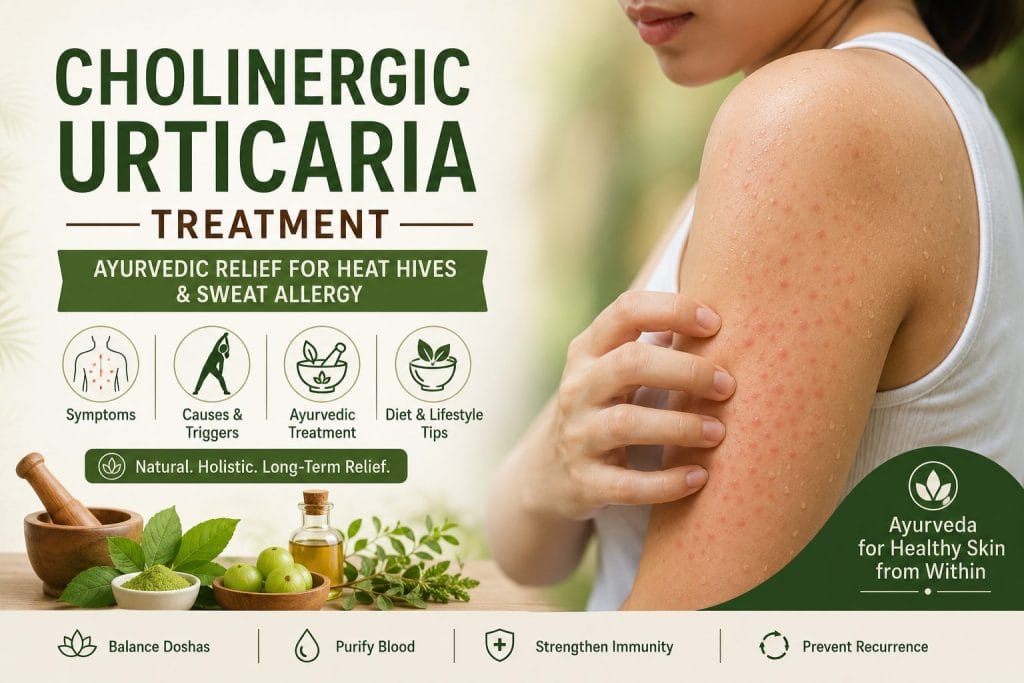
Cholinergic urticaria is a type of skin allergy that appears when body temperature rises. It often happens after exercise, hot showers, spicy food, emotional stress, or exposure to heat. The condition causes small, itchy, red bumps or hives, usually on the chest, neck, arms, back, or face. Many people also describe burning, stinging, or prickling before the rash appears.In this article blog we will discuss in dtail about cholinergic urticaria treatment in detail.
Although cholinergic urticaria is usually not dangerous, it can be very uncomfortable and disturbing for daily life. Repeated episodes may affect confidence, sleep, exercise routines, and overall quality of life. In some people, the itching and hives come suddenly and can be severe enough to interfere with work or social activities.
Modern treatment mainly focuses on symptom control with antihistamines and trigger avoidance. However, many patients look for a more holistic and long-term solution. Ayurveda offers a natural approach by addressing the underlying imbalance in digestion, body heat, inflammation, and immunity. In Ayurvedic terms, cholinergic urticaria may be related to Sheetapitta, Udarda, or Kotha depending on the patient’s presentation.
This article explains cholinergic urticaria in detail, including causes, symptoms, diagnosis, risk factors, treatment options, diet, home remedies, and Ayurvedic management.
What Is Cholinergic Urticaria?
Cholinergic urticaria is a physical urticaria that develops when the body becomes warm and starts sweating. The name comes from the role of acetylcholine, a neurotransmitter involved in sweating. When body temperature increases, tiny itchy wheals appear rapidly, often within minutes.
The hives are usually small, with a red halo around them. They may last for a short time and disappear within one to two hours, though in some people they recur frequently. The condition can affect teenagers, young adults, and anyone with a tendency toward allergic skin reactions.
Common names for cholinergic urticaria
- Heat hives
- Sweat allergy
- Exercise-induced urticaria
- Heat rash allergy
- Cholinergic hives
- Skin allergy from sweating
Cholinergic Urticaria Causes :
The exact cause of cholinergic urticaria is not fully understood, but it is strongly linked to an increase in body temperature and sweating. In susceptible people, this triggers mast cells in the skin to release histamine and other inflammatory chemicals.
Common triggers :
1. Exercise :
Running, gym workouts, cycling, sports, yoga, and brisk walking can raise body temperature and trigger hives.
2. Hot Weather :
High temperature and humid weather often make symptoms worse, especially during summer.
3. Hot Showers or Baths :
Warm water may quickly raise skin temperature and provoke an attack.
4. Emotional Stress :
Anxiety, anger, nervousness, excitement, and stress can also produce sweating and trigger hives.
5. Spicy Foods :
Chili, pepper, and other heat-producing foods may increase sweating and worsen symptoms.
6. Fever or Illness :
Any condition that increases the body’s temperature may bring on an episode.
7. Tight or Non-Breathable Clothing :
Clothes that trap heat can make symptoms worse.
Cholinergic Urticaria Symptoms :
Symptoms usually begin quickly after the trigger and may appear within a few minutes.
Skin symptoms :
Small itchy bumps :
Tiny wheals are the most common sign. These bumps may be surrounded by redness.
Burning or stinging :
Many patients describe a prickly or burning feeling before the rash fully appears.
Flushing :
The skin may become warm and red, especially on the chest, face, neck, and arms.
Itching :
Itching can be mild or intense and may worsen with sweating.
Short duration :
In many cases, symptoms last from 15 minutes to a few hours.
Severe symptoms in rare cases :
Some patients may also experience:
- Dizziness
- Headache
- Nausea
- Abdominal discomfort
- Fast heartbeat
- Difficulty breathing
If breathing difficulty occurs, urgent medical attention is needed.
Risk Factors for Cholinergic Urticaria :
Some people are more likely to get this condition than others.
Higher-risk groups include:
- People with a family history of allergies
- Those with eczema or atopic dermatitis
- Individuals with chronic urticaria
- People exposed to frequent heat or humidity
- Highly stressed individuals
- Young adults and teenagers
Diagnosis of Cholinergic Urticaria :
Diagnosis is usually made through a detailed clinical history and examination.
History taking :
The doctor may ask about:
- When symptoms started
- How long symptoms last
- What triggers the rash
- Whether exercise, heat, or stress causes the problem
- Whether there is any breathing trouble or swelling
Physical examination :
The skin rash pattern and timing help the doctor identify the condition.
Exercise challenge test :
A controlled exercise session may be used to reproduce symptoms under supervision.
Passive heating test :
A warm environment may be used to see if symptoms appear after temperature rises.
Blood tests :
These may be ordered to rule out other allergic or systemic causes.
Conventional Treatment Options :
Modern treatment for cholinergic urticaria focuses on reducing histamine release and controlling symptoms.
Antihistamines :
Non-sedating antihistamines are often prescribed to reduce itching and hives.
Trigger avoidance :
Avoiding hot showers, intense heat, and excessive sweating may reduce episodes.
Lifestyle adjustments :
Cooling the body, staying hydrated, and managing stress can help.
Emergency treatment in severe reactions :
If there is breathing difficulty, swelling, or signs of anaphylaxis, emergency treatment is necessary.
For more information, you can refer to trusted medical sources such as the American Academy of Dermatology, NCBI, and Mayo Clinic.
Cholinergic Urticaria in Ayurveda :
In Ayurveda, cholinergic urticaria can be correlated with Sheetapitta, Udarda, and Kotha depending on the dominant dosha involvement. The condition often reflects aggravation of Pitta along with Vata, Rakta Dushti, and Ama formation.
Ayurvedic understanding :
- Pitta aggravation causes heat, redness, and inflammation.
- Vata imbalance contributes to itching, dryness, and sensitivity.
- Rakta Dushti affects the skin and blood tissue.
- Ama weakens digestion and increases allergic tendency.
According to Ayurveda, when digestion is weak and diet/lifestyle are not balanced, toxins and heat accumulate in the body. This may lead to recurrent skin reactions such as itching, hives, and burning sensation.
Ayurvedic Treatment for Cholinergic Urticaria :
Ayurvedic treatment aims to reduce recurrence, pacify aggravated doshas, support digestion, and improve skin health.
1. Nidana Parivarjana :
This means avoiding the causes that aggravate the condition.
Avoid:
- Hot weather exposure as much as possible
- Hot showers
- Spicy and fried foods
- Stress
- Alcohol
- Overexertion
2. Deepana and Pachana :
These therapies help improve digestion and remove Ama.
3. Rakta Shodhana :
Rakta purification is useful in recurring allergic skin conditions.
4. Pitta Shamana :
Cooling medicines and diet are chosen to calm excess heat.
5. Personalized treatment :
Ayurvedic treatment is selected according to the patient’s prakriti, dosha imbalance, season, and severity of symptoms.
Commonly used Ayurvedic formulations may include:
- Haridra Khanda
- Mahamanjishthadi Kwatha
- Khadirarishta
- Sarivadyasava
- Guduchi-based formulations
- Neem-based formulations
- Avipattikar Churna
Note: These medicines should only be taken under the supervision of a qualified Ayurvedic doctor.
Panchakarma Support for Cholinergic Urticaria :
In chronic or recurrent cases, Panchakarma therapy may be suggested depending on the patient’s condition.
Virechana :
virechan is Helpful in Pitta-dominant conditions and skin allergies.
Raktamokshana :
May be considered in selected cases with expert supervision.
Basti :
Can be useful when Vata is strongly involved.
Takradhara :
May help in patients where stress and heat aggravation are prominent.
These therapies should be planned only after proper consultation and assessment.
Diet and Lifestyle Tips for Cholinergic Urticaria :
Diet plays a major role in controlling heat, inflammation, and sweating.
Foods that may help :
- Cucumber
- Bottle gourd
- Ash gourd
- Coconut water
- Pomegranate
- Amla
- Coriander
- Fennel
- Buttermilk in moderation
- Fresh fruits
- Green leafy vegetables
- Whole grains
Foods to avoid :
- Spicy food
- Deep-fried food
- Fermented food
- Excess tea and coffee
- Alcohol
- Packaged and processed food
- Very sour and salty food
Helpful lifestyle habits :
- Wear loose cotton clothes
- Exercise during cooler hours of the day
- Take lukewarm or cool showers instead of hot baths
- Stay hydrated
- Practice yoga and breathing exercises
- Maintain regular sleep
- Avoid sudden overheating
Home Remedies for Cholinergic Urticaria :
Home care may help in mild cases along with medical treatment.
Coconut water :
It helps support hydration and cooling.
Coriander water:
Traditionally used to pacify Pitta and reduce heat.
Aloe vera :
May soothe irritated skin in some people.
Cold compress :
A cool compress may reduce itching and redness.
Stress control :
Meditation, deep breathing, and gentle yoga may reduce flare-ups.
Home remedies should not replace professional treatment when symptoms are frequent or severe.
When to Consult a Doctor :
Consult a doctor if:
- Hives appear repeatedly
- Symptoms worsen with exercise or heat
- Antihistamines are not helping
- Rash is affecting daily life
- There is swelling, dizziness, or breathing difficulty
Seek urgent care immediately if the reaction becomes severe.
Why Choose Ayusanjivani Ayurveda Clinic?
At Ayusanjivani Ayurveda Clinic, treatment is planned after careful evaluation of the patient’s condition, triggers, diet, and dosha imbalance. The goal is not only to reduce itching but also to reduce recurrence and improve overall skin and digestive health.
Our approach includes:
- Detailed Ayurvedic consultation
- Dosha-based treatment
- Diet and lifestyle advice
- Herbal medicine planning
- Panchakarma support where needed
- Follow-up for long-term management
Clinic Locations: Kharadi, Pune and Wagholi, Pune
Contact: 9011609371
FAQ :
What is the best treatment for cholinergic urticaria?
The best treatment depends on the cause and severity. Antihistamines, trigger avoidance, and Ayurvedic treatment may help reduce symptoms.
Is cholinergic urticaria curable?
Many patients improve significantly with proper treatment and lifestyle changes, though recurrence can happen if triggers persist.
Can exercise cause cholinergic urticaria?
Yes. Exercise is one of the most common triggers because it raises body temperature and causes sweating.
Does stress cause cholinergic urticaria?
Yes. Emotional stress may trigger sweating and body heat changes, which can provoke the condition.
Which foods should be avoided?
Spicy, fried, fermented, processed, and heat-producing foods should usually be minimized.
Can Ayurveda help in urticaria?
Ayurveda may help by addressing underlying Pitta, Vata, Rakta Dushti, and Ama imbalance, along with diet and lifestyle correction.
Is cholinergic urticaria dangerous?
Usually it is not dangerous, but in rare cases breathing difficulty or severe reactions may occur and need urgent care.
Conclusion :
Cholinergic urticaria is a heat-triggered skin condition that causes itching, red bumps, and discomfort after sweating, exercise, or heat exposure. Although conventional treatment can reduce symptoms, many patients need a long-term approach that also addresses the root cause and recurrence.
Ayurveda offers a holistic strategy through trigger avoidance, cooling diet, digestive support, blood purification, and personalized herbal care. Panchakarma therapies may be helpful in selected chronic cases. With the right combination of treatment and lifestyle discipline, many patients can achieve significant relief and better control of symptoms.
If you are facing recurring heat hives or sweat allergy, early consultation with an experienced doctor can make a big difference.
Author :
Dr. Shailesh Phalle, BAMS, MD (Ayurveda)
Consultant Ayurvedic Physician & Panchakarma Specialist
Dr. Shailesh Phalle is an experienced Ayurvedic physician specializing in the management of skin disorders, allergic diseases, autoimmune conditions, arthritis, gastrointestinal disorders, infertility, and Panchakarma therapies. He has extensive clinical experience in treating chronic urticaria, allergic skin diseases, and lifestyle-related disorders using evidence-based Ayurvedic principles and personalized treatment approaches.
Areas of Expertise:
- Chronic Urticaria & Allergy Management
- Skin Diseases (Kushtha Roga)
- Panchakarma Therapy
- Autoimmune Disorders
- Arthritis & Musculoskeletal Disorders
- Infertility & Reproductive Health
- Lifestyle Disease Management
Hospital: Ayusanjivani Ayurveda Clinic & Hospital, Pune, Maharashtra, India
Medical Reviewer :
Dr. Shailesh Phalle, BAMS, MD (Ayurveda)
Medical Reviewer
This article has been medically reviewed by Dr. Shailesh Phalle to ensure clinical accuracy, relevance, and consistency with both classical Ayurvedic principles and contemporary scientific understanding.
Reviewed On: June 2026
Editorial Policy :
At Ayusanjivani Ayurveda Clinic & Hospital, all health-related articles undergo medical review before publication. Our content is developed using authentic Ayurvedic classical texts, peer-reviewed scientific literature, and current clinical practice guidelines. The objective is to provide accurate, evidence-informed, and patient-focused health information.
References :
Scientific References :
- Zuberbier T, Abdul Latiff AH, Abuzakouk M, et al. The EAACI/GA²LEN/EuroGuiDerm/APAAACI Guideline for Urticaria. Allergy. 2022.
- Kaplan AP. Chronic spontaneous urticaria: pathogenesis and treatment considerations. Allergy Asthma Immunology Research. 2017.
- Maurer M, Church MK, Gonçalo M, et al. Management and treatment of chronic urticaria. World Allergy Organization Journal. 2021.
- American Academy of Allergy, Asthma & Immunology (AAAAI). Cholinergic Urticaria and Physical Urticaria Resources.
- Mayo Clinic. Hives (Urticaria): Symptoms and Causes.
- National Health Service (NHS). Urticaria (Hives) Information Guide.
- Australasian Society of Clinical Immunology and Allergy (ASCIA). Chronic Urticaria Guidelines.
Ayurvedic References :
- Charaka Samhita – Chikitsa Sthana and Sutra Sthana.
- Sushruta Samhita – Nidana Sthana and Chikitsa Sthana.
- Ashtanga Hridaya – Nidana Sthana and Chikitsa Sthana.
- Madhava Nidana – Sheetapitta, Udarda and Kotha Nidana.
- Bhavaprakasha – Kushtha and Twak Vikara Chikitsa.
Disclaimer :
The information provided in this article is intended solely for educational and informational purposes and should not be considered a substitute for professional medical advice, diagnosis, or treatment. Cholinergic urticaria (heat hives or sweat allergy) may resemble other allergic or dermatological conditions that require proper medical evaluation.
Individuals experiencing recurrent hives, severe itching, swelling of the face or throat, breathing difficulty, dizziness, or other concerning symptoms should seek prompt medical attention. Ayurvedic treatment should always be undertaken under the guidance of a qualified Ayurvedic physician after proper assessment of the individual’s condition and constitution (Prakriti).
Treatment outcomes may vary depending on disease severity, duration, lifestyle factors, and patient compliance.
Last Updated: June 2026
Published By: Ayusanjivani Ayurveda Clinic & Hospital, Pune, Maharashtra, India
Category: Skin Disorders | Allergy Management | Ayurveda | Urticaria Treatment