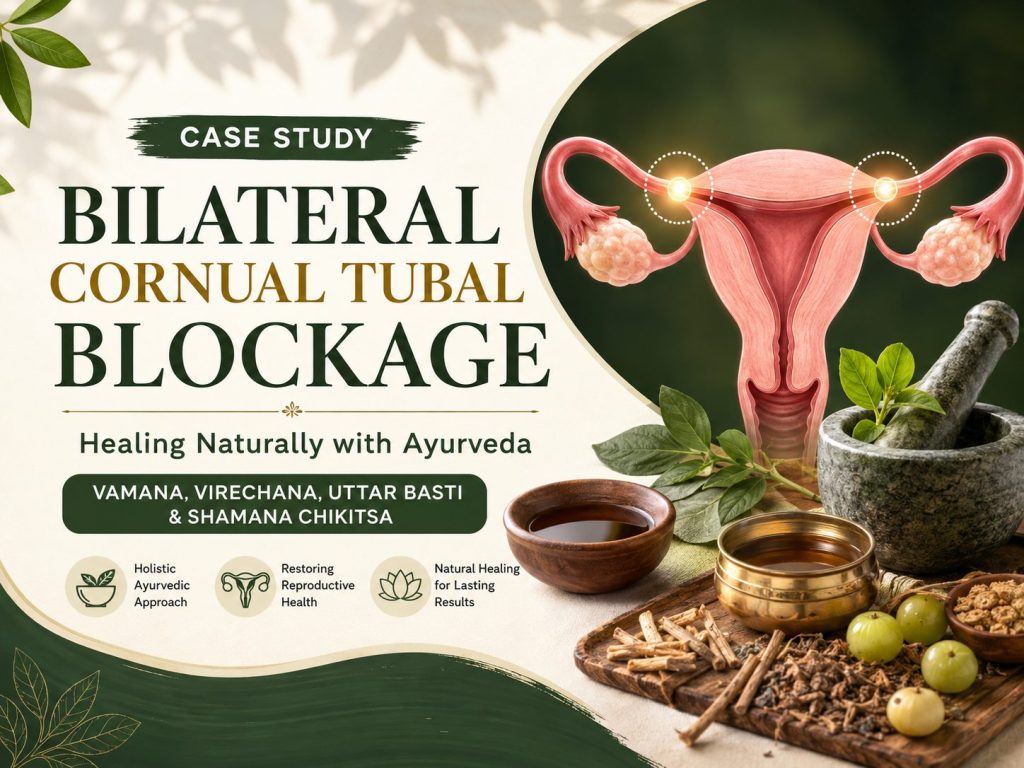
Successful Management of Bilateral Cornual Tubal Blockage by Ayurvedic Purification Therapy (Vamana & Virechana), Uttar Basti and Shamana Chikitsa – A 6-Month Case Study
A single-patient observational report combining Shodhana (Vamana & Virechana), Uttar Basti and Shamana Chikitsa, with pre- and post-treatment HSG comparison.
Abstract
Tubal factor infertility contributes to approximately 25–35% of female infertility cases. Bilateral cornual tubal blockage prevents fertilization due to obstruction at the uterotubal junction. Conventional management includes hysteroscopic cannulation, laparoscopic surgery, or IVF. Ayurveda correlates tubal obstruction with Artavavaha Srotorodha, Vata-Kapha Dushti, and Beejavaha Srotodushti. This case demonstrates successful recanalization of bilateral cornual tubal blockage through classical Ayurvedic therapies including Vamana, Virechana, Uttar Basti, and Shamana Chikitsa over six months.
Patient Details
| Parameter | Details |
|---|---|
| Age | 29 Years |
| Gender | Female |
| Marital Status | Married |
| Occupation | Homemaker |
| Duration of Infertility | 3 Years |
| Type | Primary Infertility |
Chief Complaints
- Unable to conceive since 3 years
- Irregular ovulation
- Dysmenorrhea
- Lower abdominal pain during menstruation
- White vaginal discharge occasionally
- Mental stress due to infertility
Menstrual History
- Cycle: 30–35 days
- Flow: Moderate
- Duration: 4 days
- Pain: Moderate
Investigations Before Treatment
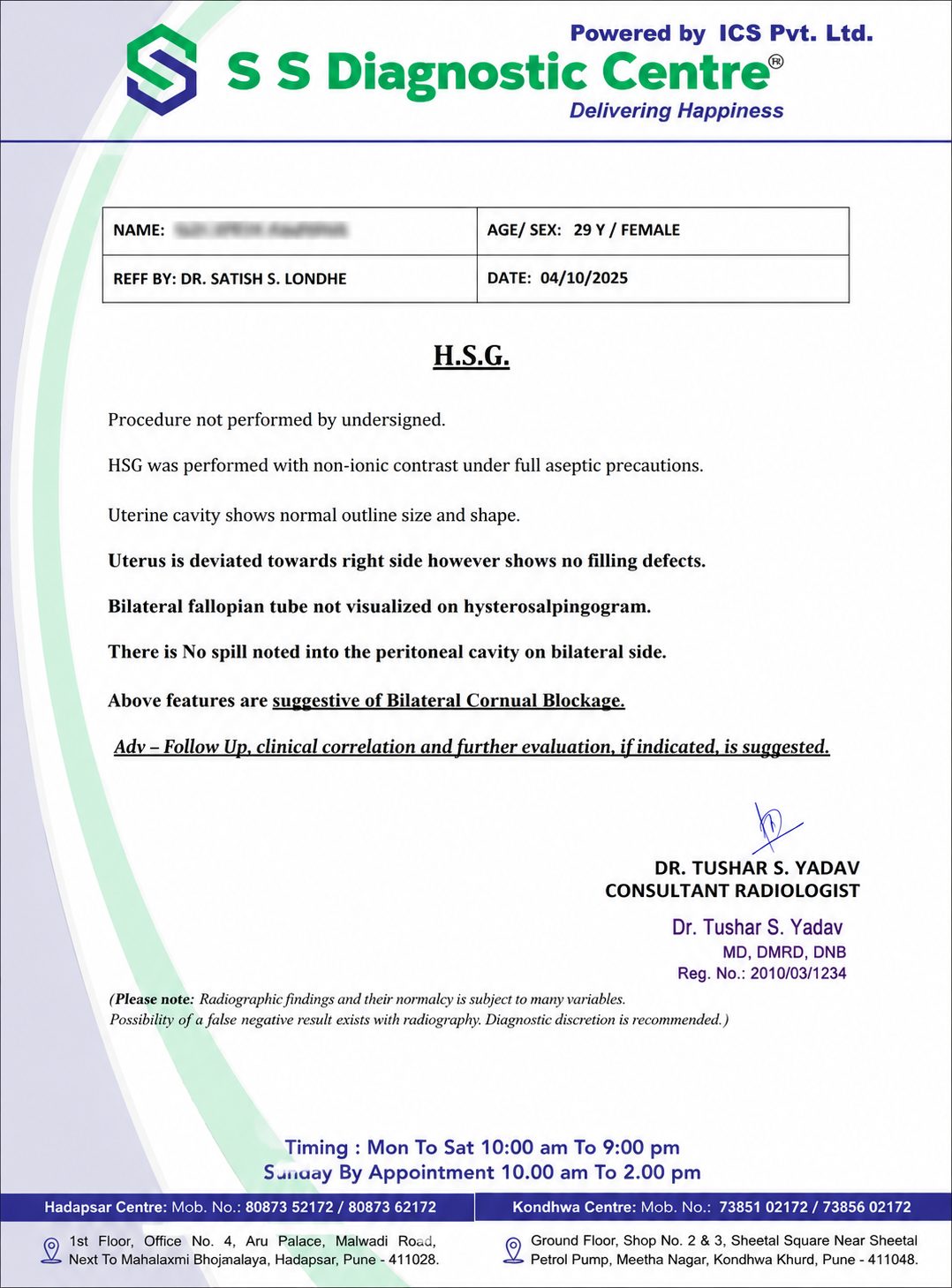
HSG Report (October 2025)
- Uterus normal
- Bilateral fallopian tubes not visualized
- No peritoneal spill
- Diagnosis: Bilateral Cornual Tubal Blockage
Ayurvedic Diagnosis
Artavavaha Srotorodha
- Vata-Kapha Pradhana
- Rasa
- Rakta
- Artava
Mandagni
Artavavaha Srotas
Samprapti
Treatment Plan
Deepana-Pachana
- Trikatu Churna
- Panchakola Churna
Duration5 days
Snehapana
- Sukumara Ghrita
Increasing dose for 5–7 days
Abhyanga + Bashpa Sweda
Daily for 3 days
Vamana Karma
Purpose- Kapha Shodhana
- Srotoshodhana
- Remove obstruction
Virechana Karma
Medicine- Trivrit Lehya / Avipattikara
- Eranda Taila (as indicated)
- Pitta-Anulomana
- Artavavaha Srotoshodhana
- Reduces pelvic inflammation
- Improves uterine receptivity
Started after menstruation.
Day 6–8 of menstrual cycle.
Performed under complete aseptic precautions.
Three consecutive menstrual cycles
Each cycle3 sittings
Total: 9 Uttar Basti ProceduresMedicineKshara Taila + Phala Ghrita (or physician's preferred protocol based on Prakriti and clinical assessment)
Sukumara Kashaya
15 ml BD before food
Varunadi Kashaya
15 ml BD before food
Eranda Bhrashta Haritaki
5 gm HS with warm water
Additional Advice
- Warm water
- No bakery food
- Avoid cold food
- Yoga
- Baddha Konasana
- Butterfly Exercise
- Stress reduction
Follow-up Schedule
| Month | Treatment |
|---|---|
| Month 1 | Deepana-Pachana + Snehapana + Vamana |
| Month 2 | Virechana |
| Month 3 | Uttar Basti Cycle 1 |
| Month 4 | Uttar Basti Cycle 2 |
| Month 5 | Uttar Basti Cycle 3 + Shamana |
| Month 6 | Continue Shamana + Repeat HSG |
Outcome
Clinical Improvement
- Regular menstrual cycle
- Reduced dysmenorrhea
- No pelvic pain
- Improved cervical mucus
- Improved ovulation
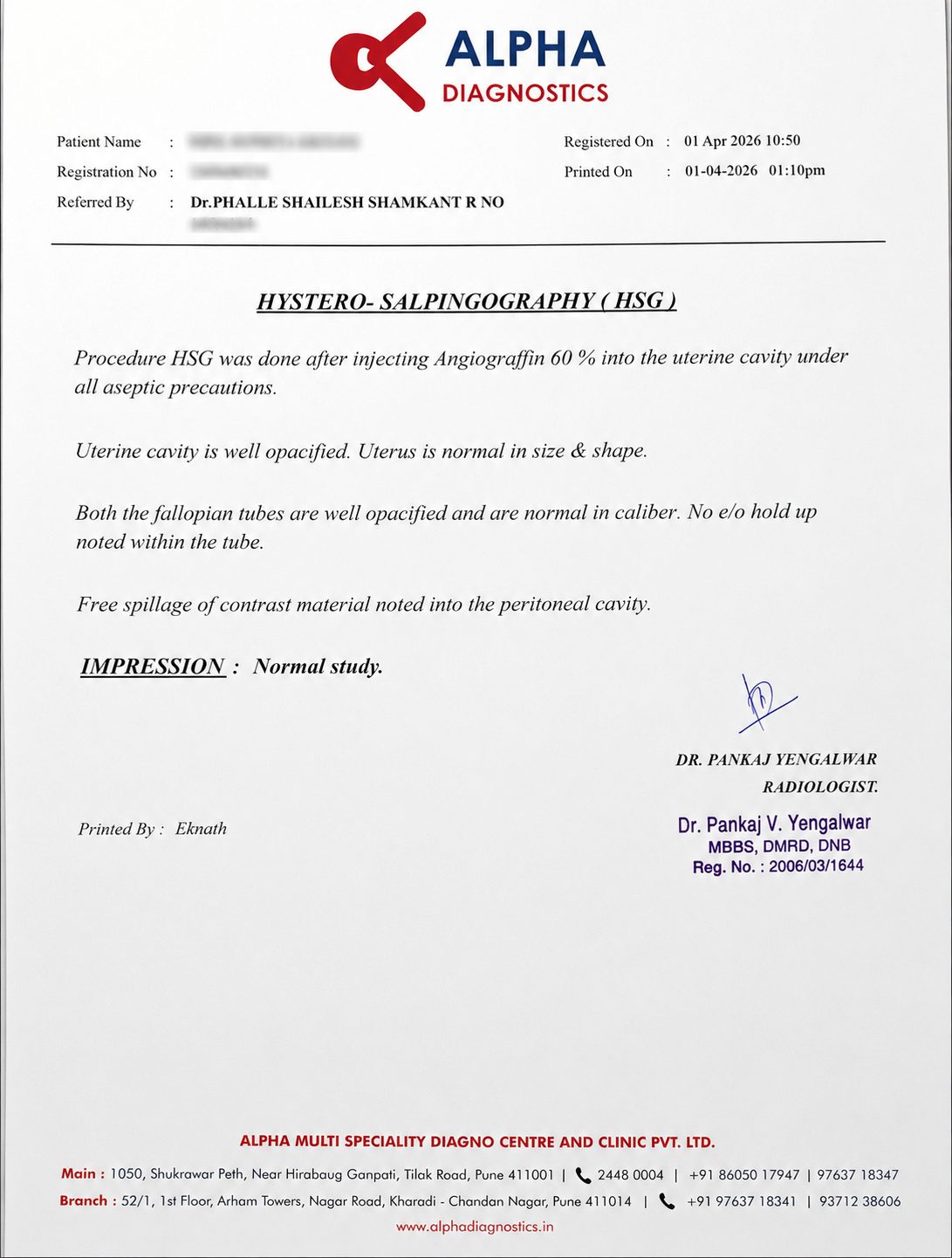
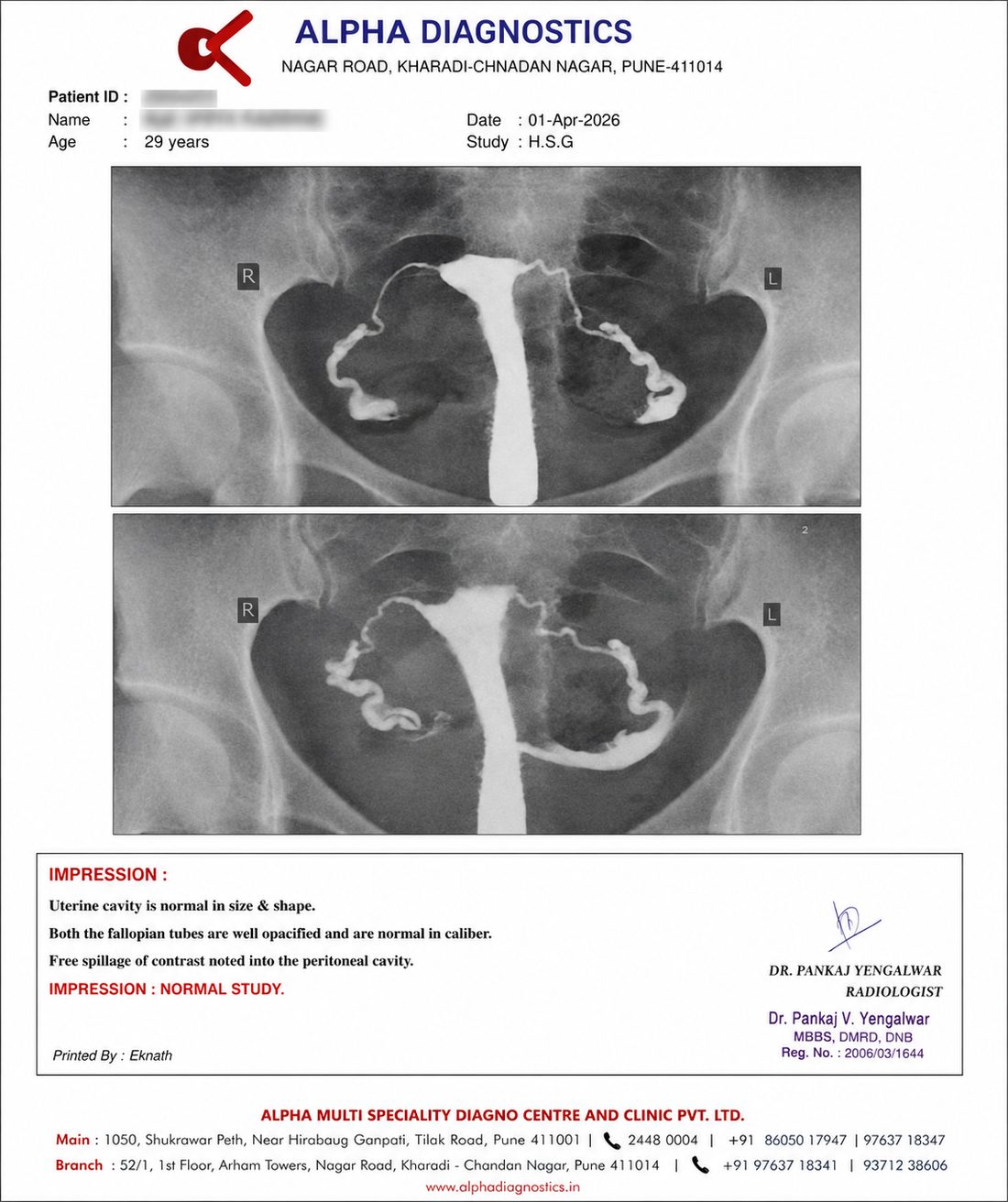
HSG After 6 Months
Findings
- Normal uterine cavity
- Bilateral fallopian tubes visualized
- Both tubes patent
- Free bilateral peritoneal spill
Impression
Normal Study
Discussion
According to Ayurveda, tubal blockage is primarily caused by Kapha-induced Srotorodha with associated Vata Avarana affecting the Artavavaha Srotas. The treatment strategy focused on sequential Shodhana followed by local therapy and Shamana:
- Vamana reduced Kapha and cleared systemic obstruction.
- Virechana eliminated Pitta-Kapha vitiation, reduced inflammation, and promoted Srotoshodhana.
- Uttar Basti delivered medicated oils directly to the reproductive tract, helping restore tubal patency, improve endometrial health, and normalize Apana Vata.
- Sukumara Kashaya supported Apana Vata balance and reproductive function.
- Varunadi Kashaya is traditionally used in Kapha-related obstructions and supported Srotoshodhana.
- Eranda Bhrashta Haritaki promoted Vatanulomana, bowel regulation, and helped maintain unobstructed channels.
The combination of systemic purification, localized therapy, and oral medicines likely contributed to restoration of tubal patency and improvement in fertility potential.
Conclusion
This case highlights that a carefully planned Ayurvedic protocol consisting of Vamana, Virechana, Uttar Basti, and Shamana Chikitsa over six months may help restore tubal patency in selected patients with bilateral cornual tubal blockage. While this single case showed favorable HSG findings and clinical improvement, larger controlled clinical studies are needed to establish efficacy.
Facing tubal blockage or infertility-related concerns? Discuss your case with our Ayurvedic physicians.