Suvarnaprashan Side Effects: Are Suvarnaprashan Drops Safe for Children?
Introduction :
Suvarnaprashan (also called Suvarnaprashan, Swarna Prashana, or Suvarna Bindu Prashan) is one of the most widely practiced Ayurvedic pediatric Rasayana therapies. Described in the classical Kashyapa Samhita, it traditionally consists of purified Swarna Bhasma (incinerated gold ash), honey, ghee, and Medhya Rasayana herbs, administered in carefully prescribed doses to support children’s physical and cognitive development.If you’re searching for information about Suvarnaprashan Side Effects, this evidence-based guide explains what scientific research says about its safety, possible risks, precautions, and proper use in children.
With increasing awareness among parents, searches for “Suvarnaprashan side effects,” “Is Suvarnaprashan safe?” and “Can Suvarnaprashan harm my child?” have also increased. These are important questions because every medicine—including Ayurvedic medicines—should be evaluated for quality, safety, appropriate dosage, and scientific evidence.
Unlike many internet articles, current scientific literature does not support the claim that properly prepared Suvarnaprashana commonly causes fever, diarrhea, liver damage, or kidney damage. At the same time, modern healthcare emphasizes pharmacovigilance, meaning that every medicine should be monitored for possible adverse reactions, especially when used in children. The Ministry of AYUSH has established the Ayush Suraksha Pharmacovigilance Programme to encourage reporting of suspected adverse drug reactions (ADRs) and improve patient safety.
This article reviews the available scientific evidence, clarifies common misconceptions, and explains how parents can use Suvarnaprashana safely under qualified Ayurvedic supervision.
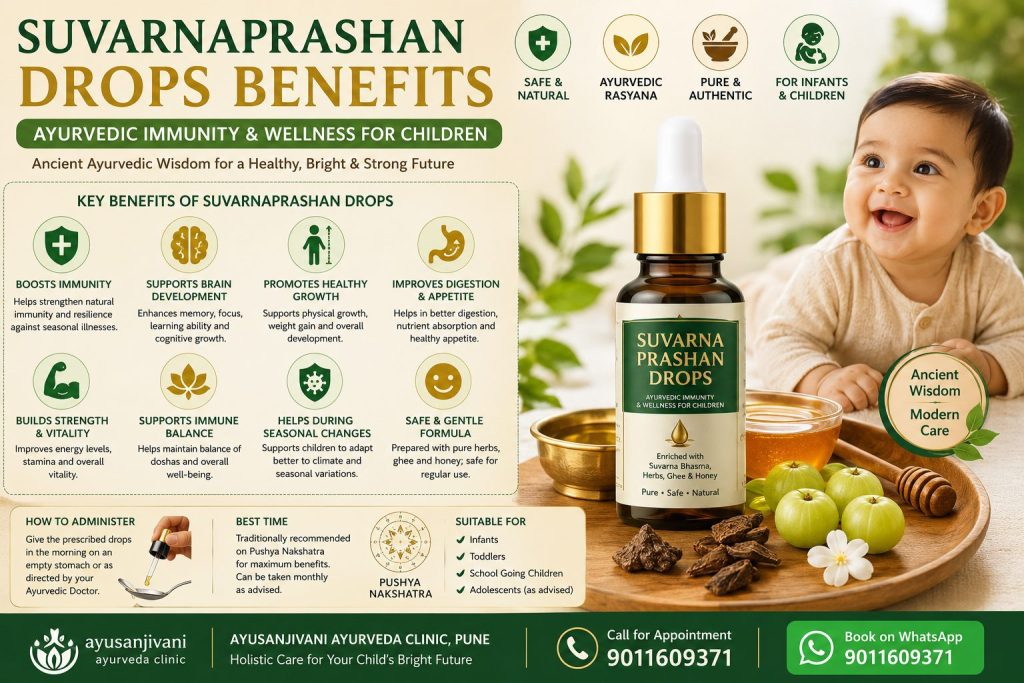
What Is Suvarnaprashana?
Suvarnaprashana is classified in Ayurveda as a Rasayana intervention for children. The classical description in Kashyapa Samhita mentions administration of gold processed with honey and ghee to promote:
- Medha (intellect)
- Smriti (memory)
- Bala (strength)
- Agni (healthy digestion)
- Ayushya (healthy longevity)
- Vyadhikshamatva (resistance to illness)
Modern commercial formulations may additionally include herbs such as Guduchi, Brahmi, Shankhapushpi, Yashtimadhu, Vacha, Ashwagandha, or other Medhya Rasayana ingredients depending on the manufacturer.
It is important to understand that Suvarnaprashana is not a vaccine and should not be considered a substitute for routine childhood immunization. Instead, it is an Ayurvedic health-promoting intervention that should complement—not replace—standard pediatric care.
Scientific References
- Classical review of Swarnaprashana.
- CCRAS Clinical Research Framework.
Is Suvarnaprashana Scientifically Safe?
This is the most important question for parents.
Based on currently available published literature, there is no high-quality evidence demonstrating that properly manufactured Suvarnaprashana routinely produces serious adverse effects in children. Most published reviews describe the available evidence as suggesting good tolerability, although they also emphasize that larger randomized controlled clinical trials are still required before firm conclusions regarding long-term efficacy and safety can be made.
The Central Council for Research in Ayurvedic Sciences (CCRAS) recognizes that modern Ayurveda must generate evidence through systematic clinical research and ongoing pharmacovigilance, including documentation of safety, tolerability, and adverse events.
This means two things can both be true:
- Classical Suvarnaprashana appears to have a favorable safety profile when properly prepared and prescribed.
- Continued scientific monitoring remains essential because children are a vulnerable population and safety data should continually improve.
This balanced approach reflects both traditional Ayurvedic principles and modern evidence-based medicine.
Understanding Pharmacovigilance: Why Safety Monitoring Matters :
One of the most common misconceptions is:
“Ayurvedic medicines are natural, so they can never cause adverse effects.”
Modern medicine—and the Ministry of AYUSH—does not support this assumption.
The Government of India has established a nationwide Ayush Pharmacovigilance Programme to collect and analyze suspected adverse drug reactions related to Ayurveda, Siddha, Unani, and Homoeopathy medicines.
The purpose is not to suggest that Ayurvedic medicines are unsafe, but rather to ensure:
- Better patient safety
- Identification of rare adverse reactions
- Detection of poor-quality products
- Prevention of medication errors
- Continuous improvement in manufacturing standards
According to Ayush Suraksha, pharmacovigilance helps detect, assess, understand, and prevent adverse effects or any other medicine-related problems, reinforcing that all systems of medicine benefit from structured safety monitoring.
Concern 1: Does Suvarnaprashana Cause Fever?
One of the most frequently searched questions is:
“My child developed fever after Suvarnaprashana. Is the medicine responsible?”
What does the evidence say?
At present, there is no published clinical evidence demonstrating that fever is a recognized adverse effect of properly prepared Suvarnaprashana. Available reviews do not identify fever as a common adverse drug reaction.
Why does this misconception occur?
Children usually receive Suvarnaprashana during infancy and early childhood—the same period when:
- Viral respiratory infections are common
- Seasonal flu occurs
- Teething episodes coincide
- Routine childhood vaccinations are administered
Because these events frequently overlap, parents may mistakenly associate a naturally occurring fever with Suvarnaprashana administration.
When should parents seek medical care?
Parents should consult a pediatrician promptly if a child develops:
- Fever above 38.5°C
- Persistent fever lasting more than 24 hours
- Poor feeding
- Difficulty breathing
- Persistent vomiting
- Lethargy or reduced responsiveness
These symptoms require medical evaluation regardless of whether the child has recently received Suvarnaprashana.
Evidence Summary
Current evidence does not identify fever as an established adverse effect of properly prepared Suvarnaprashana. However, any fever occurring after administration should be assessed clinically rather than automatically attributed to the medicine.
Concern 2: Can Suvarnaprashana Cause Loose Motions or Digestive Problems?
Another common concern among parents is whether Suvarnaprashana causes diarrhea or abdominal discomfort.
Current Scientific Evidence
Published reviews and available clinical literature do not identify diarrhea or loose motions as established adverse effects of Suvarnaprashana administered according to classical methods.
However, clinicians should remember that gastrointestinal symptoms in children are extremely common and may result from:
- Viral gastroenteritis
- Food intolerance
- Dietary changes
- Contaminated food or water
- Concurrent medications such as antibiotics
Therefore, a temporal association (occurring after taking Suvarnaprashana) does not necessarily establish a causal relationship.
Clinical Recommendation
If a child develops:
- Frequent watery stools
- Blood in stools
- Persistent vomiting
- Signs of dehydration
- Reduced urine output
parents should discontinue any non-essential supplements temporarily and seek immediate pediatric assessment.
Evidence Summary
There is no current evidence that properly manufactured Suvarnaprashana routinely causes diarrhea. Nevertheless, any persistent gastrointestinal symptoms should always be medically evaluated to exclude unrelated childhood illnesses.
Can Suvarnaprashana Cause Allergic Reactions?
Parents often worry whether Suvarnaprashana can trigger allergies, especially in infants and young children.
What does current evidence show?
Published Ayurvedic literature and available clinical reviews do not identify purified Swarna Bhasma itself as a common allergen when prepared according to classical pharmaceutic methods. However, allergic reactions to other ingredients present in the formulation remain biologically possible, particularly in children with pre-existing hypersensitivity.
Commercial Suvarnaprashana preparations may contain:
- Honey
- Cow’s ghee
- Brahmi
- Guduchi
- Shankhapushpi
- Yashtimadhu
- Other herbal extracts
Although these ingredients have a long history of traditional use, individual hypersensitivity cannot be completely excluded, just as with any food or herbal product.
When should parents seek immediate medical attention?
Stop administration and consult a doctor immediately if the child develops:
- Widespread skin rash
- Facial swelling
- Swelling of lips or tongue
- Difficulty breathing
- Persistent vomiting after administration
Fortunately, such reactions are rare, and no large pediatric study has identified allergic reactions as a frequent adverse event following properly prepared Suvarnaprashana.
Evidence Summary
Current evidence does not identify allergy as a routine side effect of Suvarnaprashana. However, individual hypersensitivity to ingredients remains possible, highlighting the importance of physician supervision and product quality.
Is Swarna Bhasma Safe? Understanding the Difference Between Gold and Swarna Bhasma
One of the greatest misconceptions is that Suvarnaprashana contains metallic gold.
This is incorrect.
The gold used in classical Ayurveda is Swarna Bhasma, which is fundamentally different from raw metallic gold.
According to Ayurvedic pharmaceutics:
- Raw gold is first purified (Shodhana)
- It undergoes repeated calcination (Marana)
- The final product is subjected to traditional quality assessments before therapeutic use
Modern analytical studies have demonstrated that properly prepared Swarna Bhasma consists predominantly of nano- and micro-sized gold particles embedded within an organometallic matrix, rather than pieces of metallic gold. These physicochemical changes are believed to contribute to its biological behavior, although further research is ongoing.
The quality of Swarna Bhasma is therefore a critical determinant of safety.
Heavy Metal Concerns: Should Parents Be Worried?
Heavy metals are among the most common concerns surrounding traditional medicines.
However, it is important to distinguish between:
- Authentic classical Ayurvedic formulations
- Counterfeit or substandard products
The Ministry of AYUSH, Pharmacopoeia Commission for Indian Medicine & Homoeopathy (PCIM&H), and Good Manufacturing Practice (GMP) regulations require licensed manufacturers to comply with quality standards, including testing for contaminants and adherence to pharmacopoeial specifications.
Most reported cases of heavy metal toxicity associated with traditional medicines involve:
- Unlicensed manufacturers
- Improper preparation
- Contamination
- Products purchased from unreliable sources
These cases should not be generalized to all classical Ayurvedic medicines manufactured under regulated conditions.
Practical Advice
Parents should always:
- Purchase products from licensed GMP-certified manufacturers.
- Avoid unlabeled or homemade preparations unless prescribed by a qualified Ayurvedic physician.
- Check batch number, manufacturing license, and expiry date.
Can Suvarnaprashana Damage the Liver or Kidneys?
Another common internet claim is that Suvarnaprashana may damage the liver or kidneys.
What does scientific evidence show?
Current published literature does not provide evidence that physician-prescribed, properly manufactured Suvarnaprashana causes liver or kidney toxicity in healthy children. Available clinical reports have not consistently identified hepatotoxicity or nephrotoxicity associated with supervised use. However, long-term, large-scale pediatric safety studies remain limited, so continued monitoring is appropriate.
This distinction is important:
- No evidence of harm is not the same as proof of absolute safety.
- Continued pharmacovigilance helps identify rare adverse events if they occur.
Evidence Summary
Based on current evidence, routine liver or kidney damage has not been demonstrated with appropriately prepared Suvarnaprashana used under medical supervision.
Can an Overdose Be Harmful?
Ayurveda emphasizes individualized dosing, especially in children.
Unlike over-the-counter supplements, Suvarnaprashana should be prescribed based on:
- Age
- Weight
- Digestive capacity (Agni)
- General health
- Physician assessment
There are no well-documented pediatric toxicity studies describing severe poisoning from physician-prescribed Suvarnaprashana doses. Nevertheless, giving more than the recommended amount is not advised, as safety has not been established for excessive doses.
Parents should never increase the dose in the belief that a larger amount will provide greater immunity or intelligence.
Who Should Temporarily Avoid Suvarnaprashana?
Although Suvarnaprashana is generally well tolerated, Ayurvedic clinicians commonly recommend postponing administration during significant acute illnesses.
Temporary postponement may be appropriate if the child has:
- High fever
- Acute respiratory infection
- Persistent vomiting
- Severe diarrhea
- Hospital admission
- Serious allergic illness
This recommendation is based on clinical prudence, allowing the child’s acute condition to be assessed and treated before restarting a Rasayana therapy.
Once the illness has resolved, the treating physician can advise when Suvarnaprashana may be resumed.
Risks Associated with Poor-Quality or Counterfeit Products Quality and Manufacturing: Why They Matter :
The greatest documented safety concern is not classical Suvarnaprashana itself but the use of poor-quality, adulterated, or counterfeit products.
Potential risks include:
- Incorrect processing of Swarna Bhasma
- Microbial contamination
- Excessive heavy metal contamination
- Substitution of ingredients
- Inadequate quality testing
- Poor storage conditions
The Ayush Suraksha Pharmacovigilance Programme encourages healthcare professionals and patients to report suspected adverse drug reactions, helping authorities identify quality-related problems and improve medicine safety.
Scientific Myths vs Facts About Suvarnaprashan Safety :
| Myth | Scientific Fact |
|---|---|
| Suvarnaprashana commonly causes fever. | Current evidence does not identify fever as a recognized adverse effect of properly prepared Suvarnaprashana. |
| Swarna Bhasma is the same as raw metallic gold. | Swarna Bhasma undergoes classical purification and calcination processes, making it chemically different from metallic gold. |
| All Suvarnaprashana products are equally safe. | Safety depends on authentic ingredients, GMP manufacturing, and adherence to pharmacopoeial standards. |
| Natural medicines cannot cause adverse reactions. | Any medicine, including herbal medicines, should be monitored for suspected adverse reactions through pharmacovigilance. |
| Higher doses provide greater benefits. | There is no evidence supporting higher doses, and dosage should always follow physician advice. |
Practical Safety Recommendations for Parents :
To minimize potential risks:
- Consult a qualified Ayurvedic physician before starting Suvarnaprashana.
- Use only GMP-certified products from reputable manufacturers.
- Follow the prescribed dosage carefully.
- Do not substitute or mix multiple herbal products without medical advice.
- Observe your child after administration, particularly during the first few doses.
- Report any suspected adverse reaction to your healthcare provider or through the Ayush Suraksha Pharmacovigilance Programme.
- Continue routine childhood vaccinations and regular pediatric care alongside Ayurvedic interventions.
Frequently Asked Questions (FAQs) : Understanding the Safety Profile of Suvarnaprashan
1. Is Suvarnaprashana safe for infants?
When prescribed by a qualified Ayurvedic physician and prepared according to classical Ayurvedic pharmaceutics using authenticated Swarna Bhasma, Suvarnaprashana is generally considered to have a favorable safety profile. However, safety depends on appropriate dosage, product quality, and clinical supervision. More high-quality pediatric studies are still needed.
2. Does Suvarnaprashana cause fever?
Current scientific literature does not identify fever as a recognized adverse effect of properly prepared Suvarnaprashana. If fever develops after administration, other common childhood illnesses should be evaluated by a pediatrician rather than assuming the medicine is the cause.
3. Can Suvarnaprashana cause allergies?
There is no evidence that purified Swarna Bhasma commonly causes allergy. However, hypersensitivity to honey, ghee, herbs, or excipients present in commercial formulations may rarely occur in susceptible children. Stop administration and seek medical advice if symptoms such as rash, swelling, or breathing difficulty develop.
4. Is Swarna Bhasma the same as metallic gold?
No. Swarna Bhasma is a classically processed Ayurvedic preparation produced through purification (Shodhana) and calcination (Marana). It is chemically and pharmaceutically different from raw metallic gold. Its quality depends on proper manufacturing according to Ayurvedic pharmaceutics.
5. Can Suvarnaprashana damage the liver or kidneys?
Current published evidence has not demonstrated routine liver or kidney toxicity when physician-prescribed Suvarnaprashana is manufactured according to accepted quality standards. Nevertheless, continued pharmacovigilance and further clinical studies are recommended.
6. Should Suvarnaprashana be given during fever?
Elective Rasayana therapy is generally postponed during acute illnesses such as high fever, severe vomiting, or diarrhea. The child should first recover, after which the treating physician can advise when to restart therapy.
7. Can Suvarnaprashana be administered with routine childhood vaccination?
Suvarnaprashana is not a substitute for vaccination. Parents should continue all immunizations according to national pediatric schedules. Discuss timing with both your pediatrician and Ayurvedic physician if needed.
8. Are all Suvarnaprashana products equally safe?
No. Product quality varies considerably. Parents should select products manufactured under Good Manufacturing Practice (GMP) standards by licensed Ayurvedic manufacturers and avoid counterfeit or unverified preparations.
9. Why is pharmacovigilance important for Ayurvedic medicines?
The Ministry of AYUSH supports pharmacovigilance because every medicine—including herbal medicines—should be monitored for suspected adverse reactions, product quality issues, and potential drug interactions to improve patient safety.
10. Can Suvarnaprashana be taken along with allopathic medicines?
Although no specific interaction has been consistently established, parents should inform both the pediatrician and Ayurvedic physician about all medicines and supplements their child is receiving to minimize the risk of interactions.
11. Is daily Suvarnaprashana recommended?
The frequency depends on the child’s age, health status, and the physician’s clinical judgment. Parents should not alter the schedule or dosage without professional advice.
12. What should parents do if they suspect an adverse reaction?
Stop the medicine temporarily, consult the treating physician, and report the suspected adverse reaction through the National Pharmacovigilance Programme for ASU&H Drugs if appropriate. Reporting helps strengthen medicine safety.
13. Can poor-quality products increase health risks?
Yes. Most safety concerns related to Ayurvedic medicines are associated with counterfeit products, contamination, adulteration, improper manufacturing, or inappropriate use rather than authentic classical formulations.
14. Does scientific evidence support all claimed benefits of Suvarnaprashana?
Traditional Ayurvedic texts describe several health-promoting effects. Modern research is promising but still limited. Larger randomized controlled trials are needed to confirm many of the proposed benefits and long-term safety.
15. Where should parents seek advice before starting Suvarnaprashana?
Parents should consult a qualified Ayurvedic physician experienced in pediatric Ayurveda, who can assess the child’s age, health status, digestive capacity, and suitability before recommending Suvarnaprashana.
About the Author :
Professor Dr. Shailesh Phalle, MD (Ayurveda) is an Ayurvedic physician with expertise in Kayachikitsa (Ayurvedic medicine ), Panchakarma, preventive healthcare, and evidence-based Ayurvedic practice. He focuses on integrating classical Ayurvedic principles with modern scientific evidence to provide safe, ethical, and patient-centered care. His clinical interests include child wellness, preventive Rasayana therapies, digestive health, immunity support, and integrative family healthcare.
Medical Reviewer :
Professor Dr. Shailesh Phalle, MD (Ayurveda)
This article has been medically reviewed for scientific accuracy, alignment with classical Ayurvedic literature, and consistency with current evidence from peer-reviewed publications and Government of India AYUSH resources. Medical information evolves continuously, and recommendations may change as new research becomes available.
Medical Disclaimer :
This article is intended for educational and informational purposes only. It does not replace professional medical advice, diagnosis, or treatment. Suvarnaprashana should only be administered under the guidance of a qualified Ayurvedic physician. Parents should consult their pediatrician or healthcare provider before starting any new medicine or supplement, especially for infants, children with chronic illnesses, allergies, or those receiving other medications. If a child develops severe symptoms such as persistent fever, breathing difficulty, facial swelling, repeated vomiting, or any suspected adverse reaction, seek immediate medical attention.
References for Suvarnaprashan Safety Profile :
- Central Council for Research in Ayurvedic Sciences (CCRAS) – Clinical Research
- Ayush Suraksha – National Pharmacovigilance Programme for ASU&H Drugs
- Pharmacovigilance of Ayurvedic Medicines in India (PubMed Central)
- Institute of Teaching and Research in Ayurveda – Pharmacovigilance
- Pharmacovigilance: Boon for the Safety and Efficacy of Ayurvedic Medicines (PubMed Central)